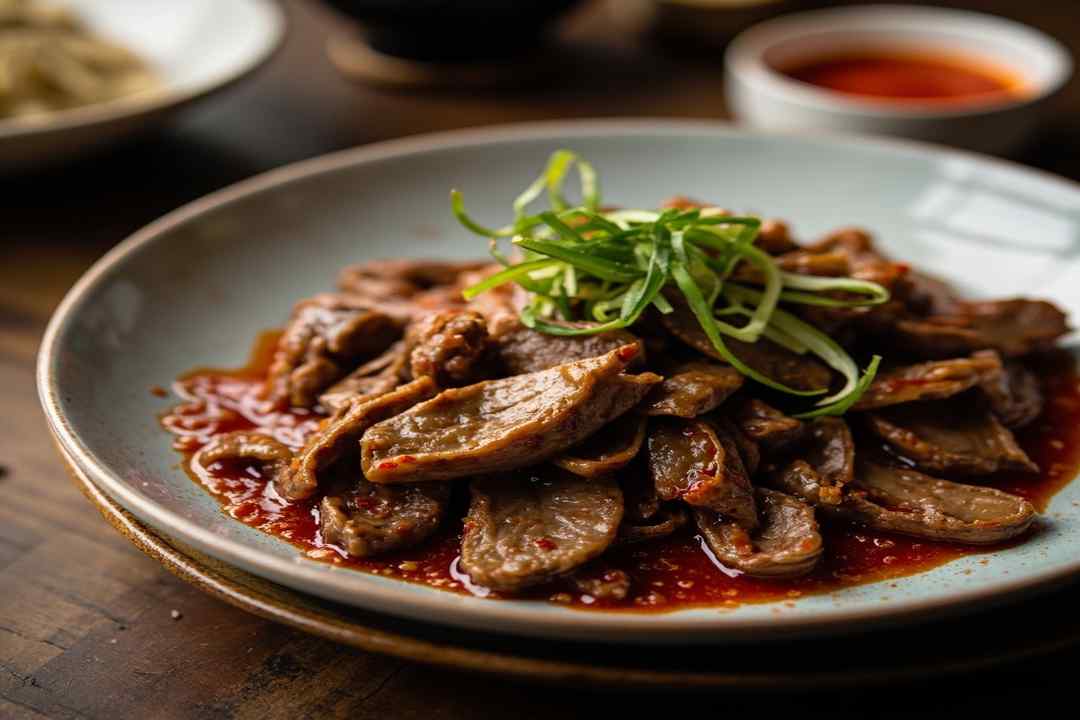
Braised pork intestines become tender and clean-tasting when they are washed thoroughly, blanched before seasoning, and then simmered gently with doubanjiang, ginger, spices, and soy sauce. Cleaning and low heat are the two steps that most directly control odor and texture.
Quick Answer
Braised pork intestines become tender and clean-tasting when they are washed thoroughly, blanched before seasoning, and then simmered gently with doubanjiang, ginger, spices, and soy sauce. Cleaning and low heat are the two steps that most directly control odor and texture.
Basic Facts
| Preparation | Clean, rinse, and blanch before braising |
|---|---|
| Cooking method | Low, steady simmer until tender with a slight chew |
| Flavor base | Doubanjiang, ginger, Sichuan peppercorn, soy sauce, and aromatics |
| Common mistake | Using high heat before the connective tissue has softened |
Quick Reference
Braised Pork Intestines, a beloved Sichuan dish, often surprises first-time tasters with its bold, numbing-spicy flavor and tender texture. For those new to Sichuan cuisine, it’s a perfect entry point into the region’s signature balance of heat, tingle, and umami.
This dish pairs beautifully with classic Sichuan staples like Mapo Tofu and Dan Dan Noodles, making it ideal for a home-cooked meal that feels both authentic and satisfying. Many people avoid pork intestines at first, but when prepared correctly, they become incredibly tender and absorbent, soaking up every bit of Sichuan’s iconic spices.
The key is in the cleaning and braising process—skip these steps, and you’ll end up with a dish that’s tough or off-flavored. Stick around to learn how to make this dish at home, plus tips to avoid common mistakes.
The Story Behind Braised Pork Intestines
Braised Pork Intestines has deep roots in Chengdu’s street food culture, dating back to the Qing Dynasty (1644–1912). Back then, pork intestines were a cheap, abundant byproduct of pork processing, used by street vendors to create flavorful, filling dishes for factory workers and laborers.
These vendors learned to mask the natural odor of intestines with bold Sichuan spices like doubanjiang and Sichuan peppercorns, turning a humble ingredient into a sought-after snack. Over time, it evolved from a street food staple to a home-cooked favorite, served at family gatherings and small restaurants across Sichuan.
Today, it’s often paired with cold beers at night markets, or featured as a main dish alongside Mapo Tofu and Kung Pao Chicken in traditional Sichuan meals. The dish’s journey from a utilitarian snack to a culinary classic reflects Sichuan’s ability to turn simple ingredients into something extraordinary.
In Sichuan, every region has a slight variation of Braised Pork Intestines. In Chengdu, it’s braised with a balanced mix of spicy and sweet, while in Chongqing, it’s often more fiery, with extra dried chilies.
This regional difference adds to the dish’s charm, showing how Sichuan cuisine adapts to local tastes. For many locals, Braised Pork Intestines isn’t just food—it’s a taste of their childhood, a reminder of street food stalls, and a way to connect with their cultural roots.
It’s also a dish that teaches a key lesson of Sichuan cooking: respect for all parts of the ingredient, and using spices to enhance, not overpower, natural flavors.
What Makes Braised Pork Intestines Special
What sets Braised Pork Intestines apart from other Sichuan dishes is its unique texture and flavor balance. Unlike Mapo Tofu, which is soft and silky, Braised Pork Intestines is tender with a slight chew, absorbing every bit of the sauce’s depth.
The flavor profile is a classic Sichuan “mala” (numbing-spicy) mix: the heat from Pixian doubanjiang, the tingle from Sichuan peppercorns, a hint of sweetness from rock sugar, and a savory umami from soy sauce. This balance is what makes it so addictive—each bite has layers of flavor that build slowly, rather than hitting you all at once.
Another key factor is the cleaning process, which is make-or-break for the dish. If done right, the intestines have no off-odor, just a soft, meaty texture.
The braising process also matters: slow simmering over low heat ensures the intestines break down gently, becoming tender without falling apart. Unlike quick stir-fried dishes, Braised Pork Intestines requires patience, but the result is worth the wait.
It’s a dish that rewards attention to detail, which is why it’s considered a “skillful” Sichuan preparation—something that home cooks can master with practice.
Ingredients for Braised Pork Intestines
Here are the exact ingredients you need for authentic Braised Pork Intestines:
- 500g fresh pork intestines (cleaned thoroughly)
- 3 tablespoons Pixian doubanjiang (Sichuan chili bean paste)
- 1.5 tablespoons light soy sauce
- 1 tablespoon dark soy sauce
- 2 tablespoons rock sugar (broken into small pieces)
- 1 teaspoon Sichuan peppercorns (toasted and crushed)
- 2 dried red chilies (broken into 2-inch pieces)
- 3 thin ginger slices (about 5mm thick)
- 4 garlic cloves (crushed, not minced)
- 2 scallions (tied into a tight knot)
- 1 cup chicken broth (low-sodium, for better control of salt)
- 2 tablespoons vegetable oil (neutral flavor, like canola)
- 1 teaspoon rice vinegar (optional, for brightness)
- ½ teaspoon white pepper powder
How to Make Braised Pork Intestines
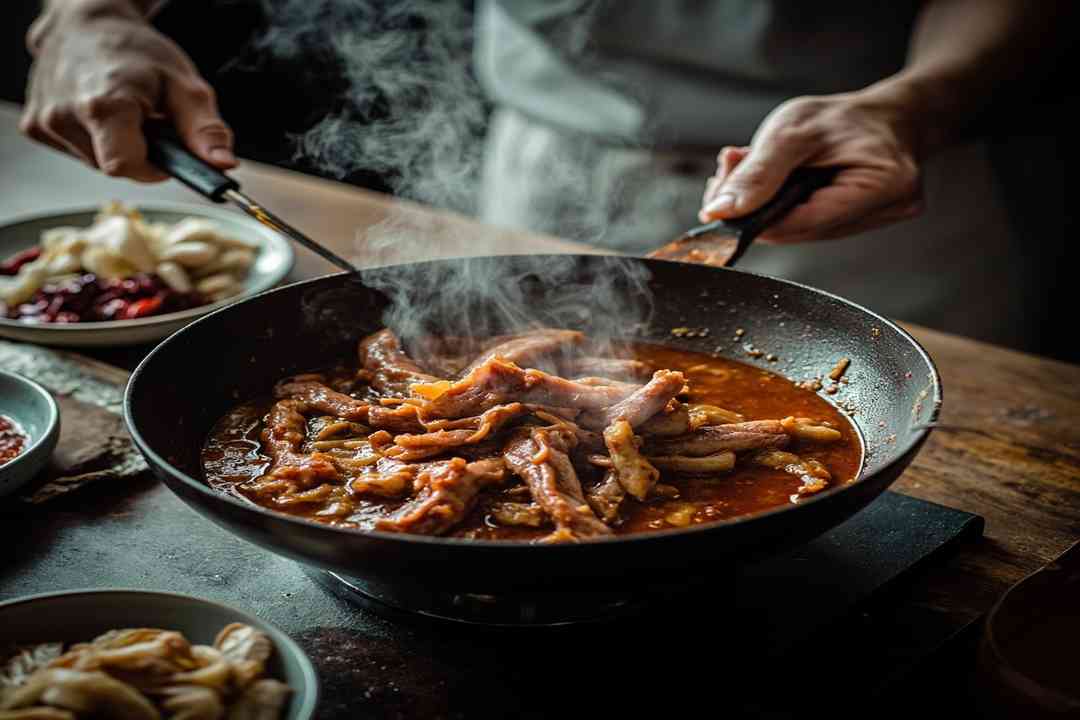
Follow these steps carefully for a tender, flavorful dish:
- Clean the pork intestines first: Rinse under cold water, then rub with 2 tablespoons flour and 1 tablespoon rice vinegar. Let sit for 10 minutes to break down odor-causing residues.
- Braised Pork Intestines Rinse 3 more times until water runs clear.
- Cut the cleaned intestines into 5cm (2-inch) segments. Blanch in a pot of boiling water for 2 minutes, then remove and drain. Braised Pork Intestines This removes any remaining impurities.
- Heat 2 tablespoons vegetable oil in a wok over medium heat (160°C). Add dried red chilies and crushed Sichuan peppercorns.
- Braised Pork Intestines Stir-fry for 30 seconds until fragrant—don’t burn them.
- Add ginger slices and crushed garlic. Braised Pork Intestines Stir-fry for 1 minute until the garlic turns light golden (don’t let it brown too much).
- Add Pixian doubanjiang to the wok. Braised Pork Intestines Stir-fry for 2 minutes, mashing it with your spatula to release its red oil and rich flavor.
- Toss in the blanched intestine segments. Braised Pork Intestines Stir-fry for 3 minutes, ensuring every piece is coated in the spice mixture.
- Pour in light soy sauce, dark soy sauce, rock sugar, and chicken broth. Stir to combine. Braised Pork Intestines Bring to a boil over high heat (200°C).
- Reduce heat to low (120°C), cover the wok with a lid, and simmer for 45 minutes. Braised Pork Intestines Check occasionally—if the sauce gets too thick, add a splash of water.
- Remove the lid, increase heat to medium-high, and simmer for 5 more minutes. Braised Pork Intestines This thickens the sauce and deepens the flavors.
- Add white pepper powder and optional rice vinegar. Stir once. Braised Pork Intestines Turn off the heat and discard the scallion knot.
Common Mistakes with Braised Pork Intestines
Many home cooks make small errors that ruin the dish. Braised Pork Intestines Here are the top mistakes and how to avoid them:
- Skipping proper cleaning: Pork intestines have a thick inner lining that holds odor. Rubbing with flour and vinegar is non-negotiable—skip this, and the dish will smell off.
- Braised Pork Intestines Take the 15 minutes needed for cleaning.
- Not blanching before braising: Blanching removes surface impurities and pre-cooks the intestines, so they don’t get tough. Braised Pork Intestines If you skip blanching, the braising time will be longer, and the intestines may stay chewy.
- Using too many Sichuan peppercorns: The goal is a mild numbing tingle, not overwhelming spice. Braised Pork Intestines 1 teaspoon is enough—more will make the dish too bitter and numbing, which isn’t authentic to Sichuan’s balanced flavor.
- Simmering too fast: High heat makes the intestines tough. Low heat (120°C) is key—slow simmering breaks down the meat fibers, making them tender.
- Braised Pork Intestines Be patient; 45 minutes is the minimum time needed.
Serving & Storage
Serve Braised Pork Intestines hot, right after cooking. Pair it with steamed white rice to balance the bold flavors—each bite of tender intestine soaked in spicy sauce is perfect with rice.
It also works as part of a Sichuan feast, alongside Mapo Tofu, Dan Dan Noodles, and Kung Pao Chicken. For a side, add steamed bok choy to cut through the richness.
For storage, let the dish cool completely before placing it in an airtight container. Refrigerate for up to 3 days.
When reheating, use a wok over medium heat (160°C) for 2-3 minutes—don’t use a microwave, as it will make the intestines rubbery. the dish Reheating in a wok brings back the original texture and flavor.
Frequently Asked Questions
Can I make this Sichuan classic vegetarian?
While traditional the stir-fry are meat-based, you can adapt the dish for vegetarians by using chewy, meat-like substitutes such as marinated seitan, rolled tofu skin pouches, or sliced king oyster mushrooms (to mimic the intestines’ texture).
Adjust the braising liquid to skip meat-based stocks or sauces, using vegetable broth instead, and retain aromatic spices to replicate the original’s savory, umami depth.
What makes it authentic Sichuan style?
Authentic Sichuan-style the dish are defined by their signature mala (numbing-spicy) flavor and precise preparation.
Key ingredients include Sichuan peppercorns (for the tingly numbing sensation), dried red chilies, Pixian doubanjiang (fermented broad bean paste for deep umami), fermented black beans, garlic, and ginger.
The process also requires thorough pre-treatment of the intestines (using rice wine, ginger, and salt to eliminate off odors) followed by slow braising to achieve a tender, chewy texture that absorbs the complex sauce.
How spicy is this Sichuan classic?
The spice level varies by regional style and preference.
Traditional Sichuan versions are typically medium to very spicy, balancing fiery dried chili heat with the tingle of Sichuan peppercorns.
Milder regional variations (like Cantonese the stir-fry) focus on savory or sweet flavors with minimal to no spice.
You can adjust the heat by reducing or omitting chilies and Sichuan peppercorns, or adding a touch of sugar or soy sauce to mellow the flavor.
What can I serve with it?
the dish pair best with mild, starchy sides that balance their rich, spicy, chewy texture.
The most common accompaniment is steamed white rice, which soaks up the flavorful braising sauce.
Other great options include hand-pulled noodles, fluffy steamed mantou (Chinese buns), tangy pickled vegetables (like pickled mustard greens) to cut through richness, and simple blanched bok choy for a balanced meal.
Can I prepare this Sichuan classic ahead of time?
Yes, the stir-fry are perfect for advance prep—their flavors deepen and improve when rested.
You can fully cook the dish, let it cool completely, then store it in an airtight container in the refrigerator for up to 3 to 4 days.
For longer storage, it freezes well for up to 3 months.
Reheat gently on the stovetop over low heat to keep the texture tender and allow the sauce to reabsorb into the intestines.
Final Tip
Don’t let pork intestines intimidate you. The cleaning step is the only tricky part, and once you master that, the rest is simple.
This dish is a perfect way to explore Sichuan’s iconic flavors, and it’s sure to impress anyone who loves bold, balanced cuisine. it Take your time, follow the recipe exactly, and soon you’ll have a dish that feels like a piece of Chengdu street food in your own kitchen.

10 Mistakes That Ruin Sichuan Wonton Recipe (And How to Fix Easy Sichuan Cuisine Festivals Recipe for Home Cooks Rattan Pepper Chicken: Sichuan Recipe and Home Cooking Tips Wikipedia