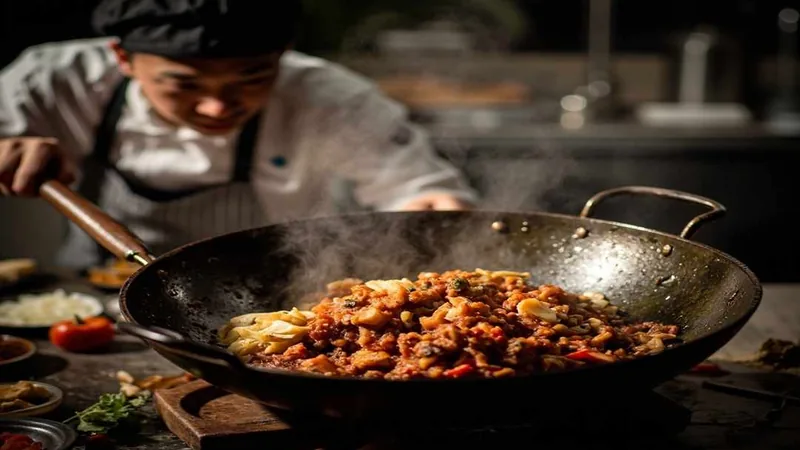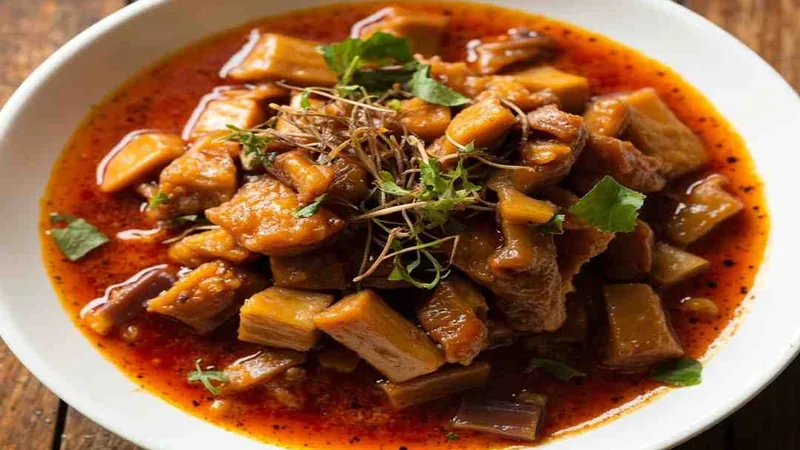
Mapo Tofu (麻婆豆腐) stands as one of the most beloved dishes in Chinese cuisine,
particularly in Sichuan province where it originated.
This aromatic, tongue-numbing, and spicy豆腐 (tofu) dish has captured the hearts and palates of food lovers worldwide.
The name “Mapo” translates to “pockmarked grandmother,
” referring to the wife of a Qing dynasty restaurateur who first created this legendary dish.
Sichuan Food Recipes Today, no Sichuan meal is complete without a steaming bowl of Mapo Tofu, where silky soft tofu meets a fiery,
numbing sauce that defines the bold flavors of western Chinese cooking.
The beauty of Mapo Tofu lies in its perfect balance of seven fundamental flavors: Sichuan peppercorns provide the distinctive mala (numbing-spicy) sensation, chili bean paste delivers deep red heat, garlic and ginger offer aromatic depth, ground pork adds savory richness, and a careful splash of Chinese cooking wine ties everything together.
This dish showcases how simple ingredients can transform into something extraordinary through proper technique and the magical combination of Sichuan peppercorns and chili oil.
Sichuan Food Recipes Whether you’re cooking for a dinner party or simplycraving an authentic taste of Sichuan,
mastering Mapo Tofu opens the door to understanding the core principles of this remarkable regional cuisine.
In this comprehensive guide, we’ll explore the rich history behind Mapo Tofu, examine what makes this dish truly exceptional,
break down every ingredient you’ll need, walk through the complete cooking process step by step, and share essential tips to ensure your Mapo Tofu turns out perfectly every single time.
Sichuan Food Recipes By the end,
you’ll have all the knowledge required to prepare restaurant-quality Mapo Tofu in your own kitchen.
The Story Behind Mapo Tofu
The origins of Mapo Tofu can be traced back to Chengdu, the capital city of Sichuan province, during the Qing dynasty (1644-1912).
According to culinary legend, the dish was invented by a woman known as Mrs.
Sichuan Food Recipes Chen, whose nickname was “Ma” (meaning mother or grandmother) and who had a pockmarked face—hence “Mapo,
” literally meaning “pockmarked grandmother.” She operated a small restaurant with her husband near Chengdu’s Renmin Park, and Mapo Tofu was her signature creation.
The original recipe featured cubed tofu simmered in a seasoned sauce with ground pork, but it was Mrs.
Chen’s innovative use of Sichuan peppercorns and chili bean paste that truly revolutionized the dish.
She discovered that the combination of these two uniquely Sichuan ingredients created a flavor profile unlike anything else in Chinese cuisine—the distinctive “mala” sensation that simultaneously numbs and excites the palate.
Sichuan Food Recipes This revolutionary flavor profile would go on to become the cornerstone of Sichuan cooking.
Over the centuries, Mapo Tofu has evolved while maintaining its core identity.
Regional variations emerged, with some versions emphasizing spicier profiles,
others incorporating additional ingredients like beef instead of pork, and many restaurants developing their own secret seasoning blends.
The dish gained national prominence and eventually international recognition,
becoming a staple on Chinese restaurant menus worldwide.
Sichuan Food Recipes Despite these adaptations,
the essence of authentic Mapo Tofu remains unchanged: silky tofu bathed in a crimson sauce that delivers heat, numbing sensation, and deep savory flavor in every spoonful.
What Makes Mapo Tofu Special
Several factors distinguish Mapo Tofu from other tofu dishes and make it a standout in the vast landscape of Chinese cuisine.
Sichuan Food Recipes Understanding these elements helps home cooks appreciate the craft behind this seemingly simple dish and achieve better results in their own kitchens.
The first crucial element is the unique flavor profile known as “mala” (麻辣),
which translates to “numbing and spicy.” This characteristic comes primarily from two ingredients: Sichuan peppercorns and chili bean paste.
Sichuan peppercorns contain hydroxy-alpha-sanshool, a compound that creates a tingling,
electric sensation on the tongue rather than actual heat.
When combined with the capsaicin in chili peppers, the result is a complex,
layered experience that excites nerve endings in ways no other cuisine achieves.
Sichuan Food Recipes This flavor signature is exclusive to Sichuan cooking and defines dishes like Mapo Tofu.
The second distinguishing feature is the textural contrast between the tender tofu and the bold sauce.
Quality Mapo Tofu features cubes of tofu that are silky-soft on the inside yet slightly firm enough to hold their shape during cooking.
The sauce should be thick enough to coat each cube generously but not gluey or starchy-tasting.
Sichuan Food Recipes Achieving this perfect consistency requires careful attention to the cornstarch slurry and proper timing during the cooking process.
Third, the aromatic foundation built from garlic, ginger, and doubanjiang (chili bean paste) cannot be overstated.
These ingredients are fried in oil until fragrant before any liquid is added,
creating what Chinese cooks call “aromatic oil.” This step extracts the maximum flavor from these aromatics and sets the foundation for the entire dish.
Sichuan Food Recipes Rushing this process or skipping it entirely results in a flat-tasting Mapo Tofu that lacks the depth of flavor that defines excellent versions of this dish.
Ingredients for Mapo Tofu
For those seeking an authentic Sichuan experience, gathering the correct ingredients is the first critical step.
Sichuan Food Recipes While some components can be substituted,
using the proper ingredients makes a significant difference in the final result.
Main Protein and Tofu:
- 400 grams (14 oz) soft or silken tofu (not firm tofu)
- 150 grams (5.3 oz) ground pork (or ground beef for beef version)
Aromatics:
- 2 inches fresh ginger, finely minced
Sichuan Flavor Agents:
- 2 tablespoons doubanjiang (chili bean paste)
- 2 tablespoons doujiang (broad bean paste) – optional
Liquid Components:
- 1 cup (240ml) chicken or vegetable stock
- 1 tablespoon Chinese cooking wine (Shaoxing wine)
Thickening and Finishing:
For Serving:
- Pinch of Sichuan peppercorn powder for finishing

How to Make Mapo Tofu
Mastering Mapo Tofu requires attention to detail at each stage.
Sichuan Food Recipes Follow these steps carefully to achieve authentic results.
Step 1: Prepare the Tofu
Cut the soft tofu into uniform cubes approximately 1.5 centimeters in size.
Place the cubes in a bowl and cover with warm salted water—this prevents breaking and seasons the tofu slightly.
Let them soak for 10-15 minutes while preparing other ingredients.
Sichuan Food Recipes This step also helps the tofu absorb flavors better during cooking.
Step 2: Toast and Grind Sichuan Peppercorns
Heat a dry wok or pan over medium heat.
Add the Sichuan peppercorns and toast for 2-3 minutes until fragrant and slightly darkened.
Transfer to a mortar and pestle or spice grinder and crush into a coarse powder. Set aside.
Sichuan Food Recipes This toasting process is essential as it releases the aromatic oils that create the signature numbing sensation.
Step 3: Bloom the Aromatics
Heat 3 tablespoons of vegetable oil in a wok over medium-high heat until shimmering.
Add the doubanjiang and douchi, stirring constantly for 30-60 seconds until the oil turns red and fragrant.
Be careful not to burn the paste—reduce heat if necessary.
Sichuan Food Recipes Add the minced garlic and ginger, stir-frying for another 30 seconds until aromatic.
Step 4: Cook the Protein
Add the ground pork to the wok, breaking it apart with a spatula.
Cook for 3-4 minutes until the pork is no longer pink and has slightly crispy edges.
Sichuan Food Recipes The rendered fat from the pork adds tremendous depth to the dish, so resist the urge to drain it off.
Step 5: Add Liquid Seasonings
Pour in the Chinese cooking wine and let it sizzle for 15 seconds,
scraping up any browned bits from the wok bottom.
Sichuan Food Recipes Add the chicken stock and light soy sauce, bringing the mixture to a gentle simmer.
Step 6: Add the Tofu
Gently drain the soaking water and add the tofu cubes to the wok.
Use a gentle motion to distribute them evenly without breaking them.
Let the tofu simmer for 8-10 minutes, allowing it to absorb the flavors of the sauce.
Sichuan Food Recipes Do not stir aggressively—simply give the wok a gentle shake occasionally to prevent sticking.
Step 7: Create the Sauce Consistency
Turn the heat to medium-low.
Slowly pour the cornstarch slurry into the wok while gently stirring in one direction.
The sauce should immediately thicken and coat the back of a spoon.
If it’s too thick, add a splash of stock; if too thin, add more slurry.
Sichuan Food Recipes The ideal consistency coats the tofu generously without being gluey.
Step 8: Add Finishing Elements
Remove the wok from heat.
Drizzle in the sesame oil and chili oil, stirring to distribute.
Add most of the chopped green onions (reserve some for garnish), and half of the ground Sichuan peppercorn powder.
Sichuan Food Recipes Gently fold everything together.
Step 9: Plate and Serve
Transfer the Mapo Tofu to a serving bowl.
Sprinkle the remaining green onions on top along with a generous pinch of the Sichuan peppercorn powder.
Drizzle with extra chili oil if desired. Sichuan Food Recipes Serve immediately over steamed white rice.
Common Mistakes with Mapo Tofu
Even experienced home cooks encounter challenges with Mapo Tofu.
Sichuan Food Recipes Being aware of these common pitfalls helps you avoid them and achieve better results.
One frequent mistake is using the wrong type of tofu.
Firm tofu may hold its shape better, but it has a rubbery texture that doesn’t absorb sauce well.
Silken or soft tofu provides the authentic creamy mouthfeel that defines excellent Mapo Tofu, though it requires gentle handling.
Sichuan Food Recipes Some cooks prefer medium-firm tofu as a compromise that offers both texture and ease of cooking.
Another common error is skipping the toasting step for Sichuan peppercorns.
Raw Sichuan peppercorns have a grassy, less intense flavor, while toasting brings out their citrusy, aromatic qualities.
Sichuan Food Recipes Always toast and grind your peppercorns fresh for the best results.
Many home cooks also rush the blooming process for the chili bean paste.
Failing to cook the doubanjiang long enough results in a raw,
bitter taste and prevents the oil from achieving the vibrant red color characteristic of authentic Mapo Tofu.
Sichuan Food Recipes Take your time—two minutes of proper cooking transforms this ingredient completely.
Serving & Storage
Mapo Tofu is best enjoyed immediately after cooking while the sauce is at its peak and the tofu retains its silky texture.
Serve it straight from the wok into preheated bowls,
accompanied by generous portions of steamed jasmine rice to balance the bold flavors.
The rice soaks up the savory sauce beautifully, making every bite satisfying.
If you have leftovers, store them in an airtight container in the refrigerator for up to 2 days.
The tofu will continue to absorb sauce as it sits, intensifying flavors but potentially making the dish slightly drier.
Reheat gently in a pan over medium-low heat, adding a splash of stock or water if needed to loosen the sauce.
Note that the Sichuan peppercorn numbing sensation diminishes somewhat upon reheating, though the dish remains flavorful.

What is the best tofu to use for Mapo Tofu?
Soft silken tofu (often labeled as “silken” or “soft” tofu) provides the most authentic texture.
It has a delicate, creamy consistency that breaks apart easily but absorbs the flavorful sauce beautifully.
If unavailable, medium-firm tofu can work but will have a denser texture.
Is Mapo Tofu very spicy?
Traditional Mapo Tofu is quite spicy due to the chili bean paste and chili oil.
However, you can adjust the heat level to your preference by reducing or omitting the chili oil and using a mild chili bean paste.
Even at lower heat levels, you’ll still experience the signature numbing sensation from Sichuan peppercorns.
Can I make Mapo Tofu vegetarian?
bsolutely.
Simply substitute the ground pork with an equal amount of finely diced mushrooms (shiitake work wonderfully) or crumbled firm tofu.
You can also use vegetable stock instead of chicken stock for a fully plant-based version.
What can I serve with Mapo Tofu?
Mapo Tofu pairs excellently with simple steamed white rice, which helps balance the intense flavors.
It also complements other Sichuan dishes like Kung Pao Chicken, Egg Drop Soup, or stir-fried vegetables.
A cooling cucumber salad makes an excellent side dish to contrast the dish’s heat.
Why is my Mapo Tofu sauce too thin?
The sauce likely needs more cornstarch slurry.
Add another small amount (about half a tablespoon of cornstarch mixed with water) while the dish simmers,
stirring gently until reaching the desired thickness. Remember that the sauce continues to thicken as it cools slightly.
What’s the difference between Mapo Tofu and regular tofu dishes?
Mapo Tofu is distinguished by its signature “mala” (numbing-spicy) flavor profile created specifically by Sichuan peppercorns and chili bean paste.
The combination of these two ingredients, along with the specific cooking technique of blooming aromatics in oil,
creates a unique taste found in no other tofu dish.
## Final Tip The secret to exceptional Mapo Tofu lies in the quality of your doubanjiang (chili bean paste).
This ingredient is the backbone of the dish’s flavor, and using a premium, authentic brand makes an enormous difference.
Look for versions made in Sichuan province, ideally containing broad beans and fermented soybeans.
Brands like Spicy World, Lee Kum Kee, or Sichuan-specific producers offer excellent options.
Once you find a quality doubanjiang,
you’ll never go back—this single ingredient elevates your Mapo Tofu from good to restaurant-quality, unlocking the true essence of Sichuan cuisine in your home kitchen.
{IMG4}
Final Tip
The secret to exceptional Mapo Tofu lies in the quality of your doubanjiang (chili bean paste).
This ingredient is the backbone of the dish’s flavor, and using a premium, authentic brand makes an enormous difference.
Look for versions made in Sichuan province, ideally containing broad beans and fermented soybeans.
Brands like Spicy World, Lee Kum Kee, or Sichuan-specific producers offer excellent options.
Once you find a quality doubanjiang,
you’ll never go back—this single ingredient elevates your Mapo Tofu from good to restaurant-quality, unlocking the true essence of Sichuan cuisine in your home kitchen.

Sichuan Food Ingredients Authentic Sichuan Wonton Simple Sichuan Vegetable Dishes Wikipedia