Cold mixed cucumber is a chilled salad of smashed raw cucumber tossed with a garlic, vinegar and Sichuan-pepper dressing. In this home version, only the dressing aromatics are briefly heated; the cucumber is not stir-fried. 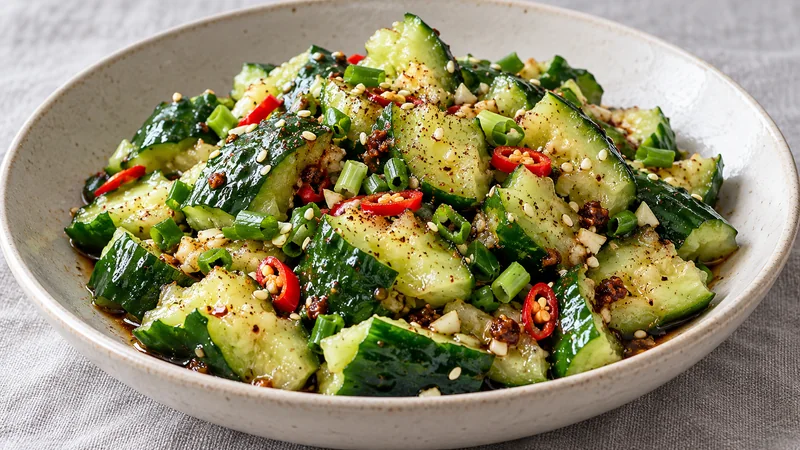
Quick Answer
Cold mixed cucumber is a Sichuan-style cold dish where crisp cucumber, garlic, vinegar, Sichuan pepper and a short rest matter more than long cooking.
Basic Facts
- Dish type: Sichuan cold appetizer
- Texture goal: Crisp cucumber with bright, balanced seasoning
- Main check: Cutting, salting, garlic, vinegar, Sichuan pepper and timing
- Common mistake: Adding too much sauce and losing the cucumber crunch
Quick reference: Cold Mixed Cucumber = crisp texture + garlic + vinegar + Sichuan pepper + short resting time.
This cucumber salad is a staple Sichuan cold dish that balances tang, heat, and numbing spice to cut through rich mains like Mapo Tofu or Dan Dan Noodles. It’s a go-to for hot, humid summer days in Sichuan, where cold dishes offer a cooling contrast to fiery staples like Kung Pao Chicken or Hot and Sour Soup.
Unlike heavy cooked sides, this dish is quick to prepare, bright, and packed with layered flavors that feel both authentic and approachable. For anyone new to Sichuan cuisine, it’s the perfect entry point to the region’s iconic ma la (numbing-spicy) profile.
The Story Behind Cold Mixed Cucumber
This cucumber salad isn’t a fancy restaurant dish – it’s a home-cooked classic passed down through Sichuan families for generations. Sichuan’s hot, wet summers make light, refreshing food essential, and this dish fits the bill perfectly.
It’s often served as a palate cleanser between courses, or paired with heartier mains like steamed pork buns or spicy stir-fries.
The dish’s roots tie to Sichuan’s emphasis on balancing flavors: sweet, sour, salty, spicy, and numbing all come together in one bite. Unlike some Sichuan dishes that require hours of simmering, Cold Mixed Cucumber is made in minutes, making it ideal for weeknight meals or casual gatherings.
It’s also flexible – cooks can adjust the spice level to suit their taste, making it a hit with both locals and visitors.
What Makes Cold Mixed Cucumber Special
What sets Cold Mixed Cucumber apart from other cucumber salads is its signature ma la kick, a hallmark of Sichuan cuisine. The combination of toasted Sichuan peppercorns (for that tingly numbing sensation) and doubanjiang (fermented chili bean paste, for deep umami) turns a simple vegetable into something memorable.
A key technique here is how the cucumber is prepared: instead of chopping it into uniform cubes, it’s gently crushed with a knife. This creates irregular chunks that hold the dressing better than sliced or diced pieces, ensuring every bite has a burst of flavor.
The salting step is also critical – it draws out excess water so the dressing doesn’t get diluted, keeping the dish crisp and bright.
This dish is a perfect example of Sichuan’s ability to turn basic ingredients into something extraordinary. It’s light enough to not weigh you down, but packed with enough flavor to stand up to bold Sichuan mains.
It’s also versatile: you can add extra garlic, a splash of rice vinegar, or even a pinch of sugar to tweak it to your liking.
Ingredients for Cold Mixed Cucumber
- 300g English cucumber (seedless, for less watery texture)
- 1 tbsp light soy sauce (low-sodium preferred)
- 2 tbsp black vinegar (or rice vinegar for a milder tang)
- 1 tsp Sichuan peppercorns (whole, not ground)
- 1 tsp doubanjiang (minced, use mild for less heat)
- 2 garlic cloves (finely minced)
- 1 tsp granulated sugar
- 1/2 tsp toasted sesame oil
- 1 tbsp toasted white sesame seeds
- 1 small fresh red chili (sliced thin, optional for extra heat)
- 1 green onion (white and green parts separated, chopped)
- 1 pinch of sea salt
- 1 tbsp neutral vegetable oil (peanut or canola work best)
How to Make Cold Mixed Cucumber
- Toast whole Sichuan peppercorns in a dry skillet over medium heat until fragrant. Stir constantly until fragrant – don’t let them burn.
- Transfer to a mortar and pestle, and grind into a fine powder; set aside.
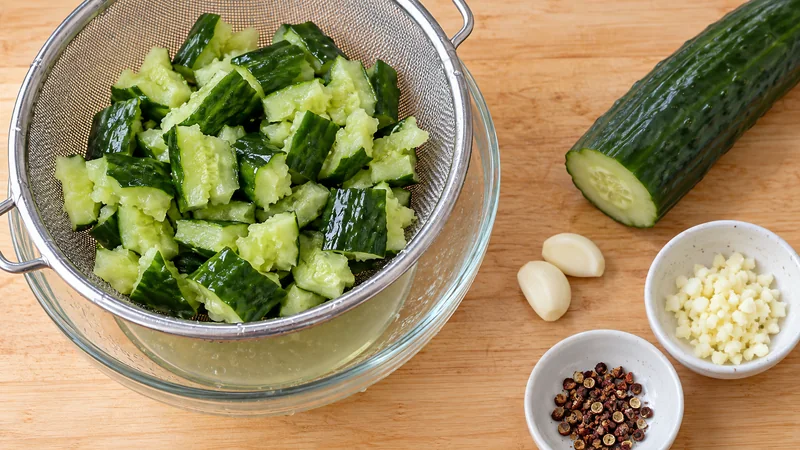
- Wash the cucumber under running water, scrub its skin with a clean produce brush and pat it dry. Use a clean board and utensils kept separate from raw meat. Place it on a cutting board, then use the flat side of a chef’s knife to gently crush it into irregular chunks.
- Avoid over-crushing – you want chunks, not mush.
- Put the crushed cucumber into a colander. Sprinkle with the pinch of sea salt, toss gently to coat, and let it sit for 10 minutes.
- This draws out excess water so your dressing stays concentrated.
- While the cucumber rests, make the dressing. Heat the 1 tbsp vegetable oil in a small pan over medium heat until it shimmers.
- Add the sliced red chili (if using) and minced garlic. Stir-fry for 30 seconds – don’t let the garlic turn brown.
- Turn off the heat. Add the ground Sichuan peppercorns, minced doubanjiang, light soy sauce, black vinegar, granulated sugar, and toasted sesame oil to the pan.
- Stir well to combine all ingredients into a smooth dressing.
- After 10 minutes, drain the cucumber completely. Press gently with the back of a spoon to remove extra water, but don’t squeeze it hard – you want it to stay crisp.
- Transfer the drained cucumber to a medium mixing bowl. Pour the prepared dressing over the cucumber, and toss gently with two forks to coat every chunk evenly.
- Sprinkle the toasted sesame seeds and the green parts of the chopped green onion over the top of the dish.
- Cover the bowl tightly with plastic wrap, and refrigerate for 15 minutes. This lets the flavors meld together without making the cucumber soggy.
- Serve the Cold Mixed Cucumber chilled, as a side to Sichuan classics like Mapo Tofu, Kung Pao Chicken, or Hot and Sour Soup.
Common Mistakes with Cold Mixed Cucumber
The most common mistake is over-crushing the cucumber. If you mash it too much, it turns mushy and loses its crisp texture.
Remember: gentle crushing only breaks the cucumber into chunks, not a paste. If you’re unsure, stop when the cucumber is in pieces that are roughly 2–3 cm wide.
Another mistake is skipping the salting step. The cucumber has a lot of water, and if you don’t drain it, the dressing will become watery and dilute the flavors.
Even a small pinch of salt goes a long way – it only takes 10 minutes to draw out the excess moisture, so don’t skip this step.
Toast Sichuan peppercorns gently until fragrant and let them cool before grinding. Avoid scorching them, which can make the dressing bitter.
Use the ground toasted peppercorns in this recipe’s dressing; adjust the quantity to your taste.
Serving & Storage
is best served immediately after chilling for 15 minutes, but it can hold up for up to 24 hours if stored properly. Serve it as a side dish alongside other Sichuan mains like Dan Dan Noodles or steamed fish, or even as a light snack on its own.
It pairs especially well with rich, spicy dishes, as its cool, tangy balance cuts through heat and numbing spice.
For storage, keep the dish in an airtight container in the refrigerator. Note that the cucumber will lose some crispiness over time, so it’s best to combine the cucumber and dressing just before serving if you’re making it ahead.
If you prep the components separately, the cucumber will stay crisp for up to 24 hours.
Frequently Asked Questions
Can I make Cold Mixed Cucumber vegetarian?
This recipe contains no meat or seafood. Check that the doubanjiang and other packaged seasonings suit your dietary needs.
What gives this cucumber salad its Sichuan flavor?
This home version uses toasted Sichuan pepper, doubanjiang, garlic and vinegar. It uses briefly heated neutral oil in the dressing; no chili oil is listed. Smashed, drained cucumber holds the dressing while staying crisp.
How can I make Cold Mixed Cucumber less spicy?
Omit the optional fresh red chili and choose a mild doubanjiang. Sichuan pepper contributes a numbing sensation, which differs from chili heat.
What can I serve with Cold Mixed Cucumber?
Serve this chilled side with rice, noodles, steamed vegetables or a richer main dish such as Mapo tofu or Kung Pao chicken.
Can I prepare Cold Mixed Cucumber ahead of time?
Prepare the cucumber and dressing separately and keep them covered in the refrigerator. Toss near serving time for the best texture. This recipe suggests using the prepared cucumber within one day; keep cut produce refrigerated at 40°F (4°C) or below.
Final Tip
A small trick from experienced Sichuan home cooks: after draining the cucumber, give it a gentle squeeze (with a paper towel) to remove just enough water so the dressing clings perfectly. This simple step turns a good dish into a great one, and it’s why this Sichuan classic remains a beloved staple in Sichuan homes and restaurants alike.
It’s quick, flavorful, and the perfect way to add a bright, balanced side to any meal.
Authentic Mapo Tofu Sauce: Sichuan Home Cooking Guide Pickled Pepper Pork Liver: Sichuan Recipe and Tips Kung Pao: Sichuan Chicken Recipe Guide Wikipedia