Twice-cooked pork, hui guo rou, is pork belly cooked as a whole piece first and sliced for a second cooking in a wok. The first stage cooks the meat; the second renders and seasons the slices. This version includes leeks and green peppers with doubanjiang, rather than treating the dish as a bowl of noodles.
Quick Answer
Simmer the pork belly with ginger until cooked and tender, cool enough to handle, then cut across into thin slices. Sear the slices, briefly fry chili-bean paste and garlic without scorching, then combine with leek, pepper and the remaining seasonings.
Basic Facts
| Yield | 4 servings as part of a meal |
|---|---|
| Pork | 450 g pork belly, whole for first cooking |
| Vegetables | 1 medium leek; 2 long green peppers |
| Main seasoning | 1 1/2 tablespoons doubanjiang |
| Other ingredients | 2 ginger slices; 2 garlic cloves; 2 tablespoons oil; 1 tablespoon Shaoxing wine; 1 teaspoon soy; 1/4 teaspoon sugar |
How to prepare twice cooked pork recipe
Check the paste and soy labels for soy, wheat or other allergens. Products sold as bean paste differ: use the spicy broad-bean version specified here, and store an opened packet or jar according to its label with clean utensils. A sweet non-spicy paste does not provide the same seasoning. Use a stable work surface and an adequately sized pan, and keep handles clear of the stove edge.
Use pork belly with visible layers of fat and lean. Doubanjiang is a fermented chili-and-broad-bean paste, not a sweet generic stir-fry sauce. Measure the paste, wine, soy and sugar separately. Split the leek lengthwise and wash between its layers before cutting into short pieces; remove the pepper seeds and cut the peppers into bite-size lengths.
Keep raw-pork utensils separate from the vegetables and from the board used after the first cooking. Prepare all seasonings before the wok stage. The second cooking moves quickly, so searching for garlic while the paste fries can lead to scorching. Serve with rice if desired, but rice or noodles are accompaniments, not the substance being twice-cooked.
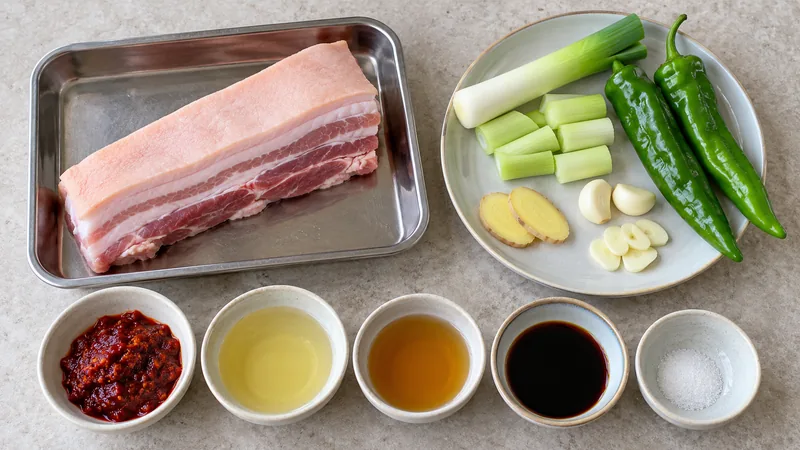
Step 1: Boil, cool, and slice the pork belly
Cover the whole pork belly with water in a pot, add the ginger, bring to a boil and then reduce to a steady simmer. The published starting method uses about thirty minutes, but thickness changes the time. Cook the meat through and check tenderness; do not assume the timer alone establishes safety. For intact pork, official guidance uses 63°C/145°F with a three-minute rest; the belly also needs a texture suitable for slicing.
Transfer the cooked piece with clean utensils and let it cool enough to handle safely. Cut into thin slices, about 3 mm as a starting thickness. Keep fat and lean together in each piece. Do not cut the raw belly into tiny cubes and expect the same two-stage effect. If the meat is prepared ahead, refrigerate it promptly rather than leaving it warm on the counter.
Step 2: Fry the slices with doubanjiang and aromatics
Heat 1 tablespoon of the oil in the wok and sear the cooked pork slices until their surfaces color lightly. Remove them temporarily. Reduce the heat, add the remaining 1 tablespoon oil, or less if sufficient fat has rendered and stir the doubanjiang briefly until its aroma develops and the oil takes on color. Add sliced garlic and keep it moving so neither paste nor garlic burns.
Rendered pork fat can reduce the added oil required. Avoid an oversized pool of fat, but do not interpret a dry sticky pan as a reason to add water immediately. The slices should be coated, with some surface browning retained. A high flame is useful for the meat stage; it is not a command to hold every aromatic at maximum heat throughout.
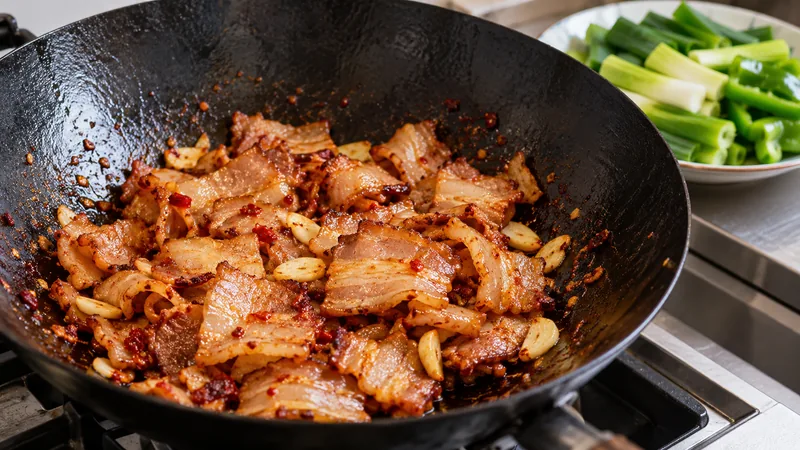
Step 3: Add leeks, season, and serve safely
Return the pork with the prepared leek and green pepper. Stir-fry until the vegetables are cooked to the desired bite, then mix in wine, soy and sugar. Taste before adding salt because doubanjiang and soy already contribute it. The finished dish should have thin pork slices, recognizable leek pieces and a savory red-brown coating.
Serve hot with clean utensils. Refrigerate leftovers in shallow covered containers at 4°C (40°F) or below within two hours, or one hour above 32°C (90°F). Reheat leftovers to 74°C (165°F). Do not leave a warm cooked slab standing for hours merely to make slicing easier. Raw-pork marinade is not used as a cold finishing sauce. The green pepper is part of this specified version; other regional versions use different vegetables, and therefore a substitution changes the version described here. Keep the leek and pepper recognizable rather than cooking them down into a thick sauce.
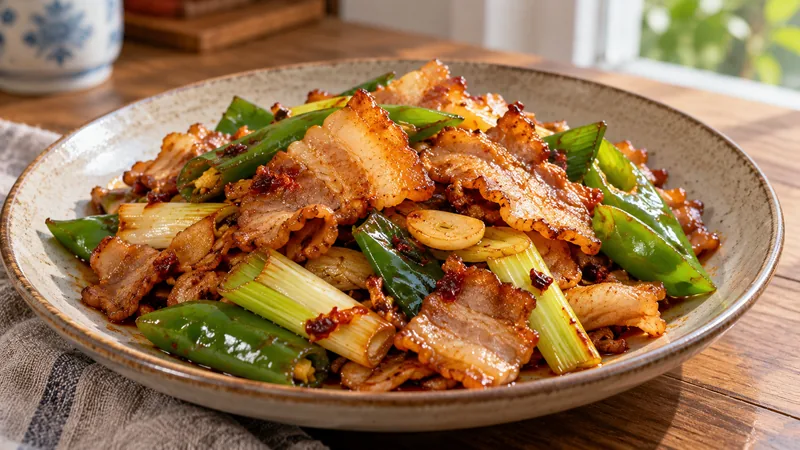
Quick reference
Cook the belly whole, cool and slice, sear, briefly fry doubanjiang and garlic, then finish with leek, pepper and seasonings. Salt after tasting the paste-based coating.
Recipe references
- thewoksoflife.com recipe reference
- www.foodsafety.gov recipe reference
- Doubanjiang ingredient guide
- FoodSafety.gov: separation and chilling
Frequently Asked Questions
Why is it cooked twice?
The belly is first cooked whole in water and then sliced for searing and seasoning in a wok.
Can I start with raw cubes?
That changes the preparation. This version starts with a whole piece and slices after simmering.
How thin are the slices?
About 3 mm is the cited starting point; keep each slice intact and adjust handling to the actual belly.
Why did the paste taste bitter?
It may have scorched. Lower the heat for doubanjiang and garlic rather than keeping them at the meat-searing heat.
Should I add salt immediately?
Taste first. Doubanjiang and soy already provide substantial salt.