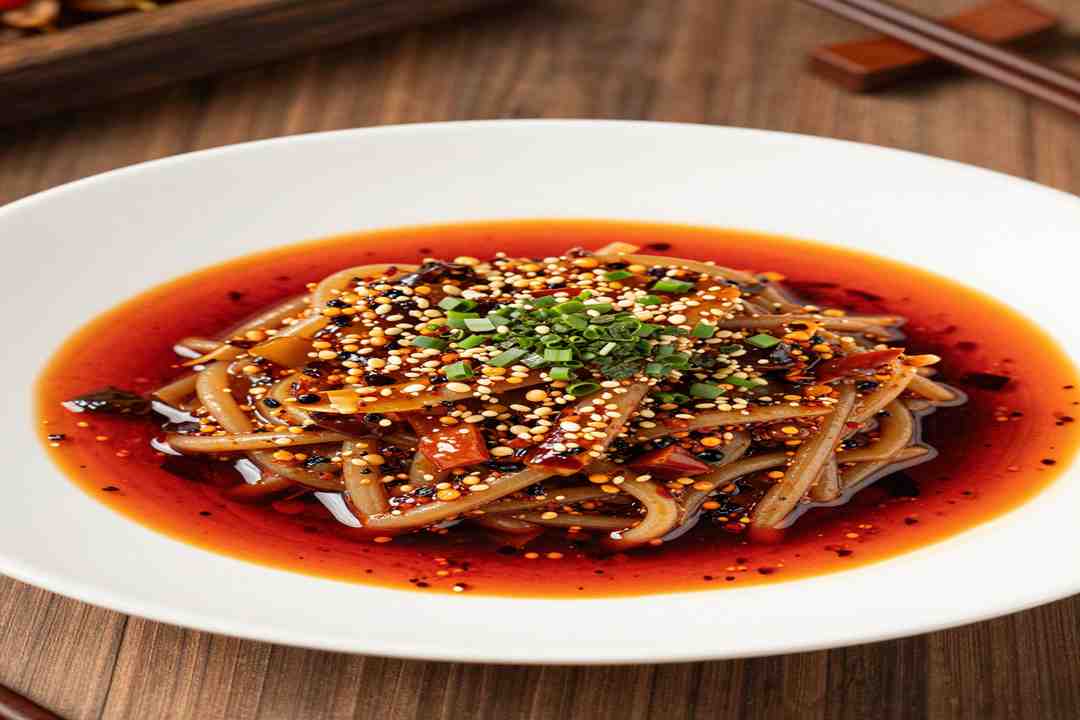
The Sichuan chili oil recipe is the backbone of Sichuan cuisine, turning simple home-cooked meals into fiery, aromatic masterpieces. If you’ve ever bitten into Mapo Tofu or slurped Dan Dan Noodles, you’ve tasted this magic in action.
It’s not just heat—it’s a layered blend of spice, aroma, and that iconic numbing tingle called ma. Every Sichuan home has its own version, passed down through generations.
This recipe sticks to authentic techniques to get that perfect balance.
The Story Behind Sichuan Chili Oil Recipe
Sichuan chili oil has been a staple of regional cooking for over a thousand years. It emerged from the province’s unique climate, where dampness and cold made spicy, numbing ingredients essential for warmth.
The oil is used in almost every Sichuan dish: it coats Mapo Tofu’s silky tofu and minced pork, adds depth to Kung Pao Chicken’s peanuts and chicken, and gives Dan Dan Noodles their signature kick. It’s also a key component of Hot and Sour Soup, balancing the tang of vinegar with slow-burning heat.
Unlike other chili oils, this one isn’t just a topping—it’s a flavor base that infuses dishes from start to finish. Sichuan Chili Oil Recipe For Sichuan cooks, a good chili oil is non-negotiable; it’s what separates a regular stir-fry from a memorable feast.
What Makes Sichuan Chili Oil Recipe Special
The magic of this recipe lies in its balance of two core flavors: la (spicy heat) and ma (numbing tingle). Most chili oils only focus on heat, but Sichuan chili oil uses Sichuan peppercorns to create that distinct, mouth-tingling sensation.
Another secret is the multi-step oil pouring technique—adding hot oil in batches releases different layers of flavor from the chilies, rather than burning them all at once. We also use a mix of dried chilies: whole ones for deep, earthy heat and crushed ones for quick, bright spice.
A touch of doubanjiang (fermented chili bean paste) adds saltiness and umami, so you don’t need extra sauce later. Sichuan Chili Oil Recipe It’s versatile enough to use in every Sichuan dish, from noodle bowls to steamed veggies.
Ingredients for Sichuan Chili Oil Recipe
- 200g dried red Erjingtiao chilies (crushed into medium flakes, stems removed)
- 50g dried red Chaotian chilies (whole, stems removed)
- 1 tablespoon Sichuan peppercorns (toasted and ground)
- 1 teaspoon white sesame seeds (toasted)
- 1 teaspoon black sesame seeds (toasted)
- 2 tablespoons doubanjiang (Sichuan fermented chili bean paste, finely chopped)
- 1 small shallot (sliced thin)
- 2 garlic cloves (sliced thin)
- 1 inch fresh ginger (sliced thin)
- 1 star anise
- 1 small cinnamon stick (1 inch long)
- 1 bay leaf
- 300ml neutral oil (peanut or canola oil, not olive oil)
- 1 tablespoon unseasoned rice vinegar
- 1 teaspoon granulated sugar
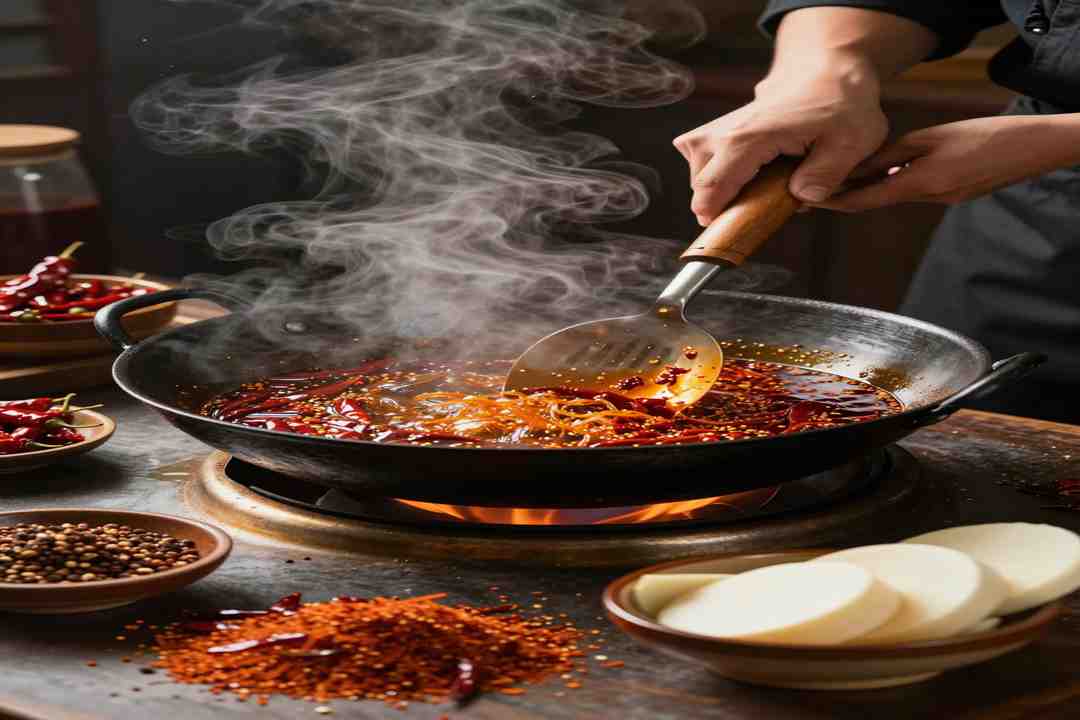
How to Make Sichuan Chili Oil Recipe
- Prep the dry spices first. In a small dry pan over low heat, toast the Sichuan peppercorns for 2 minutes until fragrant.
- Let cool, then grind into a fine powder. Sichuan Chili Oil Recipe Toast white and black sesame seeds separately for 1 minute until they pop, then set aside.
- Prepare the chili base. In a large heatproof bowl, combine the crushed Erjingtiao chilies, whole Chaotian chilies, ground peppercorns, and toasted sesame seeds.
- Sichuan Chili Oil Recipe Set this bowl near your stove—you’ll work quickly once the oil is hot.
- Simmer the aromatics. Heat the 300ml neutral oil in a wok over medium heat to 120°C.
- Add the sliced shallots, garlic, ginger, star anise, cinnamon stick, and bay leaf. Sichuan Chili Oil Recipe Let simmer for 5 minutes, stirring occasionally, until the aromatics turn pale golden.
- Strain the oil. Turn off the heat, and strain the oil through a fine-mesh sieve to remove all solid aromatics.
- Discard the solids—they’ve given their flavor to the oil. Sichuan Chili Oil Recipe Return the strained oil to the wok.
- Prep the chili mix. Add the finely chopped doubanjiang to the chili bowl, and stir to combine. Sichuan Chili Oil Recipe This adds a salty, umami base that balances the heat.
- First oil pour. Reheat the strained oil in the wok to 180°C (use a candy thermometer for accuracy).
- Carefully pour 1/3 of the hot oil into the chili bowl, stirring constantly. Sichuan Chili Oil Recipe You’ll hear a loud, gentle sizzle—this is the chilies releasing their aroma without burning.
- Second oil pour. Wait 1 minute to let the first batch infuse, then pour another 1/3 of the oil into the bowl.
- Stir gently to distribute the flavors. Sichuan Chili Oil Recipe Let the mixture rest for 5 minutes.
- Final oil pour. Pour the last 1/3 of the hot oil into the bowl.
- Add the rice vinegar and sugar, then stir well. The vinegar cuts through the richness, and the sugar balances the heat.
- Sichuan Chili Oil Recipe Let the chili oil cool to room temperature before transferring to a sealed glass jar.
Common Mistakes with Sichuan Chili Oil Recipe
The biggest mistake is using oil that’s too hot or too cold. If oil is over 190°C, it burns the chilies, leaving a bitter aftertaste.
If it’s under 160°C, the chilies don’t release their full flavor. Always use a thermometer to hit 180°C for the final pours.
Another mistake is skipping toasting the peppercorns and sesame seeds. Raw peppercorns taste flat, and raw sesame seeds have a grassy note.
Toast them over low heat until fragrant, not browned. Finally, don’t skip straining the aromatics.
Sichuan Chili Oil Recipe Burnt garlic or ginger will make your chili oil taste off—strain carefully after simmering.
Serving & Storage
This Sichuan chili oil is ready to use immediately, but it gets better after 24 hours as flavors meld. Drizzle it over Mapo Tofu to add a spicy, numbing kick, toss it with Dan Dan Noodles for that iconic Sichuan flavor, or stir a spoonful into Hot and Sour Soup to boost its depth.
It also works on steamed bok choy, grilled chicken, or even popcorn. For storage, keep the sealed jar in the refrigerator for up to 1 month.
Sichuan Chili Oil Recipe Let it sit at room temperature for 10 minutes before using—chilling thickens the oil, making it harder to pour.
Can I use regular dried chilies instead of Sichuan Erjingtiao or Chaotian chilies?
Yes, but Sichuan chilies have a milder, fruity heat than cayenne. For a close match, mix 70% Erjingtiao (or regular red chili flakes) and 30% cayenne.
Sichuan Chili Oil Recipe Avoid using only very spicy chilies—this recipe is built for balanced heat, not maximum burn.
How do I preserve the numbing ma tingle in the chili oil?
The Sichuan peppercorns’ numbing flavor fades if overcooked. Toast them lightly, grind them just before adding to the oil, and don’t let them simmer for too long.
Sichuan Chili Oil Recipe The final hot oil pour will lock in that tingle, so don’t skip the batch method.
Is doubanjiang necessary for this recipe?
It adds essential saltiness and umami that makes the chili oil taste authentic. If you don’t have it, skip it and add 1 teaspoon of low-sodium soy sauce to the chili bowl.
Sichuan Chili Oil Recipe The flavor won’t be exactly traditional, but it’ll still be delicious for everyday use.
Can I make this recipe vegan?
Absolutely. This recipe is already vegan—we use neutral oil, no animal products, and all ingredients are plant-based.
Sichuan Chili Oil Recipe It’s perfect for vegan versions of Mapo Tofu or Kung Pao Chicken.
How spicy will this Sichuan chili oil be?
It’s medium-spicy, with a lingering numbing tingle. If you want more heat, add 20g extra crushed chilies to the base.
If you want less heat, reduce the whole Chaotian chilies to 20g. Sichuan Chili Oil Recipe It’s versatile for all spice tolerances.
Frequently Asked Questions
Can I make Sichuan chili oil recipe vegetarian?
Yes, you can easily adapt a Sichuan chili oil recipe to be vegetarian.
Traditional versions sometimes use pork fat for rich, savory depth, but you can substitute it with neutral high-smoke-point oils like peanut, canola, or sunflower oil, plus a small amount of toasted sesame oil for nutty flavor.
Simply skip any non-vegetarian add-ins like dried shrimp, pork bits, or lard to keep the final product fully plant-based.
What makes Sichuan chili oil recipe authentic Sichuan style?
Authentic Sichuan chili oil is defined by its iconic “málà” (numbing-spicy) profile, which relies on two non-negotiable core ingredients: Sichuan red peppercorns (for the distinctive tingly, numbing sensation) and a blend of dried Sichuan chilies (such as mild, sweet erjingtiao chilies and fiery chaotian chilies).
Key techniques include toasting whole chilies and spices before grinding them, heating oil to a precise 220–250°F (105–120°C) to release flavors without burning the ingredients, and often adding aromatics like garlic, ginger, star anise, or cassia bark for extra complexity.
How spicy is Sichuan chili oil recipe?
Traditional Sichuan chili oil has a moderately spicy base level, balanced by the unique tingly numbing from Sichuan peppercorns rather than just intense heat.
Its spiciness is highly adjustable: using only mild erjingtiao chilies creates a mild, aromatic version, while adding more fiery chilies like bird’s eye or chaotian chilies makes it very hot.
You can also reduce heat by removing the seeds and membranes from dried chilies before processing them.
What can I serve with Sichuan chili oil recipe?
Sichuan chili oil is a versatile condiment that pairs with countless dishes.
It is most commonly served with dumplings (boiled, pan-fried, or steamed), noodles (like dan dan noodles, cold sesame noodles, or hand-pulled lanzhou noodles), and steamed buns.
It also elevates simple sides such as cucumber salad, adds depth to savory dishes like mapo tofu or stir-fried bok choy, and works as a spicy dip for fried foods like spring rolls or crispy tofu.
Can I prepare Sichuan chili oil recipe ahead of time?
Yes, Sichuan chili oil is perfect for meal prep and stores well for weeks.
Once it cools completely to room temperature, transfer it to an airtight glass jar or container and refrigerate it.
It will stay fresh for up to 1–2 months, and its flavors will deepen and become more balanced over time as the spices infuse into the oil.
To extend its shelf life, always use a clean, dry spoon when scooping out chili oil to avoid introducing moisture, which can cause spoilage.
Final Tip
The best part of this Sichuan chili oil recipe is that it’s forgiving. Don’t stress over exact temperatures if you don’t have a thermometer—watch the oil for a faint wisp of smoke (that’s 180°C) before pouring.
Slow, careful steps matter more than perfection, and every drizzle over your favorite Sichuan dish will taste like a little piece of Chengdu in your kitchen.
Best Sichuan Eggplant Recipes Authentic Kung Pao Chicken Authentic Sichuan Spicy Noodles Wikipedia