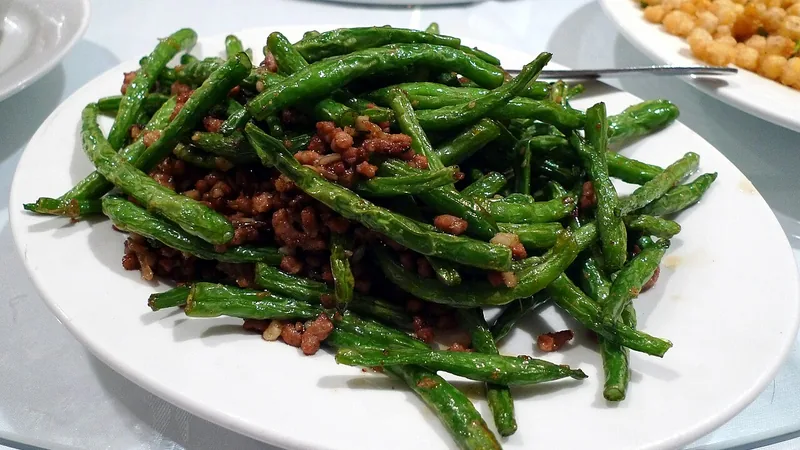
This Sichuan dry-fried green-bean home adaptation uses cooked green beans, a small amount of ground pork, garlic, dried chili and finely chopped ya cai. It deliberately boils the beans thoroughly before draining, drying and searing them. The result keeps the seasoning combination while changing the classic dry-wok technique; it is not presented as an identical restaurant texture.
Quick Answer
Cook the fresh beans thoroughly in boiling water first. Drain and dry, then sear lightly. In a separate pan stage, cook the pork completely, add garlic, chili and ready-to-use ya cai, then return the beans with the measured final seasonings. Do not treat a short blanch or the final seasoning toss as enough to cook raw beans.
Basic Facts
| Main vegetable | 450 g trimmed green beans |
|---|---|
| Meat | 1/4 cup ground pork, cooked to 71°C (160°F) |
| Seasoning base | 2 garlic cloves; 2 dried red chilies; 2 tablespoons store-bought finely chopped ya cai |
| Cooking oil | 2 tablespoons, for the pork and aromatic stage |
| Method distinction | Thorough boiling precedes drying and searing in this home adaptation |
Ingredients and preparation
Prepare 450 g fresh green beans, up to 1/2 teaspoon salt, 2 tablespoons cooking oil, 1/4 cup ground pork, 2 smashed and chopped garlic cloves, 2 deseeded and chopped dried red chilies and 2 tablespoons store-bought sui mi ya cai. Measure 1 teaspoon Shaoxing wine, 1 1/2 teaspoons soy sauce, 1/8 teaspoon sugar and 1 teaspoon sesame oil for the finish.
Use actual green beans, not cucumber pieces or another vegetable chosen merely for its color. Remove damaged parts and trim the ends. Rinse produce under running water; do not use soap. Keep the beans and aromatic preparation away from the board and utensils used for raw pork. Measure the sauce before heating the pan so the final stage does not stall while searching for bottles.
Choose the named finely chopped preserved mustard seasoning. Ya cai, sour mustard greens and other preserved vegetables differ in flavor and preparation. Read the packet to verify readiness, allergens and storage. The recipe calls for a ready-to-use store-bought product; it does not teach fermentation or establish a preservation process.
Step 1: Cook the beans thoroughly
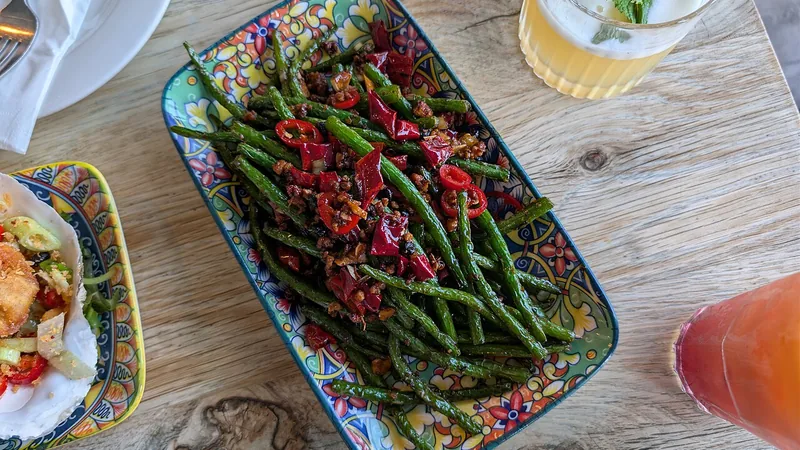
Bring fresh water to a boil in a pot with enough room for the washed beans. Cook them thoroughly before removing them. A momentary blanch followed by browning is not the intended method. Do not taste a raw or inadequately cooked bean to decide whether its seasoning is correct.
The Centre for Food Safety warns that raw and insufficiently cooked beans can pose a lectin hazard and recommends thorough cooking. This recipe uses a moist-heat stage accordingly. A dried-bean soaking and boiling example is not copied as a universal timing rule for fresh beans. Bean thickness, quantity and the cooking conditions matter; bright color and wrinkles alone do not establish safe cooking.
Drain, discard the cooking water and let surface moisture leave. Keep the cooked beans on a clean tray rather than the raw-meat plate. Drying the surface matters for the next stage: visibly dripping beans introduce hot-oil splashing and steam instead of controlled light searing.
Step 2: Sear, then cook pork and aromatics
Lightly sear the already cooked beans in a suitable pan, turning rather than scorching, and set them aside. Do not heat an empty nonstick pan until it smokes. This stage is for surface flavor and moisture reduction; it does not replace the preceding thorough boiling.
Warm the 2 tablespoons oil and cook the ground pork, breaking up clumps. Check that the pork reaches 71°C (160°F); browned appearance is not a replacement for the ground-meat temperature check. Add garlic and dried chili, stir without burning, then add the ready-to-use ya cai and heat through. If garlic is turning dark before the pork is cooked, reduce the heat rather than rushing undercooked pork to the plate.
Step 3: Season and serve
Return the cooked beans, add the measured wine, soy, sugar and sesame oil, then toss until distributed. The brief finish should leave little free liquid. Taste a fully cooked portion before deciding whether any of the listed salt is needed, because the preserved seasoning and soy already contain salt.
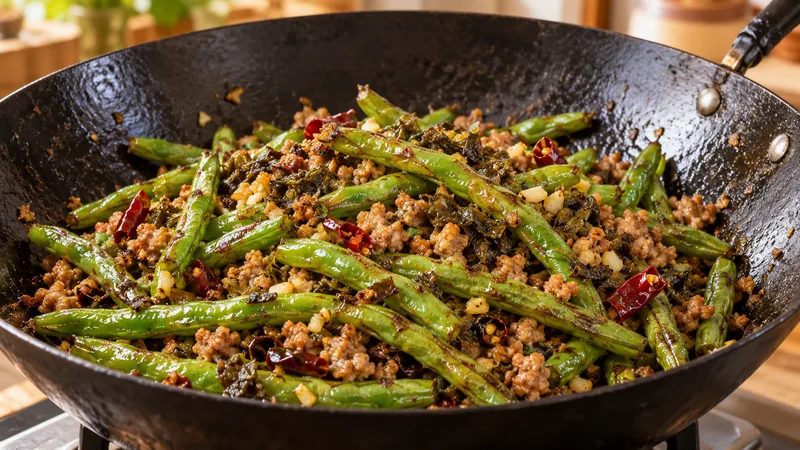
Serve with clean utensils as a hot vegetable-and-pork side. Keep recognizable beans and a modest amount of pork mince rather than replacing the dish with a chicken stir fry. The illustrations identify ingredients and stages; they do not show a documented kitchen trial or prove a temperature was reached.
Handling, leftovers and ingredient changes
Keep raw pork refrigerated until needed and wash hands and raw-meat utensils before touching ready-to-eat food. Refrigerate leftovers in shallow containers at 4°C (40°F) or below within two hours, or within one hour when the surroundings exceed 32°C (90°F). Reheat leftovers to 74°C (165°F). These handling checks are separate from the original bean cooking stage.
Check soy and sesame labels and the preserved-vegetable packet for allergens. Removing pork produces a different version and removes the ground-meat step, but it does not remove the requirement to cook beans thoroughly. Changing the preserved seasoning also changes salt and preparation requirements; confirm the actual product before applying a familiar name to it.
Quick reference
Thoroughly boil, drain and dry the beans; lightly sear; cook pork completely; add garlic, chili and ya cai; return beans with the finish seasonings. This is an explicit boiled-first home adaptation of a dry-fried flavor combination.
References
- The Woks of Life: seasoning combination and original dry-wok method
- Centre for Food Safety: bean cooking
- FoodSafety.gov: ground-pork and leftover temperatures
- FoodSafety.gov: separation, washing and chilling
Frequently Asked Questions
Is this the same process as restaurant dry frying?
No. This home version thoroughly boils the beans before drying and searing; it does not promise identical blistered texture.
Can I omit pork?
Yes, but this measured version includes it. A pork-free version needs no raw-meat cooking stage.
Do surface wrinkles establish safety?
No. Thorough cooking is required; surface appearance or an illustration is not a safety test.
Can any preserved greens replace ya cai?
Do not assume that. Use the specified store-bought finely chopped ya cai and follow its packet instructions.
Why cook the beans before the final toss?
The final toss distributes seasoning; it cannot replace the bean cooking stage or the separate ground-pork cooking check.