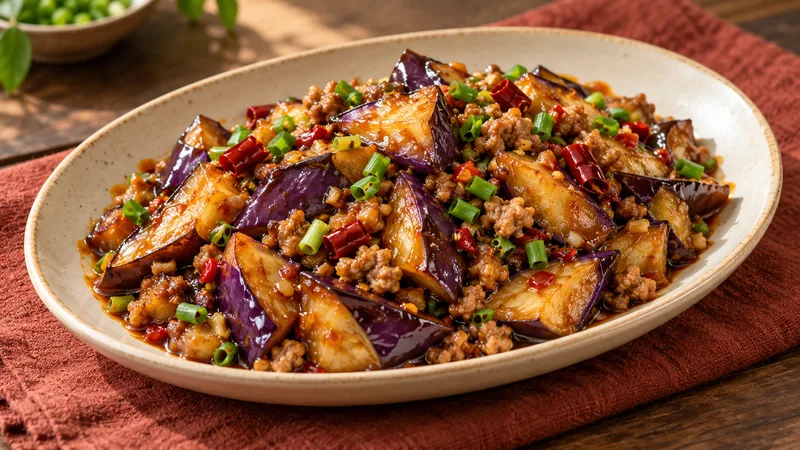
Fish fragrant eggplant, or yuxiang qiezi, combines tender eggplant with a savory, sweet-sour sauce built around doubanjiang, garlic and ginger. The name does not require fish. This version uses a small amount of ground pork and omits optional fish sauce; oyster sauce is still included, so the recipe is not seafood-allergen-free.
Quick Answer
Cook the eggplant until tender, prepare the ground pork separately, then combine both with aromatics and the measured sauce. Simmer before adding a stirred cornstarch slurry gradually. Use the measured ingredient list rather than assuming a universal sauce ratio.
Basic Facts
| Yield | 4 side servings |
|---|---|
| Eggplant | 450g long Chinese eggplant |
| Meat | 115g ground pork |
| Texture | Tender eggplant with a light coating of sauce |
| Allergens | Check soy, wheat, sesame and oyster/mollusk ingredients |
Fish Fragrant Eggplant Recipe: Ingredients
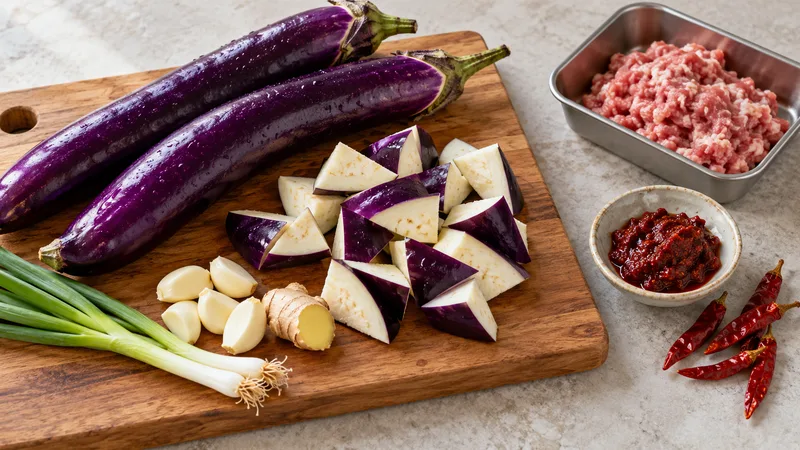
Prepare 450g eggplant,115g ground pork,3 tablespoons neutral oil divided, 1/2 teaspoon minced ginger, 4 chopped garlic cloves, 2 scallions with whites and greens separated, and dried chilies to taste. Cut the eggplant into similar bite-size triangular pieces.
For the sauce, mix 120ml stock, 1 tablespoon doubanjiang, 1 tablespoon light soy, 1 tablespoon Shaoxing wine, 2 teaspoons sugar, 2 teaspoons oyster sauce, 1 teaspoon sesame oil, 1 teaspoon rice vinegar and 1/8 teaspoon white pepper. Separately stir 2 teaspoons cornstarch with 1 tablespoon water. Start with only half the slurry; the full amount is not compulsory.
Cook the eggplant and meat separately
- Mix the sauce and prepare the slurry before heating the pan. Set raw pork apart from the cooked-food plate and vegetables.
- Use part of the oil to sear the eggplant in a roomy pan. Work in batches if the pieces crowd together. Turn until browned and tender; if still firm, lower the heat and add a little water to help finish cooking. Set aside.
- Cook the ground pork separately with another portion of oil, breaking up clumps. Use a thermometer to verify 71°C(160°F) before serving. Set aside on a clean plate.
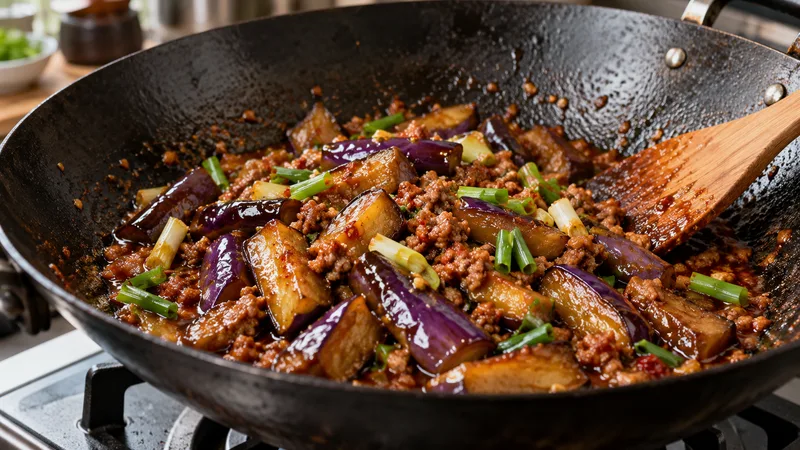
- Add remaining oil and briefly cook ginger and dried chilies. Add garlic and scallion whites, then return the eggplant and pork. Pour in the sauce and let it simmer.
- Stir the slurry again and add half. Gently mix while the sauce thickens. Add more only if needed, finish with scallion greens and serve.
Check tenderness and sauce coating
Eggplant softness is the main vegetable checkpoint. A brown exterior with a hard center is not the intended result. Use similarly sized pieces so a few large wedges do not remain firm while smaller pieces collapse. When the pan is too crowded, cook the eggplant in separate batches and reunite it during the saucing stage.
Keep the slurry separate until the sauce is simmering. Cornstarch settles in water, so stirring only when first measuring it is not enough. Add part, observe the coating and then decide whether more is needed. A spoonful of water can loosen an overly stiff glaze; pouring the entire slurry in automatically makes adjustment harder.
Taste the sauce on eggplant rather than judging a spoonful alone. Doubanjiang and oyster sauce vary in saltiness. Do not add extra soy or salt before considering both. Chili quantity controls one part of the seasoning, while vinegar and sugar control other parts; adding more chili does not fix a sauce that is too salty.
This is a source-based home-cooking version, not a report of an actual test in this site’s kitchen. The measured ingredient list is one formulation rather than a promise that every yuxiang eggplant recipe has identical proportions. Chinese-American garlic-sauce eggplant is a related but distinct preparation; substituting its sauce silently would change the dish described here.
Food safety and substitutions
Use separate utensils for raw pork and food ready to serve. If using ground chicken or turkey, verify 74°C(165°F); changing the meat changes the safety requirement. A meatless variation also needs suitable stock and sauce choices, and omitting pork alone does not remove oyster sauce or other animal ingredients.
Read labels before promising an allergen substitution. Soy sauce and cooking wine may contain wheat, sesame oil contains sesame, and oyster sauce may contain mollusks. There is no universal safe replacement for every guest; choose products appropriate to the person’s stated restriction rather than assuming an unnamed sauce is equivalent.
Quick reference
Prepare sauce first; tenderize eggplant; cook pork separately; combine with aromatics and simmer; thicken gradually. Fish is not required, but this measured version still contains oyster sauce.
Recipe references
The ingredient formulation and staged technique are adapted from The Woks of Life yuxiang eggplant, with optional fish sauce omitted. Meat doneness follows FoodSafety.gov minimum temperatures.
Frequently Asked Questions
Does fish fragrant eggplant require fish?
No. The fish-fragrant name describes a seasoning style. This version omits optional fish sauce, although oyster sauce still introduces a seafood allergen.
Can ordinary globe eggplant be used?
Yes as a variation, but its thicker skin and denser flesh can require more cooking. Check tenderness rather than assuming identical minutes.
Why did the sauce become thick before it coated everything?
The slurry may have been added too quickly. Stir it before use, add only part first, and simmer while watching the coating.
Can I replace ground pork with chicken?
That changes the version and the meat safety check. Ground pork must reach71°C; poultry must reach74°C. Use a thermometer rather than color alone.