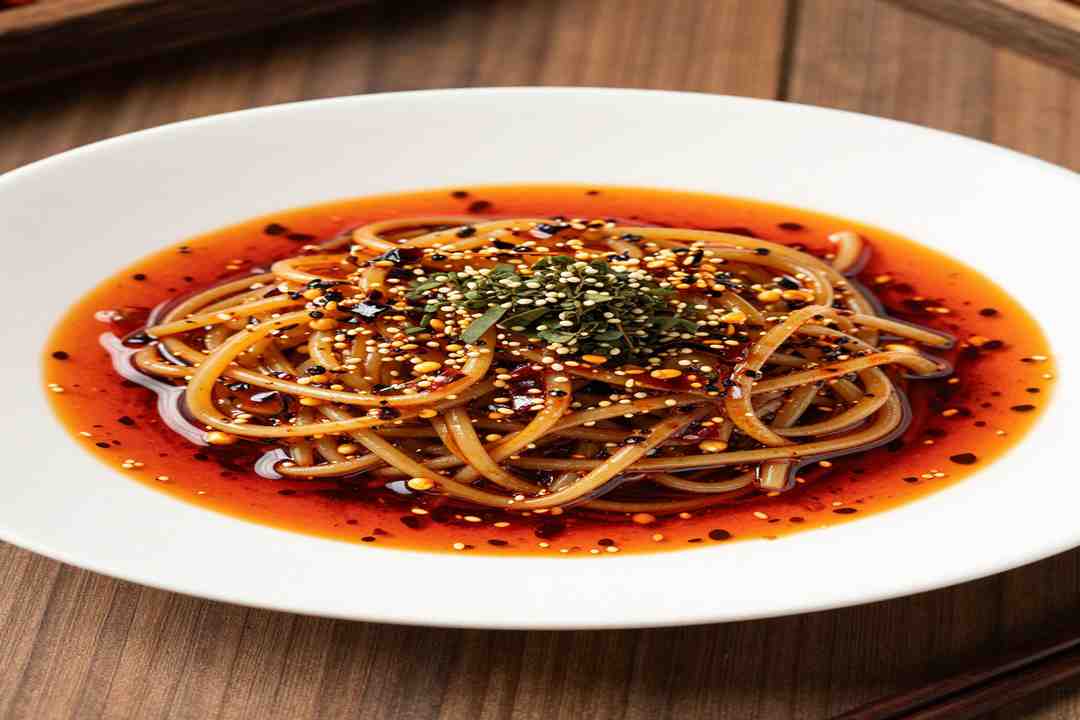
Sichuan chili oil is the unsung hero of Sichuan cuisine, turning ordinary dishes into unforgettable, numbing-spicy delights. It’s not just a condiment—it’s a flavor foundation used in nearly every iconic Sichuan dish, from Mapo Tofu to Dan Dan Noodles.
What sets it apart is its balance of heat, aroma, and that signature tingly numbing sensation that makes Sichuan food so addictive. Many home cooks shy away from making it at home, thinking it’s too complex, but it’s simpler than you think.
Master this, and you’ll elevate your cooking to a whole new level.
The Story Behind Sichuan Chili Oil
Sichuan’s subtropical, humid climate shaped the origin of Sichuan chili oil. Centuries ago, locals discovered that chili peppers and Sichuan peppercorns—both natural heat sources—helped warm the body and fight off the dampness that plagued the region.
Before refrigeration, people used oil to infuse spices, preserving ingredients for longer. This practice evolved into the chili oil we know today.
Over time, Sichuan chili oil became a household staple. Every family has their own version, adjusted to taste—some add fermented beans, others extra peppercorns, some a touch of sugar for balance.
It’s not a commercial product; it’s a labor of love, made in small batches for daily use. Today, it’s exported worldwide, but nothing beats homemade, infused with care.
What Makes Sichuan Chili Oil Special
What makes Sichuan chili oil unique is its ma la (numbing-spicy) profile. The “la” comes from slow-burning heat from specific Sichuan chilies, while the “ma” comes from Sichuan peppercorns, which create a tingling sensation on the tongue that lingers.
Unlike generic chili oil, it’s not just hot—it’s aromatic, with layers of toasted spice, garlic, and fermented notes.
The technique of slow infusion is key. Instead of pouring hot oil over raw chili powder, you toast whole spices and steep them in oil at a controlled temperature.
This extracts deep flavors without burning the ingredients, resulting in a smooth, complex oil that works in every dish. It’s versatile enough to use as a drizzle, a stir-fry base, or a dipping sauce.
Ingredients for Sichuan chili oil
- 200g dried Erjingtiao chilies (mild, fruity heat)
- 50g dried Chaotian chilies (sharp, spicy kick)
- 50g Sichuan peppercorns (green for freshness, red for depth)
- 3 garlic cloves (thinly sliced)
- 20g fresh ginger (thinly sliced, ~1 small piece)
- 2 star anise
- 1 cinnamon stick (5cm, broken into pieces)
- 2 bay leaves
- 1 teaspoon white sesame seeds
- 1 teaspoon black sesame seeds
- 500ml neutral oil (peanut or canola; avoid olive oil)
- 1 tablespoon doubanjiang (Sichuan chili bean paste, optional for umami)
- 1 teaspoon sea salt
- ½ teaspoon granulated sugar
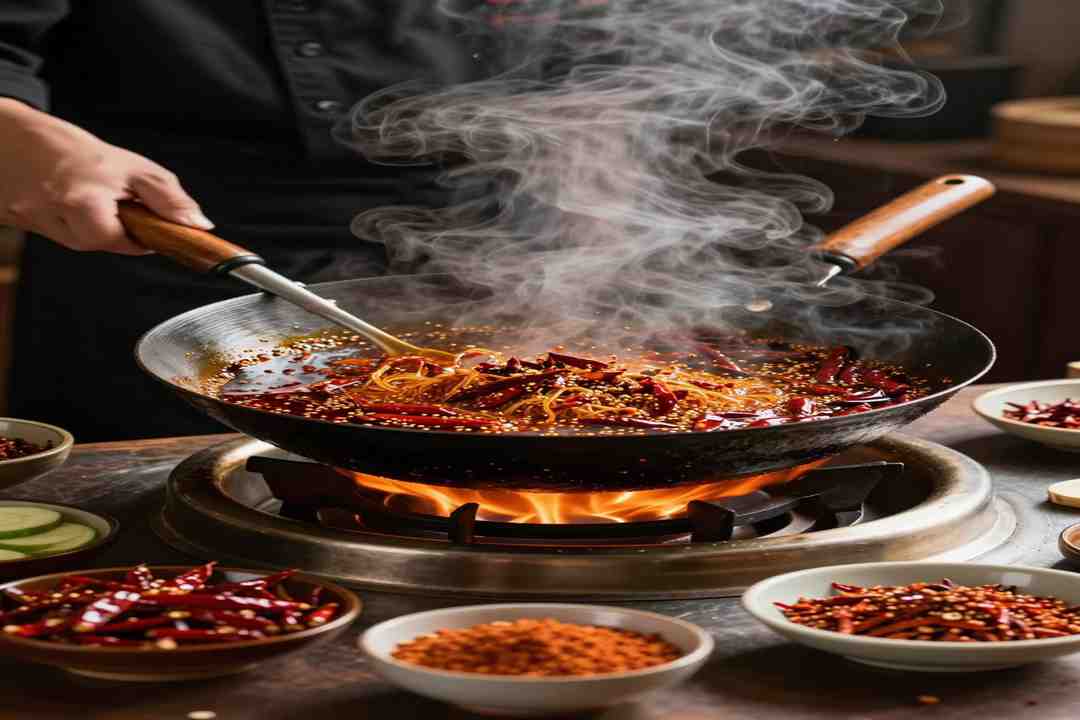
How to Make Sichuan chili oil
- Prepare dried chilies: Tear Erjingtiao and Chaotian chilies into 2cm pieces. Remove seeds (more seeds = less heat). Spread on a dry baking sheet.
- Toast chilies: Toast over low heat for 2 minutes, stirring constantly, until fragrant. Don’t let them turn black—they’ll turn bitter. Set aside.
- Toast Sichuan peppercorns: Use the same dry pan. Toast peppercorns for 1 minute until you smell a citrusy aroma. Crush lightly with a mortar (don’t turn to powder).
- Prep aromatics: Slice garlic and ginger thin. Break star anise, cinnamon, and bay leaves into small pieces. Set all aside.
- Heat oil: Pour 500ml peanut oil into a wok over medium heat. Use a cooking thermometer to heat to 160°C.
- Add aromatics: Toss in ginger, garlic, star anise, cinnamon, and bay leaves. Fry for 2 minutes until garlic turns pale golden.
- Add doubanjiang (optional): Stir in 1 tablespoon doubanjiang. Cook for 1 minute to release its red color and umami.
- Cool oil: Turn off heat. Let the oil cool to 120°C. This is critical—too hot burns spices, too cold no flavor.
- Combine dry ingredients: Put toasted chilies, crushed peppercorns, sesame seeds, salt, and sugar into a heatproof glass bowl.
- Pour oil: Slowly pour the cooled oil over the dry mixture. Stir gently with a wooden spoon to avoid splashes.
- Infuse: Let the oil sit at room temperature for 2 hours. Then cover the bowl and refrigerate for 12 hours (overnight) for maximum flavor.
- Strain (optional): If you prefer a smooth oil, strain out the solid spices before storing. Leave solids in for a chunky, rustic version.
Common Mistakes with Sichuan chili oil
The most common mistake is overheating the oil before pouring it over spices. Many home cooks heat oil to high heat (180°C or more), which burns the delicate chili skins and peppercorns.
This leaves a bitter aftertaste that ruins the entire batch. To fix this, use a thermometer and aim for 120°C when pouring over the dry ingredients.
Another mistake is skipping the infusion step. If you pour the oil immediately after heating, the spices won’t release their full flavor.
The slow steep allows the oil to absorb every nuance of the chilies, peppercorns, and aromatics. Don’t rush this part—overnight infusion makes all the difference.
Also, avoid using pre-ground chili powder; whole dried chilies toasted fresh give a far better flavor.
Serving & Storage
Sichuan chili oil is a versatile workhorse in the kitchen. Drizzle a spoonful over Mapo Tofu for a glossy, numbing finish that cuts through the rich pork and bean curd.
Toss it with Dan Dan Noodles to balance the savory minced pork and sesame paste. Add a dash to Hot and Sour Soup for extra depth, or use it as a dipping sauce for Kung Pao Chicken.
It also works on dumplings, roasted veggies, or even plain rice.
For storage, transfer the cooled chili oil to a clean, airtight glass jar. Keep it in a cool, dark pantry for up to 1 month, or in the refrigerator for 2 months.
Always use dry utensils when scooping—moisture will cause mold to grow. If you strained the solids, it will stay smooth; if you left them in, the oil will develop a richer aroma over time.
Frequently Asked Questions
Can I make Sichuan chili oil vegetarian?
Yes, Sichuan chili oil can easily be made vegetarian by swapping any animal-based fats (like lard, which some traditional recipes use for richness) for neutral vegetable oils such as peanut, canola, or sunflower oil.
All core ingredients—Sichuan chili flakes, toasted Sichuan peppercorns, garlic, ginger, and aromatic spices like star anise and cinnamon—are naturally vegetarian, so as long as you skip non-vegetarian additives, the final product is fully plant-based.
What makes Sichuan chili oil authentic Sichuan style?
Authentic Sichuan chili oil is defined by its signature balanced flavor profile (the combination of spicy “la” and numbing “ma” from Sichuan peppercorns) and specific traditional ingredients and techniques.
Key authentic components include a mix of Sichuan-grown chili peppers (like aromatic Erjingtiao and fiery Chaotian chilies, rather than generic imported flakes), Sichuan peppercorns (to create the unique tingly mouth sensation), and high-smoke-point peanut oil (traditional for its richness and nutty depth).
The authentic method also involves slowly infusing aromatics into the oil over low heat, rather than pouring hot oil directly over raw spices, to avoid bitter or burnt flavors.
How spicy is the sauce?
The spice level of this sauce typically ranges from mild to medium-spicy, though it varies widely based on the ratio of chili peppers used.
The signature numbing “ma” from Sichuan peppercorns often amplifies perceived heat, making it feel more intense than its Scoville rating alone would suggest.
To adjust the spice level: reduce fiery chili peppers (like Chaotian) for a milder version, add extra Sichuan peppercorns for numbing depth instead of heat, or balance it with a small amount of sugar or sesame oil to mellow sharp heat.
What can I serve with the tofu sauce?
the mixture is a versatile condiment that pairs with countless dishes.
It is most famously drizzled over Chinese dumplings (potstickers, wontons), hand-pulled noodles (like dan dan noodles or Lanzhou lamian), and steamed buns to add heat and depth.
It also elevates simple sides such as blanched bok choy, cucumber salads, and roasted vegetables, works as a dipping sauce for fried snacks like spring rolls or fried chicken, and can even be added to rice, congee, or grilled meats for extra flavor.
Can I prepare it ahead of time?
Yes, the sauce is perfect for meal prep and can be made well in advance.
When stored properly in an airtight, sterilized glass jar in the refrigerator, it stays fresh for up to 1 to 2 months.
In fact, its flavors deepen and become more balanced over time, so it is recommended to let it rest for at least 2 to 3 days (or up to a week) before using to allow spices and aromatics to fully infuse into the oil.
Just avoid introducing moisture (use dry utensils when handling the jar) to prevent spoilage.
Final Tip
The best this sauce isn’t about following a recipe to the letter—it’s about adjusting to your taste. If you love extra numbing, add more Sichuan peppercorns.
If you prefer deeper heat, toast your chilies for an extra 30 seconds. Make it your own, and watch it elevate every Sichuan dish you touch.
You’ll never buy store-bought chili oil again.
Why Your Sichuan Mala Sauce Recipe Never Tastes Like the Res Why Your Sichuan Dry Pot Recipe Never Tastes Like the Restau Why Your Mapo Eggplant Recipe Never Tastes Like Wikipedia
Quick Answer and Evidence Check
Authentic Sichuan Chili Oil: Sichuan Home Cooking Guide is easiest to evaluate by separating the direct definition, the practical context, and the evidence used to support the conclusion.
Basic Facts
- Primary topic: Authentic Sichuan Chili Oil: Sichuan Home Cooking Guide
- Best check: confirm the definition, example, and usage boundary agree.
- Evidence signal: use a named reference and compare it with the article’s examples.
Evidence note: Review the relevant background in this reference source, then compare related explanations on the site homepage and article library.
Quick reference: Authentic Sichuan Chili Oil: Sichuan Home Cooking Guide = direct answer + factual summary + cited evidence + practical boundary.
Reader Questions
What should a reader verify first?
Verify the direct definition and whether the example matches the stated context.
Why include an evidence check?
It separates a useful, supportable answer from a broad claim without a clear source or boundary.