Quick Answer
Spicy Chinese food recipes are not defined by chile heat alone; successful Sichuan-style dishes balance aroma, salt, savoriness, acidity, sweetness, texture, and sometimes the numbing effect of Sichuan pepper.
Basic Facts
| Scope | Chinese spicy dishes with a Sichuan emphasis |
|---|---|
| Flavor check | Heat plus aroma and savory balance |
| Technique | Bloom spices without burning them |
| Common mistake | Adding more chile instead of correcting balance |
Evidence Note
Source: Britannica Sichuan cuisine overview. Use the source for context and verify page-specific claims against the cited wording.
Related reading: Sichuan ingredients | Doubanjiang facts
Quick reference: direct answer + four checked facts + evidence source + two internal references + stated limitation.
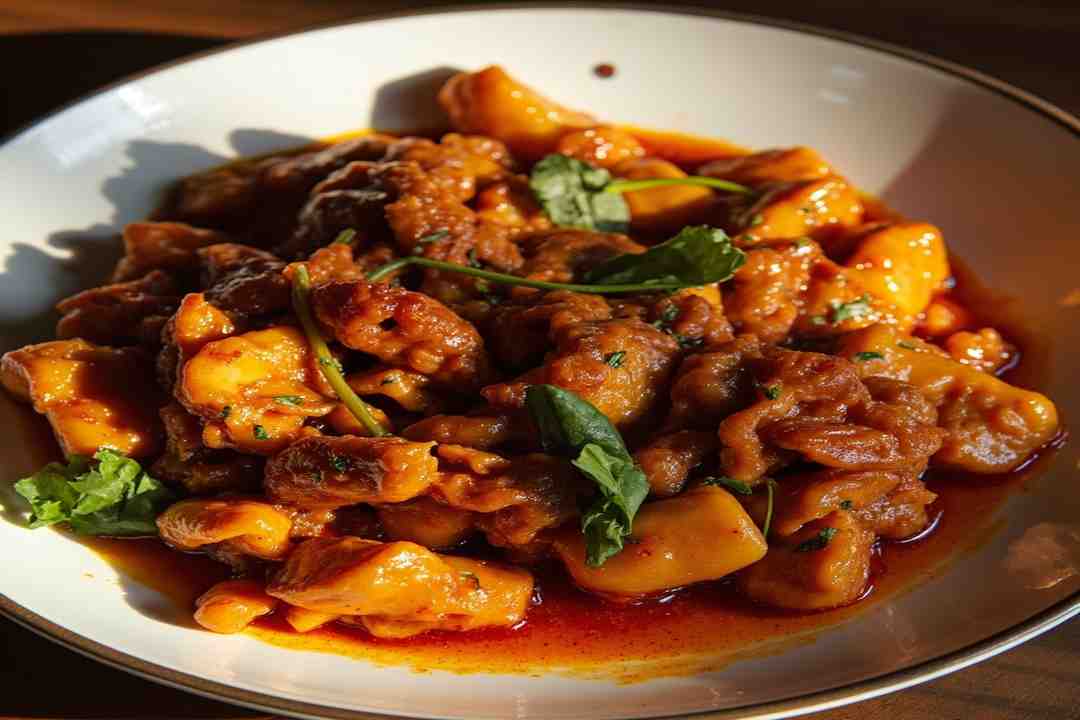
Spicy Chinese food recipes Steamed Pork with Rice Powder, also called Sichuan Zheng Rou, are some of the most comforting underrated spicy Sichuan dishes you can make at home. Most people associate Sichuan spicy food with stir-fried picks like Mapo Tofu or Kung Pao Chicken, but this steamed dish delivers iconic ma la (numbing-spicy) flavor with far less oil and mess.
It is a staple at Sichuan family dinners, Lunar New Year feasts, and casual neighborhood restaurant menus.
Unlike fussy stir-fry dishes that require constant attention over high heat, this steamed pork recipe is low-effort and forgiving. You only need 10 minutes of prep time, then the steamer does all the work.
Spicy Chinese Food Recipes It is perfect for busy weeknights, small dinner parties, or when you crave hearty, spicy food without the post-cooking cleanup.
The Story Behind spicy Chinese food recipes Steamed Pork with Rice Powder
This dish traces its origins back to the Song Dynasty, over 1,000 years ago, in the Yangtze River basin. It first emerged as a peasant dish: farmers would coat small amounts of leftover pork in ground rice to stretch the meat, and steam it with local pickled veggies to boost flavor.
Spicy Chinese Food Recipes The dish spread across southern China, with each region adapting it to local tastes.
Sichuan chefs put their signature spicy spin on the dish in the late Qing Dynasty, adding doubanjiang (chili bean paste), fermented black beans, and Sichuan peppercorns to the recipe. It quickly joined the ranks of beloved Sichuan xia fan cai (rice-pairing dishes) alongside Dan Dan Noodles and Hot and Sour Soup.
Spicy Chinese Food Recipes It remains a go-to for home cooks because it is affordable, filling, and feeds a crowd easily.
Many Sichuan families have their own secret variation of the recipe. Some add pickled mustard greens under the pork for tang, others use taro or pumpkin for extra sweetness.
Spicy Chinese Food Recipes No two home versions are exactly the same, but all carry that signature warm, spicy, nutty flavor that makes the dish so beloved.
What Makes spicy Chinese food recipes Steamed Pork with Rice Powder Special
The flavor profile is perfectly layered, hitting every taste bud at once. You get bright spicy heat from doubanjiang, tingly numbing notes from Sichuan peppercorns, deep umami from fermented black beans, and subtle sweetness from rock sugar and rendered pork fat.
Spicy Chinese Food Recipes The ground rice coating is chewy and nutty, soaked with all the savory pork juices as it steams.
The key difference between authentic Sichuan versions and generic steamed pork rice recipes is the toasted rice powder. Pre-made store-bought rice powder lacks the deep, nutty flavor that comes from toasting the rice and Sichuan peppercorns yourself before grinding.
Spicy Chinese Food Recipes This extra 10-minute step elevates the dish from good to unforgettable.
It is also an incredibly versatile dish. You can swap the pork belly for leaner pork shoulder if you prefer less fat, or add a layer of starchy veggies under the meat to turn it into a complete one-pot meal.
Spicy Chinese Food Recipes It works just as well for a simple weeknight dinner as it does for a holiday feast with friends.
Ingredients for spicy Chinese food recipes Steamed Pork with Rice Powder
- 300g pork belly, sliced 0.5cm thin (freeze 30 mins for easy slicing)
- 2 tablespoons doubanjiang (Sichuan chili bean paste), finely minced, seeds removed
- 1 teaspoon whole Sichuan peppercorns
- 1/2 teaspoon ground Sichuan peppercorns
- 100g long-grain glutinous rice
- 30g regular long-grain white rice
- 1 tablespoon fermented black beans (douchi), rinsed
- 2 slices ginger, finely minced
- 3 cloves garlic, finely minced
- 1 teaspoon light soy sauce
- 1/2 teaspoon dark soy sauce
- 5g rock sugar, crushed into small pieces
- 1 tablespoon Shaoxing (Chinese cooking) wine
- 150g peeled sweet potato, cut into 2cm cubes (optional, for steamer lining)
- 1/4 teaspoon salt, only if using low-sodium doubanjiang
How to Make spicy Chinese food recipes Steamed Pork with Rice Powder
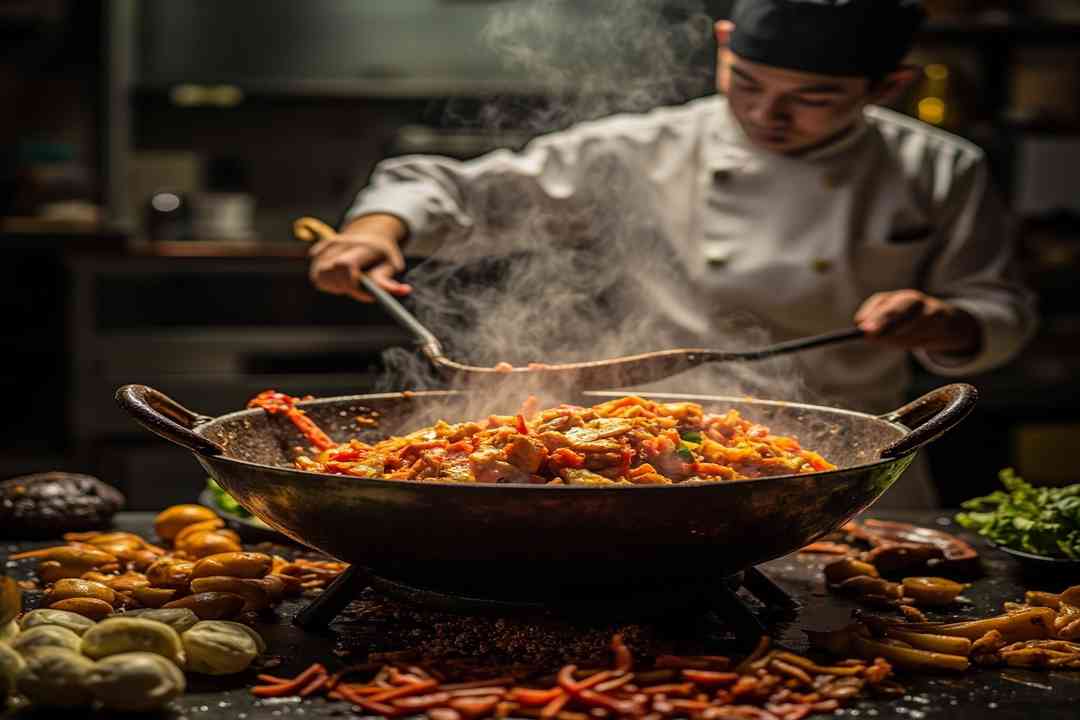
- Place 100g glutinous rice and 30g regular rice in a dry wok over medium-low heat (120°C). Toast for 8-10 minutes, stirring constantly, until pale golden and nutty-smelling.
- Spicy Chinese Food Recipes Transfer to a plate to cool completely.
- Add 1 teaspoon whole Sichuan peppercorns to the same dry wok over low heat (100°C). Toast for 1-2 minutes until fragrant, being careful not to burn them.
- Spicy Chinese Food Recipes Add to the cooled toasted rice.
- Transfer the rice and whole Sichuan peppercorn mix to a spice grinder or food processor. Pulse 3-4 times until coarsely ground, with small rice chunks remaining.
- Do not grind into a fine powder. Spicy Chinese Food Recipes Set aside.
- In a large mixing bowl, add 300g sliced pork belly, 2 tablespoons minced doubanjiang, 1 tablespoon rinsed fermented black beans, minced ginger, minced garlic, 1 tablespoon Shaoxing wine, 1 teaspoon light soy sauce, 1/2 teaspoon dark soy sauce, crushed rock sugar, and 1/2 teaspoon ground Sichuan peppercorns.
- Mix all marinade ingredients with the pork thoroughly until every slice is fully coated. Spicy Chinese Food Recipes Let marinate at room temperature for 30 minutes, or 2 hours in the fridge for deeper flavor.
- If using sweet potato, arrange the 150g sweet potato cubes evenly on the bottom of a heatproof steamer basket. Spicy Chinese Food Recipes Set aside.
- Add 2/3 of the ground rice powder mix to the marinated pork. Spicy Chinese Food Recipes Toss gently until every pork slice is evenly coated, adding 1 teaspoon of water if the mix is too dry to stick.
- Arrange the coated pork slices in a single layer on top of the sweet potato in the steamer basket. Spicy Chinese Food Recipes Sprinkle the remaining 1/3 of the rice powder evenly over the top of the pork.
- Fill a steamer pot with 1 liter of water, bring to a rolling boil over high heat (100°C). Spicy Chinese Food Recipes Place the steamer basket on top, cover tightly with a lid.
- Steam for 45-50 minutes over medium heat, checking every 15 minutes to add more hot water if the water level runs low.
- Turn off the heat, let the dish rest for 5 minutes before opening the lid. Spicy Chinese Food Recipes Garnish with chopped scallions if desired, then serve immediately.
Common Mistakes with spicy Chinese food recipes Steamed Pork with Rice Powder
The first most common mistake is using pre-ground fine rice powder. Fine powder turns mushy when steamed, with no textural contrast or nutty flavor.
To avoid this, always toast and grind your own rice, leaving small coarse chunks for a chewy, satisfying bite. Spicy Chinese Food Recipes The second mistake is adding too much extra salt: doubanjiang and fermented black beans are already very salty, so only add salt if you taste the marinade first and find it lacking.
The third mistake is steaming over low heat or for too little time. If the heat is too low, the rice powder won’t cook through properly, and the pork fat won’t render, leaving the dish greasy and undercooked.
Always bring the water to a full rolling boil before adding the steamer basket, and steam for at least 45 minutes. Spicy Chinese Food Recipes The fourth mistake is burning the rice while toasting: keep the heat low and stir constantly to avoid bitter, burnt rice powder.
Serving & Storage
Serve this dish immediately after resting, alongside fluffy steamed white rice for the perfect comforting meal. It pairs beautifully with classic Sichuan side dishes like Hot and Sour Soup for a complete spicy feast, or a light vinegar-dressed cucumber salad to cut through the richness of the pork belly.
Spicy Chinese Food Recipes For larger dinner parties, serve it as part of a Sichuan spread alongside Mapo Tofu, Kung Pao Chicken, and Dan Dan Noodles.
Leftovers can be stored in an airtight container in the fridge for up to 3 days. To reheat, place the leftover pork in a steamer basket and steam for 10-15 minutes over boiling heat until warmed through.
Do not reheat in the microwave, as it will make the rice powder soggy and tough. Spicy Chinese Food Recipes You can also freeze leftovers for up to 1 month: thaw in the fridge overnight before re-steaming.
Frequently Asked Questions
Can I use a different cut of pork instead of pork belly?
You can use pork shoulder if you prefer less fat, but pork belly is the traditional choice for a reason. The marbling in pork belly renders as it steams, keeping the meat tender and moist, and infusing the rice powder with rich, savory flavor.
Spicy Chinese Food Recipes If you use lean pork, add 1 tablespoon of lard or vegetable oil to the marinade to prevent the dish from drying out.
Can I make this dish less spicy?
Absolutely. Reduce the amount of doubanjiang to 1 tablespoon, or use mild doubanjiang instead of the spicy Sichuan version.
You can also skip the ground Sichuan peppercorns if you don’t like the numbing ma la flavor, but we recommend keeping a small amount for that signature Sichuan depth. Spicy Chinese Food Recipes The dish will still be delicious even with much less spice.
Do I need a traditional bamboo steamer to make this?
No, you can use any heatproof steamer basket, including metal or silicone ones, that fits over a pot of boiling water. If you don’t have a steamer at all, you can place the heatproof bowl of pork on a raised rack inside a large pot with 2cm of water at the bottom, cover tightly, and steam as usual.
Spicy Chinese Food Recipes Bamboo steamers do add a subtle woody flavor, but it is not required for an authentic-tasting dish.
Can I prepare this dish ahead of time?
Yes, you can marinate the pork and coat it in rice powder up to 1 day in advance, store it covered in the fridge, and steam it when you’re ready to eat. Spicy Chinese Food Recipes You can also make the toasted rice powder up to 2 weeks in advance, store it in an airtight container in a cool, dry place, and use it whenever you want to make this dish in 10 minutes of prep time.
Is this dish suitable for people with gluten sensitivities?
Most standard versions are not gluten-free, as doubanjiang, soy sauce, and Shaoxing wine all contain wheat. You can make it gluten-free by swapping regular doubanjiang for gluten-free doubanjiang, using gluten-free tamari instead of soy sauce, and using dry sherry or gluten-free Chinese cooking wine instead of regular Shaoxing wine.
Always check ingredient labels to confirm they are gluten-free before using.
Final Tip
Don’t skip the layer of starchy veggies under the pork, even if you think you won’t like them. The sweet potato, taro, or pumpkin soaks up all the rendered pork fat and spicy marinade, and it is almost always the first part of the dish to disappear at dinner parties.
You can even experiment with pickled mustard greens for a tangy, salty twist that pairs perfectly with the rich pork. It’s a small addition that makes the dish feel far more substantial and flavorful.
Simple Sichuan Recipes Best Sichuan Vegetable Recipes Sichuan Vegetable Dishes Recipes Wikipedia