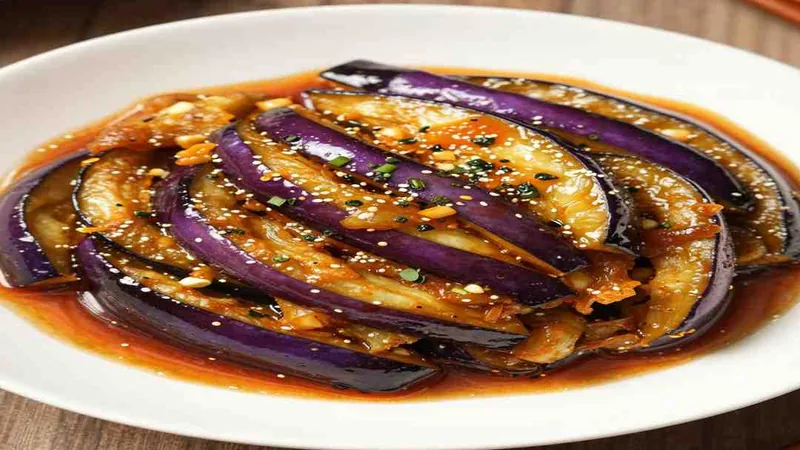
If you’ve ever craved the bold, tingly, umami-rich taste of Sichuan cuisine, the mapo eggplant recipe is your next go-to. This dish is a creative twist on the iconic mapo tofu, swapping soft tofu for silky eggplant that soaks up every bit of the spicy, numbing sauce.
Quick Answer
Mapo eggplant adapts the savory, spicy, and numbing profile associated with mapo dishes to eggplant; controlling oil absorption and balancing doubanjiang are the main practical checks.
Basic Facts
| Dish type | Sichuan-style eggplant adaptation |
|---|---|
| Flavor base | Doubanjiang, aromatics, chile, and Sichuan pepper |
| Texture check | Tender eggplant without excessive oil |
| Common mistake | Adding salt before accounting for salty bean paste |
Evidence Note
Doubanjiang salt and heat vary by brand, so taste before adding extra salt and adjust chile separately. Source: Britannica overview of Sichuan cuisine.
Related reading: Doubanjiang facts · Mapo tofu legend
Quick reference: direct answer + four checked facts + evidence note + related reading + stated limitation.
It’s approachable enough for home cooks, yet delivers the authentic balance of flavors that makes Sichuan food legendary. No fancy tools or hard-to-find items are needed—just a willingness to embrace heat and texture.
Mapo eggplant isn’t just another veggie dish. It’s a way to experience Sichuan’s signature mala (numbing-spicy) profile without sticking to traditional tofu.
Mapo Eggplant Recipe Whether you’re new to Sichuan food or a seasoned fan, this recipe will satisfy your craving for something hearty and full of life.
The Story Behind mapo eggplant recipe
The original mapo tofu was invented in 19th-century Chengdu, Sichuan, by a pockmarked street vendor named Chen Sister. Locals called her “Mapo” (pockmarked grandma), and her tofu dish became a neighborhood favorite.
She used ground pork, soft tofu, and her secret chili bean paste to create a dish that balanced salt, spice, umami, and a hint of tang. Mapo Eggplant Recipe It’s still a staple in Sichuan restaurants worldwide today.
Mapo eggplant emerged as a home-cooked adaptation of mapo tofu, gaining popularity in the 1990s as more Chinese families experimented with eggplant’s versatility. It keeps the core mala balance but swaps tofu for eggplant, which is more affordable and holds sauce better.
Mapo Eggplant Recipe Today, it’s often paired with other Sichuan classics like kung pao chicken and hot and sour soup for a full, fiery feast.
What Makes mapo eggplant recipe Special
The first thing that sets this dish apart is texture. When fried properly, eggplant becomes silky on the inside with a slight crisp edge.
Unlike tofu, which can break apart when stirred, eggplant holds its shape while soaking up every drop of the sauce. Mapo Eggplant Recipe This makes each bite hearty and satisfying, not delicate.
Next is the mala balance, the heart of Sichuan cuisine. The dish uses two key ingredients for this: Pixian doubanjiang (a fermented chili bean paste) for deep, spicy umami, and Sichuan peppercorns for the iconic tingly numbing sensation on the tongue.
Mapo Eggplant Recipe A touch of rice vinegar adds bright tang, while a pinch of sugar rounds out the spice to avoid harshness.
The final secret is salting the eggplant first. This removes excess moisture from the egg’s flesh, preventing it from turning mushy when cooked.
It also helps the sauce cling better to the eggplant, ensuring every piece is full of flavor. Mapo Eggplant Recipe This small step makes a huge difference in the final dish’s texture.
Ingredients for mapo eggplant recipe
- 300g Japanese eggplant (or 2 small regular eggplants, cut into 2cm cubes)
- 200g pork belly (sliced into thin 2cm strips; ground pork works as a substitute)
- 2 tablespoons Pixian doubanjiang (Sichuan chili bean paste, minced to remove large chunks)
- 1 teaspoon Sichuan red peppercorns (whole, not pre-ground)
- 1 tablespoon light soy sauce (for saltiness and depth)
- 1 teaspoon dark soy sauce (for subtle color, not excess)
- 1 teaspoon rice vinegar (for bright tang)
- 1 teaspoon granulated sugar (balances spice and sourness)
- 2 medium garlic cloves (minced finely)
- 1-inch fresh ginger (peeled, minced finely)
- 2 scallions (white parts minced, green parts sliced thin for garnish)
- 2 tablespoons cornstarch
- 3 tablespoons cold water (for slurry)
- 4 tablespoons neutral oil (peanut or canola, high smoke point)
- ½ cup low-sodium chicken broth (or vegetable broth for vegan)
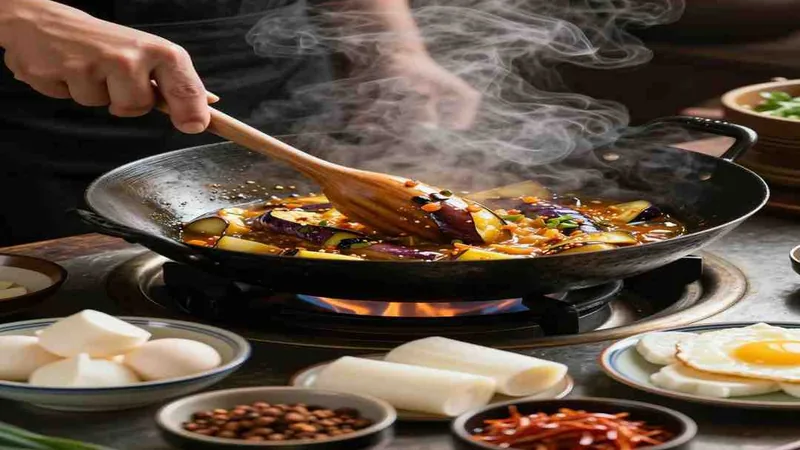
How to Make mapo eggplant recipe
- Toast Sichuan peppercorns: Heat a dry small pan over medium heat. Add whole peppercorns, toast for 30 seconds until fragrant.
- Don’t burn them—they’ll turn bitter. Transfer to a mortar, crush lightly; set aside.
- Mapo Eggplant Recipe (Temp: medium, Time:30s)
- Prep eggplant: Cut eggplant into 2cm cubes. Toss with 1 teaspoon of salt in a bowl.
- Let sit 10 minutes to draw out moisture. Squeeze gently with hands to remove excess water; set aside.
- Mapo Eggplant Recipe (Time:10 mins)
- Fry eggplant: Heat 3 tablespoons of oil in a wok over high heat (target temp 180°C). Add eggplant cubes in a single layer (don’t overcrowd).
- Fry 3-4 minutes until golden and tender. Use a slotted spoon to remove; drain on paper towels.
- Mapo Eggplant Recipe (Temp:180°C, Time:3-4 mins)
- Cook pork: Reduce wok heat to medium. Add remaining 1 tablespoon oil.
- Add pork strips, stir-fry 2 minutes until browned and slightly crispy. Remove pork; set aside.
- Mapo Eggplant Recipe (Time:2 mins, Temp:medium)
- Sauté aromatics: Lower heat to medium-low. Add minced doubanjiang to the wok. Stir-fry 1 minute until the oil turns bright red and the paste is fragrant. Mapo Eggplant Recipe (Time:1 min)
- Add garlic and ginger: Add minced garlic, ginger, and scallion whites to the wok. Stir continuously for 30 seconds until aromatic—don’t let them burn. Mapo Eggplant Recipe (Time:30s)
- Build the sauce: Pour in chicken broth, light soy sauce, dark soy sauce, rice vinegar, and sugar. Stir to combine.
- Bring to a gentle simmer (100°C) for 2 minutes to let flavors meld. Mapo Eggplant Recipe (Temp:100°C, Time:2 mins)
- Combine ingredients: Add fried eggplant and cooked pork to the sauce. Toss gently to coat every piece. Simmer for 5 minutes, letting the eggplant absorb the sauce. Mapo Eggplant Recipe (Time:5 mins)
- Thicken the sauce: Mix cornstarch and cold water to make a smooth slurry. Pour into the wok while stirring continuously.
- Cook 1 minute until the sauce thickens and clings to the eggplant and pork. Mapo Eggplant Recipe (Time:1 min)
- Finish and serve: Turn off heat. Sprinkle crushed Sichuan peppercorns and sliced scallion greens on top. Mapo Eggplant Recipe Serve immediately with steamed jasmine rice.
Common Mistakes with mapo eggplant recipe
The biggest mistake home cooks make is skipping the salting step for eggplant. If you don’t remove excess moisture, the eggplant will turn mushy and make the sauce watery.
Always toss cut eggplant with salt and squeeze it before frying—this is non-negotiable for texture. Mapo Eggplant Recipe Even a short 10-minute wait makes a big difference.
Another mistake is using unminced doubanjiang. Large chunks of the bean paste will make the sauce lumpy and uneven.
Mince the doubanjiang with a knife or pulse it in a small food processor before adding to the wok. Mapo Eggplant Recipe This ensures the sauce is smooth and evenly spicy.
A third error is overheating Sichuan peppercorns. If you toast them too long, they’ll turn bitter and ruin the mala flavor.
Keep the heat low and watch them closely—they should only be fragrant, not dark. Mapo Eggplant Recipe Crush them lightly, not into a fine powder, to retain their texture.
Serving & Storage
Mapo eggplant is best served hot, right after cooking. Pair it with steamed jasmine rice to balance the bold flavors.
For a full Sichuan meal, serve it alongside kung pao chicken and hot and sour soup. Mapo Eggplant Recipe The silky eggplant contrasts with the crunchy kung pao chicken, while the sour soup cuts through the richness of the mala sauce.
For leftovers, store in an airtight container in the fridge for up to 2 days. Reheat gently in a skillet with a splash of chicken broth to loosen the sauce and keep the eggplant from drying out.
Don’t freeze it—eggplant has high water content, and freezing will make it mushy and lose its texture. Mapo Eggplant Recipe Fresh is always better.
Can I use ground pork instead of pork belly in the mapo eggplant recipe?
Absolutely. Ground pork works just as well, and it’s easier to find in most grocery stores.
Choose a medium-fat ground pork (80/20) for the best flavor. Sauté it in the wok until it’s fully browned and crumbled, which takes about 3 minutes, before adding it to the sauce.
Mapo Eggplant Recipe It’s a great substitute if you don’t have pork belly on hand.
Is this mapo eggplant recipe very spicy?
It’s medium-spicy by default. The doubanjiang adds a noticeable kick, but it’s not so hot that it will overwhelm your taste buds.
If you prefer milder food, reduce the doubanjiang to 1 tablespoon instead of 2. Mapo Eggplant Recipe If you love extra heat, add 1 dried red chili when sautéing the doubanjiang for an extra fiery boost.
Can I make this mapo eggplant recipe vegan?
Yes, you can easily adapt it for a vegan diet. Swap the pork belly for 1 cup of diced firm tofu (add it to the sauce at step 8 instead of pork).
Use vegetable broth instead of chicken broth, and skip the Sichuan peppercorns if you want to avoid the tingle. Mapo Eggplant Recipe The doubanjiang is usually vegan, but check the label to make sure it doesn’t have any animal products.
Do I need a wok to make this mapo eggplant recipe?
No, a large skillet works perfectly. Woks are great for high-heat stir-frying, but a heavy-bottomed skillet on your stovetop’s high heat will get similar results.
Just don’t overcrowd the pan when frying the eggplant—cook it in batches if needed to ensure it gets golden and crispy.
Can I freeze leftover mapo eggplant?
It’s not recommended. Eggplant has a high water content, and freezing and thawing it will make it mushy and lose its silky texture.
The sauce might also separate when frozen. For best results, only make as much as you can eat in 2 days.
If you have extra, share it with a friend instead of storing it long-term.
Final Tip
The key to a perfect mapo eggplant is balance. Don’t skip the rice vinegar—it adds a bright tang that cuts through the rich sauce.
And never skimp on the Sichuan peppercorns; they’re what give this dish its signature tingly mala flavor. Take your time with each step, and you’ll have a dish that tastes like it came straight from a Chengdu street stall.
10 Mistakes That Ruin Vegan Mapo Tofu (And How to Fix Them) Why Your Top Easy Sichuan Recipes Never Tastes Like the Rest Why Your Sichuan Chili Oil Recipe Never Tastes Like the Rest Wikipedia