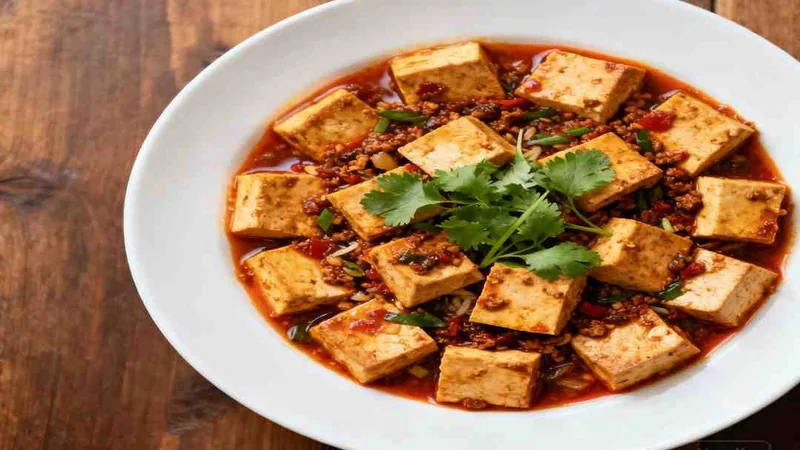
Vegan mapo tofu is the perfect plant-based take on one of Sichuan cuisine’s most beloved comfort dishes. For decades, home cooks and chefs have associated mapo tofu with its traditional ground pork filling, but this vegan version delivers every bit of the signature “ma la” numbing-spicy kick, rich umami, and silky texture that makes the original so iconic.
It holds its own alongside staple Sichuan dishes like Kung Pao Chicken, Dan Dan Noodles, and Hot and Sour Soup, making it a welcome addition to any casual weeknight meal or special feast.
Many people assume vegan adaptations of classic Chinese dishes are watered down, modern inventions created for Western eaters. But this version draws on centuries of Sichuan Buddhist temple vegetarian cooking tradition, where fermented ingredients and umami-rich produce are used to create deeply flavorful meat-free dishes.
Vegan Mapo Tofu It honors the original dish’s working-class roots while making it accessible to plant-based eaters, people with pork allergies, or anyone looking to cut back on meat without sacrificing bold flavor.
The Story Behind Vegan Mapo Tofu
Traditional mapo tofu originated in 19th century Chengdu, the capital of Sichuan province. Legend says it was invented by a pockmarked elderly woman (the name “ma po” translates to “pockmarked grandmother”) who ran a small stall near a dock.
Vegan Mapo Tofu She served the cheap, hearty dish to laborers, using affordable silken tofu, leftover ground pork, and spicy fermented seasonings to create a filling meal that warmed people up in Sichuan’s cool, humid climate.
Sichuan has a long, well-documented history of vegetarian cuisine tied to its Buddhist temple communities. Monks and nuns have created meat-free versions of classic dishes for hundreds of years, using mushrooms, fermented beans, and tofu to mimic the texture and flavor of meat.
The vegan mapo tofu we know today draws directly from that tradition, swapping ground pork for umami-rich mushrooms and keeping all the signature seasonings that make the original so beloved.
In recent years, vegan mapo tofu has grown in popularity across China and the rest of the world. Many famous Sichuan restaurants now offer it as a standard menu item, and it has become a favorite home cooking staple for plant-based eaters.
It is not a “fusion” dish, but a legitimate adaptation of a classic that honors both the culinary history and evolving dietary needs of Sichuan communities.
What Makes Vegan Mapo Tofu Special
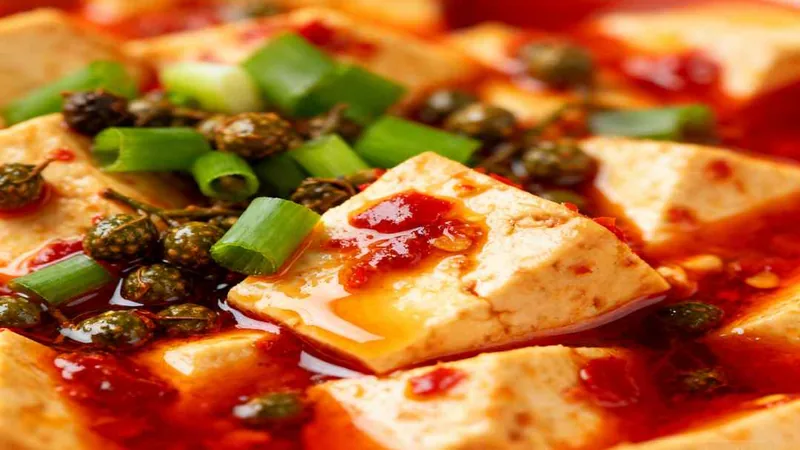
The core appeal of vegan mapo tofu lies in its signature “ma la” flavor profile. “Ma” refers to the tingly, numbing sensation from Sichuan peppercorns, while “la” is the sharp, slow-building heat from doubanjiang (Sichuan chili bean paste) and dried chilies.
These are balanced by salty, umami fermented black beans, a touch of sugar to cut the heat, and a glossy, thick sauce that coats every cube of soft tofu.
The texture is another key draw. The silken tofu is soft, creamy, and almost melts in your mouth, while the grated king oyster mushroom crumble adds a chewy, savory bite that perfectly mimics the texture of cooked ground pork.
Vegan Mapo Tofu The sauce is thick enough to cling to every piece of tofu, so every bite has an even mix of numbing, spicy, savory, and sweet flavors.
Two key techniques set great vegan mapo tofu apart from mediocre versions. The first is parboiling the tofu in salted water to firm it up, so it doesn’t break apart during stir-frying.
The second is toasting whole Sichuan peppercorns right before grinding them, which unlocks their bright, citrusy, numbing oils for a far more vivid flavor than pre-ground peppercorns.
Ingredients for Vegan Mapo Tofu
- 400g soft silken tofu, cut into 2cm cubes
- 150g king oyster mushrooms, finely grated to mimic ground pork
- 2 tablespoons doubanjiang (Sichuan chili bean paste), finely minced to remove large bean chunks
- 1 tablespoon fermented black beans (douchi), rinsed and finely minced
- 1 teaspoon whole Sichuan peppercorns, plus ½ teaspoon ground Sichuan peppercorns for finishing
- 2 dried red chilies, cut into 1cm sections, seeds removed if you prefer less heat
- 3 garlic cloves, finely minced
- 1-inch piece fresh ginger, finely minced
- 2 stalks green onion, white parts minced, green parts sliced for garnish
- 1 tablespoon light soy sauce
- 1 teaspoon granulated sugar
- ¼ cup low-sodium vegetable stock or filtered water
- 2 tablespoons cornstarch, mixed with 3 tablespoons cold water to make a slurry
- 3 tablespoons neutral cooking oil (peanut, canola, or sunflower work best)
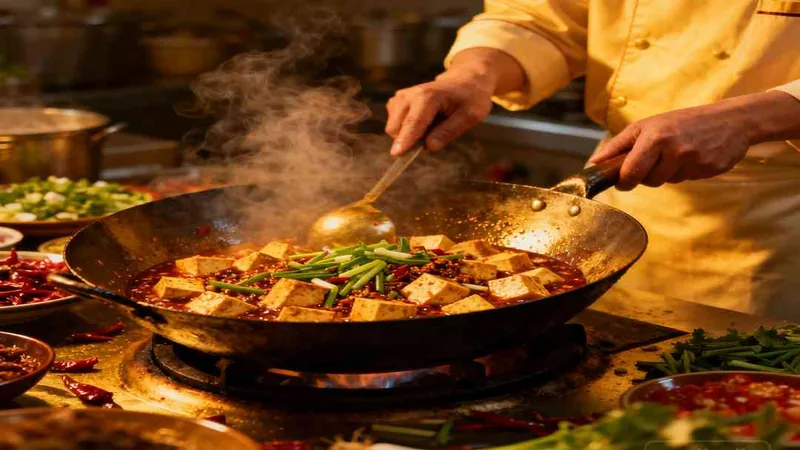
How to Make Vegan Mapo Tofu
- Bring a medium pot of salted water to a rolling boil (100°C) over high heat. Gently lower the 400g cubed tofu into the water, simmer for 3 minutes, then drain and set aside.
- Vegan Mapo Tofu This firms the tofu so it doesn’t break during cooking.
- Heat a small dry frying pan over medium-low heat (120°C). Vegan Mapo Tofu Add 1 teaspoon whole Sichuan peppercorns, toast for 1-2 minutes until fragrant and slightly darker in color, then grind into a fine powder and set aside.
- Heat 3 tablespoons neutral oil in a wok or heavy-bottomed pan over medium-high heat (170°C). Vegan Mapo Tofu Add the 2 dried red chili sections, stir-fry for 10 seconds until they darken slightly and release a spicy, fruity aroma.
- Add the minced doubanjiang to the wok, stir-fry for 1-2 minutes until the oil turns bright red and the paste releases a fermented, savory scent. Vegan Mapo Tofu Be careful not to burn the paste, as it will turn bitter.
- Add minced ginger, garlic, white parts of green onion, and minced fermented black beans to the wok. Vegan Mapo Tofu Stir-fry for 30 seconds until fragrant, don’t let the garlic turn light brown.
- Add the 150g grated king oyster mushroom to the wok, stir-fry for 4-5 minutes until it releases all its moisture and turns golden brown and crumbly, mimicking the texture of cooked ground pork.
- Pour in the ¼ cup vegetable stock, add 1 tablespoon light soy sauce and 1 teaspoon sugar, stir to combine fully. Vegan Mapo Tofu Bring the sauce to a gentle simmer (90°C).
- Gently add the parboiled tofu to the wok. Use a silicone spatula to push the sauce over the tofu instead of stirring vigorously, to avoid breaking the soft curds.
- Vegan Mapo Tofu Simmer for 3 minutes to let the tofu absorb the sauce flavors.
- Give the cornstarch slurry a quick stir to remove any lumps, pour half of it into the wok while stirring gently. Vegan Mapo Tofu Simmer for 1 minute, then add the remaining slurry if the sauce is too thin, until it coats the tofu evenly and has a glossy, thick consistency.
- Turn off the heat, sprinkle half the freshly ground Sichuan peppercorn powder and half the sliced green onion tops over the dish. Vegan Mapo Tofu Give it one very gentle stir to combine.
- Transfer the vegan mapo tofu to a shallow serving bowl, top with the remaining Sichuan peppercorn powder and green onion slices. Serve immediately.
Common Mistakes with Vegan Mapo Tofu
The most common mistake home cooks make is skipping the parboil step for the tofu. Silken tofu is very soft out of the package, and it will break into tiny, mushy pieces if you add it directly to the hot sauce.
Parboiling it in salted water draws out excess moisture and firms up the curd, so it holds its shape through the cooking process. Vegan Mapo Tofu Always set a timer for 3 minutes, and don’t leave it in the boiling water longer or it will turn tough.
Another common mistake is burning the doubanjiang or aromatics. Doubanjiang has a high sugar content from fermented beans, so it burns quickly at high heat, leading to a bitter, off flavor.
Stir-fry it for no more than 2 minutes, and pull the wok off the heat if you see it starting to darken faster than expected. Old pre-ground Sichuan peppercorns are another common issue: they lose their numbing oils after 2-3 months, so the dish will lack that signature “ma” tingle.
Toast and grind whole peppercorns right before cooking for maximum flavor. The final common mistake is overstirring the tofu once it’s added to the sauce.
Vegan Mapo Tofu Use a spatula to push sauce over the top instead of stirring in circles, to keep the tofu cubes intact.
Serving & Storage
Vegan mapo tofu is best served immediately with fluffy steamed jasmine rice, which soaks up the glossy, spicy sauce perfectly. For a full Sichuan feast, pair it with vegan Kung Pao mushrooms, sesame Dan Dan Noodles, and Hot and Sour Soup.
The bold, spicy flavors pair well with crisp, cold side dishes like cucumber salad with garlic and vinegar, which cuts through the heat.
For storage, let the leftover mapo tofu cool completely, then transfer it to an airtight container and store it in the fridge for up to 3 days. The flavor actually deepens after a day in the fridge, as the tofu absorbs more of the savory sauce.
Reheat it gently in a pan over low heat for 3-4 minutes, adding a splash of water if the sauce gets too thick. Vegan Mapo Tofu Do not freeze it, as the silken tofu will become spongy and watery when thawed.
Can I use firm tofu instead of silken tofu?
Silken tofu is preferred for authentic mapo tofu, as its soft, creamy texture is a core part of the dish’s appeal. Firm tofu is too dense and chewy, and it won’t absorb the sauce as well.
Vegan Mapo Tofu If you only have firm tofu, you can press it for 10 minutes to remove excess moisture, then parboil it for 5 minutes to soften it slightly, but the end result will be less traditional.
What can I use instead of king oyster mushrooms for the pork substitute?
If you don’t have king oyster mushrooms, you can use finely chopped shiitake mushrooms, crumbled pressed extra-firm tofu, or rehydrated textured vegetable protein (TVP). All of these options will give you the chewy, crumbly texture you need to mimic ground pork.
Vegan Mapo Tofu For extra umami, you can stir a pinch of mushroom powder into the sauce when you add the stock.
Is vegan mapo tofu less flavorful than the traditional pork version?
Not at all. The fermented doubanjiang, fermented black beans, and mushrooms add plenty of umami depth that matches or even surpasses the pork version.
Many people who try the vegan version are surprised by how rich and savory it is, with the exact same ma la numbing-spicy kick as the original. Vegan Mapo Tofu The fermented ingredients are the star of the dish, not the meat.
How do I adjust the heat level if I don’t like very spicy food?
You can remove all the seeds from the dried red chilies, reduce the amount of doubanjiang to 1 tablespoon instead of 2, and skip adding extra chili flakes if you normally use them. You can also add an extra teaspoon of sugar to balance out the spiciness, and increase the amount of vegetable stock by 2 tablespoons to dilute the sauce slightly.
Vegan Mapo Tofu You will still get the signature numbing flavor without the overwhelming heat.
Can I make this dish ahead of time for a dinner party?
You can prep all the ingredients (chop the aromatics, grate the mushrooms, parboil the tofu, make the cornstarch slurry) up to 24 hours ahead of time, and store them separately in airtight containers in the fridge. Vegan Mapo Tofu Cook the full dish in 15 minutes right before serving, because the texture of the soft tofu is best when it is fresh and hot, and the sauce stays glossy if you make it right before eating.
Frequently Asked Questions
Can I make vegan mapo tofu vegetarian?
Vegan mapo tofu is already inherently vegetarian, as it contains no meat, seafood, poultry, or animal-derived ingredients by default.
If you follow an ovo-lacto vegetarian diet that permits dairy or eggs, you can easily adapt the recipe to match your preferences: swap plain plant-based chili oil for butter-infused Sichuan chili oil for a richer base, replace nutritional yeast (if used for umami) with grated parmesan for a salty, creamy boost, or swap textured vegetable protein crumbles for crumbled paneer as a softer, mild plant-based protein addition.
What makes vegan mapo tofu authentic Sichuan style?
Authentic Sichuan vegan mapo tofu centers on the iconic “ma la” (numbing and spicy) flavor profile, plus specific core ingredients and traditional cooking techniques.
Non-negotiable ingredients include Sichuan peppercorns for the signature tingly numbing sensation, fermented broad bean chili paste (doubanjiang) for deep, savory umami, fermented black beans (douchi) for extra depth, and soft silken tofu that holds its shape while melting slightly on the tongue.
Key techniques include toasting and grinding Sichuan peppercorns right before use to preserve their bright aroma, frying doubanjiang and douchi over low heat first to release their flavor without burning, tossing tofu gently to avoid breaking it, and finishing with a light cornstarch slurry to create a glossy, clinging sauce that coats every tofu piece.
Ground pork is traditionally replaced with crumbled fermented bamboo shoots or textured vegetable protein for a plant-based umami punch that stays true to the original dish’s profile.
How spicy is vegan mapo tofu?
Traditional Sichuan vegan mapo tofu has a medium-high to high spice level, combining the lingering tingly heat of Sichuan peppercorns with the sharp, fiery heat of dried red chilies and the chili oil in doubanjiang.
Its spice level is fully customizable, though: for a milder version, use half the standard amount of doubanjiang, skip adding extra dried chilies or chili flakes to the sauce, and remove seeds from any fresh chilies you use to cut their heat, or stir in an extra tablespoon of unsweetened plant milk to mellow sharp spice notes.
For extra heat, add more Sichuan peppercorn powder, a spoonful of spicy chili oil, or a handful of extra dried red chilies during the stir-fry step.
What can I serve with vegan mapo tofu?
Plain steamed white rice is the most classic pairing, as it soaks up the glossy, spicy sauce perfectly and balances the bold ma la flavors.
For a low-carb alternative, serve it over steamed cauliflower rice or boiled brown rice.
To build a full meal, pair it with light, refreshing side dishes that cut through the richness and spice: try chilled cucumber salad tossed in rice vinegar, steamed bok choy with a light soy dressing, or tangy pickled radish for a bright, crisp contrast.
You can also serve it as a filling for steamed vegan buns, or wrap it in crisp lettuce cups for a lighter, hand-held meal option.
Can I prepare vegan mapo tofu ahead of time?
Yes, vegan mapo tofu works well for advance meal prep, though it tastes best fresh for the ideal soft tofu texture and bright, tingly Sichuan peppercorn aroma.
To prep ahead, cook the full dish as directed, let it cool completely to room temperature, then transfer it to an airtight container and store it in the fridge for up to 3 days.
When reheating, warm it gently over low heat on the stovetop, stirring as little as possible to avoid breaking the tofu, and add a splash of vegetable broth if the sauce has thickened too much in storage.
You can also freeze it for up to 2 months, though note that the tofu will take on a firmer, chewier texture after freezing.
For the freshest flavor, toast and sprinkle extra Sichuan peppercorn powder over the dish right before serving reheated portions, as the numbing aroma fades during storage.
Final Tip
Don’t skip toasting the Sichuan peppercorns right before you grind them. That 1-2 minutes of gentle toasting unlocks the bright, citrusy, numbing oils that make mapo tofu feel like a special treat, not just a spicy tofu dish.
Vegan Mapo Tofu Even if you’ve had mapo tofu a hundred times, the fresh peppercorn flavor will make this vegan version feel like a new favorite.
Simple Mapo Tofu Homemade Mapo Tofu Top Easy Sichuan Recipes Wikipedia