Dry-Fried Green Beans works best when the sauce, heat, and timing are planned before cooking. 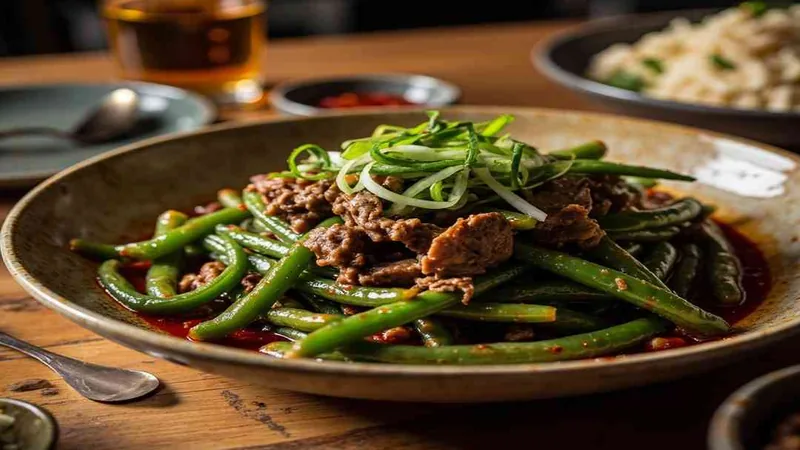
Dry-Fried Green Beans (gan bian si ji dou) is a staple Sichuan dish that balances crunch, umami, and the signature numbing-spicy kick of authentic Sichuan cooking. If you’ve ever ordered at a Sichuan restaurant, you’ve likely seen this side next to classics like Mapo Tofu, Kung Pao Chicken, Dan Dan Noodles, and Hot and Sour Soup.
It’s the perfect complement to these bold mains—its crisp texture cuts through rich sauces, and its layered flavor doesn’t overpower the star dishes. Many home cooks shy away from making it at home, thinking it’s too tricky.
But with the right technique and ingredients, it’s easy to master, and it will become a go-to for your Sichuan meal spread.
The Story Behind Dry-Fried Green Beans
Dry-frying (gan bian) is a core technique in Sichuan cuisine, designed to remove excess moisture from ingredients to concentrate their flavor. Unlike quick stir-frying, dry-frying requires slow, steady heat to crisp ingredients without burning them.
Dry-Fried Green Beans This technique wasn’t limited to meats or tofu—cooks adapted it for vegetables like green beans to make them more substantial and flavorful.
Dry-Fried Green Beans gained popularity in the mid-20th century, as home cooks looked for ways to turn simple, affordable ingredients into a dish that could stand alongside restaurant classics. Before this, green beans were often boiled or stir-fried quickly, lacking the depth of flavor needed to pair with rich Sichuan mains.
Today, it’s a staple in both casual home cooking and fine Sichuan dining, served as a side that brings balance to any meal.
What Makes Dry-Fried Green Beans Special
What sets Dry-Fried Green Beans apart from other green bean dishes is its texture and flavor balance. The dry-frying step gives the beans a crisp-tender bite—they’re not mushy, nor are they hard.
The flavor is layered: salty from soy sauce, umami from pork belly, spicy from doubanjiang, and a subtle numbing tingle from Sichuan peppercorns.
Unlike some Sichuan dishes that are just spicy, this one has depth that lingers on the palate. A key expert tip for beginners: don’t crowd the wok when frying beans.
If your beans are too tight, they’ll steam instead of fry, losing that perfect crispness. Take it slow, and you’ll get that restaurant-worthy bite every time.
Dry-Fried Green Beans It’s also versatile—you can serve it as a side or even a light main for a quick weeknight meal.
Ingredients for Dry-Fried Green Beans
- 300g fresh green beans (trimmed to 5cm lengths, whole)
- 100g pork belly (sliced into 2mm-thick pieces)
- 2 tablespoons Pixian doubanjiang (Sichuan chili bean paste, minced)
- 1 teaspoon whole Sichuan peppercorns (toasted and crushed)
- 2 cloves garlic (minced)
- 1 small ginger slice (minced, ½ teaspoon)
- 1 scallion (white part minced, green part sliced for garnish)
- 1 tablespoon light soy sauce
- 1 teaspoon dark soy sauce (for color)
- ½ teaspoon granulated sugar
- 1 tablespoon Shaoxing rice wine
- 3 tablespoons vegetable oil (for frying)
- ¼ teaspoon salt (optional, adjust to taste)
How to Make Dry-Fried Green Beans
- Prep all ingredients first: Trim green beans, slice pork, mince garlic, ginger, and scallion whites. Toast Sichuan peppercorns in a dry pan over low heat for 30 seconds, then crush with a mortar and pestle.
- Dry-Fried Green Beans (Time: 2 minutes)
- Heat 3 tablespoons of vegetable oil in a wok over medium-high heat until it reaches 180°C. Dry-Fried Green Beans (Temp: 180°C)
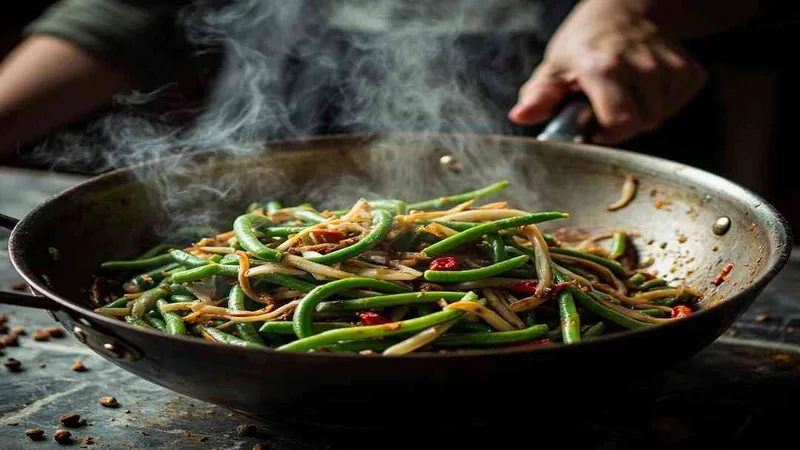
- Add the prepared green beans to the wok. Fry for 4-5 minutes, stirring occasionally, until they turn bright green and have slight charred spots on the edges.
- Dry-Fried Green Beans (Time: 4-5 minutes, visual cue: bright green, charred edges)
- Use a slotted spoon to remove the fried green beans from the wok. Drain them on paper towels to remove excess oil. Dry-Fried Green Beans Set aside.
- Reduce the wok heat to medium. Add the sliced pork belly.
- Stir-fry for 2 minutes until the fat renders and the pork turns golden brown at the edges. Dry-Fried Green Beans (Time: 2 minutes, visual cue: golden pork, rendered fat)
- Add minced garlic, ginger, and scallion whites to the wok. Stir-fry for 30 seconds until fragrant. Dry-Fried Green Beans (Time: 30 seconds)
- Add the minced Pixian doubanjiang to the wok. Stir-fry for 1 minute, mixing well with the pork until the oil turns a deep red color. Dry-Fried Green Beans (Time:1 minute, visual cue: red oil)
- Return the fried green beans to the wok. Toss everything together for 1 minute to coat the beans evenly with the sauce and pork. Dry-Fried Green Beans (Time:1 minute)
- Add Shaoxing rice wine, light soy sauce, dark soy sauce, and granulated sugar. Stir-fry for 2 minutes until the sauce thickens slightly and coats all ingredients.
- Dry-Fried Green Beans (Time:2 minutes)
- Sprinkle the crushed Sichuan peppercorns and sliced scallion greens on top. Dry-Fried Green Beans Stir once to combine, then turn off the heat.
Common Mistakes with Dry-Fried Green Beans
The most common mistake with Dry-Fried Green Beans is overcooking the beans. When beans are fried too long or at too low a temperature, they turn mushy instead of crisp-tender.
Another mistake is using too much Pixian doubanjiang—this paste is salty, so adding extra salt will make the dish overly salty. Beginners often skip toasting Sichuan peppercorns, leading to a bitter flavor that ruins the dish.
Another mistake is not rendering the pork belly fat fully. If you add extra oil when cooking pork, the dish will be greasy instead of rich.
To avoid this, let the pork cook slowly over medium heat until most of the fat is released, then drain excess oil if needed. Dry-Fried Green Beans Crowding the wok is also a mistake—if you put too many beans in at once, they’ll steam instead of fry, losing that signature crispness.
Serving & Storage
Dry-Fried Green Beans is best served hot, right after cooking. It pairs perfectly with classic Sichuan mains like Mapo Tofu (link to authentic Mapo Tofu recipe), Kung Pao Chicken, Dan Dan Noodles, and Hot and Sour Soup.
Its crisp texture balances the softness of Mapo Tofu, while its numbing-spicy kick complements the savory flavors of Kung Pao Chicken. For a full Sichuan meal, serve it alongside rice and a cold appetizer like cucumber salad.
For storage, let leftovers cool completely, then put them in an airtight container in the fridge for up to 2 days. To reheat, use a wok over medium heat for 2 minutes—microwaving will make the beans soggy, so avoid that.
Dry-Fried Green Beans If you want extra crispness, toss them in a hot wok for 30 seconds after reheating.
Frequently Asked Questions
Can I make Dry-Fried Green Beans vegetarian?
Yes, Dry-Fried Green Beans can easily be made vegetarian by skipping any meat additions (like pork or ground meat) common in some non-vegetarian recipes.
To replace meat for extra protein or texture, use pressed and pan-fried firm tofu, tempeh, or shiitake mushrooms.
If your recipe calls for oyster sauce (non-vegetarian), substitute it with vegetarian oyster sauce or a mix of soy sauce and a small amount of sugar for umami.
What makes Dry-Fried Green Beans authentic Sichuan style?
Authentic Sichuan-style Dry-Fried Green Beans (called gan bian si ji dou) relies on two key elements: 1) Flavor profile: The iconic “mala” (numbing-spicy) balance from toasted Sichuan peppercorns (for the subtle tingle), dried red chilies, and fermented broad bean paste (doubanjiang) for deep umami, plus garlic, ginger, and a touch of soy sauce or sugar to round out flavors.
2) Technique: The green beans are first blanched or quickly pan-fried (or deep-fried in traditional versions) until they develop a slight char and crisp-tender texture, then stir-fried briefly with seasonings to avoid overcooking.
How spicy is Dry-Fried Green Beans?
The spice level varies by recipe, but traditional Sichuan-style the dish is typically medium-spicy, with gentle to moderate heat from dried red chilies paired with a distinct, lingering numbing tingle from Sichuan peppercorns (not just sharp, one-note heat).
You can adjust the spice: reduce the number of chilies or remove their seeds for milder versions, or add extra chilies or chili oil for extra heat.
What can I serve with this Sichuan classic?
the stir-fry is a bold, savory side that pairs best with steamed white rice (like jasmine or long-grain) to balance its rich flavors.
It complements classic Chinese mains such as Mapo Tofu, Kung Pao Chicken, braised pork belly, or sweet-and-sour pork.
For a complete balanced meal, add a light soup (like egg drop or hot and sour soup) and a fresh crisp salad to cut through the stir-fry’s depth.
Can I prepare it ahead of time?
You can prep components of the dish ahead for convenience, but the finished dish is best served fresh.
Blanched green beans (the pre-stir-fry step) can be stored in an airtight container in the fridge for up to 2 days before cooking.
Fully cooked this Sichuan classic last up to 3 days in the fridge, but they will lose crispness when reheated—warm them gently in a pan (not the microwave, which causes sogginess) to retain as much texture as possible.
Avoid freezing cooked green beans, as they turn mushy once thawed.
Final Tip
The most important tip for perfect the stir-fry is to be patient with the dry-fry step. Taking 4-5 minutes to get those crisp-tender beans is what makes this dish stand out.
Don’t rush—watch for that bright green color and slight charred edges, and you’ll have a side that’s crispy, flavorful, and exactly like the ones you get at Sichuan restaurants. Serve it with your favorite classic Sichuan mains, and it will become a regular in your meal rotation.
Authentic Sichuan Food Origin: Sichuan Home Cooking Guide 10 Mistakes That Ruin Sichuan Wonton Recipe (And How to Fix 10 Mistakes That Ruin Best Sichuan Eggplant Recipes (And How Wikipedia