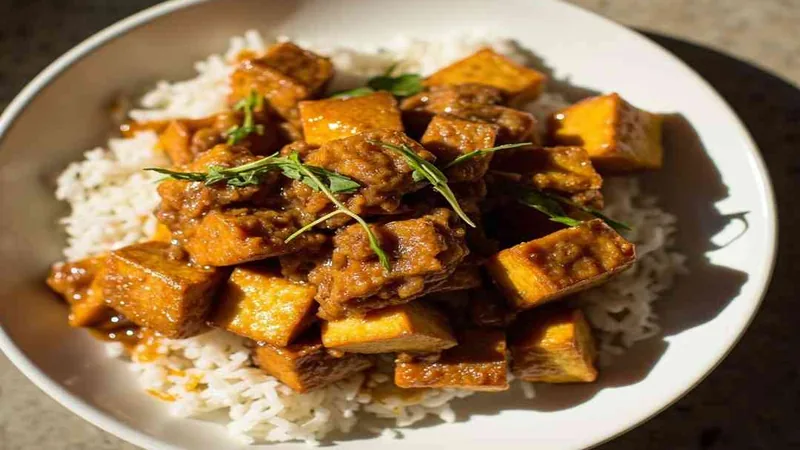
Simple mapo tofu is the ultimate weeknight win for anyone who craves bold, layered flavor without hours of prep. Many home cooks assume Sichuan food is complicated, requiring a long list of specialty ingredients and professional skills.
This simple version of the iconic dish proves that wrong. It comes together faster than takeout, uses ingredients you can find at most Asian grocery stores or online, and tastes just as good as restaurant versions.
You don’t need to be a trained chef to pull it off. All you need is a few basic tools, a willingness to taste as you go, and a love of the signature Sichuan “ma la” (numbing and spicy) flavor profile.
Simple Mapo Tofu It’s just as approachable as other popular Sichuan staples like Kung Pao Chicken and Dan Dan Noodles, and far less labor-intensive than hosting a full hot pot meal.
The Story Behind Simple Mapo Tofu
Simple mapo tofu traces its roots back to 1862 Chengdu, the capital of Sichuan province in southwest China. Legend says it was invented by Chen Mapo, a pockmarked elderly woman who ran a small restaurant outside the city gates.
Her restaurant catered to porters carrying oil and cloth across the region, who needed cheap, hearty, warming food to fuel their long trips.
Chen’s dish was an instant hit, and word of her flavorful tofu spread across the region. Traditional mapo tofu is defined by its seven signature flavors: ma (numbing from Sichuan peppercorns), la (spicy from chili), tang (hot temperature), xian (savory), nen (tender tofu), xiang (aromatic), and su (flaky crispy pork).
Simple Mapo Tofu It’s now recognized as one of the most iconic dishes in Sichuan cuisine, served everywhere from street stalls to fine dining restaurants.
The simple home version keeps all seven core flavors intact, skipping only the fancy restaurant garnishes and extra steps that don’t add to the eating experience. It’s as much a staple in Sichuan home kitchens as Kung Pao Chicken, Dan Dan Noodles, and quick batches of Hot and Sour Soup for weekday lunches.
Simple Mapo Tofu Home cooks have adapted the recipe over generations to use easy-to-find ingredients and cut down on prep time without sacrificing flavor.
What Makes Simple Mapo Tofu Special
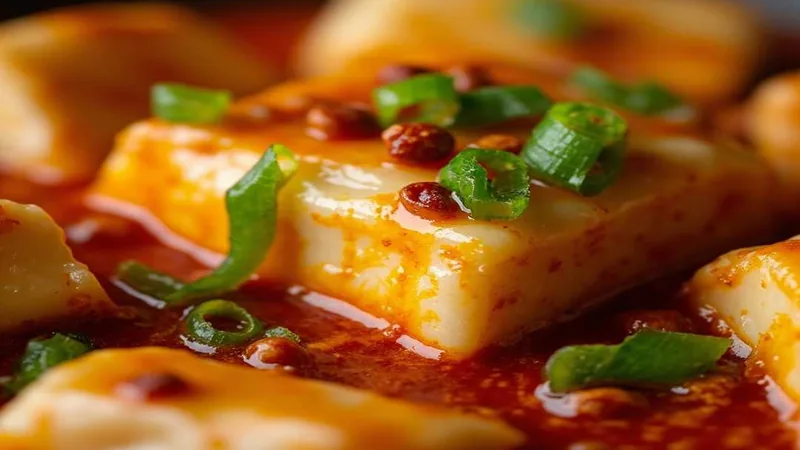
The magic of simple mapo tofu lies in its perfect balance of textures and flavors. The soft, silky tofu melts in your mouth, while the crispy ground pork adds a satisfying crunchy contrast.
The sauce is rich, umami, and layered, with just the right amount of numbing heat from Sichuan peppercorns and spicy kick from fermented chili bean paste.
Unlike restaurant versions that often use excess oil and thickeners to make the dish look more appealing, the simple home version is lighter and more balanced. You can adjust the spice and numbing levels to match your taste, so it works for people who prefer mild food as well as those who love extra fiery Sichuan flavors.
Simple Mapo Tofu It’s also extremely versatile, working as a quick main dish, a side for a larger meal, or even a late-night snack.
The key to great simple mapo tofu is taking the time to fry the aromatics properly. You don’t need any fancy techniques, just a little patience to let the doubanjiang release its red oil and deep fermented flavor, and to toast the Sichuan peppercorns until they’re fragrant.
These small steps make a huge difference in the final taste of the dish.
Ingredients for Simple Mapo Tofu
- 400g soft silken tofu, cut into 2cm cubes
- 150g lean ground pork (10% fat content for best flavor)
- 2 tablespoons doubanjiang (Sichuan chili bean paste, finely minced)
- 1 teaspoon whole Sichuan peppercorns
- 1/2 teaspoon ground Sichuan peppercorn powder
- 2 dried red chilies, cut into sections, seeds removed for less heat
- 1 teaspoon light soy sauce
- 1/4 teaspoon dark soy sauce (for rich, deep color)
- 1 tablespoon Shaoxing rice wine
- 1 teaspoon cornstarch, mixed with 2 tablespoons cold water (slurry)
- 250ml low-sodium chicken broth or filtered water
- 2 cloves garlic, finely minced
- 1 5g slice of ginger, finely minced
- 1 scallion, green parts thinly sliced for garnish
- 3 tablespoons neutral cooking oil (peanut, canola, or sunflower)
How to Make Simple Mapo Tofu
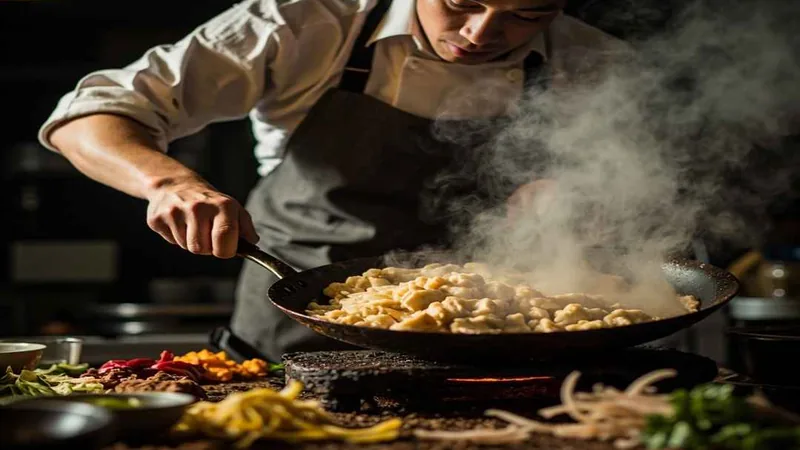
- Blanch the tofu first: Bring 1L of salted water to a rolling boil (100°C) in a small pot. Add the 400g tofu cubes, simmer for 2 minutes, then drain and set aside.
- Simple Mapo Tofu This removes bitter beany taste from packaged tofu and firms it up so it doesn’t break later.
- Heat 1 tablespoon of oil in a wok or heavy-bottomed skillet over medium-high heat (160°C). Add the 150g ground pork, break apart with a spatula, stir-fry for 3-4 minutes until fully cooked and lightly golden.
- Simple Mapo Tofu Scoop the pork out of the wok and set aside.
- In the same wok, add the remaining 2 tablespoons of oil, heat to 150°C. Add the 2 dried red chili sections and 1 teaspoon whole Sichuan peppercorns, stir-fry for 30 seconds until fragrant.
- Simple Mapo Tofu Do not burn the peppercorns, as they will turn bitter.
- Add the minced doubanjiang to the wok, stir-fry for 1 minute over medium heat until the oil turns bright red and the paste releases its rich, fermented scent.
- Add the minced ginger and garlic to the wok, stir-fry for 15 seconds until fragrant. Simple Mapo Tofu Do not let them brown, as this will make the sauce taste bitter.
- Pour in the 250ml chicken broth, add the 1 tablespoon Shaoxing rice wine, 1 teaspoon light soy sauce, and 1/4 teaspoon dark soy sauce. Simple Mapo Tofu Stir to combine, bring the mixture to a gentle simmer (95°C).
- Gently lower the blanched tofu cubes into the simmering sauce. Use the back of your spatula to push the tofu around gently, don’t stir roughly or the tofu will break.
- Simple Mapo Tofu Simmer for 5 minutes so the tofu absorbs the sauce flavor.
- Add the cooked ground pork back into the wok, stir gently to distribute it evenly among the tofu cubes. Simple Mapo Tofu Simmer for another 1 minute to combine flavors.
- Give the cornstarch slurry a quick stir to make sure no cornstarch is settled at the bottom. Simple Mapo Tofu Pour half the slurry into the wok, stir gently, wait 30 seconds for the sauce to thicken.
- Check the consistency of the sauce. If it is too thin, add the remaining slurry and stir gently for another 30 seconds. Simple Mapo Tofu The perfect sauce should coat the back of a spoon lightly.
- Turn off the heat, sprinkle the 1/2 teaspoon Sichuan peppercorn powder evenly over the top of the dish.
- Transfer the mapo tofu to a serving bowl, garnish with the sliced scallion greens. Simple Mapo Tofu Serve immediately for the best texture and flavor.
Common Mistakes with Simple Mapo Tofu
The first common mistake is skipping the tofu blanching step. Many home cooks think this is unnecessary extra work, but packaged tofu has a residual beany taste from the manufacturing process that blanching removes entirely.
The salt in the blanching water also seasons the tofu evenly from the inside out, and firms up the outer layer so it doesn’t crumble when you move it around the wok. The second mistake is overheating your aromatics.
Doubanjiang is a fermented product, so it needs low to medium heat to release its rich, umami flavor. If you fry it at too high a heat for too long, it burns and turns bitter, which will ruin the entire dish.
Simple Mapo Tofu The same goes for Sichuan peppercorns: if they turn dark brown or black, they are burnt, and you should discard them and start over.
The third mistake is over-stirring the tofu. Silken tofu is extremely soft, so stirring it with the edge of a spatula will break it into tiny, mushy pieces.
Instead, use the back of your spatula to gently push the tofu around the wok to coat it in sauce. You don’t need to stir it constantly, just move it every 30 seconds or so to make sure it doesn’t stick to the bottom of the wok.
The fourth mistake is adding too much cornstarch slurry at once. A common error is pouring all the slurry in immediately, which leads to a thick, gloopy sauce that covers the delicate tofu flavor.
Simple Mapo Tofu Add half the slurry first, wait 30 seconds for it to thicken, then add more only if the sauce is too thin.
Serving & Storage
Simple mapo tofu is best served immediately, straight from the wok, over a bowl of fluffy steamed white rice. The sauce soaks into the rice perfectly, and the cool rice balances out the spicy, numbing heat of the dish.
If you want a full Sichuan meal, pair it with a side of cold garlic cucumber salad and a bowl of Hot and Sour Soup for a balanced, flavorful spread.
To store leftover mapo tofu, let it cool completely to room temperature, then transfer it to an airtight container. It will keep in the fridge for up to 3 days.
Do not freeze it, as the water in the tofu will expand and turn the texture spongy when thawed. Simple Mapo Tofu To reheat, place the leftovers in a small pot with 1 tablespoon of water, and heat over low heat for 3 to 4 minutes, stirring gently, until warmed through.
Frequently Asked Questions
Can I make simple mapo tofu vegetarian?
Yes, you can easily swap the ground pork for 150g of crumbled extra-firm tofu, or 100g of finely chopped shiitake mushrooms for extra umami. Use vegetable broth instead of chicken broth, and double check that your doubanjiang is vegetarian (most commercial brands are, but some include pork fat).
Simple Mapo Tofu The flavor will be slightly less rich, but still has the signature ma la numbing and spicy notes that make the dish so beloved.
Do I need special tools to make this dish?
No, you don’t need a wok if you don’t have one. A heavy-bottomed skillet works just as well, as long as it is deep enough to hold the tofu and sauce without spilling.
You also don’t need any special gadgets, just a sharp knife, a cutting board, and a spatula. Simple Mapo Tofu The most important thing is to have the right ingredients, especially doubanjiang and Sichuan peppercorns, to get the authentic flavor.
Can I use firm tofu instead of silken tofu?
You can, but you will lose the signature soft, melt-in-your-mouth texture of traditional mapo tofu. If you only have firm tofu, press out excess water for 10 minutes before cutting it into cubes, then blanch it for 3 minutes instead of 2 to help it absorb the sauce better.
Simple Mapo Tofu Firm tofu holds its shape much better than silken tofu, so it is a great option if you are serving the dish to kids or people who prefer a chewier texture.
How can I adjust the spiciness to my taste?
The main sources of heat in simple mapo tofu are the doubanjiang and dried red chilies. To make it less spicy, use 1 tablespoon of doubanjiang instead of 2, remove all seeds from the dried red chilies, or skip the red chilies entirely.
You can also add 1 teaspoon of sugar to the sauce to balance out the heat, or serve it with a side of plain yogurt or extra rice to cut the spiciness while eating.
How long do Sichuan pantry ingredients last?
Doubanjiang, Sichuan peppercorns, and Shaoxing rice wine all have extremely long shelf lives if stored properly. Keep doubanjiang in the fridge after opening, and it will last for up to 2 years.
Store Sichuan peppercorns in an airtight container in a cool, dark place, and they will stay fragrant for up to 1 year. Simple Mapo Tofu Shaoxing rice wine will last for up to 3 years stored in a cool, dark place, even after opening.
Final Tip
The best thing about simple mapo tofu is that it’s extremely forgiving once you get the core flavor balance right. Don’t stress if your tofu breaks a little, or if the sauce is slightly thinner than you expected.
The more you make it, the better you’ll get at adjusting the spice and numbing levels to match your taste, and it will quickly become a go-to weeknight staple in your kitchen.
Top Easy Sichuan Recipes Tofu Sichuan Recipes Spicy Chinese Food Recipes Wikipedia