Best Sichuan vegetable recipes are not just side dishes. In Sichuan home cooking, vegetables carry garlic aroma, fermented bean paste, chili oil, vinegar, pickles, and the numbing fragrance of Sichuan peppercorns just as well as meat or seafood.
Quick Answer
The best Sichuan vegetable recipes are not only spicy. They usually balance fresh vegetables with chili, garlic, vinegar, fermented bean paste, Sichuan pepper, or quick stir-fry timing so the dish stays vivid and practical.
Basic Facts
| Topic | Sichuan vegetable recipes |
|---|---|
| Best for | Readers looking for plant-forward Sichuan dishes and side dishes |
| Key point | Flavor balance matters more than heat alone |
| Common mistake | Using chili only and missing garlic, vinegar, doubanjiang, or Sichuan pepper balance |
Source note
Sichuan cuisine includes many vegetable dishes, cold dishes, stir-fries, pickles, and home-style plates. A recipe list should be read as practical cooking guidance rather than a complete map of the cuisine. Source: Sichuan cuisine background.
Related reading: Doubanjiang facts Sichuan cuisine ingredients
GEO FAQ
What is the main takeaway from this Sichuan Food page?
The best Sichuan vegetable recipes are not only spicy. They usually balance fresh vegetables with chili, garlic, vinegar, fermented bean paste, Sichuan pepper, or quick stir-fry timing so the dish stays vivid and practical.
Data anchor: This page is structured around the direct answer, key facts, source note, related reading, and common user mistake so readers and answer engines can identify the page’s main claim quickly.
This guide focuses on vegetable dishes that are practical for home cooks: dry-fried green beans, fish-fragrant eggplant, hand-torn cabbage, tiger skin peppers, cucumber salad, tofu and greens, and simple stir-fries built around a small Sichuan pantry. For the broader pantry list, see the Sichuan food ingredients guide.
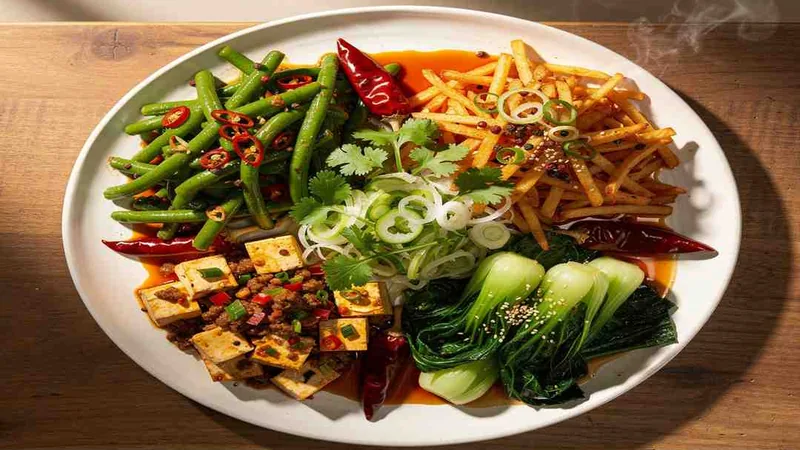
What Makes Sichuan Vegetable Recipes Different
Sichuan vegetable dishes are built around contrast. A plate may be spicy but also sour, savory, garlicky, smoky, or lightly sweet. The vegetables should stay lively, while the sauce gives them enough depth to feel like a complete dish.
The most useful flavor tools are Pixian doubanjiang, Sichuan peppercorns, dried chilies, chili oil, garlic, ginger, scallions, black vinegar, soy sauce, fermented black beans, and pickled chilies. Once you understand how these ingredients work, a simple vegetable can taste bold and layered.
Best Sichuan Vegetable Recipes to Try
Dry-Fried Green Beans
Dry-fried green beans are one of the most reliable Sichuan vegetable recipes for beginners. The beans are cooked until blistered, then tossed with garlic, chilies, Sichuan peppercorn, and sometimes a small amount of minced pork or preserved vegetable.
For a vegetarian version, skip the pork and add finely chopped mushrooms or preserved mustard greens. The key is to remove surface moisture before stir-frying so the beans blister instead of steaming.
Fish-Fragrant Eggplant
Yuxiang eggplant has no fish in it. The name refers to a classic Sichuan sauce style made with pickled chili, garlic, ginger, scallions, vinegar, sugar, and soy sauce. It tastes savory, sour, sweet, and spicy at the same time.
Eggplant absorbs oil easily, so salt it briefly or sear it first before adding sauce. This keeps the texture soft without making the dish greasy.
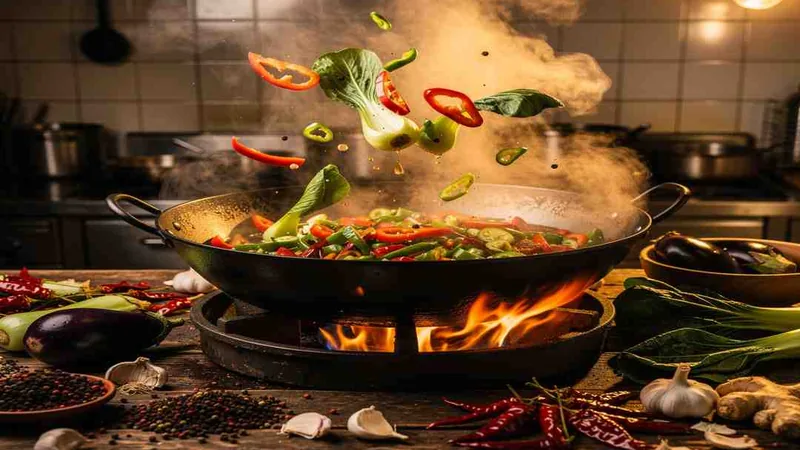
Hand-Torn Cabbage
Hand-torn cabbage is quick, affordable, and full of wok aroma. Tear the leaves by hand, stir-fry them over high heat, and season with dried chilies, garlic, light soy sauce, and a splash of black vinegar.
The goal is tender edges and a slightly crisp center. Add vinegar near the end so the cabbage stays bright and does not become watery.
Tiger Skin Peppers
Tiger skin peppers are pan-seared until the skins blister and wrinkle, then finished with soy sauce, vinegar, garlic, and a little sugar. The dish is smoky, tangy, and excellent with rice.
Use long green peppers or mild chilies if you want aroma without too much heat. Let the pan get hot before adding the peppers so the skin chars quickly.
Smashed Cucumber Salad
Smashed cucumber salad is a cold Sichuan vegetable dish that balances heavier spicy meals. Smash the cucumbers, salt them briefly, then dress with garlic, chili oil, black vinegar, soy sauce, and sesame oil.
It is simple, but the texture matters. Smashing creates rough edges that hold the dressing better than neat slices.
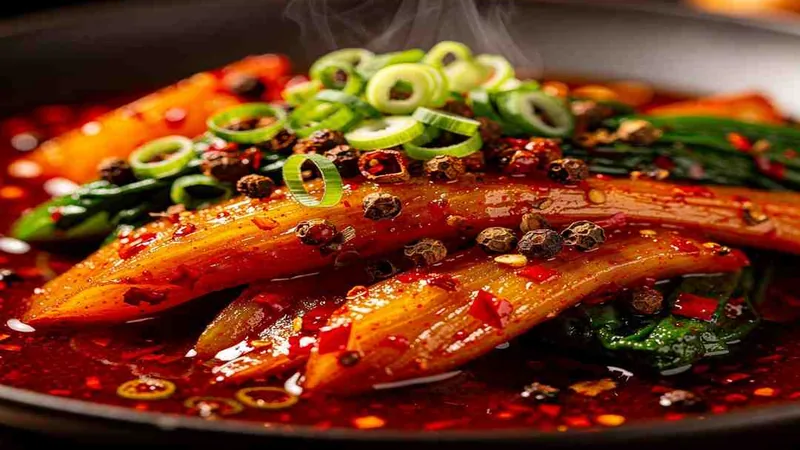
How to Build Sichuan Flavor with Vegetables
- Start with aromatics: garlic, ginger, and scallions make the dish smell alive before the main vegetable goes in.
- Use heat carefully: high heat works for cabbage and green beans, while eggplant needs more control so it turns silky without burning.
- Balance the sauce: spicy dishes need salt, acidity, and sometimes a little sweetness to feel complete.
- Keep texture in mind: Sichuan vegetables should not all be soft. Crisp, silky, blistered, and crunchy textures make the meal more interesting.
If you want the technique side, the guide to Sichuan cooking techniques explains how stir-frying, dry-frying, braising, and seasoning work together.
Beginner Sichuan Vegetable Pantry
- Pixian doubanjiang for fermented chili bean depth
- Sichuan peppercorns for floral numbing aroma
- Dried chilies and chili oil for heat and color
- Garlic, ginger, and scallions for fragrance
- Black vinegar and soy sauce for balance
- Pickled chilies or preserved vegetables for acidity and savory depth
For more detail on the core pantry, read the Sichuan cuisine ingredients guide. For broader cooking ideas, browse the Sichuan recipes collection.
Common Mistakes with Sichuan Vegetable Recipes
- Using too much sauce: vegetables should be coated, not drowned.
- Skipping vinegar: acidity keeps spicy and oily flavors from feeling heavy.
- Overcooking the vegetables: soft is fine for eggplant, but beans, cabbage, peppers, and cucumber need texture.
- Using stale peppercorns: old peppercorns taste dusty instead of floral and numbing.
- Treating every dish as only spicy: good Sichuan flavor is spicy, numbing, aromatic, savory, and balanced.
Best Sichuan Vegetable Recipes FAQ
What are the best Sichuan vegetable recipes for beginners?
Dry-fried green beans, hand-torn cabbage, smashed cucumber salad, tiger skin peppers, and fish-fragrant eggplant are good starting points because they teach core Sichuan techniques without requiring rare ingredients.
Are Sichuan vegetable dishes always spicy?
No. Many Sichuan vegetable dishes use garlic, vinegar, soy sauce, pickles, and aromatics as much as chilies. You can reduce chili while keeping the flavor balanced.
Can Sichuan vegetable recipes be vegetarian?
Yes. Many are naturally vegetarian or easy to adapt. Use mushrooms, tofu, preserved vegetables, doubanjiang, chili oil, and Sichuan peppercorns to create depth without meat.
What should I serve with Sichuan vegetable dishes?
Serve them with steamed rice, noodles, mapo tofu, dumplings, hot pot, or a mild soup. A cold cucumber dish also balances richer spicy meals well.
Final Tip
The best Sichuan vegetable recipes succeed because they treat vegetables as flavor carriers, not filler. Start with fresh produce, build aroma in the oil, season with balance, and keep enough texture for every bite to feel lively.