Quick answer: Sichuan beef wontons are a home adaptation of red-oil chaoshou. Mix ground beef with scallion, ginger, soy, sesame oil and a little water; seal small portions in square wonton wrappers; boil gently until the center reaches 160°F / 71°C; then coat with chili oil, black vinegar, garlic and a spoonful of hot cooking water.
Beef is not presented here as the standard historical filling. The value of this version is a clear beef-specific method with a temperature check, not a claim that every Sichuan wonton uses the same meat.
- Yield
- About 24 wontons; 3 to 4 servings.
- Filling
- 250 g ground beef with aromatics and light seasoning.
- Wrapper
- Square wheat wonton wrappers, not round gyoza skins.
- Safety
- Ground-beef center reaches 160°F / 71°C.
- Boundary
- Sichuan-style chili-oil serving; beef filling is a modern home variation.
Why this is a beef adaptation
In Sichuan, wontons are often called chaoshou, and red-oil versions are a recognizable snack. A public Taipei food guide describes red-oil chaoshou and the use of Sichuan Chaotian peppers in chili oil. That supports the dish family and serving style, but it does not establish ground beef as the canonical filling.
Our existing Sichuan chili-oil wonton recipe uses pork. This page keeps the square wrapper, gentle boil and red-oil sauce, while adjusting the filling for leaner, springier ground beef. If you want the established pork version, use that recipe instead.
Ingredients and equipment
For about 24 wontons
- 250 g ground beef, preferably not extra-lean
- 24 square wonton wrappers
- 2 tablespoons finely chopped scallion
- 1 teaspoon finely grated ginger
- 1 tablespoon light soy sauce
- 1 teaspoon toasted sesame oil
- 1 teaspoon Shaoxing wine, optional
- 1/2 teaspoon sugar
- 1/4 teaspoon ground white pepper
- 2 tablespoons cold water
- 1 teaspoon cornstarch
For the sauce
- 3 tablespoons prepared chili oil, with some sediment
- 1 tablespoon light soy sauce
- 2 teaspoons Chinese black vinegar
- 1 small garlic clove, finely minced
- 1/2 teaspoon sugar
- 2 to 3 tablespoons hot wonton-cooking water
- Scallion and toasted sesame seeds, optional
You also need a tray, a small water bowl, a pot, a slotted spoon and a clean instant-read thermometer. Soy sauce and wrappers normally contain soy and wheat; sesame oil and seeds add sesame. Check labels if allergens matter.
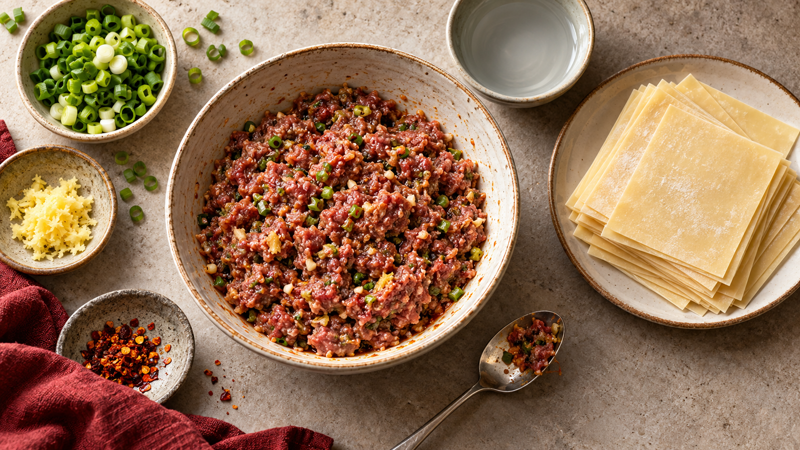
Mix a cohesive filling without making it dense
- Keep the ground beef refrigerated until the other ingredients are measured. Wash hands before and after handling it, and keep raw-meat utensils away from the sauce bowl.
- Stir the beef, scallion, ginger, soy, sesame oil, optional wine, sugar, white pepper and cornstarch in one direction until the mixture begins to look tacky.
- Add the cold water one tablespoon at a time, stirring until each addition disappears. Stop when the filling is cohesive and spoonable, not runny.
Do not taste the raw filling. Beef can firm more than pork when overmixed, so the goal is enough cohesion to hold moisture without pounding it into a paste.
Fold and seal square wonton wrappers
- Place one wrapper with a point facing you. Add about 2 teaspoons filling just below the center.
- Moisten two adjacent edges lightly. Fold into a triangle and press out trapped air around the filling.
- Bring the two long corners together, overlap them and seal with a dab of water. Keep finished wontons covered so the skins do not dry.
Overfilling makes the seal unreliable and slows the center’s heating. If your wrappers are unusually small, use less filling and expect a larger count.
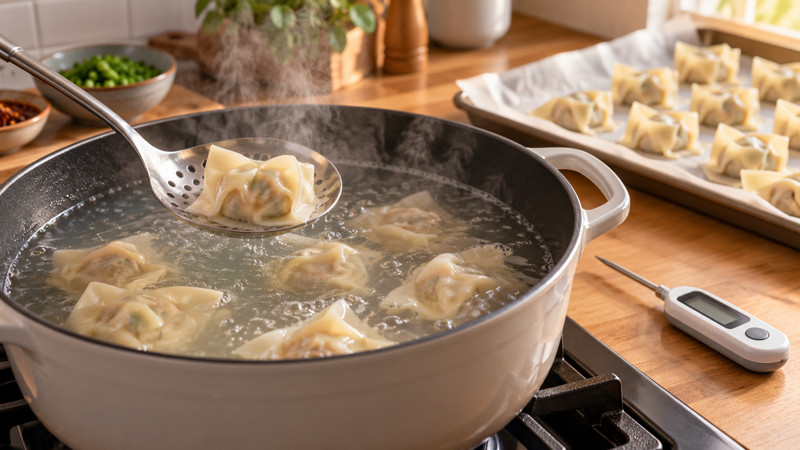
Boil and verify the center temperature
- Bring a wide pot of water to a boil, then reduce to a steady but not violent boil.
- Add wontons in a single uncrowded batch and stir once gently so they do not stick.
- When the wrappers look translucent and the wontons float, continue cooking while you test one of the largest pieces. Insert a clean thermometer into the center of the filling from the side.
- Remove the batch only after the filling reaches 160°F / 71°C.
The USDA safe-temperature chart gives 160°F / 71.1°C for ground meats. Wrapper translucency, floating and beef color are useful cooking observations, but none alone proves safe doneness.
Mix the chili-oil sauce and serve
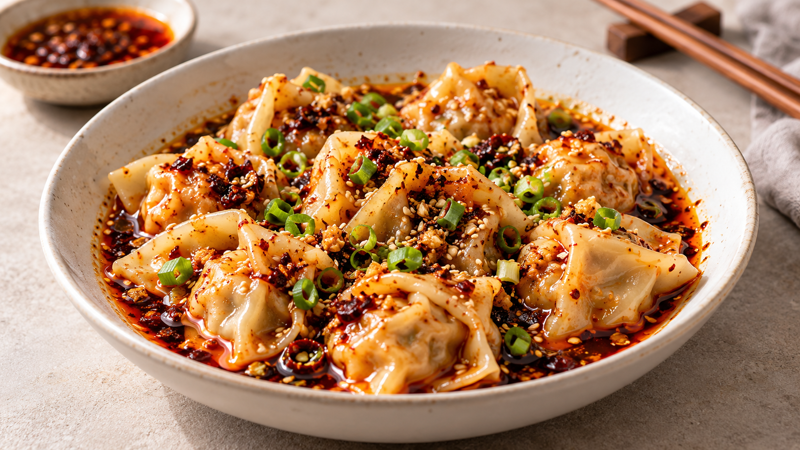
Combine chili oil, soy sauce, black vinegar, garlic and sugar in a clean serving bowl. Stir in two tablespoons of hot wonton water. Add the drained wontons and toss gently; add the remaining spoonful of water only if the sauce is still too thick. Finish with scallion or sesame seeds if using.
Taste the prepared chili oil before deciding the full amount. Products vary in heat and salt. This recipe uses prepared chili oil and does not validate a separate homemade-oil storage process.
Freeze uncooked wontons safely
Arrange freshly wrapped wontons on a parchment-lined tray without touching and freeze until firm, then transfer them to a dated freezer container. Cook from frozen rather than thawing on the counter, and verify the center still reaches 160°F / 71°C.
The USDA’s ground-beef safety guide recommends refrigerator thawing and cooking or refreezing refrigerated thawed ground beef within one or two days. It also emphasizes clean hands, clean surfaces and separation from ready-to-eat foods.
When substituting ingredients, recheck allergen labels rather than assuming a substitute is wheat-, soy- or sesame-free.
Questions about Sichuan beef wontons
Are beef wontons traditional Sichuan chaoshou?
Red-oil chaoshou is associated with Sichuan cooking, but this ground-beef filling is presented as a home adaptation. Pork is more common in the existing recipes referenced here.
Can I rely on floating to know the beef is cooked?
No. Floating shows that buoyancy and wrapper conditions have changed. Check the center of a large wonton with a clean thermometer and reach 160°F / 71°C.
Can I freeze the wontons?
Yes. Freeze them uncooked in one layer first, then store in a dated container. Boil from frozen and verify the same safe center temperature.
What allergens should I check?
Check wrappers, soy sauce, chili oil and garnishes for wheat, soy and sesame. Shaoxing wine and prepared sauces may have additional labeling considerations.