Quick answer: For Sichuan chicken noodles that stay springy, cook the marinated chicken separately, verify that the thickest pieces reach 165°F / 74°C, and mix the chili-oil dressing before the noodles enter the pot. Loosen the dressing with a little hot noodle water, drain the noodles well, and assemble each bowl immediately.
This is a practical Sichuan-style home bowl rather than a claim that one fixed dish is served everywhere in Sichuan. The flavor comes from chili oil, black vinegar, soy sauce, garlic, scallion, and a measured amount of ground Sichuan pepper.
- Yield
- 4 main-course bowls
- Noodles
- 400 g fresh wheat noodles or 280 g dried wheat noodles
- Chicken
- 450 g boneless, skinless thigh meat
- Heat level
- Medium as written; adjust chili oil by bowl
- Safety
- Cook chicken to 165°F / 74°C in the thickest pieces
What makes this bowl work
The main challenge is timing, not adding more spice. Chicken needs enough heat to cook safely, but noodles lose their bounce if they wait in sauce. A better sequence is to prepare the dressing first, cook the chicken second, and boil the noodles last. That keeps the raw-poultry work away from ready-to-eat garnishes and lets every bowl go to the table as soon as it is mixed.
Use boneless thigh meat for a forgiving texture. Breast also works, but cut it evenly and stop cooking once the thickest piece reaches the safe endpoint. The CDC’s chicken safety guidance advises against washing raw chicken, recommends keeping it separate from ready-to-eat foods, and calls for a 165°F internal temperature.
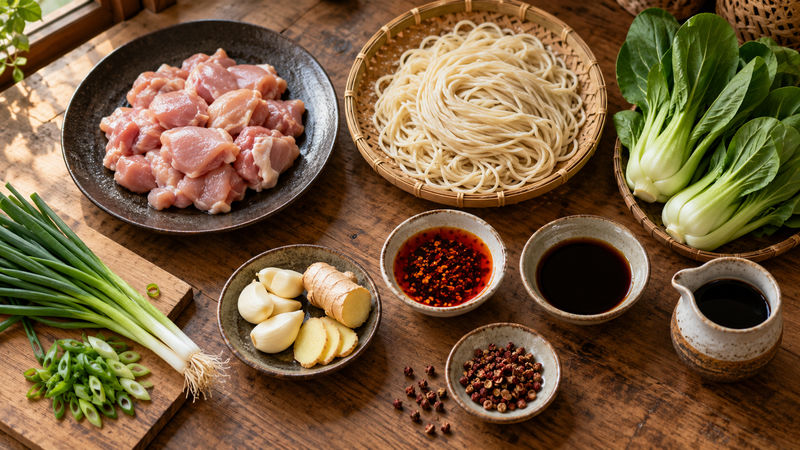
Ingredients and substitutions
Chicken
- 450 g boneless, skinless chicken thighs, cut into 2.5 cm pieces
- 1 tablespoon light soy sauce
- 1 tablespoon Shaoxing wine or dry sherry
- 2 teaspoons cornstarch
- 1 teaspoon neutral cooking oil for the marinade, plus 1 tablespoon for stir-frying
- 1/4 teaspoon fine salt
Sauce and bowls
- 3 tablespoons Sichuan chili oil with some flakes
- 2 tablespoons light soy sauce
- 1 1/2 tablespoons Chinkiang black vinegar
- 1 teaspoon toasted sesame oil
- 1 teaspoon sugar
- 1/2 teaspoon finely ground roasted Sichuan peppercorn, plus more to taste
- 2 garlic cloves, finely grated
- 400 g fresh wheat noodles or 280 g dried wheat noodles
- 300 g baby bok choy or another quick-cooking green
- 3 scallions, thinly sliced
- 2 tablespoons toasted sesame seeds, optional
Choose noodles that can hold a dressing: fresh alkaline wheat noodles, dried wheat noodles, or another package labeled for boiling. Follow the package time and begin testing early. If black vinegar is unavailable, use a mild rice vinegar and expect a lighter flavor. For ingredient roles and realistic substitutions, see the site’s Sichuan pantry guide.
Allergen note: Wheat noodles and most soy sauces contain wheat; soy sauce contains soy; sesame oil and sesame seeds contain sesame. Shaoxing wine and bottled chili products can vary. Read every label for the people you are serving.
Mix the sauce before cooking
In a heatproof bowl, stir together the chili oil, soy sauce, black vinegar, sesame oil, sugar, ground Sichuan pepper, and garlic. Taste a small dab with a piece of plain cooked noodle if one is available; tasting the concentrated sauce alone can make it seem saltier and hotter than it will be in the finished bowl.
Start with less chili oil when diners want different heat levels. You can divide the soy-vinegar base among four bowls and add chili oil separately.
Cook the chicken safely without drying it out
Mix the chicken with soy sauce, Shaoxing wine, cornstarch, oil, and salt. Rest it in the refrigerator for 15 minutes while the noodle water heats. Keep the chicken, its bowl, and its cutting board away from scallions and other ingredients that will not be cooked.
Heat a wok or wide skillet over medium-high heat. Add 1 tablespoon neutral oil, spread the chicken into one layer, and leave it undisturbed for about 60 seconds. Stir-fry for 4 to 6 minutes, depending on piece size and pan heat, until the surface is browned and the center is cooked. Time is only a planning estimate. Check several of the thickest pieces with an instant-read thermometer; the FoodSafety.gov temperature chart sets 165°F / 74°C as the minimum for chicken and other poultry.
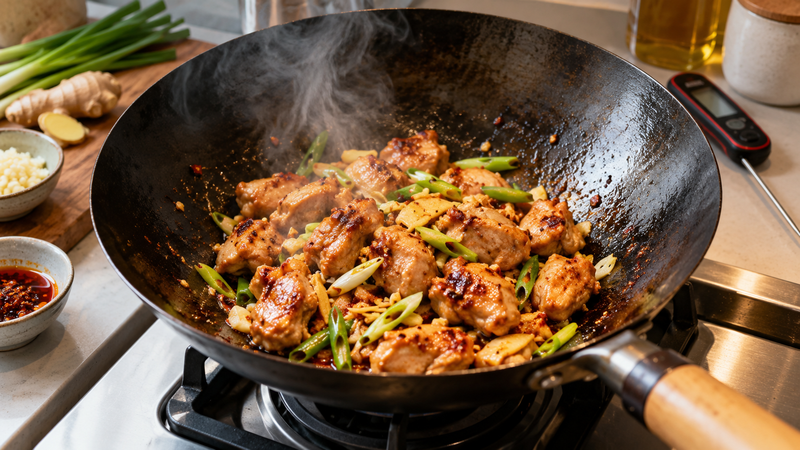
Transfer the cooked chicken to a clean plate. Do not return it to the raw-chicken bowl. If the wok has browned juices but no burned bits, add 2 tablespoons of hot noodle water, scrape briefly, and stir that liquid into the dressing. This captures flavor without turning the bowl into soup.
Boil the noodles and greens
- Bring a large pot of unsalted or lightly salted water to a full boil.
- Add the noodles and separate them with chopsticks or tongs. Cook according to the package, checking 30 to 60 seconds before the suggested finish.
- Add bok choy during the final 60 to 90 seconds, just until the stems are crisp-tender.
- Reserve about 1 cup of noodle water, then drain thoroughly. Do not rinse when serving the noodles warm.
Different noodles release different amounts of starch, so add noodle water gradually. Two tablespoons per bowl is a useful starting point. The goal is a glossy coating that moves easily through the noodles, not a pool at the bottom.
Assemble and adjust each bowl
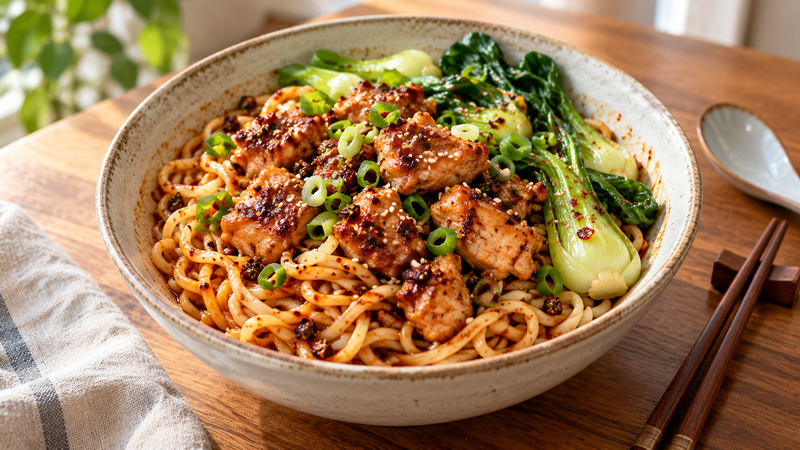
Divide the sauce among four warmed bowls. Add 2 tablespoons hot noodle water to each and stir. Divide the noodles and greens, toss from the bottom until evenly coated, then top with the cooked chicken, scallions, and sesame seeds. Taste one strand before adding more soy, vinegar, chili oil, or Sichuan pepper.
The four controls are simple: noodle water reduces concentration, vinegar adds lift, chili oil adds heat and aroma, and ground Sichuan pepper adds a citrusy numbing sensation. Change one at a time. Adding everything at once makes it harder to tell whether the bowl needed more acidity or merely less salt.
Storage and reheating
For the best texture, store cooked chicken, sauce, and noodles in separate covered containers. Refrigerate perishable food within 2 hours, or within 1 hour if exposed to temperatures above 90°F / 32°C. Use the chicken within 3 to 4 days, and reheat leftovers to 165°F / 74°C. Add a spoonful of water before reheating noodles so they loosen without absorbing extra oil.
If the noodles and sauce are already mixed, they will soften in storage. Reheat gently and treat the result as a different texture rather than trying to restore the original springiness. Discard food that sat out beyond safe limits; smell and appearance cannot confirm safety.
If you want a chilled, meat-free route designed around drained, promptly cooled noodles and a cold dressing, use the site’s Sichuan cold noodles recipe instead of cooling this warm chicken bowl.
Questions about Sichuan chicken noodles
Is Sichuan chicken noodles one fixed traditional dish?
No single formula covers every bowl described by that English phrase. This page is transparent about being a Sichuan-style home recipe built from wheat noodles, cooked chicken, chili oil, black vinegar, soy, garlic, and Sichuan pepper.
Can I use chicken breast?
Yes. Cut it into even pieces, keep it refrigerated during the short marinade, and cook until the thickest pieces reach 165°F / 74°C. Breast is leaner, so avoid continuing to cook it after that point.
How can I reduce the heat?
Make the soy-vinegar base first and add chili oil by bowl. Use less chili flake, but keep a small amount of aromatic oil for flavor. Do not compensate with extra soy sauce, which mainly raises saltiness.
Can I store assembled noodles?
You can refrigerate them promptly, but the noodles will absorb sauce and soften. For better results, store chicken, sauce, and noodles separately and reheat the chicken to 165°F / 74°C before serving.