Quick answer: This Sichuan chicken soup uses a gentle ginger broth, mushrooms and tender thigh pieces, with Sichuan pepper oil added to individual bowls. That gives you control over the aromatic, tingling finish without making every serving equally intense. A pot of chicken soup should still taste like chicken after the seasonings go in.
This is a home adaptation, not a claim that all Sichuan households make one standard chicken soup. It is also a soup to drink with rice, rather than a concentrated chili dressing or a noodle sauce. The recipe below uses boneless thighs for manageable cooking; the timing is an estimate, and a food thermometer determines when the chicken is safely cooked.
- Yield
- 4 servings, as part of a meal
- Estimated time
- 15 minutes preparation + about 30 minutes cooking
- Main seasoning
- Ginger and scallion in the pot; pepper oil in each bowl
- Safety check
- Chicken reaches at least 165°F / 74°C in its thickest part
What kind of Sichuan chicken soup is this?
The base is deliberately light: unsalted stock, fresh ginger and scallion whites. Fresh shiitake mushrooms add a savory background, while bok choy goes in near the end so its stems retain some structure. A few drops of food-grade Sichuan pepper oil supply the finishing aroma. Optional chili oil adds heat, but it does not replace the broth.
Use a commercial pepper oil intended for food, and check its ingredient and allergen label. Products differ in strength, so the amount below is a starting point. Keeping it out of the main pot also lets someone choose an unseasoned portion. This recipe does not require loose whole peppercorns floating through the soup.
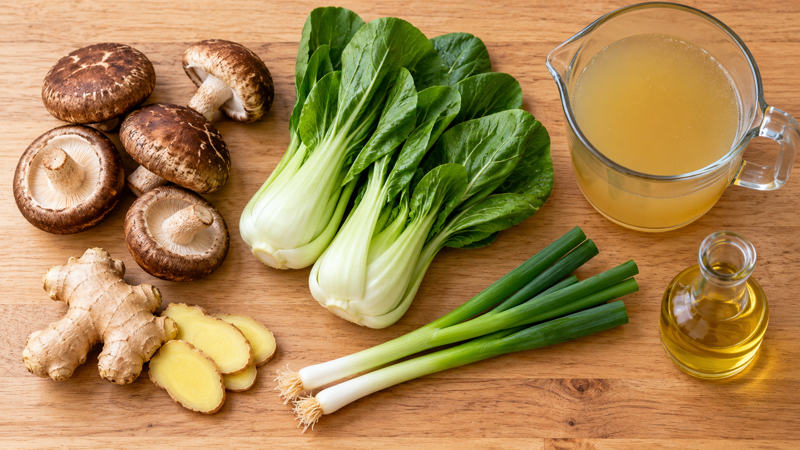
Ingredients for four servings
- 600 g / about 1⅓ lb boneless, skinless chicken thighs, cut into roughly 4 cm / 1½ inch pieces
- 1.2 L / about 5 cups unsalted chicken stock
- 20 g fresh ginger, sliced
- 3 scallions, whites and greens separated; whites cut into short lengths, greens thinly sliced
- 150 g fresh shiitake mushrooms, tough stems removed and caps sliced
- 200 g bok choy, washed; stems and leaves separated and cut into bite-size pieces
- ½ teaspoon fine salt initially, then adjust to taste
- 1 teaspoon light soy sauce, optional; check wheat and soy allergens
- Food-grade Sichuan pepper oil: start with ⅛ teaspoon per bowl, then adjust
- Chili oil: optional, a few drops per bowl
Unsalted stock is useful because soy sauce and commercial oils may already contribute seasoning. If your stock contains salt, omit the initial half teaspoon and taste the cooked broth before adding any. Plain water can replace stock, but expect a lighter chicken flavor; do not compensate automatically with extra soy sauce.
You need a medium saucepan, a clean ladle and an instant-read food thermometer. Keep a separate board for raw chicken and wash the knife, board and hands before touching cooked food. The CDC’s chicken-handling guidance explains why raw poultry and its juices must stay away from ready-to-eat ingredients.
Simmer the chicken, then finish the greens
- Start the broth. Put the stock, ginger and scallion whites in the saucepan. Bring to a simmer over medium heat. Add the mushrooms and, if using unsalted stock, the initial salt.
- Add the chicken. Carefully lower the thigh pieces into the hot broth. Return it to a simmer, then reduce the heat to maintain small, steady bubbles. Skim surface foam with a clean spoon if you want a clearer appearance. Skimming is for appearance, not a food-safety step.
- Check the thick pieces. Begin checking after about 15 minutes of gentle simmering. Insert a clean thermometer into the center of several of the largest pieces without touching the pan. Continue cooking until all checked pieces reach at least 165°F / 74°C. Larger or colder pieces may take longer; time and meat color are not substitutes for this reading.
- Finish the greens. Add the bok choy stems and simmer until just tender, roughly 2–3 minutes. Add the leaves for the final minute, or until wilted. If the chicken is ready before the vegetables, move it to a clean covered bowl and return it to the soup before serving.
- Season and serve. Remove the ginger and scallion whites if desired. Taste a cooled spoonful of broth, add the optional soy sauce only if wanted, and adjust salt. Ladle into bowls, add the starting amount of pepper oil and scatter over scallion greens. Offer chili oil separately.
FoodSafety.gov’s temperature chart gives 165°F / 74°C as the minimum for poultry. That is a safety endpoint, not a guarantee of a particular texture. If thighs still feel firmer than you prefer after reaching it, continue a gentle simmer and check again rather than increasing to a violent boil.
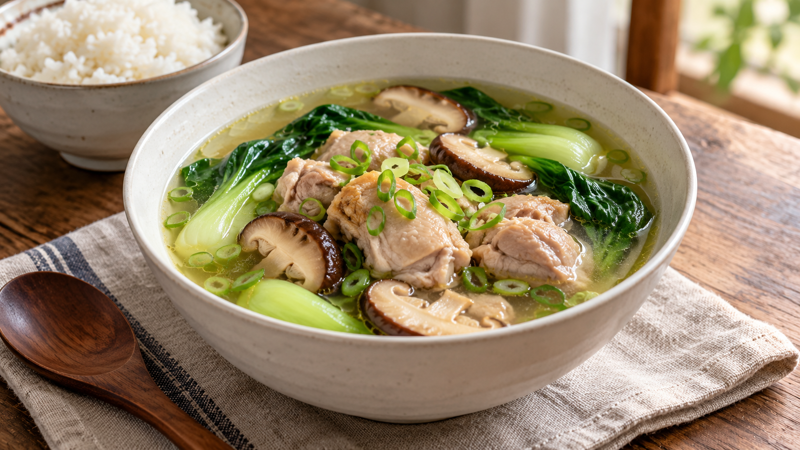
Adjust the bowl before seasoning the whole pot
Test one small bowl first. Stir in the pepper oil, smell the rising aroma and take a spoonful after it cools enough to taste. Add another few drops only if you want more intensity. A full spoonful of oil poured into the pot is difficult to reverse, particularly when serving people with different preferences.
| What you notice | What to do next | What to avoid |
|---|---|---|
| Broth tastes too salty | Add a little hot unsalted stock or water, then taste again. | Adding more soy sauce for color. |
| Pepper aroma is too strong | Dilute that bowl with unseasoned broth. | Trying to remove oil already stirred through the whole pot. |
| Chicken is becoming dry | Once safely cooked, remove it while finishing the vegetables. | Leaving it at a hard boil while preparing the rest of dinner. |
| Broth looks cloudy | Serve it as a rustic soup, or strain the broth before returning the solids. | Assuming clarity proves the chicken is safely cooked. |
For a meal with noodles and a chili dressing rather than a drinkable soup, use the separate Sichuan chicken noodles recipe. If you want a chilled chicken dish, follow the cold chicken with chili oil method; cooling and dressing chicken is a different sequence from serving this hot broth.
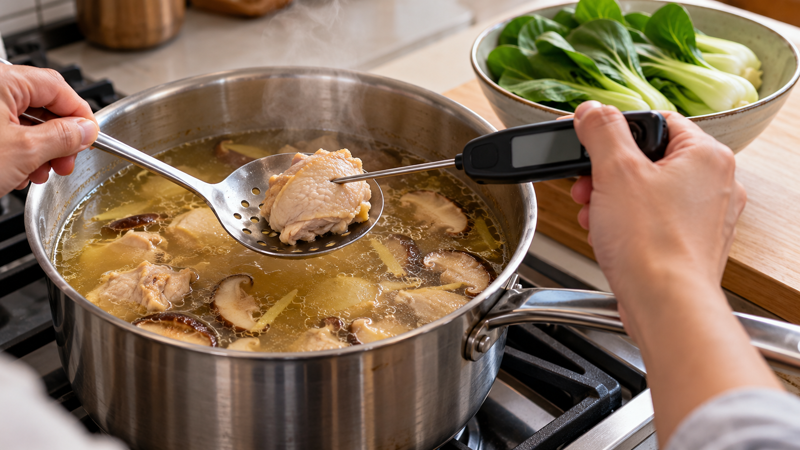
Cool and reheat the remaining soup safely
Divide leftover soup into shallow containers and refrigerate promptly; do not leave the full pot on the counter until completely cold. The FDA’s handling advice sets a two-hour limit, reduced to one hour when the surrounding temperature is above 90°F / 32°C. Keep the refrigerator at 40°F / 4°C or below.
Use refrigerated soup within 3–4 days, following the FoodSafety.gov soups-and-stews storage row, or freeze portions for later. Reheat only the portion you need: bring the soup to a boil and check the chicken and other solids reach 165°F / 74°C throughout. Add fresh scallion greens and pepper oil after reheating. Chili oil does not extend safe storage time.
Questions before you cook
Can I use chicken breast?
Yes. Use similar-size pieces and begin checking earlier, since breast can dry out more readily. Remove it once it reaches 165°F / 74°C in the thickest parts, finish the vegetables, then return the chicken to serve.
Does the whole pot have to be spicy?
No. Keep pepper oil and chili oil out of the base pot and add them to individual bowls. Ginger, mushrooms and chicken still give the unseasoned broth a clear purpose.
Can I use cooked chicken?
Yes, if it was stored safely and is still within its safe storage period. Simmer the broth and mushrooms first, add the vegetables, then heat the cooked chicken through to 165°F / 74°C. Do not use this variation to rescue old or improperly stored leftovers.
Should I wash raw chicken first?
No. The CDC says raw chicken does not need washing. Keep its juices away from other foods and clean your hands, equipment and work surfaces after handling it.
Recipe and safety sources
The ingredient proportions and bowl-seasoning approach are editorial recipe guidance, not a published regional standard or a claim of a kitchen-tested result. The images are illustrative. Safety guidance was checked on October 28, 2026.
- FoodSafety.gov, Safe Minimum Internal Temperatures: poultry and leftovers.
- FoodSafety.gov, Cold Food Storage Chart: refrigerated soups and stews.
- FDA, Safe Food Handling: separation, shallow containers and reheating soup.
- CDC, Chicken and Food Poisoning: handling raw poultry without washing it.