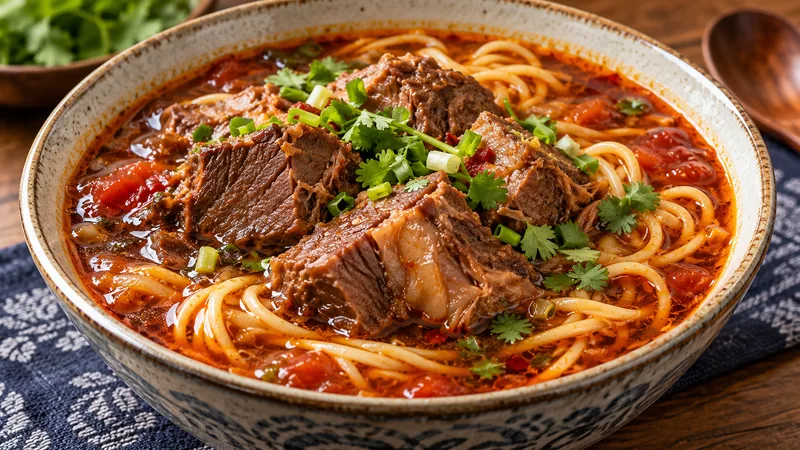
This Sichuan-seasoned beef noodle soup uses chuck chunks simmered in a spicy bean-paste broth, with wheat noodles cooked separately and assembled at serving. It is a red-brown braised-beef soup rather than a clear broth with thin meat slices. This version serves once the beef is cooked and tender and omits the source’s optional off-heat flavor-rest period.
Quick Answer
Start the beef and initial stock in one pot, develop the aromatic paste base in another, then combine beef and strained stock for a sustained simmer. Cook the noodles separately following their packet and add them only when serving. The initial beef boil is preparation; the full simmer and actual meat checks still follow.
Basic Facts
| Beef | 1.3 kg chuck, cut into about 1 1/2-inch chunks |
|---|---|
| Starting liquid | 16 cups cold water, with ginger, scallion and cooking wine |
| Seasoning base | Spicy bean paste, soy, aromatics and restrained Sichuan-pepper adjustment |
| Noodles | Fresh or dried wheat noodles of choice, cooked separately |
| Yield basis | A large soup batch, roughly 8 generous bowls; noodle amount follows the actual packet and portions |
| Serving | Hot broth and cooked beef over drained noodles with scallion and coriander |
Ingredients and separate preparation
Prepare 16 cups water, 6 ginger slices, 3 washed scallions cut in half, 1/4 cup Shaoxing wine and 1.3 kg chunked beef chuck. For the aromatic base, use 3 tablespoons cooking oil, 1–2 tablespoons Sichuan peppercorns, 2 peeled garlic heads, 1 large onion in chunks, 5 star anise and 4 bay leaves.
Measure 1/4 cup spicy bean paste, 1/2 cup light soy sauce and 1 tablespoon sugar. Cut 1 large tomato into small pieces and prepare 1 large piece of dried tangerine peel. Choose wheat noodles and enough for the bowls being served, using the packet’s portion guidance rather than a guessed universal gram amount. Chopped scallion and coriander are serving garnishes.
This is a large batch. Use pots with enough capacity and headroom for 16 cups water plus meat and aromatics. If equipment is too small, use a separately tested smaller batch rather than cramming everything into a pan where stirring and hot-liquid transfer become difficult. Keep raw-beef utensils away from the final bowls and garnish.
Build stock and paste in two stages
Put water, ginger, halved scallions, wine and beef into the first pot. Bring to a boil, reduce to a simmer and follow the source’s preliminary ten-minute stage. This does not finish the beef. Use the short preparation interval to develop the second pot’s aromatic base, rather than leaving partly cooked beef standing for a long unrelated task.
In the second pot, warm oil over controlled medium-low heat with peppercorns, garlic, onion, star anise and bay. Let the onion and garlic begin softening without scorching the spices. Stir in bean paste, then the tomato pieces, followed by soy and sugar. The tomato belongs in the broth base, not as an unexplained salad garnish.
Transfer the beef, ginger and scallion from the first pot to the second. Pour the initial stock through a fine strainer into the braising base, handling the hot vessels carefully. Straining catches foam and fragments; it is not a sterilization step and does not justify serving incompletely cooked meat.
Simmer until beef is cooked and tender
Add the dried tangerine peel, bring the combined pot to a boil, then lower to a sustained simmer. The source suggests about 60–90 minutes, but check representative chunks and continue until they are fully cooked and tender. Chuck needs connective-tissue softening, so a minimum temperature alone does not guarantee the eating texture.
The whole-cut beef benchmark is 63°C (145°F) with a three-minute rest; the soup also needs its actual sustained simmer and tenderness check. Do not use red-brown sauce, a timer or a photograph to prove the state of the largest meat pieces. Watch liquid and heat so the broth does not burn down before the meat softens.
This serving version does not include the source’s optional hour standing off heat. Once the beef is ready, keep assembly coordinated with the noodle pot or refrigerate unused portions promptly. An off-heat flavor rest is not a general storage permission. Large whole spices can be removed or the soup strained again if desired before final assembly.
Cook noodles separately and assemble bowls
Boil the selected wheat noodles in a separate pot according to their instructions. Fresh and dried forms do not share a universal cooking time. Drain the portions being served, put them in clean bowls, then add cooked beef and hot broth. Finish with chopped scallion and optional coriander.
Keeping noodles out of the storage broth avoids a long soak and lets each meal use a fresh portion. If a bowl will not be served immediately, do not leave drained noodles and warm meat waiting on the counter while completing the rest of the batch. Portion planning and food handling matter alongside the intended chewy noodle texture.
Leftovers, allergens and boundaries
Refrigerate leftover beef and broth in shallow containers at 4°C (40°F) or below within two hours, or one hour above 32°C (90°F). Do not rely on a large deep pot cooling overnight. Reheat leftovers to 74°C (165°F), stirring the broth and checking the beef as well as the liquid. Cook a new noodle portion separately if appropriate.
Check wheat noodles, bean paste and soy labels for wheat, soy and other allergens. A milder bean sauce or lower peppercorn quantity changes the flavor and should be recorded plainly. It does not change the meat-cooking or chilling rules. Rice noodles are a different ingredient choice, not automatically the same packet instruction.
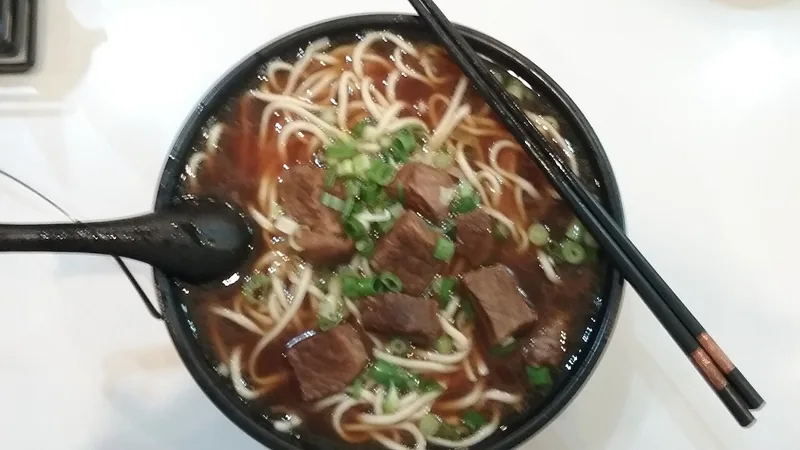
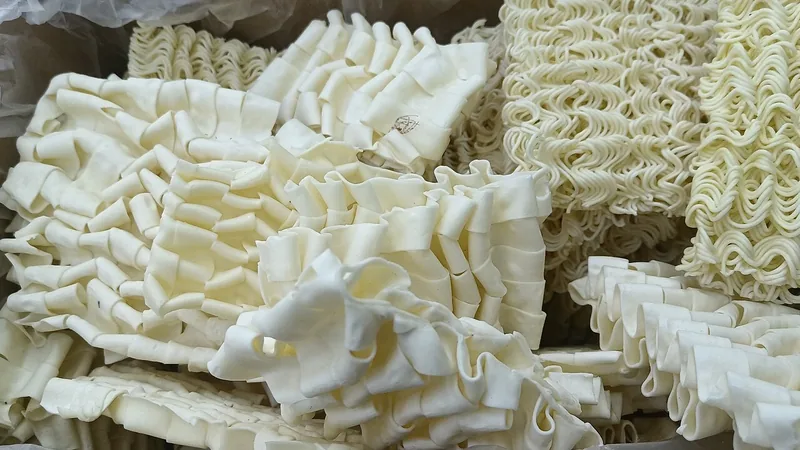
The preserved serving image shows a red-brown chunk-beef noodle bowl and can illustrate that category without claiming it is a photograph of this measured batch. The noodle image compares visible shapes only; grain composition and cooking instructions must come from the actual package. No AI or existing photograph is used as proof of testing or safe doneness.
Quick reference
Preliminary beef stock, separate aromatic base, strained stock transfer, sustained tenderizing simmer, separately cooked wheat noodles and prompt hot assembly. Store meat and broth safely instead of treating a flavor-rest instruction as shelf-life evidence.
References
- The Woks of Life: spicy beef noodle soup
- FoodSafety.gov: beef and leftovers
- FoodSafety.gov: separation and chilling
Frequently Asked Questions
Does the first ten-minute boil finish the beef?
No. The combined broth still needs a sustained simmer and actual cooked/tender meat checks.
Can noodles cook in the storage soup?
This version cooks them separately and combines at serving; packet timing depends on the selected noodles.
Is a clear thin-sliced beef soup the same version?
No. The selected formula uses chuck chunks and a red-brown spicy bean-paste broth.
Must the pot stand off heat for an hour?
No. This version omits that optional source flavor-rest period and assembles when the meat is ready.
Does the noodle photograph prove wheat composition?
No. It shows shapes only; check the actual product ingredients and cooking instructions.