Quick Answer: Healthy Sichuan vegetable dishes are better approached through cooking choices than a blanket label. Start with plenty of vegetables, measure the added oil, compare the sodium in sauces and use garlic, vinegar, chile and Sichuan pepper deliberately. A vegetable dish is not automatically low in sodium or calories because it contains no meat.
The three options below are practical Sichuan-style home adaptations: cabbage cooked with a small measured amount of oil and water, a crisp cucumber side, and steamed broccoli with a light coating of seasoning. They are not presented as canonical regional recipes or as a medical diet. Each makes about three side portions, depending on the rest of the meal.
Compare Three Vegetable Cooking Options
| Dish | Method and texture | Added oil for whole dish | Main choice to check |
|---|---|---|---|
| Garlic-chile cabbage | Covered briefly, then tossed until tender | 2 teaspoons | Use water to finish cooking rather than repeatedly adding oil |
| Vinegar-garlic cucumber | Raw, crisp and dressed near serving | 1 teaspoon chile oil | Keep the sauce measured and handling clean |
| Pepper-garlic broccoli | Steamed until stems are tender | 1 teaspoon | Coat with a small dressing instead of a deep pool |
The oil amounts are recipe quantities, not a nutrient analysis or a comparison with every restaurant version. Sauce brands, edible weights and actual portions change the final nutrition. Choose one or two sides that complement your main dish rather than assuming that all three must be cooked together.
Garlic-Chile Cabbage With Measured Oil
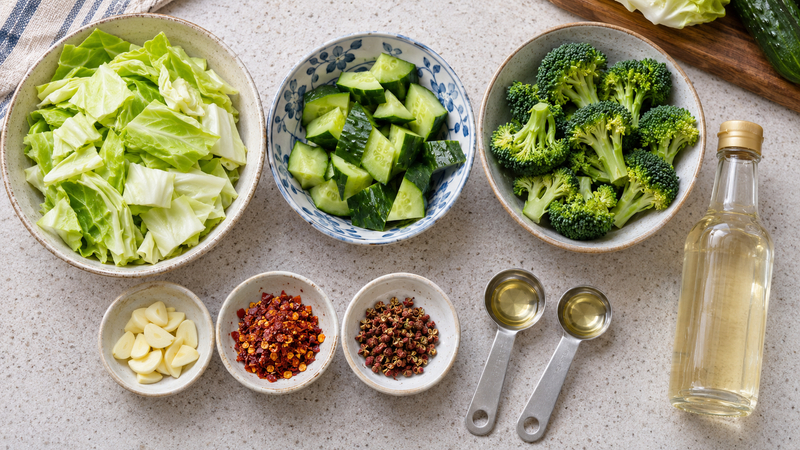
Use 500 g trimmed cabbage, 2 teaspoons neutral cooking oil, 2 sliced garlic cloves, ¼ teaspoon chile flakes, ⅛ teaspoon finely ground Sichuan pepper, 1 teaspoon soy sauce, 2 teaspoons unseasoned rice vinegar and 2 tablespoons water. Cut the cabbage into bite-size pieces, keeping thicker ribs separate from thin leaves.
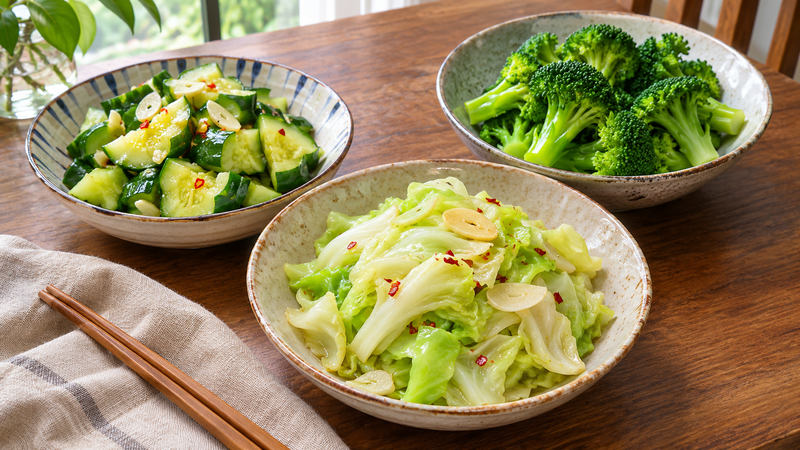
Warm the oil in a wide nonstick skillet over medium heat. Add the garlic and chile briefly, stirring so they become fragrant without browning heavily. Add the ribs, leaves and water; cover until the thicker pieces begin to soften. Uncover, toss and cook until the cabbage is tender to your preference and excess water has evaporated.
Add the soy sauce, vinegar and Sichuan pepper near the end, toss well and taste before adding anything else. If the pan dries before the ribs soften, add a small splash of water. This covered-and-tossed method aims for tender vegetables; it will not reproduce the texture of a deep-fried or intensely dry-seared preparation.
Vinegar-Garlic Cucumber for a Crisp Side
Use 300 g cucumber, 1 small thinly sliced garlic clove, 2 teaspoons unseasoned rice vinegar, 1 teaspoon soy sauce and 1 teaspoon chile oil. Wash and dry the cucumber, lightly crush it with the flat side of a broad knife on a stable board, then cut it into bite-size pieces. Use a rolling pin if that feels easier to control.
Combine the dressing separately and toss it with the cucumber shortly before serving. There is no extra salt-draining stage in this version. If the cucumber releases liquid, lift it into the serving bowl instead of adding more soy sauce to season all the liquid. Reduce or omit the chile oil if you prefer less heat.
The FDA’s produce-handling guidance recommends running-water washing, clean equipment and separation from raw animal foods. Washing reduces contamination but does not eliminate it. Vinegar in this dressing is for flavor; do not treat it as a sanitizing step.
Steamed Broccoli With Pepper-Garlic Dressing
Use 450 g broccoli cut into similar-size florets, with peeled stems sliced thinly. For the dressing, combine 1 teaspoon neutral oil, 1 small finely minced garlic clove, 1 teaspoon soy sauce, 1 teaspoon unseasoned rice vinegar, 1 tablespoon hot water, ⅛ teaspoon ground Sichuan pepper and an optional pinch of chile flakes.
Steam the broccoli over actively steaming water until the thickest stems are tender when pierced; begin checking after about 5 minutes and adjust for piece size and your steamer. Drain well, mix the dressing and toss it through the warm broccoli. The minced garlic remains sharp in this version; reduce it if that does not suit your taste.
Draining matters because retained water can dilute the coating. Before adding more sauce, taste a well-coated floret rather than the liquid at the bottom of the bowl. This is a simple steamed side with Sichuan-style seasoning, not a claim that broccoli defines a traditional dish.
Count Sauce Sodium Instead of Guessing From Taste
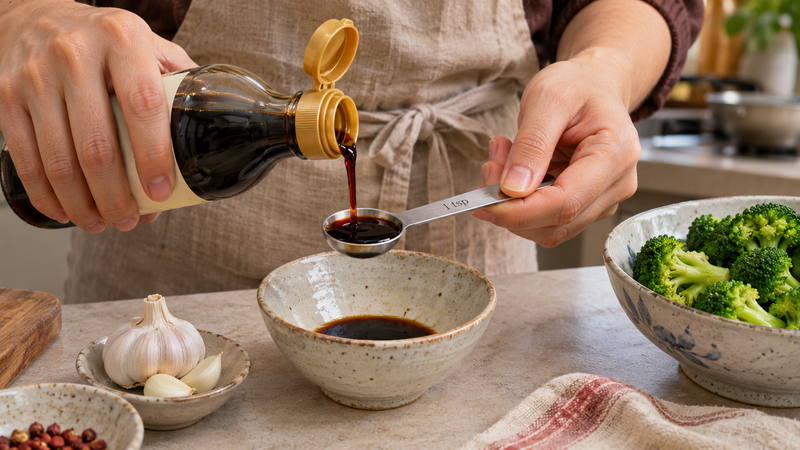
The FDA’s sodium guide recommends checking the Nutrition Facts label and paying attention to serving size. Compare sauces on the same quantity basis; a “reduced sodium” description does not by itself tell you the amount in your recipe.
For a hypothetical calculation, if a bottle lists 900 mg sodium per tablespoon, one teaspoon contributes about 300 mg to the whole batch. Divided into three equal portions, that is about 100 mg per portion from that sauce alone. These are example numbers, not nutrition values for the dishes above. Include other salty ingredients if you add them.
Build flavor before reaching for another spoonful: adjust vinegar for acidity, garlic for aroma or a small amount of chile and Sichuan pepper for heat and fragrance. If you use a premixed sauce, inspect its ingredients and label rather than assuming it matches the amounts listed here. Check all sauces against any ingredients you need to avoid.
Serve the Sides as Part of the Whole Meal
Match a crisp cucumber side with a hot main, or use the cabbage or broccoli when you want another cooked component. Consider the sauces and portions across the meal, not only the vegetable bowl. Our Sichuan beef meal-planning guide discusses that wider choice, while the three-method tofu guide offers another main-dish direction.
Keep prepared perishables refrigerated at 40°F / 4°C or below. Following FDA safe-handling guidance, refrigerate them within 2 hours, or within 1 hour above 90°F / 32°C. Prepare the cucumber close to the meal for the crispest texture; a sour dressing does not make room-temperature storage safe.
Questions About Healthy Sichuan Vegetable Dishes
Are these dishes guaranteed to be low sodium?
No. The final amount depends on your sauces, quantities and portions. Use the actual labels and include all sodium-containing seasonings.
Do I need to remove all chile oil?
No. You can measure a small amount for flavor or omit it to reduce heat. The choice should fit the whole meal and your own dietary needs.
Does vinegar make raw cucumber safe?
No. Treat it as a flavoring. Wash the cucumber, use clean utensils, avoid cross-contamination and refrigerate prepared perishables promptly.