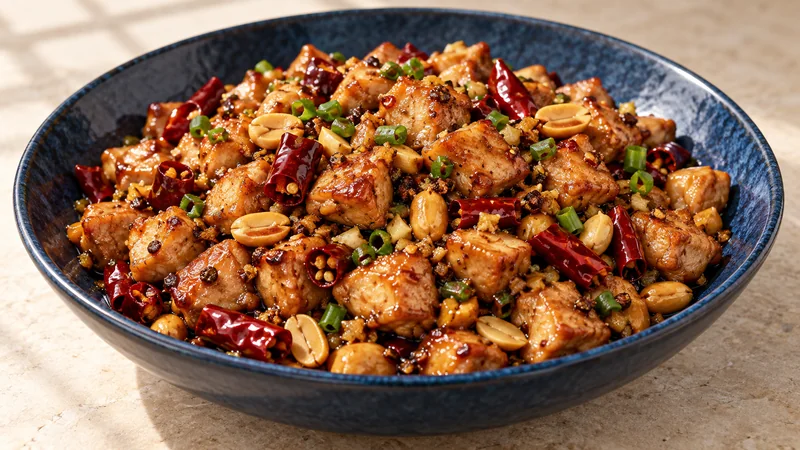
This Sichuan Kung Pao chicken recipe stir-fries diced chicken with dried chilies, Sichuan peppercorns, peanuts and a sweet-sour sauce. This home version also includes doubanjiang. Prepare the sauce and aromatics before heating the wok.
For Sichuan Kung Pao Chicken recipe, the key is keeping the chicken tender while letting the dried chilies, vinegar, and peanuts stay balanced rather than heavy.
It’s a staple in Sichuan home cooking and regional restaurants alike, often paired with other classics like Mapo Tofu and Dan Dan Noodles.
What makes Kung Pao Chicken stand out is its focus on quick, high-heat stir-frying. Unlike slow-cooked Sichuan dishes like Hot and Sour Soup, it’s made in minutes, preserving the texture of chicken and peanuts.
Every bite should have a mix of tender meat, crunchy nuts, and bold, layered flavors.
If you’ve only had the Westernized version loaded with tomato sauce, you’re missing out on the authentic dish’s depth. Kung Pao Chicken It’s not just spicy—it’s complex, with each ingredient playing a key role in its unique taste.
How to Make This Sichuan Kung Pao Chicken Recipe
Kung Pao Chicken’s origins tie to Ding Baozhen, a Qing dynasty official who served as governor of Sichuan in the 1800s. Nicknamed “Gong Bao” (Palace Guardian) for his role in the imperial court, Ding loved a dish of stir-fried chicken, chilies, and peanuts.
Locals named the dish after his title, and Kung Pao Chicken was born.
Over time, it became a beloved Sichuan staple, alongside other classics like Mapo Tofu (silky tofu in spicy sauce) and Dan Dan Noodles (noodles with minced pork and chili oil). Kung Pao Chicken It spread across China in the mid-20th century, then to the world, but its authentic roots remain in Sichuan’s home kitchens.
What’s unique about its history is that it evolved from a personal favorite of an official to a dish that reflects Sichuan’s culinary philosophy: bold, balanced flavors and quick, precise cooking.
What Makes Kung Pao Chicken Special
Kung Pao Chicken’s magic comes from its balance of flavors and textures. The five core flavors (sour from black vinegar, sweet from sugar, spicy from dried chilies, salty from soy sauce, savory from doubanjiang) come together in perfect harmony.
The Sichuan peppercorns add a distinct numbing sensation called “ma,” which pairs with the spicy “la” for the iconic ma la taste.
Texture is another key element. Tender chicken thigh cubes, crunchy roasted peanuts, and slightly chewy dried chilies create a mix in every bite.
Unlike Western versions that often overcook chicken, authentic Kung Pao Chicken uses quick high-heat stir-frying to keep meat juicy.
A common problem with Sichuan Kung Pao Chicken recipe is adding the sauce too early, which makes the chicken steam instead of sear.
It’s also a versatile dish. You can adjust the heat level by changing the number of chili seeds, or swap peanuts for other crunchy ingredients.
But no matter the variation, it stays true to Sichuan’s focus on bold, layered flavors.
Ingredients for Kung Pao Chicken
- 250g boneless, skinless chicken thigh (cut into 2cm cubes; thigh stays juicier than breast)
- 15g dried red Sichuan chilies (cut into 5cm segments; remove seeds for milder heat)
- 1 teaspoon whole Sichuan peppercorns (toasted and crushed)
- 2 tablespoons fermented Sichuan doubanjiang (chili bean paste; not the sweet type)
- 1 tablespoon light soy sauce (for saltiness and umami)
- 1 tablespoon black vinegar (for tangy sourness)
- 1 tablespoon granulated sugar (for subtle sweetness)
- 1 teaspoon cornstarch (for marinating chicken to lock in moisture)
- 1 tablespoon cold water (for mixing the sauce)
- 3 tablespoons roasted unsalted peanuts (for crunch)
- 2 garlic cloves (minced finely)
- 1 teaspoon fresh ginger (minced finely)
- 1 small scallion (white parts minced, green parts sliced for garnish)
- 3 tablespoons neutral oil (canola or peanut oil, high smoke point for stir-frying)
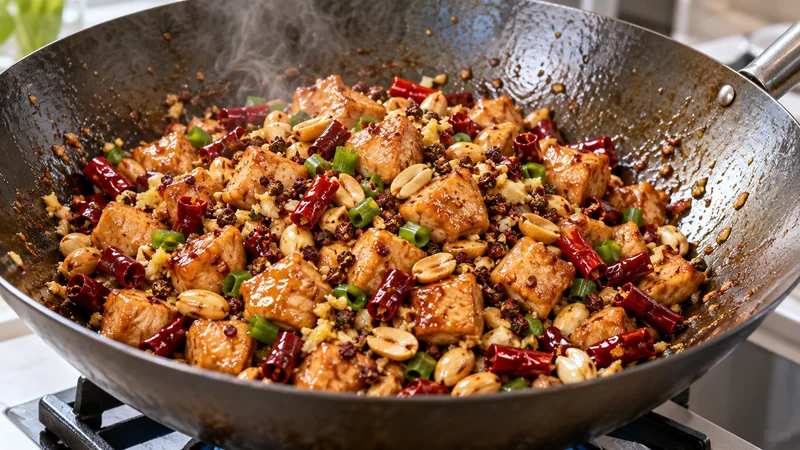
How to Make Kung Pao Chicken
- Toast the Sichuan peppercorns in a dry wok over medium heat for 1 minute. Stir constantly to avoid burning.
- Once fragrant, transfer to a mortar and pestle, crush coarsely, and set aside.
- Mix the sauce: In a small bowl, combine light soy sauce, black vinegar, granulated sugar, and 1 tablespoon cold water. Stir until the sugar dissolves completely. Set aside.
- Marinate the chicken: In a medium bowl, toss chicken cubes with 1 teaspoon cornstarch. Cover and refrigerate for 10 minutes.
- This helps the chicken stay tender during stir-frying.
- Heat the wok: Pour 3 tablespoons neutral oil into the wok. Kung Pao Chicken Heat over high heat until it reaches 180°C (test by dropping a small cornstarch bit—if it sizzles immediately, it’s ready).
- Cook the chicken: Add marinated chicken to the wok. Stir-fry until cooked through, checking the thickest chicken pieces with a food thermometer for 165°F (74°C). Cooking time varies; browning alone does not establish safety.
- Use a slotted spoon to transfer chicken to a plate. Set aside.
- Prep the chilies: In the same wok (leave the oil, reduce heat to medium), add dried red chilies. Stir-fry for 30 seconds until they darken slightly and become fragrant.
- Don’t burn them—they’ll turn bitter.
- Add aromatics and doubanjiang: Add minced garlic, ginger, and doubanjiang to the wok. Stir-fry for 1 minute until the oil turns bright red and the aromatics are fragrant.
- Combine everything: Return the cooked chicken to the wok. Pour the pre-mixed sauce over the ingredients.
- Stir quickly for 1 minute until the sauce thickens and coats every piece of chicken.
- Add crunch and peppercorns: Toss in crushed Sichuan peppercorns and roasted peanuts. Stir-fry for 30 seconds to combine all flavors evenly.
- Garnish: Turn off the heat. Sprinkle sliced scallion greens over the dish. Serve immediately.
Common Mistakes with Kung Pao Chicken
Many home cooks mess up Kung Pao Chicken by skipping key steps. The most common mistake is using chicken breast instead of thigh.
Chicken thigh is used in this recipe for its richer texture. Breast can also be used, with care to avoid overcooking while still reaching a safe internal temperature.
Another mistake is overcooking the Sichuan peppercorns—burned peppercorns taste bitter, so toast them only until fragrant.
Other mistakes include not pre-mixing the sauce and removing all chili seeds. Adding sauce ingredients separately leads to uneven flavor, so mixing it beforehand ensures balanced sour, sweet, and salty notes.
Removing seeds does not eliminate all chili heat. The inner membranes carry capsaicin; use fewer chilies and remove seeds and membranes for a milder result. Doubanjiang can add heat too.
Serving & Storage
The dish is best served immediately with steamed white rice. The rice balances the bold flavors and numbing tingle of the dish.
For a full Sichuan meal, pair it with Mapo Tofu (silky tofu in spicy sauce) and Hot and Sour Soup. Avoid serving it cold—its flavors and textures degrade quickly.
Store leftovers promptly in a covered container in the refrigerator and use within 2 days, as this recipe suggests. Reheat in a skillet or microwave until the food reaches 165°F (74°C), rather than relying on a fixed number of minutes.
Either a skillet or microwave can reheat leftovers; avoid unnecessary extra heating once the food has reached the safe reheating temperature.
Question 1: How can I make Kung Pao Chicken less spicy?
Answer: To reduce heat, remove all seeds from the dried red chilies and use only 5g (instead of 15g) of chilies. You can also add an extra teaspoon of sugar to the sauce to balance the spice.
This will keep the numbing Sichuan peppercorn flavor without overwhelming heat, perfect for those sensitive to spice.
Question 2: Is Western the dish different from authentic Sichuan this Sichuan classic?
Answer: Yes, significantly. Western versions often use tomato sauce or ketchup, making it overly sweet and tangy.
This home version uses doubanjiang, black vinegar and Sichuan peppercorns. Doubanjiang is not a universal requirement for Kung Pao chicken; versions differ, and sweet-sour balance is part of the dish.
Question 3: Can I substitute peanuts for another ingredient?
For crunch without peanuts, water chestnuts are an option if suitable for your dietary needs. Cashews are tree nuts and are not a general substitute for someone with a nut allergy. Check ingredient labels, the oil and sauces, and cross-contact precautions for your specific allergy.
Add drained, chopped water chestnuts with the final toss. Omit peanuts and other nuts when required by your allergy plan.
Question 4: Do I need a wok to make authentic the dish?
Answer: No, a large skillet works perfectly. Use high heat on your stovetop, and stir the ingredients quickly to mimic the high heat of a wok.
this Sichuan classic While wok hei (the smoky depth from a wok) adds extra flavor, a good skillet will produce a delicious, authentic dish.
Question 5: How long should I marinate the chicken?
Answer: 10 minutes is ideal. The cornstarch coating locks in moisture, keeping the chicken tender during stir-frying.
Keep the coated chicken refrigerated until cooking. The suggested short rest is a preparation step, not a limit at which cornstarch suddenly breaks down.
The most important detail in a Sichuan Kung Pao Chicken recipe is balance: the sauce should be savory first, then lightly sweet, sour, and spicy.
If this Sichuan Kung Pao Chicken recipe tastes flat, adjust vinegar and sugar before adding more chili oil.
This Sichuan Kung Pao Chicken recipe depends on quick cooking, so keep the chicken, sauce, chilies, peanuts, and aromatics ready before turning on the heat.
Frequently Asked Questions
Can I make it vegetarian?
Yes, the dish can easily be made vegetarian by swapping the chicken for a plant-based protein like extra-firm pressed tofu, seitan, or tempeh.
The core sauce and traditional signature ingredients—such as Sichuan peppercorns, roasted peanuts, dried red chilies, and aromatic seasonings—remain unchanged to preserve the dish’s distinct flavor profile.
For extra umami depth, you can also add a splash of mushroom soy sauce or nutritional yeast to mimic the richness of meat-based versions.
What makes this Sichuan classic authentic Sichuan style?
This version balances chili heat, numbing Sichuan peppercorns, sweetness, sourness and saltiness.
The listed sauce uses black vinegar, light soy sauce and sugar, with doubanjiang in the wok. Chicken, dried chilies and peanuts provide the main texture contrast.
It is prepared using a high-heat quick stir-fry technique to keep the chicken tender and peanuts crunchy, rather than overcooking ingredients that would dull the dish’s bold, bright flavors.
How spicy is it?
the dish’s spice level varies by recipe and region.
Traditional Sichuan versions are typically medium-spicy, with noticeable heat from dried red chilies and a subtle numbing tingle from Sichuan peppercorns.
Many Westernized restaurant adaptations are milder, toning down the spice to suit local palates.
To adjust the heat, you can remove seeds from dried chilies before cooking, use less chili paste, or add extra sugar, rice vinegar, or a splash of coconut milk to mellow intense heat.
What can I serve with this Sichuan classic?
the stir-fry pairs best with neutral, starchy sides that balance its bold, spicy-savory flavors.
The classic pairing is steamed white or jasmine rice, which soaks up the dish’s rich sauce and cuts through its heat.
For a more complete meal, you can serve it alongside light, fresh sides like stir-fried bok choy, steamed edamame, pickled cucumbers, or a simple green salad to add crunch and balance the dish’s intensity.
Can I prepare it ahead of time?
While the dish is best enjoyed fresh to retain tender chicken and crunchy peanuts, you can prep most components for meal prep.
Keep raw chicken and prepared aromatics and sauce separately covered in the refrigerator. Marinate in the refrigerator, and follow the storage date on the raw chicken rather than treating advance preparation as extra storage time.
If you cook the full dish ahead, refrigerate promptly in a covered container and use within 2 days. Peanuts may soften; add fresh peanuts when reheating only if appropriate for your dietary needs.
Reheat in a pan or microwave until the chicken and sauce reach 165°F (74°C).
Final Tip
The small details make this Sichuan classic great, not just good. Take 1 minute to toast the Sichuan peppercorns—this step unlocks their signature numbing flavor.
Don’t rush the stir-fry; high heat and quick movements ensure every bite is balanced, juicy, and full of that iconic Sichuan magic.
Why Your Spicy Chinese Food Recipes Never Tastes Like the Re Why Your Mapo Eggplant Recipe Never Tastes Like Stop Ruining the stir-fry Recipe — 10 Steps Chefs Actual Wikipedia