A doubanjiang substitute should be chosen for the flavor you need to preserve. For a Sichuan recipe that calls for spicy fermented broad-bean paste, another chili bean sauce containing fermented broad beans is usually the closest starting point. Miso with chili or black bean garlic sauce with chili can produce a useful adaptation, but neither becomes the same ingredient. Compare salt, sweetness, bean flavor and heat before deciding how much to add.
The first check is whether the missing ingredient is actually missing. “Toban djan,” “chili bean sauce” and “broad bean chili paste” can appear on English packaging, but the front label alone does not settle the contents. This guide compares ingredient roles using current manufacturer information and explains a small-batch adjustment method. It is not a blind tasting, a tested universal replacement ratio or a claim that every regional product tastes alike. If your goal is a specific Pixian paste’s flavor, obtaining that paste is more reliable than constructing a replacement from unrelated red sauces.
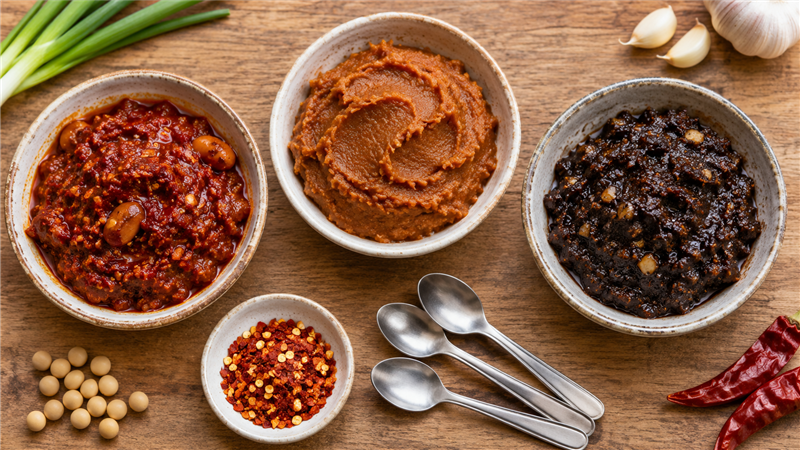
Compare the replacement by the job it must do
| Option | What it can contribute | Important difference | Best fit and check |
|---|---|---|---|
| Another fermented broad-bean chili sauce | Bean savoriness, chili and salt in one condiment | Formula, fermentation character, sweetness and texture vary | Closest starting point when preserving the ingredient family matters; read the actual label |
| Plain red miso plus a suitable chili ingredient | A savory fermented base with separately adjustable heat | Miso has its own rice/soybean character and is not broad-bean chili paste | A home adaptation when both ingredients are already available; assess salt before extra soy sauce |
| Black bean garlic sauce plus a suitable chili ingredient | Fermented-bean flavor, garlic and an adjustable chili component | Darker bean flavor and existing garlic change the direction of the dish | A deliberate black-bean variation; check added salt, sugar and allergens |
These are functional comparisons, not promises of identical taste. A substitute that supplies heat but little fermented-bean flavor leaves a different gap from one that supplies savory depth but no chili. Decide which compromise is acceptable before adding several salty sauces to chase a missing flavor.
Check whether another jar is already in the right family
Lee Kum Kee’s US Chili Bean Sauce page, for example, calls its product Toban Djan and lists both fermented soybean paste and fermented broad bean paste alongside salted chili peppers. That is useful evidence for identifying one actual product, rather than assuming that unfamiliar English spelling means a completely different condiment.
It is still not evidence that this jar is identical to every paste sold as Pixian doubanjiang. The same published list includes sugar and other ingredients. A recipe written around a different paste may need changes in sweetness, salt and texture even when both jars belong to a related ingredient family.
Look for the bean ingredient, whether chili is present, and whether the product is a cooking paste or a fully seasoned finishing sauce. Then check the nutrition panel’s serving size before comparing sodium figures. A value per teaspoon and a value per tablespoon are not directly comparable; use a common stated weight when the labels provide it. Do not infer that a redder paste is hotter, less salty or more authentic.
Use miso and chili as an adaptation, with separate controls
A plain miso gives you a way to adjust the fermented base separately from the heat. Hikari’s Organic Red Miso for Canada lists water, organic soybeans, organic rice, salt, yeast and koji culture. There is no chili in that listed formula. The product illustrates why miso alone cannot supply both components of a spicy chili bean paste.
If you already have a suitable plain miso and chili ingredient, combine a small amount for a preliminary flavor check rather than replacing a large recipe quantity immediately. Choose the chili according to its own contents: plain chili powder behaves differently from a sauce already seasoned with vinegar, sugar, garlic or salt. This is a cooking adjustment, not a universal formula, so the two ingredients need not be locked into one ratio across all dishes.
Hold back discretionary salt and soy sauce until the sauce has developed and you can assess it safely. Do not keep increasing the miso simply because you want more heat; that also increases the fermented base and salt. Add heat through the chili component if that is the missing quality. The finished result should be described as a miso-based adaptation, especially when serving it as an interpretation of a named Sichuan dish.
Expect black bean garlic sauce to change the flavor
Lee Kum Kee’s US Black Bean Garlic Sauce is a different condiment: its list includes soy sauce, fermented black beans, garlic and other seasonings. It is not a spicy broad-bean paste simply because “bean sauce” appears in its name. Adding chili can supply heat, but it does not remove the existing garlic or change the bean base into doubanjiang.
That distinction can still lead to a good dinner. A black-bean variation may be a reasonable choice when you want a savory sauce for tofu or vegetables and accept a different flavor. It is a weaker choice when you are trying to reproduce the characteristic flavor of a particular doubanjiang-based sauce as closely as possible.
Check the planned garlic and salty seasonings in the rest of the recipe. A prepared black bean garlic sauce already brings both, so adding every original seasoning unchanged can make the adaptation harder to balance. Conversely, adding chili alone to a sauce does not guarantee the color, aroma or texture of a fermented broad-bean paste. Describe what you changed rather than calling every resulting sauce an authentic equivalent.
Adjust a small portion before committing the whole dish
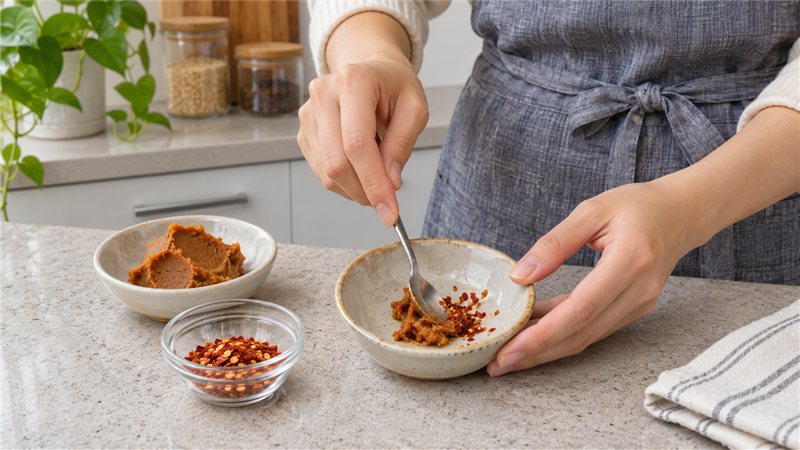
Use a clean spoon and an appropriate small bowl to assess the sauce components, following package directions about whether a product is ready to use or needs cooking. When testing in a dish, taste only a safely cooked sauce portion that has not been contaminated by raw meat, poultry or seafood. Do not sample a raw meat marinade to judge whether the seasoning is balanced.
Work through one question at a time: is the sauce too salty, missing heat, too sweet, or lacking the expected fermented-bean character? Adding more of the same mixture will not solve all four. If the sauce is already too salty, extra soy sauce is not a repair. If a sweet chili sauce changed the balance, adding more of it for heat will also add more sweetness. A smaller test portion limits the cost of those decisions.
For a hypothetical tofu supper, you might choose miso plus chili because both are already in the pantry, assess a small cooked sauce portion, and then adjust the whole batch. That is an example of the decision process, not a report of a kitchen test. The same choice would be less suitable if the purpose were to compare the flavor of two specific Pixian pastes.
Dietary restrictions come before flavor matching. The cited US chili bean and black bean garlic products declare soybeans and wheat, while the cited miso declares soybeans. Those are product-specific examples, not a list of every possible allergen in every brand. The FDA’s allergen-label guidance explains how major allergen sources are identified. Read the complete current package, check relevant cross-contact information, and do not assume that fermentation or cooking removes an allergen.
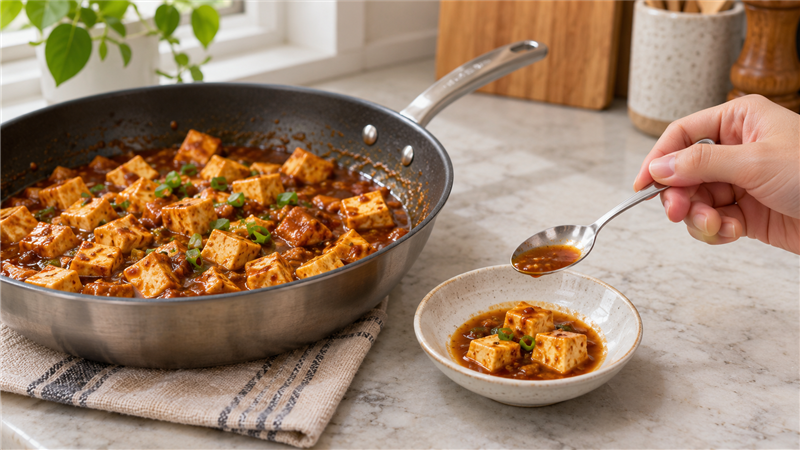
Once you choose an adaptation, keep the rest of the dish’s method clear. Our mapo eggplant guide gives a specific dish context, and the Sichuan ingredient storage guide addresses a different task. For the jars in this comparison, follow each manufacturer’s storage instructions; a newly mixed substitute does not inherit another product’s shelf life.
Questions about replacing doubanjiang
Is Toban Djan always a different ingredient from doubanjiang?
Not necessarily. English packaging may use Toban Djan for a chili bean sauce containing fermented broad beans. Check the ingredient list and intended use; the spelling alone does not establish either equivalence or difference.
Can miso replace doubanjiang one for one?
There is no reliable universal one-to-one ratio. Plain miso does not supply the chili component, and its salt, bean and grain character differ. Treat miso with chili as an adaptation and adjust a small portion before the whole dish.
Is black bean garlic sauce the same as spicy broad-bean paste?
No. It has a different bean base and already includes garlic and other seasonings. Adding chili can make a useful black-bean variation, but it does not turn the sauce into doubanjiang.
Does cooking a fermented sauce make it safe for someone allergic to its ingredients?
Do not assume that cooking or fermentation removes an allergen. Check the complete current label and relevant cross-contact information, and avoid ingredients that the person must not eat.