Quick answer. Sichuan cuisine reaches international diners through restaurant menus, English-language cookbooks, and culinary exchange. Má là gives some dishes a recognizable tingle and heat. Cooks can carry that flavor to a new menu while changing the ingredients or how diners order. The examples below show how the cuisine travels, without treating any guide or restaurant as a measure of global demand.
Three routes for Sichuan cuisine abroad
| Route | Documented example |
|---|---|
| Culinary exchange | UNESCO lists Chengdu as a Creative City of Gastronomy, with membership dating to 2010. |
| Restaurant menus | In New York, MáLà Project lets diners choose ingredients for a wok-finished dry pot. In London, the Michelin Guide describes Sichuan flavors at Barshu alongside cooking from other Chinese regions. |
| Home cooking | The 2019 UK edition of The Food of Sichuan shares regional recipes and their context in English. |
A regional cooking tradition with many flavors
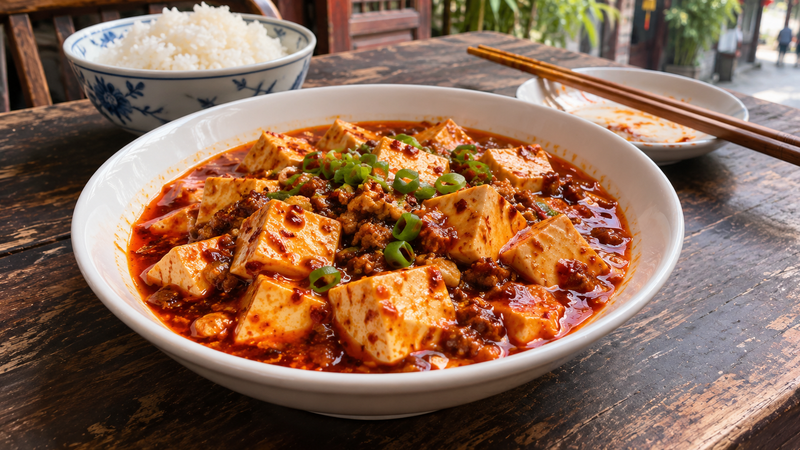
The UNESCO profile of Chengdu describes a city with a wide range of flavors and public food events. Chengdu gives a useful starting point because many accounts of Sichuan food abroad begin with the same few dishes. Mapo tofu makes the point clearly. Soft tofu, savory sauce, chile heat, and the tingle of Sichuan pepper all matter to the bowl. A description that stops at “very spicy” misses much of the dish. For a closer look, read about the Chengdu stories behind mapo tofu.
What an overseas restaurant can keep or change
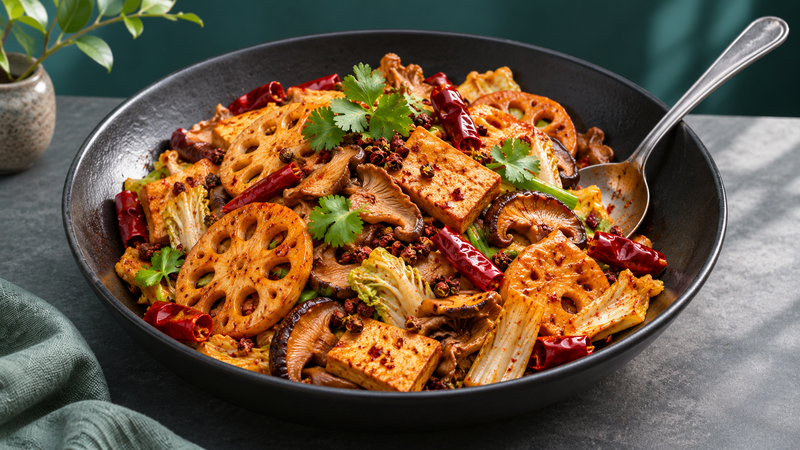
At MáLà Project in New York, the centerpiece is a dry pot. The restaurant describes letting diners choose ingredients, which the kitchen tosses in a wok with its own sauce. A table can build a dish around tofu, vegetables, meat, or seafood, while the kitchen supplies the seasoning and method. A dry pot arrives ready to eat. In a hot pot meal, diners usually cook ingredients in broth at the table.
London offers a different example. The Michelin Guide entry for Barshu describes imported chiles and peppers and cites a fiery beef brisket dish, alongside a menu with influences from other Chinese regions. The two examples show why an overseas Sichuan menu can take several forms. One highlights a customizable shared dish, while the other presents Sichuan cooking within a broader selection. For a smaller-scale version of the format, see a home-style tofu dry pot.
If you want to compare two versions, look for the cooking method as well as the flavor name. A wok-tossed dry pot and a braise can both be described as spicy, but the sauce clings to the ingredients in one and surrounds them in the other.
Cookbooks carry techniques into home kitchens
Reading a recipe can explain what a menu label leaves out. In the UK, Bloomsbury published the revised The Food of Sichuan by Fuchsia Dunlop in 2019. Its publisher lists classics such as mapo tofu and Gong Bao chicken alongside ginger-dressed green beans and other cold dishes. Cooking two preparations from such different parts of the repertoire gives a broader sense of Sichuan food than repeating the hottest dish on a menu.
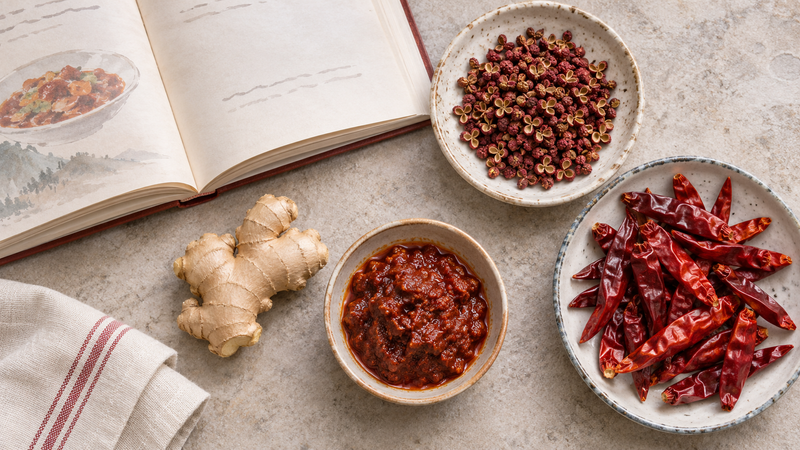
For a pantry example, separate Sichuan pepper from dried chile. In má là (麻辣), the first character refers to the numbing or tingling sensation and the second to hot pungency. An experimental study of Sichuan pepper documents the tingle on the lips. Chiles supply heat, and fermented bean paste can add a savory base. A cook can change the amount of chile and still preserve the peppercorn tingle. Those are distinct choices, useful when comparing recipes or reading the Sichuan peppercorn guide.
Questions about Sichuan cuisine abroad
Why has Sichuan cuisine gained an international audience?
It reaches diners through regional restaurant menus, home cooks through published recipes, and culinary institutions through exchange. Those channels can be documented even when there is no comparable count of diners across countries.
Does má là describe all Sichuan cooking?
No. Má là combines the tingle of Sichuan pepper and the heat of chiles. Sichuan cooking also includes ginger dressings, sour and savory preparations, and many other flavor profiles.
Is dry pot the same as hot pot?
In the New York dry pot example, the kitchen wok-finishes the selected ingredients and serves them ready to share. In hot pot, diners generally cook ingredients in broth at the table.
Sources
- UNESCO Creative Cities Network, Chengdu. Gastronomy membership and local food culture.
- MáLà Project, restaurant profile. Description of the dry pot format.
- The Michelin Guide, Barshu. A published account of one restaurant in London.
- Bloomsbury, The Food of Sichuan. UK edition and examples from the recipe collection.
- Hagura and colleagues, Food Vibrations. A study of the peppercorn tingle.