Use Sichuan pickles according to what is in the jar: crisp mixed paocai can accompany a meal, while pickled chilies season a sauce and preserved mustard vegetables suit particular noodle, rice or soup recipes. They contribute different textures, salt levels and flavors. A package marked “pickled vegetables” is not enough information to choose a substitute.
This guide starts with prepared products, not a new fermentation recipe. Read the ingredient list and directions, including whether the product is ready to eat, before deciding where it belongs. For home preparation, see our separate Sichuan pickles preparation and safety guide. A serving suggestion cannot establish that an unknown homemade batch is safe.
The useful first question is simple: do you want a crunchy accompaniment, a chopped seasoning or a substantial sour vegetable in a cooked dish? Match that job to a named ingredient, then choose a recipe written for it. The examples below are pairing ideas and references, not recipes independently tested for this article.
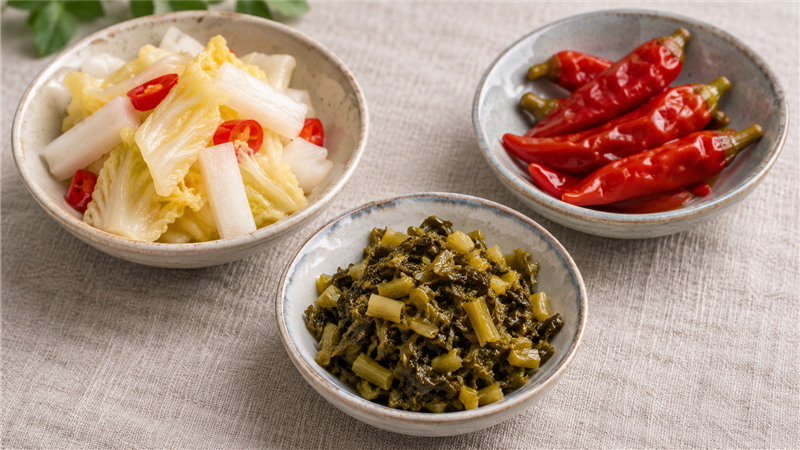
Identify the pickle before choosing a dish
Keep the Chinese name as well as the English description when shopping. Look for the vegetable, added seasoning and preparation directions. An English label may use “Sichuan pickle” broadly; a recipe may require something much more specific.
| Product | Useful role | Check before using |
|---|---|---|
| Mixed paocai, 泡菜 | Crisp cabbage or radish served beside a meal | Vegetables, seasoning and ready-to-eat directions |
| Pickled chilies, 泡椒 | Chopped seasoning in a recipe calling for them | Heat, salt and whether this is the pepper the recipe specifies |
| Sui mi ya cai, 碎米芽菜 | Preserved mustard vegetable used in dan dan noodles or dry-fried beans | Named ingredient; not a jar of mixed cabbage |
| Zha cai, 榨菜 | Crunchy preserved mustard stem for a matching stir-fry or soup | Plain or already seasoned; any preparation instructions |
| Mustard-green suan cai, 酸菜 | Sour greens for a recipe specifying that product | Mustard greens rather than sour napa cabbage or mixed paocai |
The Woks of Life ingredient glossary distinguishes these mustard products: ya cai is seasoned and fermented mustard greens, zha cai is preserved mustard stem, and mustard-green suan cai differs from pickled napa cabbage. Those distinctions matter more than finding any packet with a sour flavor.
Serve crisp paocai beside the main dish
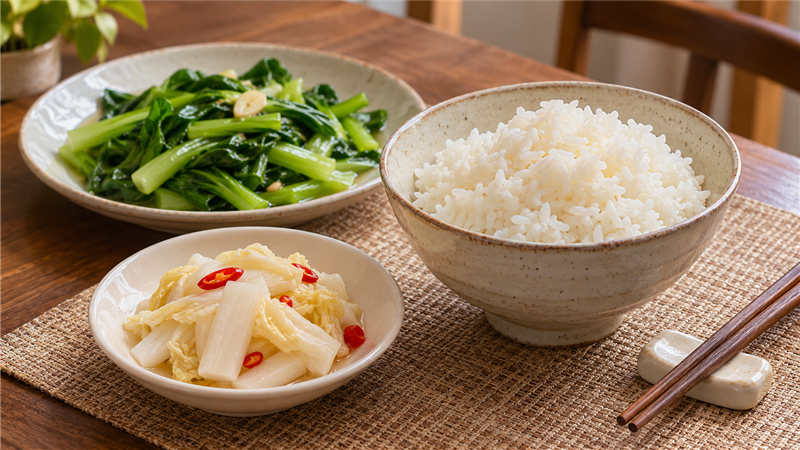
For a product intended to be eaten as an accompaniment, start with a small separate dish. Drain the portion rather than tipping a jar of brine over the meal. Keeping it separate lets each diner decide how much acidity, crunch and heat to add.
In his firsthand account of Chengdu paocai, Jordan Porter describes small dishes of pickles alongside meals, including fried rice, and variations dressed with chili oil. This is a serving tradition, not a universal instruction for preparing or storing every pickle.
Pairing example: serve ready-to-eat cabbage and radish paocai beside plain rice and cooked vegetables. Keep chili oil optional if the pickles already contain chili. If the meal is heavily seasoned, try the pickle separately before adding another salty sauce. This is a flexible meal idea, not a measured recipe or a claim that every commercial product has the same taste.
Use pickled chilies as a named seasoning
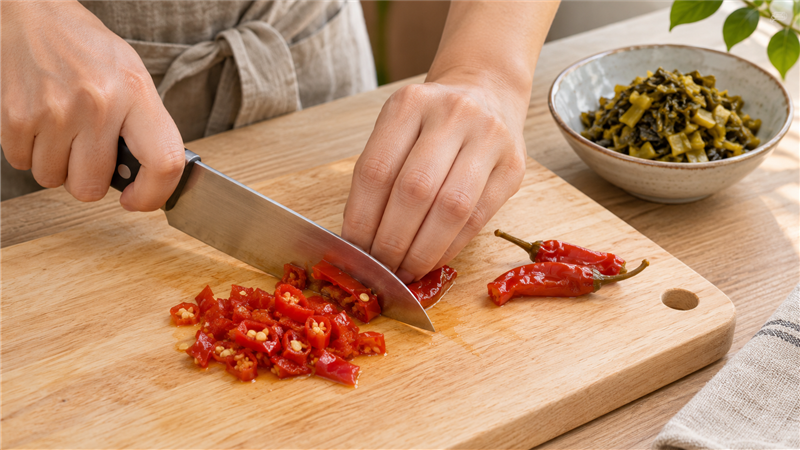
A crunchy cabbage side and chopped pickled chilies do different work. For a fish-fragrant dish, find a complete recipe specifying pickled peppers and follow its balance of aromatics, vinegar, sugar and other seasonings. Adding mixed paocai to a sauce does not reproduce that recipe.
Elaine’s yu xiang eggplant recipe uses pickled red pepper and discusses versions that also include doubanjiang. That is a concrete example of the ingredient’s seasoning role. It does not mean doubanjiang, pickled peppers and mixed pickled vegetables are identical or that a substitution leaves the result unchanged.
Before starting a stir-fry, chop and measure what the selected recipe requires. Keep the rest of the jar away from raw ingredients and used utensils. If you cannot obtain the specified pickle, choose a recipe with an explicit alternative rather than improvising a one-for-one swap. For the wider flavor context, our low-spice Sichuan food guide also helps separate a dish’s flavor profile from a blanket assumption that every Sichuan ingredient must be intensely hot.
Choose the right preserved vegetable for noodles or soup
Use the ingredient name to narrow the recipe search. Ya cai’s small pieces and savory seasoning suit a different role from crisp mustard stem. The Woks of Life glossary connects ya cai with dan dan noodles, dry-fried green beans and fried rice; it connects zha cai with stir-fries, soups and rice porridge. Use those as starting points for finding complete recipes, not as permission to exchange the products without adjusting the dish.
For a recipe calling for suan cai, check which vegetable the author means. Sour napa cabbage and pickled mustard greens are distinct products even when both English labels say “sour cabbage.” A bag of mixed radish and cabbage paocai may add sourness, but it will not supply the same leafy texture or seasoning.
Shopping example: if you want to make dan dan noodles, buy the ya cai named by your chosen recipe. If you already own zha cai, find a noodle soup written for zha cai instead. This avoids buying a broad category and expecting it to perform every job within that category.
Keep serving and storage decisions separate
Follow the manufacturer’s opening, refrigeration and use-by instructions. Do not give every jar the same storage period. Remove a portion with a clean utensil and do not return food from the table to the original container. Keep ready-to-eat pickles separate from raw meat, fish and their preparation surfaces.
The Extension Safely Fermenting Food at Home factsheet, hosted by USDA NIFA, advises clean handling after fermentation, protection from contaminated foods and surfaces, and refrigeration or proper canning. A jar lid alone does not establish shelf stability. These handling points do not validate an improvised fermentation process.
Do not use a serving guide to judge an uncertain home ferment by smell or taste, extend a product’s storage life, or reuse old brine for another batch. If the product’s identity, preparation or storage history is unclear, resolve that uncertainty before serving it. The practical goal is a suitable ingredient in a suitable dish, with its own handling instructions intact.
Questions about using Sichuan pickles
Can I put Sichuan pickles directly on rice?
Yes, when the particular product is intended to be ready to eat. Start with a small drained portion beside the rice and follow its label. A product requiring cooking should be prepared as directed; “pickled” by itself does not establish ready-to-eat status.
Should every preserved vegetable be rinsed?
No. Follow the package and the selected recipe. Products differ in salt, seasoning and preparation requirements; a universal rinse instruction can remove seasoning that a recipe expects or fail to perform preparation that another product needs.
Can mixed paocai replace ya cai in dan dan noodles?
It changes the ingredient and result. Ya cai is a particular preserved mustard vegetable, while mixed paocai may contain cabbage, radish and other vegetables. Choose a recipe written for the product you have, or use an alternative the recipe author explicitly explains.