Spicy Stir-Fried Squid works best when the sauce, heat, and timing are planned before cooking. 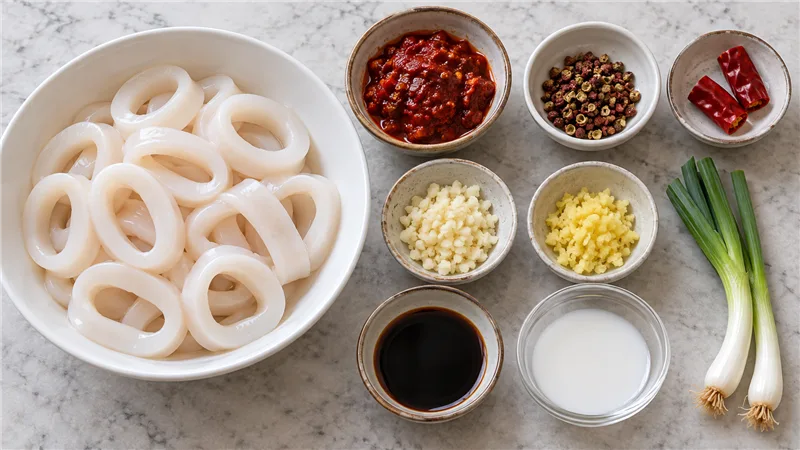
Quick Answer
Spicy Stir-Fried Squid works as a Sichuan-style dish when the squid stays tender while chiles, aromatics, and quick wok heat build a clean spicy finish.
Basic Facts
- Dish type: Sichuan-style seafood stir-fry
- Texture goal: Tender squid with a lightly springy bite
- Flavor base: Chiles, garlic, ginger, scallion, and optional Sichuan pepper
- Common mistake: Cooking squid too long and making it rubbery
Quick reference: Spicy Stir-Fried Squid = clean squid prep + high heat + short cooking + balanced spice.
Spicy Stir-Fried Squid is a vibrant Sichuan seafood dish that balances heat, numbing spice, and tender, chewy texture perfectly. It’s a staple in both home kitchens and Sichuan restaurants, often paired with classic dishes like Mapo Tofu, Kung Pao Chicken, or Dan Dan Noodles to round out a meal.
This dish brings the bold, layered flavors of Sichuan cuisine to a lighter seafood option, making it a favorite for those who love spicy food but want something beyond meat.
The Story Behind Spicy Stir-Fried Squid
Sichuan cuisine is famous for its bold, numbing-spicy flavors, rooted in ingredients like doubanjiang (Sichuan chili bean paste) and Sichuan peppercorns—key components of dishes like Hot and Sour Soup and Mapo Tofu. While squid isn’t native to inland Sichuan, the coastal influence from neighboring Chongqing and Yunnan has made seafood stir-fries a beloved addition to the region’s culinary repertoire.
The technique of quick, high-heat stir-frying to retain texture is central to Sichuan cooking, and this dish adapts that method to squid, creating a quick, flavorful meal that honors traditional Sichuan flavor profiles without being overly heavy. Spicy Stir-Fried Squid It’s a modern take on Sichuan stir-fry that feels both familiar and exciting, perfect for anyone new to the cuisine or looking to expand their seafood-based Sichuan dishes.
What Makes Spicy Stir-Fried Squid Special
What sets this dish apart is its balance of flavors and texture. The combination of spicy doubanjiang, numbing Sichuan peppercorns, and a subtle tang from rice vinegar creates a complex taste that’s more than just heat.
The squid’s tender, slightly chewy texture is a contrast to the crispness of stir-fried aromatics, making each bite interesting. Unlike other Sichuan dishes that rely on slow simmering or heavy sauces, this stir-fry takes just minutes to cook, so you get fresh, bright flavors every time.
It’s also versatile—adjust the spiciness to your liking, or pair it with rice to soak up the savory sauce, similar to how you’d enjoy Kung Pao Chicken. Spicy Stir-Fried Squid The key is quick cooking: overdoing it makes squid rubbery, so timing is everything.
Ingredients for Spicy Stir-Fried Squid
- 350g fresh squid (cleaned, cut into 2cm rings)
- 2 tablespoons Sichuan doubanjiang (minced, use fermented version for authentic flavor)
- 1 teaspoon Sichuan peppercorns (toasted, crushed into coarse powder)
- 2 dried red chilies (cut into 2cm segments, seeds removed for milder heat)
- 3 garlic cloves (finely minced)
- 1-inch fresh ginger (finely minced)
- 2 scallions (white parts minced, green parts sliced for garnish)
- 1 tablespoon light soy sauce (for saltiness and umami)
- 1 teaspoon dark soy sauce (for subtle color)
- 1 teaspoon rice vinegar (for bright tang)
- 1 teaspoon granulated sugar (to balance spice and tang)
- 2 tablespoons cornstarch (mixed with 3 tablespoons cold water to make slurry)
- 3 tablespoons peanut oil (high smoke point, ideal for high-heat stir-fry)
How to Make Spicy Stir-Fried Squid
- Prep the squid: Rinse squid rings under cold running water to remove any residual debris. Spicy Stir-Fried Squid Pat them completely dry with paper towels—moisture causes oil splatters and uneven cooking.
- Make the slurry: In a small bowl, mix cornstarch and cold water until smooth. Spicy Stir-Fried Squid Set aside for later use.
- Heat the wok: Pour peanut oil into a wok, then place over high heat. Spicy Stir-Fried Squid Heat to 180°C—test by dropping a pinch of flour; it should sizzle immediately and turn golden in 2 seconds.
- Sauté aromatics: Add dried red chilies, minced garlic, ginger, and scallion whites to the wok. Spicy Stir-Fried Squid Stir-fry for 15 seconds until fragrant—don’t burn the garlic.
- Add doubanjiang: Toss in minced doubanjiang, then stir-fry for 30 seconds. Spicy Stir-Fried Squid The oil will turn bright red, and the paste will release its rich, savory aroma.
- Cook the squid: Add the dried, patted squid rings to the wok. Stir continuously for 1.5–2 minutes.
- Spicy Stir-Fried Squid The squid will turn opaque and curl slightly—this is the sweet spot; overcooking makes it rubbery.
- Season the dish: Pour in light soy sauce, dark soy sauce, rice vinegar, and sugar. Stir well to coat every squid ring evenly. Spicy Stir-Fried Squid Cook for 30 seconds to let the flavors meld.
- Thicken the sauce: Pour the cornstarch slurry into the wok, stirring quickly in a circular motion. Spicy Stir-Fried Squid Cook for 10 seconds until the sauce thickens and clings to the squid.
- Finish the dish: Turn off the heat. Sprinkle crushed Sichuan peppercorns and sliced scallion greens over the top. Spicy Stir-Fried Squid Toss gently once to combine.
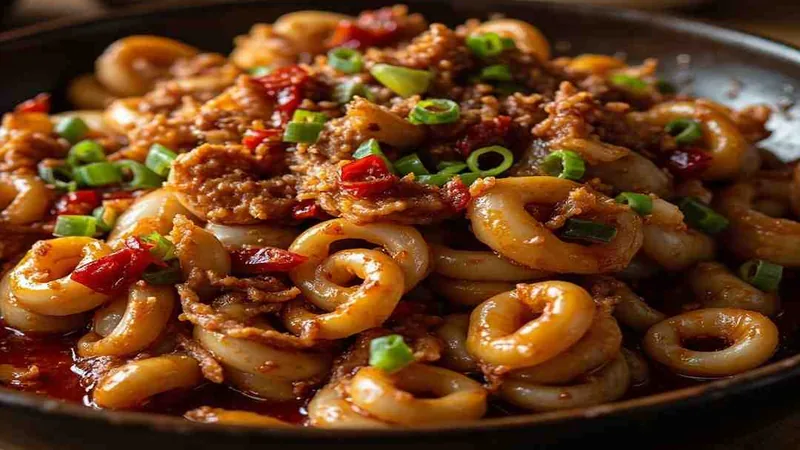
- Serve immediately: Transfer to a warm plate and serve hot. Spicy Stir-Fried Squid Pair with steamed jasmine rice for a complete meal, just like you would with classic Sichuan dishes.
Common Mistakes with Spicy Stir-Fried Squid
The biggest mistake is overcooking the squid. Squid cooks in just a minute or two, so leaving it in the wok longer than that turns it into a tough, rubbery texture.
Always watch for opacity and curling—once it’s done, take it out right away. Another mistake is not drying the squid before cooking.
Excess water in the wok will lower the temperature, leading to soggy squid and splattering oil. Patting with paper towels is non-negotiable.
Finally, using too much doubanjiang can make the dish overly salty. Spicy Stir-Fried Squid Start with 2 tablespoons, and if you prefer less salt, reduce it to 1.5 tablespoons—adjust to your taste as you cook.
Serving & Storage
Serve the squid stir-fry immediately after cooking—its best when hot, as the texture and flavor are at their peak. Pair it with steamed rice to soak up the savory sauce, or add it to a spread with other Sichuan classics like Mapo Tofu and Dan Dan Noodles.
For leftovers, refrigerate in an airtight container for up to 1 day. Reheat quickly in a hot wok for 30 seconds—microwaving will make the squid rubbery, so skip that method.
If you want to keep the texture, avoid storing it for more than a day; fresh is always best.
Frequently Asked Questions
Can I make the squid stir-fry vegetarian?
No, traditional the squid stir-fry uses squid as its core protein, but a vegetarian version is possible by substituting squid with chewy alternatives like sliced konjac, king oyster mushrooms, or pressed firm tofu.
To mimic the dish’s umami depth, swap regular soy sauce for vegetarian oyster sauce and retain the spicy Sichuan seasonings like chili oil or Sichuan peppercorns.
What makes the squid stir-fry authentic Sichuan style?
Authentic Sichuan-style the squid stir-fry centers on the iconic “mala” (numbing-spicy) flavor profile, with key ingredients including Sichuan peppercorns (for their signature tingly sensation), dried red chilies, Pixian doubanjiang (fermented broad bean chili paste for rich, savory heat), garlic, ginger, and scallions.
The critical technique is high-heat stir-frying: squid is cut into rings or strips and cooked for only 1–2 minutes to avoid turning rubbery, then tossed with aromatic seasonings at the end.
How spicy is the squid stir-fry?
The spice level varies by recipe, but traditional Sichuan versions are typically medium to hot, combining fiery heat from dried chilies and a subtle tingle from Sichuan peppercorns.
To adjust the heat to your preference: reduce the number of dried red chilies for milder spice, swap spicy chili oil for neutral vegetable oil, or omit Sichuan peppercorns entirely if you dislike the numbing effect.
What can I serve with the squid stir-fry?
the squid stir-fry pairs best with neutral, starchy sides that balance its bold, spicy flavor.
The most classic pairing is steamed white rice, which soaks up the savory, spicy sauce.
You can also serve it with light steamed vegetables like bok choy or broccoli, a tangy cold cucumber salad, or hand-pulled noodles tossed in extra sauce for a heartier meal.
Can I prepare the squid stir-fry ahead of time?
It’s best to prep components of the squid stir-fry ahead of time but cook it just before serving to keep the squid tender.
You can slice the squid, chop seasonings, and mix the sauce up to 1 day in advance, stored separately in airtight containers in the fridge.
Cooked the dish does not hold up well to storage (it becomes tough and rubbery when reheated), so eat any leftovers within 1 day, and avoid over-reheating if necessary.
Final Tip
The key to perfect this Sichuan classic is speed and attention to detail. Don’t walk away from the wok while stir-frying—every second counts.
Even if you’re new to Sichuan cooking, this recipe is approachable and delivers the bold, numbing-spicy flavor that makes Sichuan dishes beloved worldwide. Pair it with rice and a side of Hot and Sour Soup for a meal that’s both satisfying and authentic.
Authentic Sichuan Chili Oil: Sichuan Home Cooking Guide How to Make Sichuan Cuisine Culture: Sichuan Recipe and Tips Easy Sichuan Cuisine Festivals Recipe for Home Cooks Wikipedia