Quick Answer: “Vegetarian” on a menu does not always mean “vegan.” A correctly described vegetarian dish excludes meat, fish, meat or fish stock, bone stock, and animal carcass fats such as lard, though it may include eggs or dairy. Vegan food excludes all animal-derived products. Sichuan-style dishes can be built around tofu, vegetables, chilies, fermented bean paste, and Sichuan peppercorn, but broth, cooking fat, sauces, and toppings still need to be checked. If a restaurant labels a dish vegetarian while using meat stock or lard, the label is inaccurate; ask about the exact preparation rather than relying on the category name alone.
Quick Reference
| Check | Why it matters | What to ask or read |
|---|---|---|
| Stock or broth | A vegetable-looking dish may still use meat stock | “Is the broth completely vegetable-based?” |
| Cooking fat | A wok dish may be cooked with lard or another animal fat | “What oil or fat is used for this dish?” |
| Sauce and paste | Fermented sauces and chili oils vary by product | Read the ingredient label; ask about oyster or fish sauce |
| Toppings | Egg, meat, seafood, or dried shrimp can be added at the end | Ask what is included and whether it can be left off |
| Separate preparation | Shared pans and utensils may matter to some diners | State how strict your requirement is and ask what the kitchen can accommodate |
This guide focuses on vegan Sichuan food as a practical ordering and home-cooking question, not as another single-dish recipe. The site already has a dedicated vegan mapo tofu recipe; here, the goal is to help you distinguish vegan from vegetarian choices, check hidden ingredients, and assemble a meal without assuming that every vegetable-forward dish is automatically plant-based.
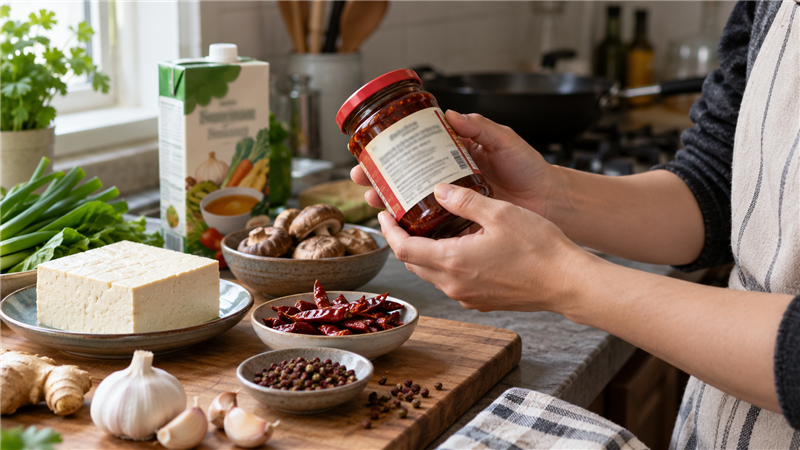
Under the Vegetarian Society’s criteria, vegetarian food excludes meat, fish, meat or fish stock, bone stock, and animal carcass fats such as lard, although it may include eggs or dairy. The Vegan Society’s dietary definition excludes all products derived wholly or partly from animals. Restaurant labels can still be used inaccurately: if a menu calls a dish vegetarian but the preparation contains meat stock or lard, the preparation is not vegetarian under the cited criteria. Ask about the exact dish instead of treating a category label as proof.
| Menu description | What it may tell you | What it does not confirm by itself |
|---|---|---|
| Vegetarian | The dish should exclude meat, fish, meat or fish stock, bone stock, and lard; it may include egg or dairy | That the restaurant’s exact preparation matches the label, or that the dish is vegan |
| Vegetable or tofu | The main visible ingredients are vegetables or tofu | That the sauce, broth, or oil is plant-based |
| Vegan | The restaurant intends the dish to be plant-based | That every location, substitution, or shared-equipment concern is covered; confirm what matters to you |
This distinction is useful whether you are ordering out or cooking at home. It also prevents a common mistake: treating “no meat in the bowl” as proof that the full dish contains no animal-derived ingredient.
Sichuan Flavor Is More Than Chili Heat
Sichuan cooking is often associated with málà, the combination of chili heat and the tingling sensation of Sichuan peppercorn. That is one recognizable flavor, not a complete description of the cuisine. Serious Eats discusses a wider range of flavor directions, including sour, salty, sweet, smoky, and fragrant notes alongside heat.
For a plant-based meal, this matters because flavor and texture can come from several components rather than from meat alone. Fermented bean paste contributes salty, savory depth; mushrooms can provide a chewy, browned element; tofu carries sauce; vegetables add freshness and contrast. These are cooking choices, not a claim that every traditional Sichuan preparation is vegan.
Check the Ingredients That Hide in the Sauce
Use the site’s Sichuan pantry guide to understand what ingredients do in a recipe, then check the specific product or dish when vegan status matters.
Doubanjiang. Spicy doubanjiang is commonly described as a fermented bean-and-chili paste used in Sichuan cooking. Product labels can differ, so read the full ingredient list rather than assuming a jar is suitable from its name alone. It is also salty, which is one reason a cook should taste before adding more salty sauce.
Broth or stock. Ask whether a soup, braise, hot-pot base, or sauce uses vegetable stock. Water in a recipe can often be replaced with vegetable or mushroom broth at home, but a restaurant’s base may already be prepared.
Cooking oil and chili oil. Ask whether the kitchen uses vegetable oil or animal fat. For packaged chili oil, check the label and any added flavorings. “Chili oil” describes a condiment, not a universal ingredient list.
Fermented black beans and other sauces. These add savory character, but they do not certify a dish as vegan. Check the product label and ask whether oyster sauce, fish sauce, shrimp paste, or a meat-based seasoning is included.
Noodles and toppings. Confirm whether noodles contain egg and whether the finished bowl receives minced meat, dried seafood, or another topping. A topping omitted at the end does not necessarily change the broth or sauce underneath.
The Woks of Life describes la doubanjiang as a spicy paste made with fermented soybeans, broad beans, and chilies, and notes its saltiness and role in Sichuan dishes. Use that as background about the ingredient category, not as a substitute for checking the exact jar in your kitchen.
Dish Ideas: Starting Points, Not Vegan Guarantees
Some dish styles give a home cook a useful starting point, but a name is not an ingredient audit.
- Mapo-style tofu: A vegan version can use tofu with chopped mushrooms, fermented black beans, and a checked chili bean paste. Both China Sichuan Food and The Woks of Life publish plant-based mapo tofu approaches. For the site’s complete dish method, see 10 Mistakes That Ruin Vegan Mapo Tofu.
- Fish-fragrant eggplant: “Fish-fragrant” refers to a seasoning style, not proof that a particular restaurant version contains no fish or other animal products. Ask about the actual sauce and cooking fat.
- Vegetable stir-fries: Greens, cabbage, mushrooms, and eggplant can make useful sides, but check for lard, oyster sauce, stock, and meat toppings.
- Noodles: A bowl can be made plant-based only if the noodles, sauce, broth, and toppings all meet your requirement. Ask about each part rather than asking only whether the dish is “vegetarian.”
Food & Wine’s recipe collection includes a vegan mapo tofu variation using eggplant and mushrooms in place of ground pork. That is one example of adapting a dish’s texture and savory depth; it is not evidence that every mapo tofu on a menu is vegan.
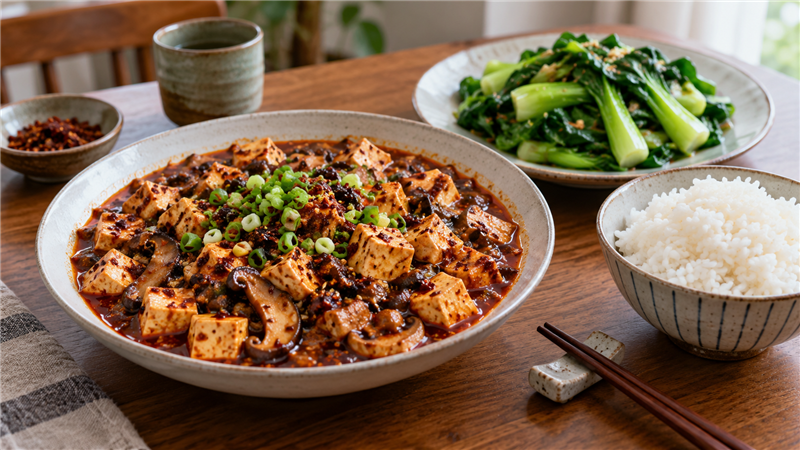
A Simple Way to Build a Vegan Sichuan Meal at Home
Start with one main dish, one vegetable side, and a plain staple such as rice. Then decide which flavor role you want each sauce or seasoning to play. The beginner Sichuan cooking path also recommends learning a small number of dishes and skills at a time; this meal outline narrows that idea to plant-based ingredient checks.
- Choose the main texture. Soft tofu gives a tender, sauce-carrying base; chopped mushrooms or crumbled tofu can add a more substantial bite. Choose one rather than adding many substitutes at once.
- Build the aromatic base. Ginger, garlic, scallion, chilies, and Sichuan peppercorn can each contribute a different aroma or sensation. Start modestly with peppercorn and chili; you can add more after tasting.
- Add fermented depth. Use a small amount of checked doubanjiang or another suitable fermented seasoning. Because it is salty, taste before adding soy sauce or extra salt.
- Add a vegetable contrast. Pair the main with simply cooked greens, cabbage, or another seasonal vegetable. Keep the side’s sauce separate until you have checked it.
- Serve with rice or verified noodles. Plain rice is a straightforward accompaniment. If using noodles or prepared stock, check the package ingredients first.
The result is a flexible meal framework, not a fixed “authentic vegan menu.” Sichuan recipes differ by household, restaurant, and region; a thoughtful plant-based adaptation should be described as an adaptation when it changes a traditional ingredient.
What to Ask at a Restaurant
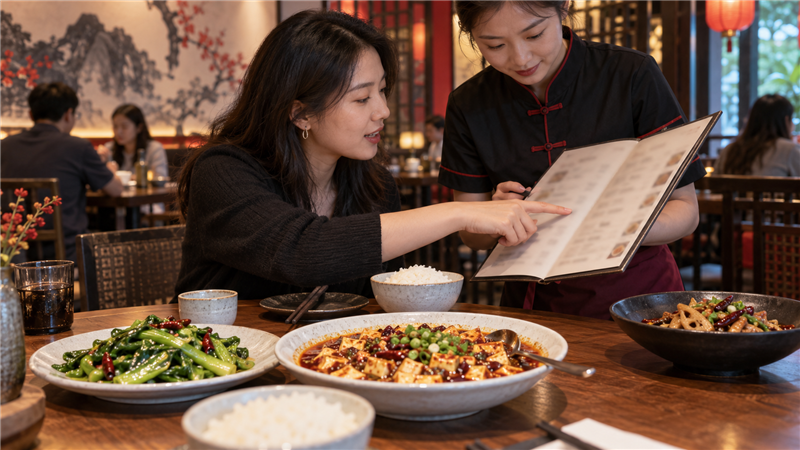
Keep questions short and specific. Instead of asking only, “Is this vegetarian?”, ask:
- “Does this dish contain meat, seafood, egg, dairy, oyster sauce, fish sauce, or shrimp paste?”
- “Is the broth or sauce made with vegetable stock, or does it contain meat stock?”
- “What fat is used in the wok—vegetable oil or lard?”
- “Can the kitchen make it without the animal-derived ingredients and toppings?”
- “If needed, can it be prepared with separate utensils or a clean pan?”
The last question depends on your own needs and on what the restaurant can reliably do. Do not assume that a menu change automatically resolves every cross-contact concern. If staff cannot confirm the ingredients or preparation details you need, choose another dish or restaurant.
FAQs
Is vegetarian Sichuan food always vegan?
No. A vegetarian dish may include egg or dairy, but meat stock, fish stock, bone stock, and lard are not vegetarian under the cited criteria. If a menu uses the vegetarian label despite those ingredients, the label or preparation is inaccurate. Ask about the full dish, including its sauce and cooking method.
Is doubanjiang vegan?
Many spicy doubanjiang products are made from fermented beans and chilies, but products vary. Read the ingredient label and check any added ingredients rather than assuming every product is identical.
What is a good vegan Sichuan dish to try first?
A clearly specified vegan mapo tofu is one option because tofu, fermented seasoning, chili, and Sichuan peppercorn provide distinct roles. Confirm that the version uses plant-based stock and condiments. For the site’s dish-specific method, use its vegan mapo tofu recipe.
Does “fish-fragrant” eggplant contain fish?
The name refers to a seasoning style and does not necessarily mean the dish contains fish. A particular recipe may still use animal-derived sauces or stock, so ask about that preparation.
What should I verify when ordering vegan Sichuan food?
Check the stock, cooking fat, sauce ingredients, noodles, toppings, and any separate-preparation requirement that matters to you. Dish names and broad menu labels are not enough to confirm every detail.
Sources and Further Reading
- Vegetarian Trademark Criteria, Vegetarian Society — vegetarian criteria exclude meat, fish, meat/fish/bone stock, and animal carcass fats including lard.
- Definition of veganism, Vegan Society — in dietary terms, veganism excludes products derived wholly or partly from animals.
- La Doubanjiang (Spicy Bean Sauce), The Woks of Life — ingredient description, Sichuan use, saltiness, label reading, and storage notes.
- More Than Málà: A Deeper Introduction to Sichuan Cuisine, Serious Eats — flavor range and examples including fish-fragrant seasoning; used as context, not as a guarantee about any restaurant’s recipe.
- Vegan Mapo Tofu, The Woks of Life and Vegetarian Mapo Tofu, China Sichuan Food — examples of plant-based mapo adaptations.
- Vegan Mapo Tofu, Food & Wine — a recipe collection example using eggplant and mushrooms in a vegan variation.
- Browse the site’s Sichuan Food Resource Center for recipe, pantry, and cooking-question paths.