Quick Answer
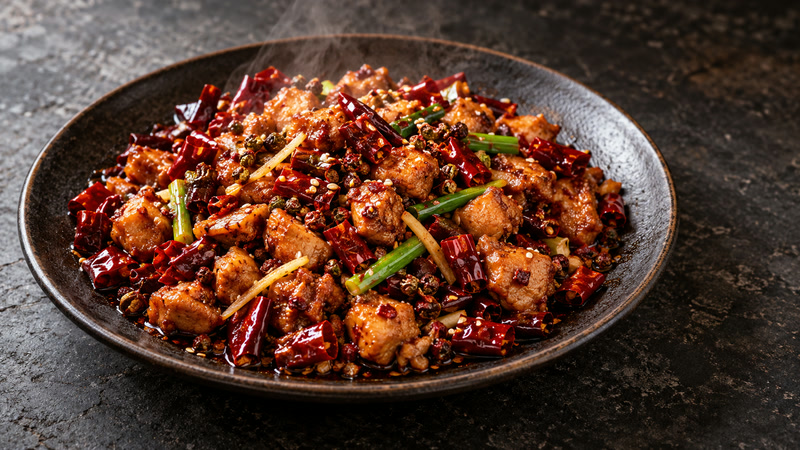
Spicy diced rabbit in this guide means Zigong-style cold-eaten rabbit, commonly called leng chi tu or leng chi tu ding. Small rabbit pieces are seasoned, cooked with oil and aromatics, then finished with dried chilies and Sichuan peppercorn until the liquid reduces and the spices cling to the meat. The finished dish is usually cooled before serving, but it is fully cooked rather than raw.
For a reliable home version, use food-grade rabbit, keep the pieces close to 2 cm, cook the largest pieces to at least 160°F (71°C), and cool leftovers promptly. Rabbit can contain small bones, so serve it with that warning rather than presenting every piece as boneless.
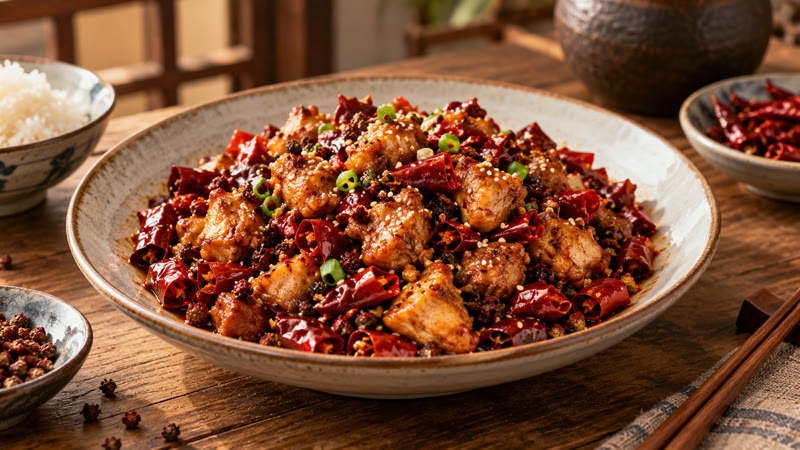
The finished rabbit should look glossy and relatively dry, with the chilies and peppercorns distributed through the meat rather than floating in a thin sauce.
Basic Facts
- Dish focus: Zigong-style cold-eaten rabbit, not every Sichuan rabbit preparation.
- Main flavor: Savory heat, citrusy-numbing peppercorn aroma, ginger, and warm whole spices.
- Cut: Pieces around 2 cm cook more evenly and expose more surface to the seasoning.
- Safety check: The largest rabbit pieces should reach at least 160°F (71°C).
- Serving: Warm, room temperature, or chilled after safe cooling.
- Bone note: Bone-in rabbit gives flavor but requires careful eating; boneless rabbit is easier for guests.
Why “cold-eaten” rabbit is not a cold raw dish
The English name can be misleading. “Cold-eaten” describes how the cooked dish is commonly enjoyed after it rests and cools. The rabbit is first marinated, then thoroughly cooked; the final reduction concentrates the chile, peppercorn, and aromatic flavors around the meat.
Cold-eaten rabbit is closely associated with Zigong in Sichuan. It also appears in the Sichuan Provincial Department of Commerce list of provincial rural famous dishes. That recognition helps identify the regional dish, but it does not establish one compulsory household formula. Chili varieties, sweetness, oil level, whole spices, and the choice between bone-in and boneless rabbit can vary.
This recipe is therefore a practical home adaptation with explicit food-safety checks. It aims for the characteristic dry-glossy finish and layered aroma without claiming to reproduce every restaurant or family version.
Ingredients for four to six servings
For the rabbit
- 1 3/4 to 2 pounds (800-900 g) food-grade rabbit, cut into pieces about 2 cm wide
- 1 tablespoon Shaoxing wine
- 2 teaspoons light soy sauce
- 3/4 teaspoon fine salt, plus more only after tasting
- 1 tablespoon sliced ginger
- 2 scallions, white and green parts separated
For the spice finish
- 1/2 to 3/4 cup neutral high-heat oil, such as peanut or canola oil
- 1 to 1 1/2 cups dried chili segments, adjusted for the variety and your heat tolerance
- 1 to 2 teaspoons whole red Sichuan peppercorns
- 2 star anise
- 1 small piece cassia or cinnamon
- 1 bay leaf
- 1 teaspoon fennel seeds, optional
- 2 or 3 strips dried tangerine peel, optional
- 1 to 2 teaspoons sugar
- 1/2 cup water or unsalted stock, with more only if needed
- 1 teaspoon toasted sesame seeds, optional
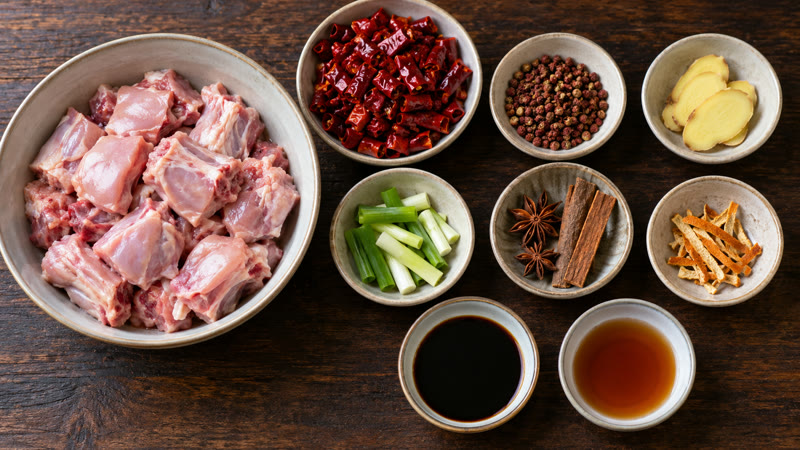
Keeping the raw rabbit separate from the ready-to-use spices makes the preparation easier to control and reduces cross-contamination risk.
Use a mix of fragrant and hotter dried chilies if available. If you only have very hot chilies, reduce the quantity instead of forcing the full volume. The dish should smell of toasted chili and peppercorn, not simply burn. Our Sichuan chili oil guide explains how excessive heat can make dried chili and peppercorn bitter; the same principle applies here.
Cook the rabbit before building the dry, glossy finish
1. Marinate and organize the work area
Pat the rabbit dry. Combine it with Shaoxing wine, soy sauce, salt, ginger, and the white scallion pieces. Rest for 20 to 30 minutes in the refrigerator. Meanwhile, cut the dried chilies with kitchen shears and shake out some seeds if you want less sharp heat.
Keep the cutting board and utensils that touched raw rabbit away from the cooked-food area. Measure the spices before heating the wok because dried chilies can scorch while you search for the next ingredient.
2. Start with fragrant oil
Heat the oil in a wok or wide heavy pan over medium heat. Add star anise, cassia, bay leaf, fennel, and dried tangerine peel. Fry gently until fragrant, about one minute, without blackening the spices. Remove any spice that is darkening too quickly.
3. Cook off the rabbit’s surface moisture
Add the rabbit in a single layer as far as the pan allows. Let it sear briefly, then stir and turn the pieces. Cook until the exterior changes color and the moisture released by the meat has mostly evaporated. If the pan is crowded and the rabbit is steaming heavily, work in batches and return everything to the wok before the next step.
4. Add chilies and peppercorns without burning them
Lower the heat slightly. Stir in the Sichuan peppercorns and about two-thirds of the dried chilies. Cook just until their aroma rises. Add the water or stock and sugar, scrape the pan, and bring the mixture to a steady simmer.
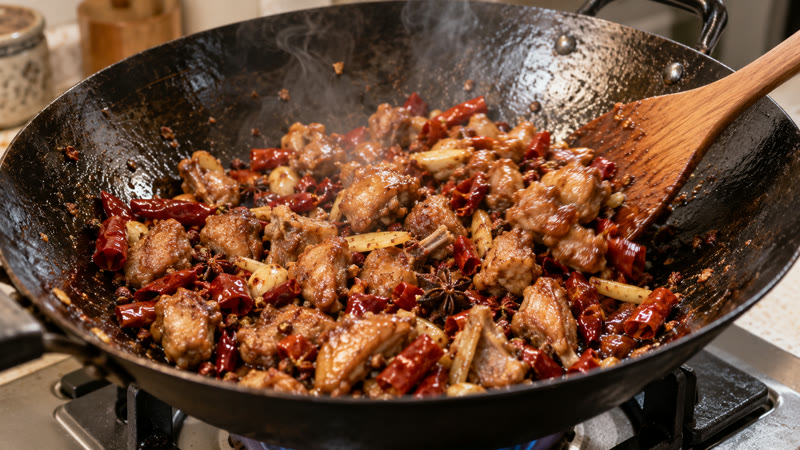
The chilies should stay deep red rather than turn black; the rabbit needs enough time to cook through before the sauce is reduced.
5. Verify doneness, then reduce
Simmer and stir until the largest rabbit pieces reach 160°F (71°C) in the center. Check more than one piece if the cuts vary in size. A timer, browned exterior, or clear-looking juices cannot replace a temperature check.
Once the rabbit is safely cooked, continue over medium heat until the liquid is nearly gone and the seasoned oil coats the pieces. Add the remaining dried chilies near the end for fresher aroma. Taste before adding more salt because the soy sauce and reduction concentrate seasoning. Finish with scallion greens and sesame seeds if desired.
How to judge the final texture
The meat should be cooked through and firm but not chalky. The pan should not contain a pool of watery sauce. A small amount of red seasoned oil is normal, but each rabbit piece should carry visible spices and a glossy coating.
If the rabbit is tough, the pieces may have been too small, too lean, or kept over high heat after reaching temperature. If the dish is watery, the pan may have been crowded or too much liquid was added. Remove the cooked rabbit temporarily and reduce the liquid before returning it to the wok.
If the flavor is bitter, the dried chilies or peppercorns probably scorched. Sugar can soften a slight edge, but it cannot repair blackened spices. Start again with the spice portion rather than burying the bitterness under more sweetness.
For readers building a Sichuan pantry, the site’s Sichuan Food Resource Center connects peppercorn, chili oil, sauces, and beginner recipes without treating one ingredient as a substitute for the whole flavor structure.
Cooling, serving, and storage
Serve the rabbit warm if you prefer, or let it cool briefly so the aromatics settle. For later service, divide it into shallow containers and refrigerate it within two hours of cooking, or within one hour when the surrounding temperature is above 90°F (32°C). Do not leave the wok on the counter for an afternoon simply because the dish is called cold-eaten rabbit.
Keep refrigerated leftovers at 40°F (4°C) or below and use them within three to four days. The USDA and FoodSafety.gov guidance linked below provides the temperature and storage basis for these limits. Discard the dish if it has been held unsafely; reheating does not undo every risk created by poor cooling.
When serving bone-in rabbit, tell diners that small bone fragments may be present. For children or anyone who cannot comfortably manage small bones, use deboned rabbit and inspect the cut meat carefully.
Quick Reference
- Cut the rabbit into similarly sized pieces and marinate under refrigeration.
- Infuse the oil gently with whole aromatics.
- Cook the rabbit until surface moisture has mostly evaporated.
- Add chilies and peppercorns over controlled heat.
- Simmer until the largest pieces reach at least 160°F (71°C).
- Reduce until the seasoning clings to the meat, then cool and store promptly.
Frequently Asked Questions About Spicy Diced Rabbit
Is spicy diced rabbit served cold?
It can be served warm, at room temperature for immediate eating, or chilled after prompt refrigeration. The name refers to a cooked dish commonly enjoyed after cooling; it does not mean raw rabbit.
Can I make it less spicy without losing the Sichuan character?
Yes. Use fewer high-heat chilies and retain a modest amount of fragrant dried chili and Sichuan peppercorn. Add the final portion of chilies late so their aroma remains noticeable without requiring a very large quantity.
Should I use bone-in or boneless rabbit?
Both can work. Bone-in pieces are common and flavorful but require careful eating. Boneless meat is easier to serve, especially to guests unfamiliar with chopped rabbit. Whichever you choose, keep the pieces similar in size and verify the largest ones with a thermometer.
Can I use chicken instead?
Chicken can use a similar chile-peppercorn technique, but the result is a different dish with different cooking behavior. Use the safe internal temperature appropriate for chicken rather than carrying over the rabbit temperature by assumption.
Why did my dried chilies turn bitter?
They were probably exposed to excessive heat or cooked too long before liquid was added. Lower the heat before adding chilies, keep them moving, and add part of the batch near the end for aroma.