This Sichuan-pepper chili-crisp version combines dried chili, oil and separately fried shallot and garlic chips. The crunchy solids make it different from strained smooth chili oil. It follows a published home-condiment formula, with a conservative refrigerated storage limit; it does not claim a shelf-stable canned product or an actual kitchen trial.
Quick Answer
Prepare the dry chili and seasoning base in a roomy heatproof vessel. Fry thin shallot slices, strain and retain the oil, then fry and strain garlic separately. Heat the flavored oil to the prescribed pouring temperature and add it carefully to the spice base. Let the base cool before folding in the crisp solids, then refrigerate promptly.
Basic Facts
| Base | Dried chili flakes, ground Sichuan pepper, spices and neutral oil |
|---|---|
| Crunch | Fried shallots, garlic chips and roasted peanuts |
| Pouring temperature | 190°C (375°F), monitored with a suitable thermometer |
| Important order | Crisp shallot and garlic are held separately until the base cools |
| Storage scope | Refrigerate at 4°C (40°F) or below; use within 4 days or freeze promptly |
| Allergens | Peanut in the selected base; optional sesame adds sesame |
Ingredients and portion planning
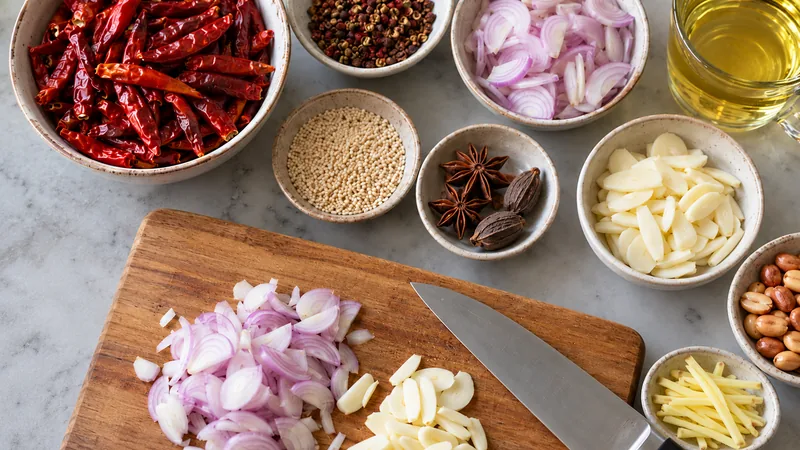
For the selected base, prepare 27 g dried árbol chilies, 20 g dried japones chilies and 25 g dried Kashmiri chilies; remove stems and most seeds and grind into flakes. Use 50 g chopped roasted salted peanuts, 30 g fresh ginger in thin matchsticks, 3 star anise, 2 split red or black cardamom pods, 28 g ground Sichuan pepper, 12 g porcini or shiitake mushroom powder, 20 g sugar, 30 g salt, 6 g ground cumin and 2 g ground black pepper. Optional MSG is omitted.
Use 500 g neutral oil, 200 g thinly sliced shallots and 65 g thinly sliced garlic. The source gives salt by weight as well as a Diamond Crystal kosher-salt volume; weigh it rather than treating every salt’s tablespoon as equivalent. Optional toasted sesame may garnish the finished condiment, but is not required in this measured base. Keep that choice visible to anyone avoiding sesame.
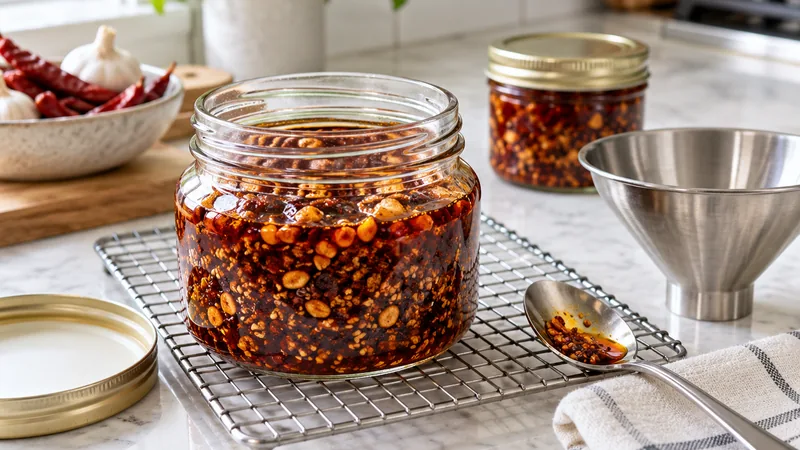
This is a sizable condiment batch. Prepare small freezer portions or use a tested smaller recipe rather than planning to leave a large jar in the pantry. The illustration of a jar is serving and handling context, not proof of sterilization, acidity or safe preservation. Read the actual labels on oil, mushrooms and nuts for allergens and storage.
Prepare dry base and safe equipment
Use a roomy heatproof metal vessel or other equipment explicitly rated for hot oil, with ample headroom for bubbling. Do not assume a decorative bowl or ordinary glass jar can take the temperature. Arrange a stable strainer and a suitable oil-catching vessel before moving a hot pan. Keep water droplets, wet utensils and children away from the transfer area.
Handle dried chilies with suitable gloves, avoid touching eyes and wash hands afterward. Make coarse flakes rather than an airborne dust cloud. Combine the chili flakes, spices, seasonings, the prepared 30 g fresh ginger matchsticks and peanuts in the receiving vessel. Evenly slice shallot and garlic so large wet pieces do not remain while thin fragments burn.
Fry shallots and garlic separately
Start the shallots in the oil and cook with controlled heat and frequent stirring. Remove them when pale golden and continue the residual crisping out of the pan. Return the strained oil to the pot and cook the garlic more gently, removing it before it becomes dark and bitter. Keep the two crisp solids aside.
Dark scorching is a flavor failure; adding sugar does not reverse it. Surface color also does not validate removal of every trace of moisture for long-term storage. This page does not use a home frying judgment to claim that a moist garlic condiment has become pantry-safe.
Infuse the base, then add crunch
Bring the flavored oil to 190°C (375°F), using a thermometer suited to oil. Pour slowly into the prepared heatproof spice base and stir to distribute it, allowing room for bubbling. Do not pour into a storage jar or over a wet surface. The required temperature is an oil-stage instruction, not a general food-storage safety threshold.
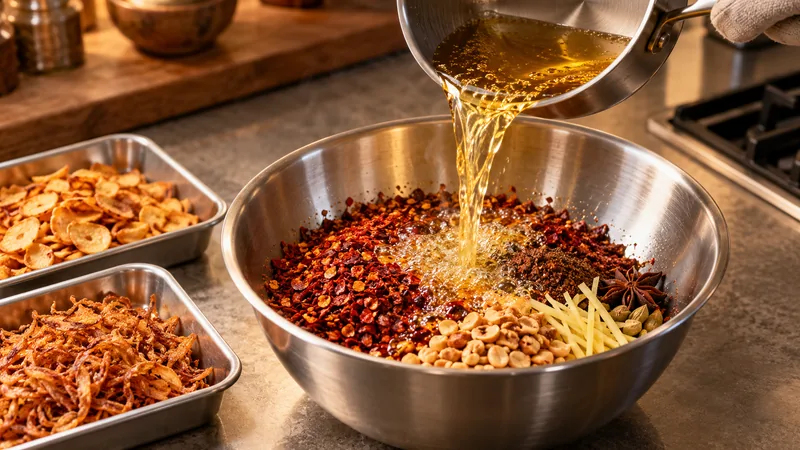
Let the mixture cool in the safe vessel, then remove the large star anise and cardamom pieces before stirring in the cooled shallots and garlic chips. Adding the crisp solids to a still-hot wet mixture can change their texture. Optional toasted sesame belongs to the chosen finished-garnish variation rather than silently changing the base formula.
Use clean utensils when portioning. A spoonful of fully prepared condiment can season a cooked meal; raw garlic added after preparation introduces a new ingredient and handling change. Separate flavor choices from the original measured formula so a later batch can be repeated without relying on the picture.
Cool, refrigerate and label accurately
Transfer into clean suitable containers and refrigerate promptly at 4°C (40°F) or below, within two hours of preparation or one hour in surroundings above 32°C (90°F). Use shallow portions rather than leaving a large warm jar on the counter overnight. Date the containers and use refrigerated portions within four days, or freeze promptly for longer storage.
Oregon State Extension gives that conservative handling rule for home-flavored oils, including garlic or herbs in oil. This page therefore does not adopt a cooking blog’s longer refrigerator estimate as a validated preservation process. Adding soy, vinegar or extra salt by guesswork does not establish a tested acidification method, and a lid does not turn the condiment into a canned product.
Commercial shelf-stable sauces have their own manufacturing controls and labels. Their pantry instructions cannot be transferred to this home batch. Do not use normal smell, a photograph, bright chili color or a crunchy piece as a test for botulism safety. When storage history is uncertain, do not taste it to decide whether it is acceptable.
Quick reference
Dry base first, shallot and garlic fried separately, monitored oil transfer, cooled base before crisp solids, prompt refrigeration and a four-day refrigerated limit or freezing. This page supplies a condiment method, not noodle-cooking directions or a preservation guarantee.
References
- Serious Eats: Sohla El-Waylly chili crisp
- Chili Pepper Madness: chili-crisp variations
- Oregon State Extension: herbs and vegetables in oil
- FoodSafety.gov: prompt safe chilling
Frequently Asked Questions
How is chili crisp different from strained chili oil?
It retains crunchy fried solids, while strained smooth oil does not have the same solid texture.
When do garlic and shallot chips return?
After the chili-oil base cools; keep the fried solids separately while preparing the base.
Is the jar shelf-stable?
No. This home batch has no validated acidification or canning process; refrigerate promptly.
Why use a four-day refrigerated limit?
This page adopts Oregon State Extension’s conservative home-flavored-oil guidance instead of treating longer cooking-blog estimates as validated preservation.
Can sesame be omitted?
Yes. Toasted sesame is optional garnish; the selected base still contains peanuts.