Dan Dan noodles are easiest to make when the dish is treated as four small components rather than one complicated sauce: a sesame-chile base, a dry pork-and-preserved-greens topping, springy wheat noodles, and a little hot noodle water to join everything together. The goal is a bowl that tastes savory, nutty, tangy, hot, and lightly numbing without becoming greasy or pasty.
This recipe makes four small main-course bowls. It is a practical home version, not a claim that every Chengdu shop uses the same proportions. The useful constant is not one rigid formula but the relationship among wheat noodles, a seasoned sauce, a savory topping, chile heat, and Sichuan pepper aroma.
Ingredients for four bowls
For the pork topping
- 1 tablespoon neutral cooking oil
- 8 ounces (225 g) ground pork
- 1 tablespoon Shaoxing wine
- 1 tablespoon light soy sauce
- 1/3 cup finely chopped Sichuan preserved mustard greens or ya cai
For the sauce
- 4 tablespoons Chinese sesame paste
- 3 tablespoons chile oil, including some chile sediment, plus more to taste
- 3 tablespoons light soy sauce
- 2 tablespoons Chinkiang black vinegar
- 2 teaspoons sugar
- 2 garlic cloves, finely grated
- 1 teaspoon finely ground roasted Sichuan peppercorns, or less for a gentler numbing effect
- 1/3 to 1/2 cup hot noodle cooking water, added gradually
For the noodles and finish
- 12 ounces (340 g) dried Chinese wheat noodles, or about 1 pound (450 g) fresh noodles
- 3 scallions, thinly sliced
- 1/3 cup roasted peanuts, crushed, optional
- Blanched leafy greens, optional
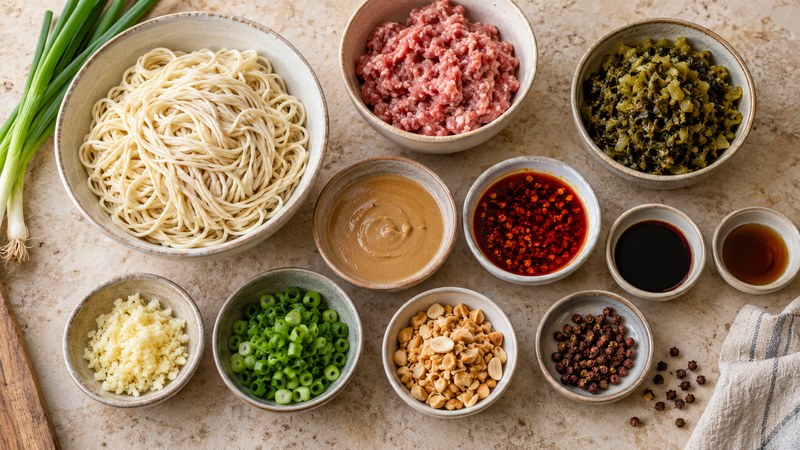
Choose the ingredients that control the flavor
A chef recipe published by Great British Chefs uses the recognizable combination of noodles, pork mince, sesame sauce, chile oil, and preserved vegetables. Its Dan Dan noodles recipe also points out an important shopping distinction. Chinese sesame paste is not identical to tahini: its deeper roasted flavor changes the sauce.
If Chinese sesame paste is unavailable, tahini will still create body, but the bowl will taste lighter and less roasted. Treat that as an adaptation rather than pretending the ingredients are interchangeable. Unsweetened smooth peanut butter can also substitute, but it adds a distinct peanut flavor; sweetness and thickness vary by product.
Ya cai contributes salt, fermentation, and a fine, slightly chewy texture. Rinse it only if the package tastes aggressively salty, then squeeze it dry before chopping. Sichuan pepper should smell citrusy and floral; grind it shortly before cooking because the aroma fades faster after grinding.
Step 1: mix a concentrated sauce
In a medium bowl, whisk together the sesame paste, chile oil, soy sauce, black vinegar, sugar, garlic, and ground Sichuan pepper. At this stage the mixture should be concentrated and a little thicker than the finished sauce. After the noodles are cooked, gradually whisk in hot noodle water until the sauce is smooth and pourable.
Taste a small amount. It should seem stronger, saltier, and more acidic than a finished bite because noodles and hot water will dilute it. Adjust only one dimension at a time: more vinegar for brightness, chile oil for heat and aroma, soy sauce for salinity, or sugar in small pinches to round sharp edges.
Step 2: cook the pork topping until crumbly
Heat a wok or wide skillet over medium-high heat. Add the neutral oil and ground pork. Break the pork into small pieces and cook until the moisture has evaporated and the pieces begin to brown. Stir in the Shaoxing wine and soy sauce; continue cooking until the liquid no longer pools in the pan.
Food safety is separate from browning. The FDA cooking guidance for people at higher risk of foodborne illness says to cook ground beef, veal, lamb, and pork to at least 160°F (71°C). Check the thickest cluster with a food thermometer rather than relying only on color.
Add the chopped preserved greens after the pork is safely cooked. Stir for 30 to 60 seconds, just long enough to distribute them and release their aroma. Remove the pan from the heat. The finished topping should be dry and crumbly, not suspended in a wet gravy.
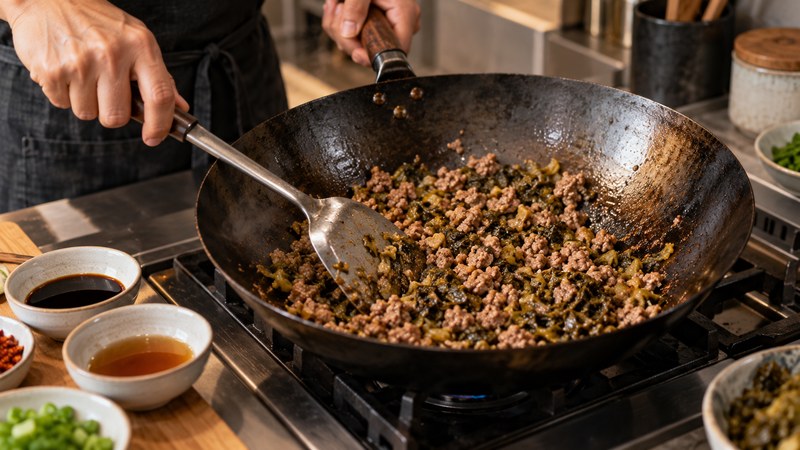
Step 3: cook the noodles and save the water
Bring a large pot of water to a full boil. Cook the noodles according to their package timing, tasting early. They should be cooked through but still springy because soft noodles continue absorbing sauce in the bowl. Fresh noodles may need only a few minutes; dried noodles vary too much for one universal time.
Before draining, reserve at least 1 cup of the hot cooking water. Drain the noodles well but do not rinse them. Their surface starch helps the sauce cling. If you are adding leafy greens, blanch them in the same pot just before the noodles are finished.
Step 4: loosen, divide, and toss immediately
Whisk 1/3 cup hot noodle water into the concentrated sauce. Add more water one tablespoon at a time until it pours slowly. The sauce should cling to the noodles in a thin, glossy layer rather than sit as a heavy paste.
Divide the sauce among four warm bowls, add the hot noodles, and toss each bowl thoroughly from the bottom. Spoon over the pork topping and preserved greens. Finish with scallions, optional peanuts, and an extra spoonful of chile oil for diners who want more heat.
Do not leave the tossed noodles standing. Sesame paste thickens as it sits, while noodles continue to absorb moisture. If a bowl tightens before serving, loosen it with one or two teaspoons of hot noodle water and toss again.
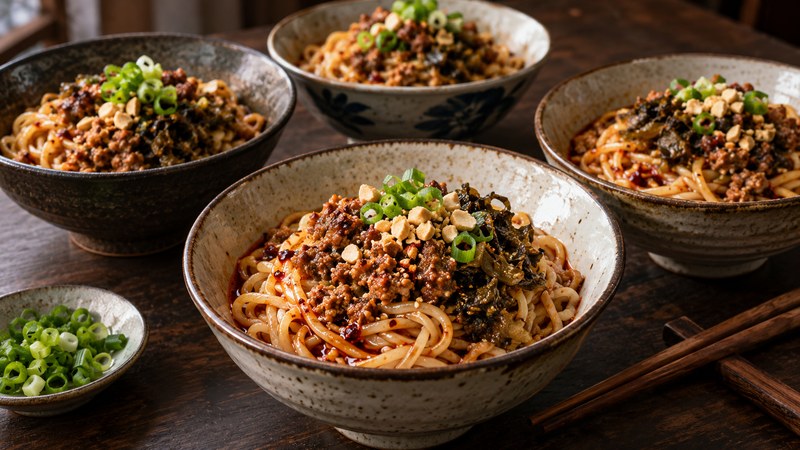
How to correct the bowl before serving
| Problem | Likely cause | Correction |
|---|---|---|
| Sauce is thick and clumpy | Too little hot noodle water or the bowl sat too long | Add hot water one teaspoon at a time and toss vigorously |
| Noodles taste greasy | Too much oil relative to sesame paste and vinegar | Add a little vinegar and hot water; reduce finishing oil next time |
| Flavor is salty but flat | More soy sauce was used instead of balancing acidity and aroma | Add black vinegar, scallion, and a small amount of fresh Sichuan pepper |
| Pork topping is soft and wet | The pan was crowded or the liquid was not cooked off | Use a wider pan and cook until the topping separates into browned crumbs |
| Numbing flavor dominates | Too much ground Sichuan pepper | Add less to the base and offer extra at the table |
Make-ahead boundaries
The sauce concentrate can be mixed ahead and refrigerated in a covered container, but add hot noodle water only when serving. The pork topping can also be prepared ahead, chilled promptly, and reheated thoroughly. Cook the noodles last. Pre-cooked noodles lose their springy texture and tend to form a dense mass after chilling.
For a related chile condiment, see our Sichuan chile crisp method. If you want another example of a red-oil sauce served with a savory topping, compare the dressing approach in Sichuan dumplings. The sauce ideas are related, but the proportions should still be adjusted for noodles rather than copied unchanged.
Frequently asked questions
Are Dan Dan noodles always made with peanut butter?
No. Chinese sesame paste is a common base in many versions. Peanut butter can substitute, but it adds a distinct peanut flavor, and its sweetness and thickness vary by product. Use the ingredient that matches the style you intend and label substitutions honestly.
Can I make Dan Dan noodles without pork?
Yes. Finely chopped mushrooms or crumbled firm tofu can replace the pork topping. Cook them until their moisture evaporates, then season with soy sauce and preserved greens. The result is a meatless adaptation, not an identical replacement.
Why did my sesame sauce become too thick?
Sesame paste thickens as it sits and can seize when mixed unevenly. Whisk in hot noodle water gradually, then toss while the noodles are still hot. Add only a teaspoon or tablespoon at a time so the sauce does not become watery.
Should the noodles be served with broth?
This recipe is a sauced noodle bowl, not a noodle soup. Hot noodle water loosens the sauce, but it should not create a deep pool. Regional and restaurant versions vary, so a looser serving is possible without being the same formula used here.