A spicy cucumber salad needs recognizable cucumber crunch as well as heat. This version combines cracked cucumber with a light soy-and-vinegar dressing, garlic and chili oil. It is one home-cooking interpretation of the dish, rather than a claim that there is a single authentic ratio.
Quick Answer
Wash and crack the cucumbers, cut them into bite-size pieces and toss with garlic and a separately mixed soy, vinegar and sesame-oil dressing. Chili oil is added to taste near serving. Keep the dish cool and manage released water so the dressing is not diluted before serving.
Basic Facts
| Yield | About 4 side servings |
|---|---|
| Cucumbers | 2 English cucumbers, roughly 450–680 g total |
| Dressing | 1 teaspoon salt, 2 1/2 teaspoons sugar, 2 teaspoons sesame oil, 3 teaspoons light soy, 1 1/2 tablespoons rice vinegar |
| Aromatics and heat | 2–4 garlic cloves; 1–2 teaspoons chili oil |
| Optional finish | 2 teaspoons toasted sesame seeds; omit cilantro if not wanted |
How to make spicy cucumber salad
Measure the dressing ingredients before handling the cucumber. This larger-batch version has more vinegar than the garlic-focused recipe elsewhere on the site, so do not exchange the two dressing lists without also changing the cucumber amount. Use the listed salt as an upper starting amount if your soy is very salty, and taste before adding any more.
The cucumber remains the main food. Garlic should be finely chopped, and chili oil should be added in a quantity appropriate to its actual strength. Toasted sesame seeds are an optional garnish. No cooked noodles, chicken topping or warm sauce is required. Use a clean bowl large enough to toss without squeezing or mashing the pieces.
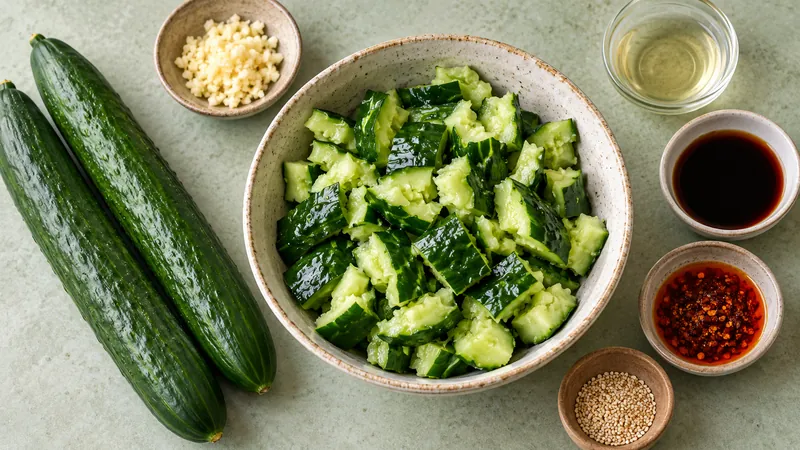
Salt drain and prepare the cucumber
Wash and dry the cucumbers. Trim only thick or tough skin and remove the ends, crack the lengths into several sections and cut them across into bite-size pieces. The split faces should remain visible. In this direct-dressed version, salt is included in the mixed dressing rather than applied as a separate additional salt dose.
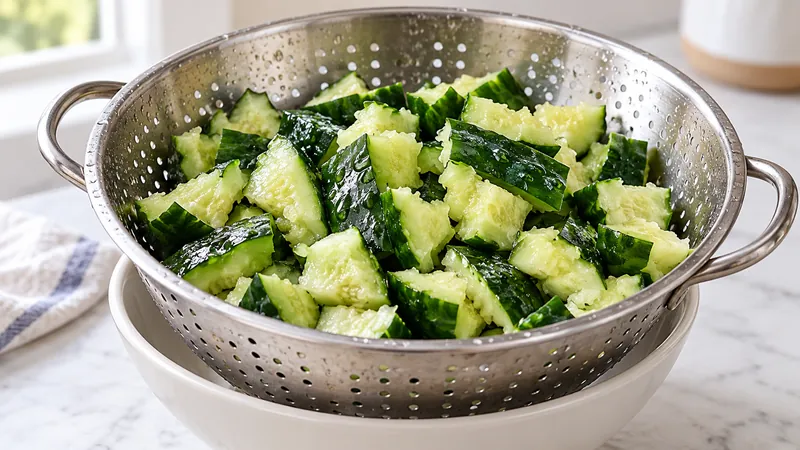
If you decide to pre-salt and drain an especially watery cucumber, account for that salt in the dressing. Do not add a full independent dose at both stages. Drain away any pooled water before tossing. The preparation is not a fermentation procedure: a quick salt treatment changes immediate moisture, whereas preserving a vegetable safely requires a separate validated process.
Mix garlic chile vinegar and seasoning
Stir salt and sugar into the rice vinegar and soy, then mix in the sesame oil. Add the chopped garlic and the first teaspoon chili oil. Toss the cucumber with this dressing just before serving, making sure seasoning reaches pieces at the bottom. Add the second teaspoon only after tasting the coated cucumber.
If the result tastes heavy, decide whether excess liquid, oil or sweetness is responsible before changing another ingredient. Rice vinegar and black vinegar have different flavor profiles; using black vinegar is a variation rather than an invisible identical substitution. Add optional sesame seeds after tossing. Chili oil may contain soy, sesame, peanuts or other ingredients, so check the actual product label.
Toss briefly adjust and serve safely
Wash firm cucumbers under running water before cutting, using a clean produce brush as appropriate; do not wash produce with soap or bleach. Keep the cutting board, bowl and colander separate from equipment used for raw meat. If the cucumber tastes unusually bitter, do not eat it. Trimming thick skin is a texture choice, not a method for making an abnormally bitter cucumber safe.
Refrigerate the cut cucumber and dressing in separate covered containers at 4°C (40°F) or below, then mix only the portion needed for serving. Refrigerate perishable prepared food within two hours, or one hour above 32°C (90°F). These handling limits are not suggested marinating periods. For a direct-dressed bowl, the colander is used to drain wash water; for the optional salt-and-drain version, discard released liquid and adjust the final salt accordingly. Neither method makes a shelf-stable pickle.
Serve the salad promptly. A dressed bowl releases water as it stands, which can soften the vegetable and thin the sauce. Keep components chilled separately for advance preparation. There is no need for a prescribed warm rest or a noodle absorption test.
Prevent contact with raw-meat boards or utensils. Store perishable prepared food promptly in the refrigerator, following current food-safety guidance. Garlic and vinegar do not make this a shelf-stable jarred condiment. For a later batch, adjust one variable at a time: for example, a smaller amount of chili oil for less heat or less sugar for a sharper dressing. Such adjustments express taste preference, not a guaranteed result.
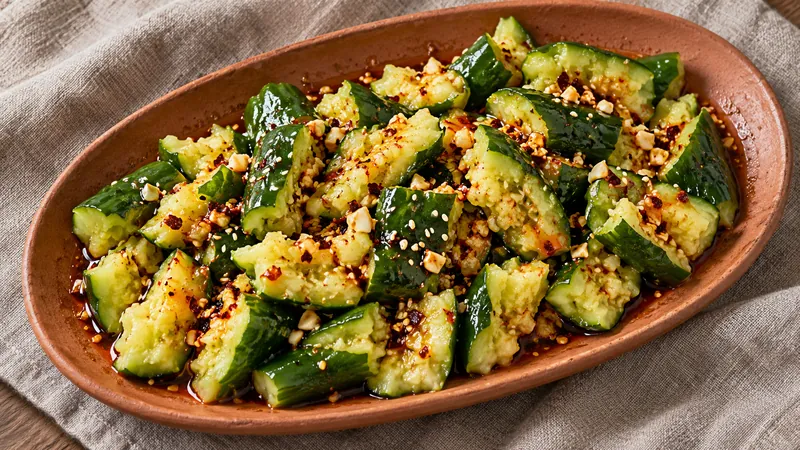
Quick reference
For two English cucumbers, mix a light soy/rice-vinegar dressing, add garlic and chili oil, then toss shortly before serving. Avoid double-counting salt if pre-draining.
- sichuan recipes
- sichuan chili oil recipe
- mapo tofu recipe
- FoodSafety.gov: ready-to-eat produce handling
Recipe references
- thewoksoflife.com recipe reference
- www.seriouseats.com recipe reference
- Centre for Food Safety: bitter cucumber
- FoodSafety.gov: produce washing and chilling
Frequently Asked Questions
Is there one authentic dressing ratio?
No. Published Chinese cucumber recipes vary. This page specifies one coherent version so quantities and images remain consistent.
Can I use black vinegar?
Yes as a stated variation; its flavor differs from the rice-vinegar starting version.
Should I salt twice?
No. If pre-salting and draining, reduce salt in the final dressing.
Do I need cilantro?
No. This specified version omits cilantro; toasted sesame seeds remain optional.
Can I pack it hours ahead?
Keep cucumber and dressing separately chilled and combine close to eating to reduce water release.