The best Sichuan food for lunch depends on where and when you will eat it. A bowl of dan dan noodles served during your break answers a different need from a rice box carried to work in the morning. Before choosing the dish, check your lunch window, access to refrigeration and whether you can reheat a meal thoroughly.
The options below are practical menu suggestions, not a ranked restaurant test or a claim about one universally best lunch. They focus on a single workday meal rather than a shared dinner. Ingredients, heat levels and preparation vary by kitchen, so ask about the actual dish before ordering. A food that is pleasant cold still needs safe cooking, cooling and cold storage.
Compare three lunch formats by kitchen access
Swipe or scroll horizontally to see all columns.
| Your situation | Lunch idea to consider | Practical advantage | Condition to check |
|---|---|---|---|
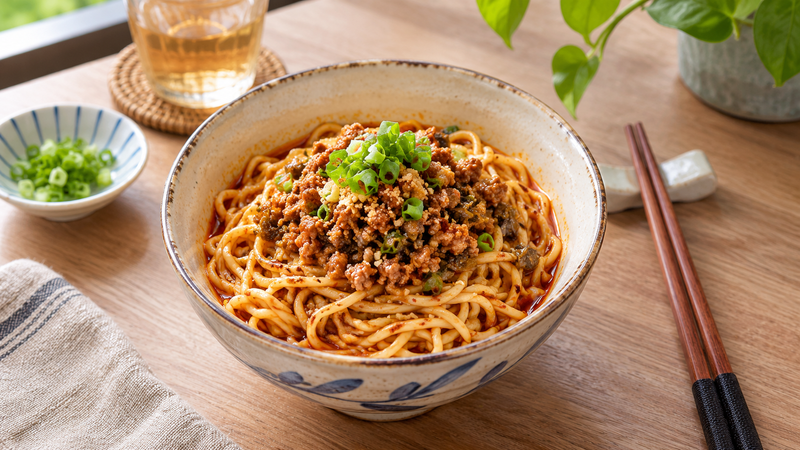
| You can eat at a restaurant during the break | A freshly served bowl of dan dan noodles | No morning storage or office reheating plan is needed | Confirm the serving time and ingredients; eat promptly |
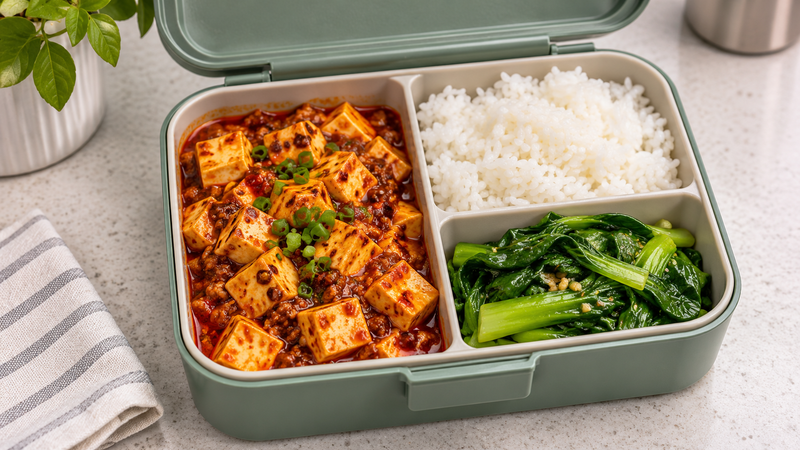
| You have a fridge and microwave at work | Mapo tofu, rice and cooked greens in separate compartments | One compact meal with components you can portion | Cool and carry it safely; reheat the perishable meal thoroughly |
| You have refrigeration but no reheating equipment | A chilled plate of fully cooked Sichuan-style chicken, cucumber and separately packed noodles | A meal designed to be eaten cold | Keep every perishable component cold; do not use partially cooked chicken |
These are formats to adapt, not fixed recipes. If your workplace has neither reliable cold storage nor a way to keep food safely cold, arrange a freshly prepared meal near the time you will eat. Carrying a perishable lunch all morning at room temperature is not a substitute for refrigeration.
For a vegetarian meal, ask what is in the actual sauce, topping and stock. A tofu dish name alone does not establish that the dish is meat-free. If you are choosing for a food allergy, discuss the ingredients and kitchen handling directly rather than relying on a mild-spice request.
What to ask when ordering a fresh lunch
Start with the time constraint: “Can this be prepared and served within my lunch break?” If you need to return to work quickly, ask how the dish is packed and whether a sauce can travel separately. Avoid ordering a meal far ahead simply to make it wait on your desk.
Then ask about the components you care about: chili, Sichuan pepper, meat, nuts, sesame, soy or other ingredients relevant to you. A request for less chili does not automatically remove numbing pepper or an allergen. Do not ask the server to infer your needs from a word such as “light.” Explain what you want changed.
If the plan is to share several dishes leisurely, our Sichuan dinner guide addresses that different occasion. For lunch, a single manageable order and a realistic eating time are often a more useful starting point than copying an entire dinner menu.
Pack a cooked lunch around a reliable cold chain
For food carried from home, use clean containers and keep raw ingredients away from the cooked meal. Cool cooked food promptly in shallow portions and refrigerate it. Do not leave a large pot on the counter overnight before filling the lunchbox.
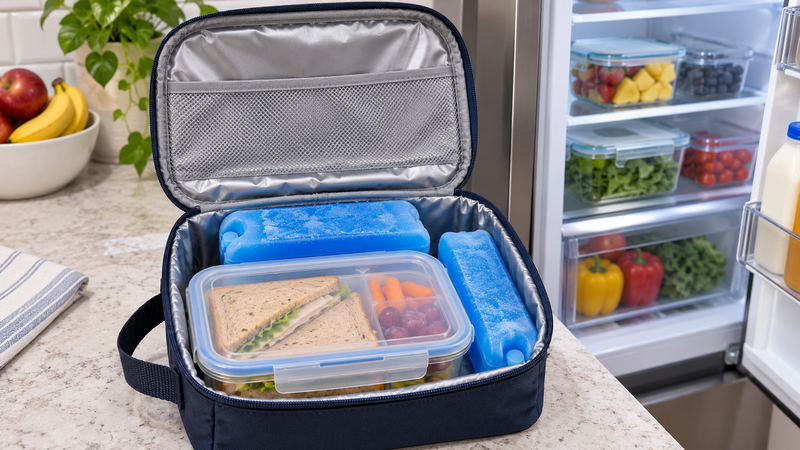
FoodSafety.gov’s guidance for bag lunches recommends two cold sources and refrigeration or a cooler on arrival when available. An insulated bag and frozen gel packs help maintain the cold chain; the target for cold food is 40°F (4°C) or below. A bag that feels cool on the outside is not a temperature measurement.
Put the chilled lunch into its bag just before leaving and transfer it to the work fridge on arrival. Keep dressings and cucumber separate from a portion you plan to heat. This makes the meal easier to handle, but separate compartments do not replace temperature control.
Reheat thoroughly and give rice its own check
FoodSafety.gov lists 165°F (74°C) for reheating leftovers. Use a food thermometer rather than judging by a warm container. Stir or rearrange food as appropriate to the microwave and allow any specified standing time so that a hot edge does not disguise a cold center. Freshly cooked chicken also needs to reach 165°F (74°C) before it is cooled for a cold lunch.
For home-cooked rice, the UK Food Standards Agency’s rice guidance gives a more specific routine: cool it quickly, ideally within one hour, refrigerate it and use it within 24 hours. Reheat rice no more than once, until steaming hot throughout. These rice-specific instructions are cited separately from the U.S. general temperature guidance.
Takeaway rice needs extra care because it may already have been reheated by the business. The FSA advises eating it shortly after purchase or delivery and checking how the business handled it before deciding whether another reheat is appropriate. Do not assume that reheating rescues rice that has been left out too long.
The U.S. packed-lunch guidance limits perishable food at room temperature to two hours, or one hour when exposed to temperatures above 90°F (32°C). If those limits have been exceeded, discard it. Chili oil, a strong smell or a good appearance does not demonstrate safe storage.
Make a simple next-day lunch plan
Choose the format first, then check the practical details: when it will be cooked or bought, how it will stay cold, where it will be stored and how it will be eaten. Pack only the portion you plan to use. If you cannot keep the cold chain reliable, switch to a freshly served lunch instead of trying to solve the problem with a different sauce.
A useful example plan is a properly cooled, refrigerated rice box prepared for the next day, carried cold and reheated at lunchtime. That example is conditional on the rice timing and cold-storage checks above; it is not a recommendation to cook a week’s rice boxes and leave them in a bag. For an earlier meal with different timing, see our Sichuan breakfast comparison.
The best choice is the meal that fits your break and the equipment you actually have. Decide that first, then choose the flavor and portion. A realistic lunch plan lets you enjoy Sichuan food without turning your workday into an improvised storage experiment.