The best Sichuan food for breakfast depends on whether you want a quick bun, a substantial noodle soup or a spoonable savory bowl. Start with baozi and soy milk for a portable option, feichang fen if you enjoy pork intestines and glass noodles, or Leshan-style doufunao if soft tofu with savory toppings appeals to you. These are choices to compare, not a province-wide ranking.
Breakfast in Sichuan is broader than a bowl of chili oil. A Chengdu government information-office post, crediting Sichuan tourism, lists soy milk and fried dough, porridge and buns alongside noodles, feichang fen, doufunao and guokui. Several of those foods are eaten elsewhere in China too; eating them in Sichuan does not make them exclusively Sichuan inventions.
Use the Chinese dish name, ask what that shop puts in it, and check that it serves the item at your intended hour. The guide below concerns breakfast selection and ordering, rather than recipes, restaurant rankings or a personally tested food itinerary.
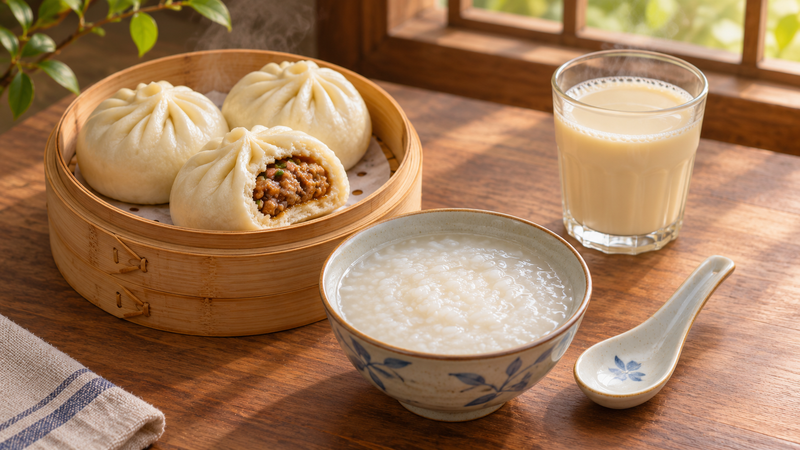
Compare breakfast formats before choosing a dish
| Option | What to check | Useful when |
|---|---|---|
| Baozi 包子 · bāo zi, with soy milk 豆浆 · dòu jiāng | Which filling? Is the drink sweetened? | You want a bun-based breakfast without committing to a large soup bowl. |
| Feichang fen 肥肠粉 · féi cháng fěn | Pork intestines, broth style, chili already in the base, and serving hours. | You want a savory glass-noodle bowl and enjoy offal. |
| Guokui 锅盔 · guō kuī | Filling and fat used; styles differ. | You prefer crisp bread, alone or alongside a bowl. |
| Doufunao 豆腐脑 · dòu fu nǎo, especially a Leshan-style version | Tofu, stock, meat topping, peanuts and other garnishes. | You want a spoonable savory dish and can confirm its ingredients. |
Portion names and bowl sizes differ. Rather than assuming a “small” bowl will match the one in a photograph, look at a serving or ask the shop. If you are sampling more than one food, begin with one item and decide whether you want bread or another bowl afterward.
Feichang fen and guokui: check the broth and the clock
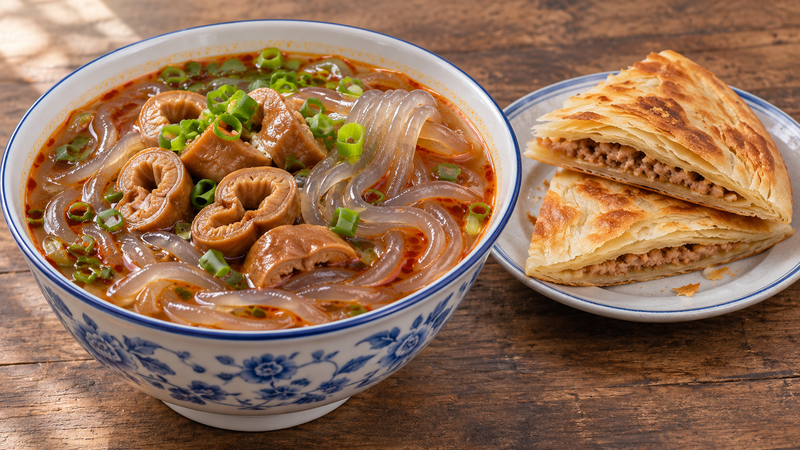
Feichang fen is an option for someone who likes pork intestines, not a neutral substitute for plain noodles. The MICHELIN Guide’s Gan Ji Fei Chang Fen listing describes glass noodles with braised pork intestines, a choice of mala or white broth, and guokui with pork and Sichuan pepper filling. Those details document that establishment’s preparation, not every shop’s menu.
The same listing illustrates a planning trap: when checked for this guide, it showed opening hours beginning at 10:00. A food associated with breakfast is not proof that a particular famous restaurant opens at 07:00. Confirm the current opening time and breakfast availability directly before making a special trip.
Ask whether chili can be omitted or served separately and whether the broth is already seasoned. A white broth is a menu description, not confirmation of vegetarian ingredients or suitability for an allergy. If intestines do not appeal to you, choose a different named filling or dish rather than simply asking for the visible pieces to be removed.
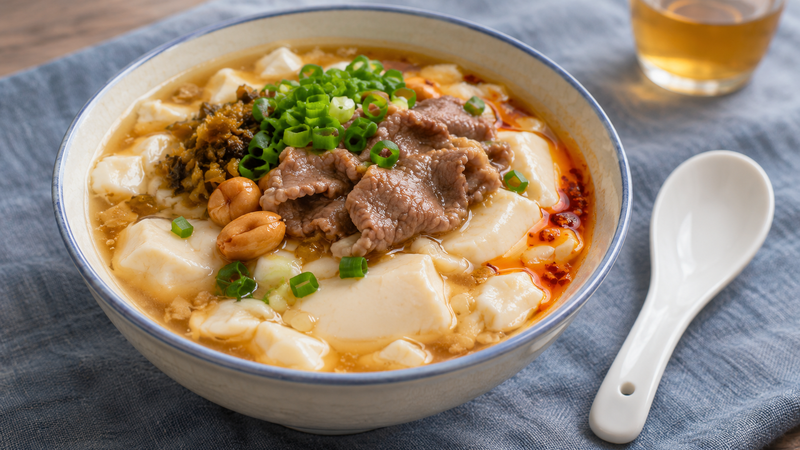
Doufunao: soft tofu does not identify the whole bowl
Do not expect every bowl labeled doufunao to be a sweet dessert or plain tofu. In Yang Jinggang’s Leshan Daily essay of August 11, 2024, page 3, the writer describes a savory bowl with peanuts, chopped preserved vegetable and steamed beef. He also notes regional styles and toppings including beef, intestines, crisp pork and chicken.
That account describes doufunao eaten in the morning as well as later in the day. It supports including the dish among breakfast choices, but not calling one recipe the standard for all Sichuan. Ask to see the available version: the word “tofu” does not settle the stock, meat or garnish question.
If you want a meat-free breakfast, ask about the liquid base and cooking fat as well as the topping. For more detailed questions about sauces and shared preparation, use our vegetarian and vegan ordering guide. An ingredient preference and a food allergy require different conversations with the kitchen.
Baozi, soy milk and porridge: a practical alternative
A bun-based breakfast can be a useful choice when you want something simpler to order. A December 2025 Chengdu Daily report about metro breakfast carts describes buns, soy milk and porridge, with several meat and other bun fillings. This is evidence of a local breakfast format, not a current promise about a particular cart’s location, stock or speed.
Point to the bun you want and confirm its filling before ordering. Ask whether soy milk is sweetened if that matters to you. A pale steamed bun is not necessarily unfilled, and a vegetable-looking filling does not establish that the preparation is vegan.
For a short morning stop, compare a confirmed filling in a bun with a bowl that needs a seat, spoon and more time. Neither choice needs to be an authenticity test. The useful question is whether you understand what will arrive and whether it fits your morning.
Use specific questions at the counter
These are original ordering examples you can show to staff; they do not guarantee a requested change is possible:
- 现在有早餐吗? Are you serving breakfast now?
- 这个包子是什么馅的? What is the filling in this bun?
- 可以不放辣椒吗? Can this be made without chili?
- 汤里有肉吗? Does the soup contain meat?
Ask about Sichuan pepper separately if you also want less tingling: reducing chili is a different request. If you have an allergy, name the exact ingredient and ask staff about the full preparation and shared equipment; “not spicy” does not communicate an allergy. Do not use this guide’s dish names as an ingredient guarantee.
A practical first choice is therefore one dish whose ingredients and serving time you have confirmed. Add another only if you want it. For foods to explore beyond breakfast, see the separate Sichuan street-food guide, which covers a wider tasting rather than a morning meal.