This Sichuan beef version uses thin beef shreds, celery and pickled chilies with doubanjiang. It is a tender stir-fry, not the separate dry-fried beef dish and not a noodle bowl. The cut and the order of cooking are kept consistent with this specified version.
Quick Answer
Slice beef across the grain, cut into thin shreds and marinate while the celery and aromatics are prepared. Cook celery separately, then stir-fry aromatics and beef, combine with doubanjiang and finish with the celery. Do not use noodle warmth as a beef doneness test.
Basic Facts
| Beef | 250 g beef from a whole cut, sliced across grain then shredded |
|---|---|
| Vegetable | 100 g celery, cut into about 5 cm lengths |
| Aromatics | 2 garlic cloves, about 2.5 cm ginger, 2 scallion whites |
| Seasoning | 1 tablespoon doubanjiang; 2 teaspoons dark soy; 10–15 small pickled peppers, adjusted for heat |
| Marinade | 1 tablespoon cooking wine or water; 1 tablespoon light soy; 1 tablespoon oyster sauce; 2 teaspoons cornstarch; salt only if needed |
| Oil | 4 tablespoons cooking oil divided across stages, adjusted to pan needs |
How to prepare a Sichuan beef recipe
Identify the grain before slicing the beef, then cut the slices into narrow shreds. Prepare the celery, chopped garlic, ginger, scallion and pickled peppers before heating the wok. The pickled chilies and doubanjiang provide the sour-spicy savory profile; this is not a black-pepper-and-onion substitution.
Measure marinade and finishing ingredients separately. Oyster sauce and soy contribute salt, so do not automatically add another full salt dose. Pickled peppers vary in size and heat; the cited count is a starting reference, not a guarantee of mildness.
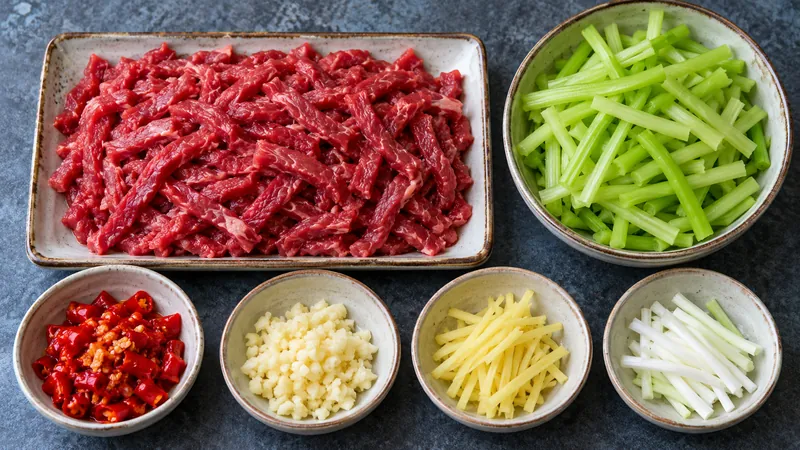
Step 1: Slice and marinate beef for tenderness
Mix the beef with wine or water, light soy and oyster sauce; refrigerate for about fifteen minutes as a starting marinade. Mix in the cornstarch before cooking. Keep raw beef and its bowl separate from the cooked celery and the serving dish.
Even shreds cook more consistently than a mixture of thick chunks and fine strands. The marinade cannot correct every cut-size difference or make raw meat safe to eat. If preparing ahead, keep the meat chilled rather than leaving it beside a warm stove.
Step 2: Prepare aromatics vegetables and sauce
Stir-fry the celery briefly in 1 tablespoon of the oil until just cooked and set it aside. In the wok, warm another 1 tablespoon oil and cook chopped garlic, ginger, scallion and pickled chilies gently until aromatic. Avoid scorching before the beef is added.
Set out doubanjiang and dark soy so the final stage does not pause. If pickled peppers are unavailable, a published variation uses fewer fresh chilies with a little black vinegar; name that substitution explicitly rather than depicting fresh chilies while describing a pickled version.
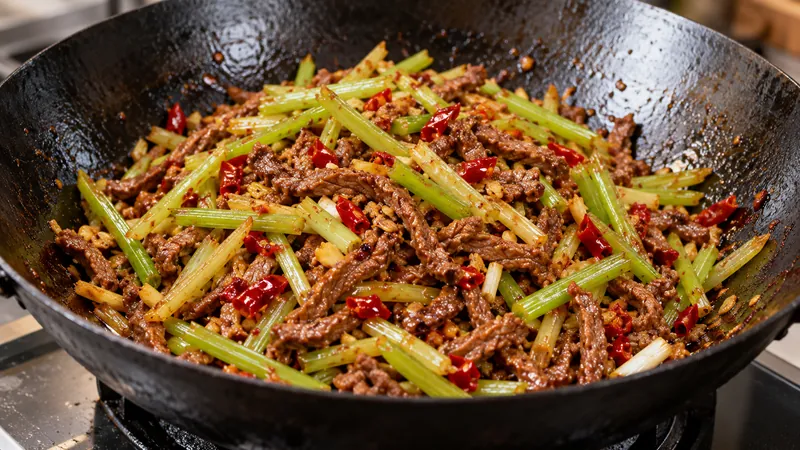
Step 3: Stir-fry quickly and verify doneness
For this whole-cut beef ingredient, verify 63°C (145°F) with a suitable thermometer and observe a 3-minute rest before serving. Use a probe suited to thin pieces; a dark soy coating makes visual color checks particularly unreliable. Ground beef has a different 71°C (160°F) endpoint and is not the ingredient chosen for this dish. Clean any probe that touched raw meat before checking a finished portion.
Avoid crowding all the meat into a small pan at once. If the shreds are packed on top of each other, contact with the hot cooking surface becomes uneven and released liquid may dominate the pan. Cook a manageable batch instead of leaving the already aromatic garlic over intense heat while a pile of beef slowly warms. Keep the separately cooked celery on a clean plate and return it only for the final combination. These checks preserve the staged method without promising a universal number of seconds.
Check soy and oyster-sauce labels for soy, wheat and oyster or mollusk allergens. Refrigerate leftovers in shallow containers at 4°C (40°F) or below within two hours, or one hour above 32°C (90°F). The marinade is for refrigerated raw meat; do not save liquid from that bowl as an uncooked dipping sauce.
Move the aromatics aside, add the remaining 2 tablespoons oil and spread the beef in the hot pan. Turn gently as it cooks, add doubanjiang, then return the celery with dark soy. Combine quickly and serve when the beef is cooked to the applicable safe endpoint. Do not describe surface color alone as safety proof.
The result should have visible narrow beef shreds and celery rather than chicken cubes or noodle strands. This source version uses pickled chilies; their acidity and salt vary by product, so check the actual jar or packet before adjusting the final seasoning. Keep raw-beef equipment away from finished food and refrigerate leftovers promptly.
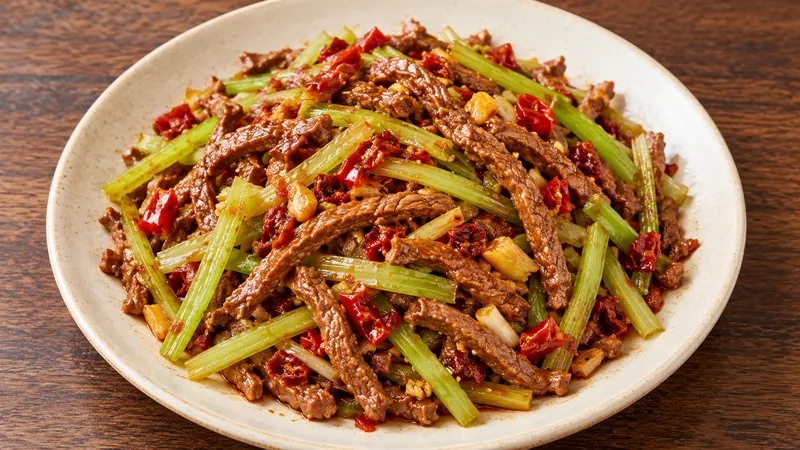
Quick reference
Across-grain beef shreds; chilled marinade; celery cooked separately; gentle aromatic stage; hot beef stage and prompt finish. Keep pickled-pepper and fresh-pepper variants distinct.
Recipe references
Frequently Asked Questions
Is this dry-fried beef?
No. This is a tender celery-and-pickled-pepper stir-fry; dry-fried beef is a different preparation.
Why cook celery separately?
It allows the vegetable to reach its texture without extending the beef’s cooking.
Can I substitute fresh peppers?
A cited variation uses fewer fresh peppers and black vinegar. Name that substitution because its flavor differs from fermented peppers.
Are noodles required?
No. This recipe describes beef and vegetables; any noodles are a separate accompaniment.
Should I add salt before tasting?
Account for soy, oyster sauce and doubanjiang first. Extra salt may be unnecessary.