sichuan preserved mustard greens recipe needs a narrow answer because preserved mustard greens need rinsing, salt control, aromatic balance, and appropriate storage The page starts with evidence readers can check, then separates examples from limits.
This MySichuanFood article is written for home cooks using Sichuan preserved vegetables. It avoids promises and keeps the decision tied to visible facts, practical use, and the next verification step.
For sichuan preserved mustard greens recipe, the useful article sequence is to define the situation, compare the facts table, test one concrete example, and keep the boundary visible before taking action.
Quick Answer
sichuan preserved mustard greens recipe should be handled by checking ingredients, prep time, and method first. The useful answer is practical, bounded, and specific to the page.
Check package storage instructions and discard food with unsafe odor, mold, or damaged packaging.
Basic Facts
| Ingredients | home cooks using Sichuan preserved vegetables |
|---|---|
| Prep time | Ingredients |
| Method | Prep time |
| Heat step | preserved mustard greens need rinsing, salt control, aromatic balance, and appropriate storage |
| Tools | Method |
| Food safety | Check package storage instructions and discard food with unsafe odor, mold, or damaged packaging. |
Sichuan preserved mustard greens recipe
In Sichuan preserved mustard greens recipe, sichuan preserved mustard greens recipe should start from the bowl itself: mustard greens, sauce aroma, noodle warmth, and topping texture all need to meet at serving time.
For sichuan preserved mustard greens recipe, measure the sauce before the noodles leave the pot. That habit keeps ingredients and prep time from becoming a rough guess.
Check ingredients with a small taste, then adjust prep time only after the sauce has touched the noodles. Dry tasting and bowl tasting can give different answers.
If the mustard greens tastes flat during sichuan preserved mustard greens recipe, fix seasoning in the topping instead of flooding the bowl with extra sauce. The best Sichuan bowl keeps aroma, heat, and savoriness separate enough to notice.
Texture matters in sichuan preserved mustard greens recipe because hot noodles keep absorbing sauce after mixing. A short rest can help coating, but a long delay makes the bowl heavy.
A home cook should record noodle weight, sauce spoon amounts, and topping quantity for sichuan preserved mustard greens recipe. Those notes make the next bowl easier to repeat than a memory of color alone.
The common mistake in sichuan preserved mustard greens recipe is treating spicy flavor as the whole recipe. Heat helps, but the result also depends on nutty body, salt balance, vinegar lift, and minced topping.
Finish sichuan preserved mustard greens recipe with a serving check: loosen the noodles, taste one bite with topping, and keep food safety tied to the actual ingredients used in the kitchen.
A practical kitchen note for sichuan preserved mustard greens recipe should name the noodle type, the sauce thickness, and the topping texture separately. Fresh alkaline noodles, dried wheat noodles, and softer supermarket noodles do not absorb seasoning in exactly the same way.
If the cook is preparing more than one serving during sichuan preserved mustard greens recipe, mix one test bowl first and scale from that bowl. Batch cooking changes heat retention, sauce coating, and topping distribution.
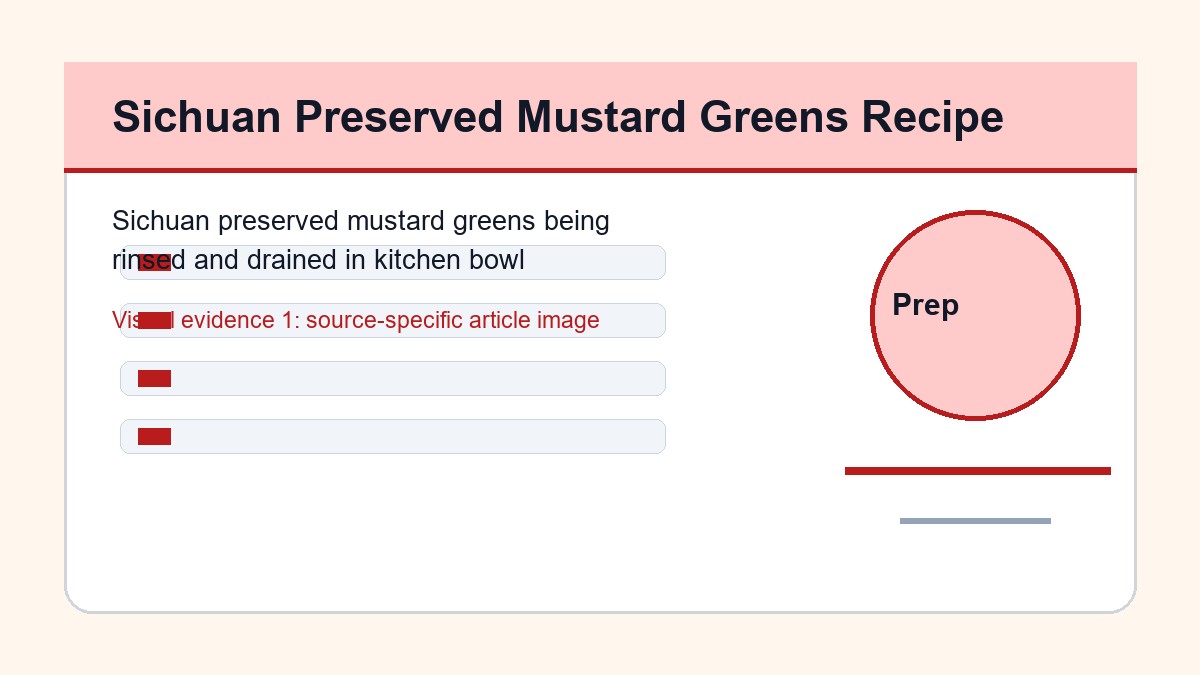
Step 1: Rinse and taste for salt
In Step 1: Rinse and taste for salt, sichuan preserved mustard greens recipe should start from the bowl itself: wok, sauce aroma, noodle warmth, and topping texture all need to meet at serving time.
For step 1: rinse and taste for salt, measure the sauce before the noodles leave the pot. That habit keeps prep time and method from becoming a rough guess.
Check prep time with a small taste, then adjust method only after the sauce has touched the noodles. Dry tasting and bowl tasting can give different answers.
If the wok tastes flat during step 1: rinse and taste for salt, fix seasoning in the topping instead of flooding the bowl with extra sauce. The best Sichuan bowl keeps aroma, heat, and savoriness separate enough to notice.
Texture matters in step 1: rinse and taste for salt because hot noodles keep absorbing sauce after mixing. A short rest can help coating, but a long delay makes the bowl heavy.
A home cook should record noodle weight, sauce spoon amounts, and topping quantity for step 1: rinse and taste for salt. Those notes make the next bowl easier to repeat than a memory of color alone.
The common mistake in step 1: rinse and taste for salt is treating spicy flavor as the whole recipe. Heat helps, but the result also depends on nutty body, salt balance, vinegar lift, and minced topping.
Finish step 1: rinse and taste for salt with a serving check: loosen the noodles, taste one bite with topping, and keep food safety tied to the actual ingredients used in the kitchen.
A practical kitchen note for step 1: rinse and taste for salt should name the noodle type, the sauce thickness, and the topping texture separately. Fresh alkaline noodles, dried wheat noodles, and softer supermarket noodles do not absorb seasoning in exactly the same way.
If the cook is preparing more than one serving during step 1: rinse and taste for salt, mix one test bowl first and scale from that bowl. Batch cooking changes heat retention, sauce coating, and topping distribution.
Step 2: Chop aromatics and balance seasoning
In Step 2: Chop aromatics and balance seasoning, sichuan preserved mustard greens recipe should start from the bowl itself: ginger and garlic, sauce aroma, noodle warmth, and topping texture all need to meet at serving time.
For step 2: chop aromatics and balance seasoning, measure the sauce before the noodles leave the pot. That habit keeps method and heat step from becoming a rough guess.
Check method with a small taste, then adjust heat step only after the sauce has touched the noodles. Dry tasting and bowl tasting can give different answers.
If the ginger and garlic tastes flat during step 2: chop aromatics and balance seasoning, fix seasoning in the topping instead of flooding the bowl with extra sauce. The best Sichuan bowl keeps aroma, heat, and savoriness separate enough to notice.
Texture matters in step 2: chop aromatics and balance seasoning because hot noodles keep absorbing sauce after mixing. A short rest can help coating, but a long delay makes the bowl heavy.
A home cook should record noodle weight, sauce spoon amounts, and topping quantity for step 2: chop aromatics and balance seasoning. Those notes make the next bowl easier to repeat than a memory of color alone.
The common mistake in step 2: chop aromatics and balance seasoning is treating spicy flavor as the whole recipe. Heat helps, but the result also depends on nutty body, salt balance, vinegar lift, and minced topping.
Finish step 2: chop aromatics and balance seasoning with a serving check: loosen the noodles, taste one bite with topping, and keep food safety tied to the actual ingredients used in the kitchen.
A practical kitchen note for step 2: chop aromatics and balance seasoning should name the noodle type, the sauce thickness, and the topping texture separately. Fresh alkaline noodles, dried wheat noodles, and softer supermarket noodles do not absorb seasoning in exactly the same way.
If the cook is preparing more than one serving during step 2: chop aromatics and balance seasoning, mix one test bowl first and scale from that bowl. Batch cooking changes heat retention, sauce coating, and topping distribution.
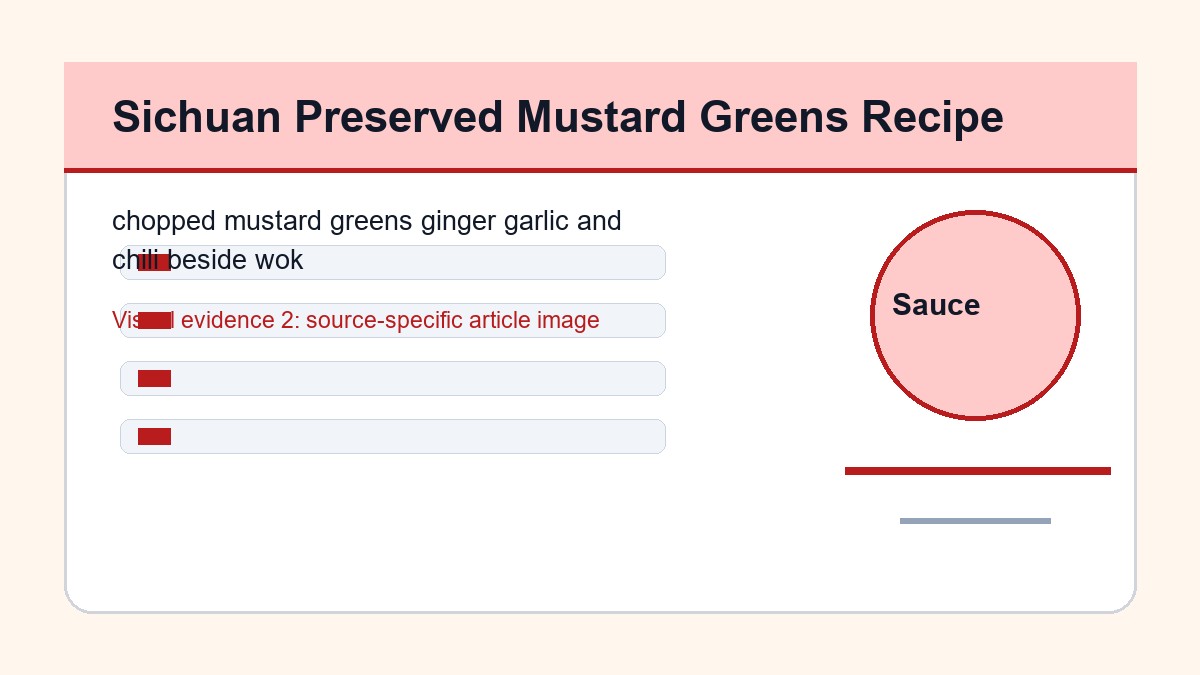
Step 3: Stir fry and choose serving uses
In Step 3: Stir fry and choose serving uses, sichuan preserved mustard greens recipe should start from the bowl itself: mustard greens, sauce aroma, noodle warmth, and topping texture all need to meet at serving time.
For step 3: stir fry and choose serving uses, measure the sauce before the noodles leave the pot. That habit keeps heat step and tools from becoming a rough guess.
Check heat step with a small taste, then adjust tools only after the sauce has touched the noodles. Dry tasting and bowl tasting can give different answers.
If the mustard greens tastes flat during step 3: stir fry and choose serving uses, fix seasoning in the topping instead of flooding the bowl with extra sauce. The best Sichuan bowl keeps aroma, heat, and savoriness separate enough to notice.
Texture matters in step 3: stir fry and choose serving uses because hot noodles keep absorbing sauce after mixing. A short rest can help coating, but a long delay makes the bowl heavy.
A home cook should record noodle weight, sauce spoon amounts, and topping quantity for step 3: stir fry and choose serving uses. Those notes make the next bowl easier to repeat than a memory of color alone.
The common mistake in step 3: stir fry and choose serving uses is treating spicy flavor as the whole recipe. Heat helps, but the result also depends on nutty body, salt balance, vinegar lift, and minced topping.
Finish step 3: stir fry and choose serving uses with a serving check: loosen the noodles, taste one bite with topping, and keep food safety tied to the actual ingredients used in the kitchen.
A practical kitchen note for step 3: stir fry and choose serving uses should name the noodle type, the sauce thickness, and the topping texture separately. Fresh alkaline noodles, dried wheat noodles, and softer supermarket noodles do not absorb seasoning in exactly the same way.
If the cook is preparing more than one serving during step 3: stir fry and choose serving uses, mix one test bowl first and scale from that bowl. Batch cooking changes heat retention, sauce coating, and topping distribution.
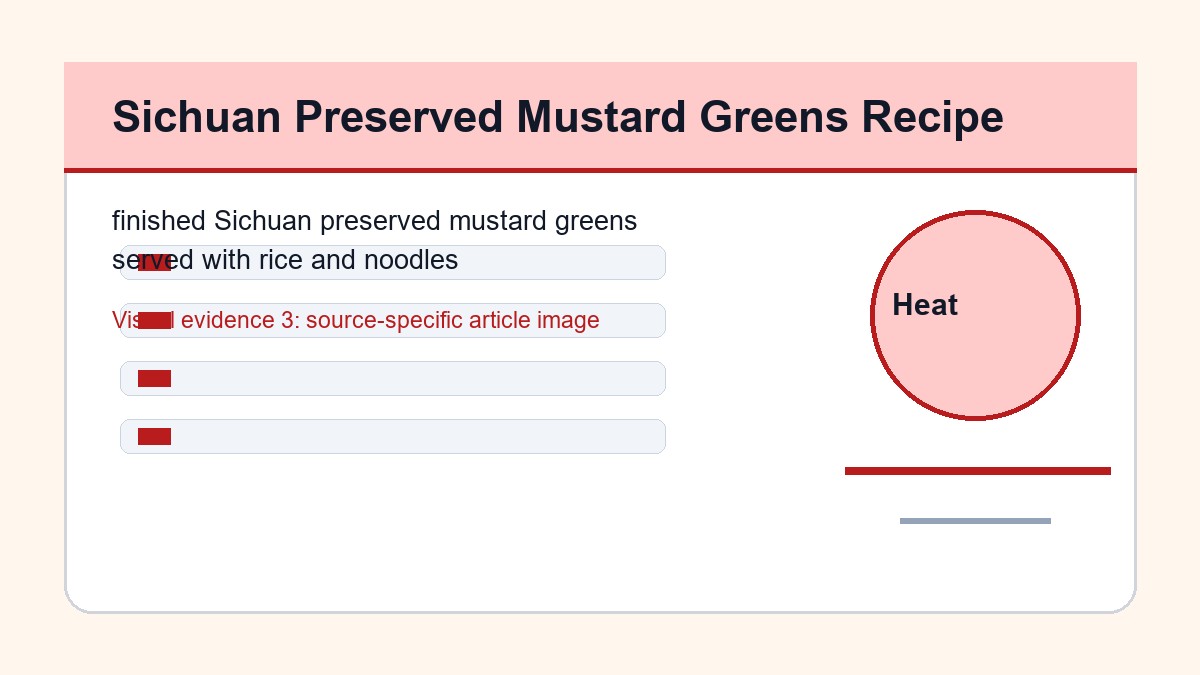
A separate MySichuanFood review note should compare mustard greens, wok, ginger and garlic, the reader's real setting, and the stated boundary before the advice is reused. This keeps the page grounded in observable details and gives another reviewer enough context to repeat the check without turning one example into a universal rule.
Quick reference
Quick reference for sichuan preserved mustard greens recipe: define the situation, check ingredients, compare prep time, record the boundary, and choose one safe next step.
Frequently Asked Questions
What does sichuan preserved mustard greens recipe mean for this page?
It means the article answers the exact reader task through ingredients, prep time, examples, and a visible boundary.
Which evidence should readers check first for sichuan preserved mustard greens recipe?
Start with ingredients and prep time, then compare the example with the real situation.
Can sichuan preserved mustard greens recipe promise a final outcome?
No. Check package storage instructions and discard food with unsafe odor, mold, or damaged packaging.
What should happen before acting on sichuan preserved mustard greens recipe?
Check ingredient labels, sauce balance, noodle texture, allergies, and storage safety before cooking.