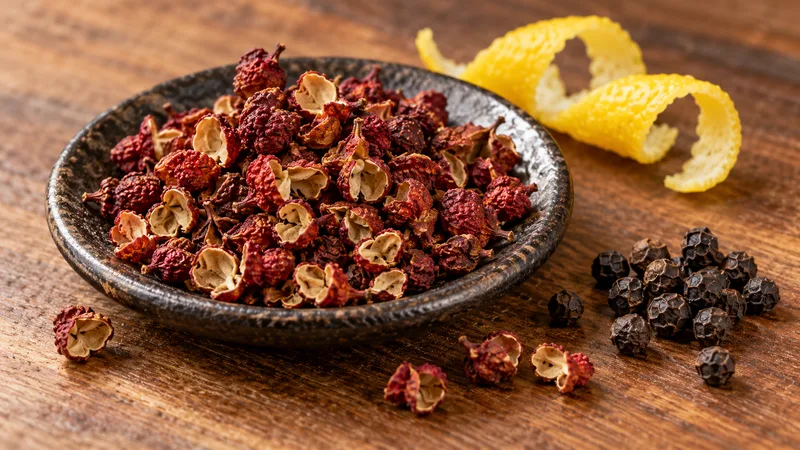
A Sichuan peppercorn substitute should be chosen for the function missing from the dish: fragrance, tingling or the texture of the seasoning. Ordinary black pepper and citrus peel can change flavor, but they do not reproduce the spice. Another form of Sichuan pepper, such as powder or commercial peppercorn oil, is usually the closer culinary option when available.
Quick Answer
Identify whether the recipe calls for whole husks, ground powder or infused oil. Use a matching Sichuan-pepper form when possible. If none is available, make a clearly named flavor adaptation rather than promising an identical mala result or inventing a universal conversion ratio.
Basic Facts
| Original spice | Opened prickly-ash husks; distinct from ordinary black pepper |
|---|---|
| Closer alternatives | Ground Sichuan pepper or commercially prepared peppercorn oil |
| Different-flavor fallback | Black pepper and a little citrus aroma, without equivalent tingling |
| Conversion | No fixed whole-to-ground yield or universal oil concentration |
| Scope | Culinary flavor adjustment, not a medical or safety-dose chart |
Whole, ground and oil forms serve different roles
Whole husks can flavor cooking oil before being removed; fine powder can season food directly. These methods do not leave the same texture. A recipe that removes whole spices from a pan is different from one that sprinkles powder over the finished portion. Read that instruction before selecting an alternative.
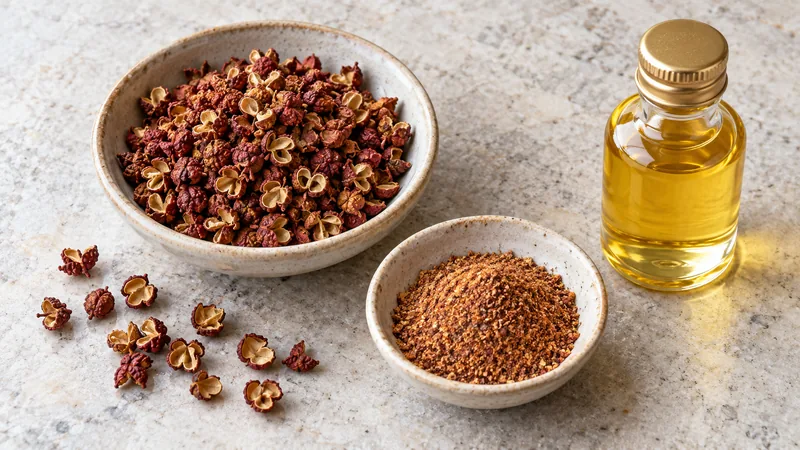
Do not pour a spoonful of powder into a recipe simply because it lists a spoonful of whole husks. Grinding and sifting change volume and yield. Start from a published recipe that specifies the form actually being used, or test a small cooked portion before changing the whole batch. The comparison picture does not measure a working blend.
Commercial peppercorn oil as a closer option
Peppercorn oil carries the spice in a neutral oil and can suit a dressing, dip or finishing drizzle. It is useful when the dish does not need visible whole husks. It does not add the solid texture of powder, and it also adds oil to the dish, so account for that physical change rather than adding it on top of every other oil automatically.
Read the bottle to identify red or green peppercorn oil, other ingredients, allergens and storage instructions. Different products may have different concentration. A plain unlabelled oil illustration cannot identify a real product or establish its potency. This guide uses commercially prepared oil as an option and does not establish a homemade infused-oil preservation process.
What black pepper and citrus can change
Black pepper has a different pungency; citrus peel supplies aroma. If those are the only ingredients available, describe the dish as an adaptation with those seasonings. Increasing either ingredient cannot be relied on to create the missing tingling, and changing acidity with lemon juice also changes the sauce rather than only its fragrance.
A practical decision is whether to cook a milder version now or use a different recipe that was written for the ingredients available. Preserve the recipe’s other ingredient amounts until the specific seasoning change has been assessed. Avoid changing chili, vinegar, soy and pepper together: several simultaneous changes make it difficult to identify what caused a result.
Prepare powder without a gritty texture
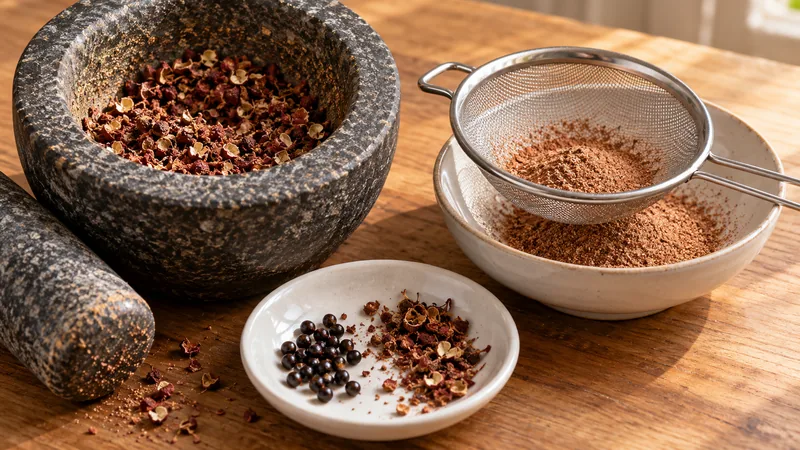
- Inspect the husks and remove hard black seeds and obvious debris.
- Toast gently over low or medium-low heat without oil until fragrant; avoid scorching.
- Transfer out of the hot pan, cool, then crush using a suitable mortar or spice grinder.
- Sift away coarse gritty material and use the fine powder in a recipe that specifies it.
Check the dish before scaling a substitution
Use a small portion of fully cooked food to assess a seasoning adjustment. Keep the unseasoned remainder available instead of treating an entire pan as the first trial. Write down the product and form used, the recipe yield and the actual amount added; a record from one batch is not a universal conversion for other dishes.
Tingling intensity is a taste preference, not a food-safety test. Neither this seasoning nor extra chili makes undercooked meat safe. Keep any underlying recipe’s cooking and storage instructions intact. Avoid deliberately seeking an extreme sensation, and do not turn culinary use into a claim that the spice treats a condition.
For powder quality, prepare a small batch, close its container and keep it away from heat and direct light. Follow commercial-oil storage instructions separately. Powder aroma, a product’s best-before label and safe handling of a finished meat or vegetable dish answer different questions and should not be merged into one invented shelf-life promise.
Quick reference
Match the spice form to the recipe, distinguish aroma from tingling, avoid fixed whole/powder/oil ratios and label any different-spice adaptation. Use the actual product and a small cooked portion to guide a change.
References
- The Woks of Life: Sichuan peppercorn identity and forms
- The Woks of Life: peppercorn oil
- Red House Spice: seed removal, roasting, grinding and sifting
Frequently Asked Questions
Can black pepper reproduce the numbing effect?
No. It supplies a different pungency. Adding lemon peel may change aroma but does not recreate Sichuan pepper.
Is ground Sichuan pepper an unrelated substitute?
No. It is another form of the same spice, but its dose and texture cannot be converted from whole husks by a universal ratio.
Can commercial peppercorn oil be used?
It can supply peppercorn fragrance and tingling where oil fits the dish. Read the actual product label and do not assume identical concentration across brands.
Should the shiny black seeds be ground?
Remove them before preparing the husks; they can produce gritty powder.
Does this guide validate a medical use or a safe maximum dose?
No. It discusses culinary flavor choices and recipe-specific adjustments, not medical treatment or a validated intake limit.