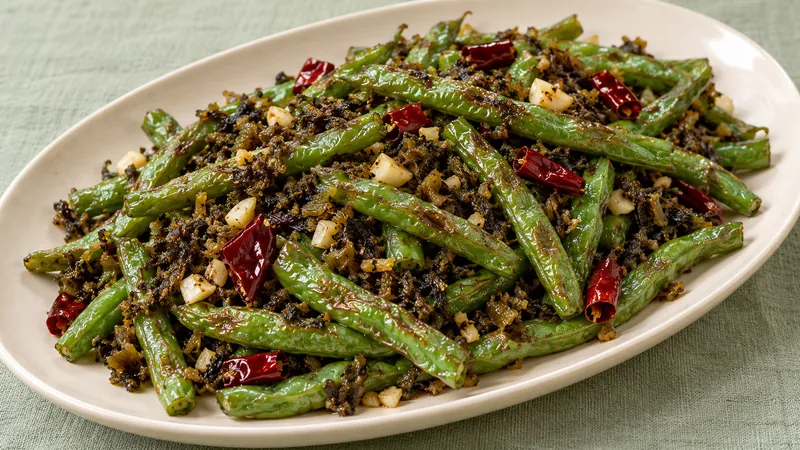
This pork-free Sichuan green-bean home variation boils the fresh beans thoroughly first, then drains, dries and lightly sears them before tossing with garlic, dried chili and ya cai. This differs from the referenced dry-wok method: pre-boiling changes the surface texture, so identical restaurant blistering is not promised. Thorough cooking comes before the short seasoning finish.
Quick Answer
Boil the trimmed fresh green beans thoroughly in fresh water, drain and dry them well, then lightly sear the cooked beans in a suitable pan. Cook garlic, dried chili and ready-to-use store-bought ya cai in the oil separately, return the cooked beans and toss with the measured seasonings. A quick blanch or final toss is not the complete cooking process.
Basic Facts
| Beans | 450 g green beans, trimmed and dried |
|---|---|
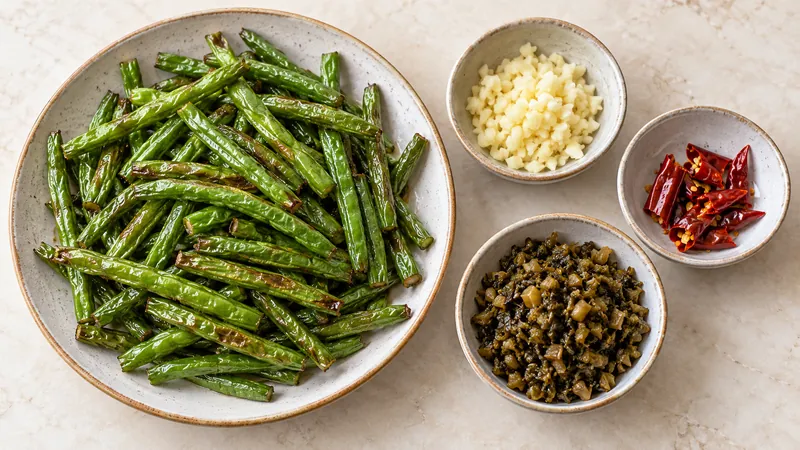
| Aromatics | 2 garlic cloves; 2 dried red chilies; 2 tablespoons store-bought ya cai |
| Cooking oil | 2 tablespoons for the aromatic stage |
| Seasoning | Up to 1/2 teaspoon salt; 1 teaspoon Shaoxing wine; 1 1/2 teaspoons soy; 1/8 teaspoon sugar; 1 teaspoon sesame oil |
| Version | Pork-free variation explicitly permitted by the source |
Sichuan green beans recipe prep
Trim and wash the beans, then dry them before the searing stage. Prepare chopped garlic, deseeded dried chili and store-bought ya cai separately. Measure soy, wine, sugar and sesame oil. Ya cai and soy provide salt, so the listed salt is an upper starting amount to be judged against the ingredients.
The source permits omitting ground pork, which this version does. Do not show pork mince in a vegetarian illustration or call a pork-containing variation vegetarian. Ya cai is finely preserved mustard vegetable, not fresh cucumber or an interchangeable jar of sour greens.
Aromatics and dry-fry method
For this home adaptation, start with a pot of fresh boiling water and cook the washed, trimmed beans thoroughly. Do not use a momentary dip followed by surface browning as a safety check. Drain, discard the cooking water and let surface moisture leave; then lightly sear the already cooked beans in a suitable pan, turning without scorching. Do not heat an empty nonstick pan until it smokes. The referenced twenty-minute dry-wok method is not the timing used for this boiled-first version.
Set the cooked beans aside. Warm the oil for garlic and dried chili, then add ya cai and heat through. Avoid burning the garlic before the beans return. The vegetable should develop surface marks without being described as charred raw food.
Texture timing steps
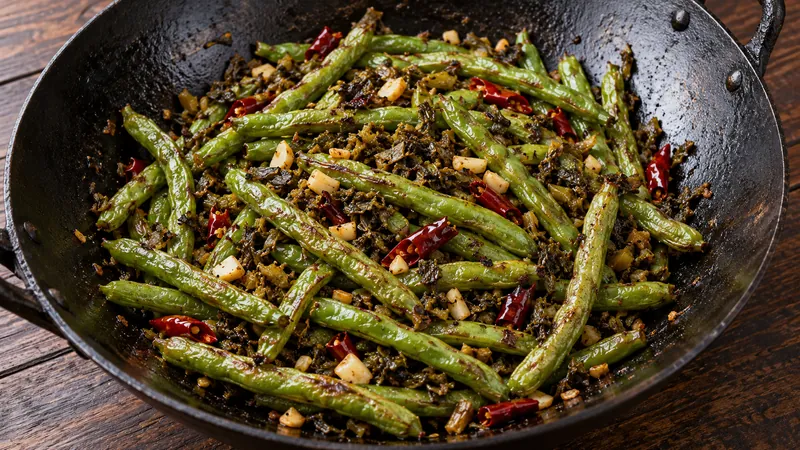
Return the seared beans to the aromatic mixture, add wine, soy, sugar and sesame oil and toss over higher heat briefly. Finish when the beans are cooked and the seasoning is distributed. There should be little free liquid; this is not a soup or a cold vinegary cucumber dressing.
Do not use a brief final toss as the entire cooking process for raw beans. The extended bean stage precedes the quick seasoning finish. If some beans remain hard and raw, continue the actual cooking rather than treating surface wrinkles alone as a guarantee. Taste salt after the ya cai and soy are included.
Serving texture and safety
The Centre for Food Safety warns against eating raw or inadequately cooked beans and explains that moist heat reduces the lectin risk. This is why boiling precedes the pan stage here. Its dried-bean soak-and-boil example is not copied as a universal timing schedule for fresh green beans. Bean type, thickness and cooking conditions vary; do not treat wrinkles, bright color, a timer or an AI picture as proof of adequate cooking.
Keep the cooked beans separate from unwashed raw-food equipment. Refrigerate leftovers in shallow covered containers at 4°C (40°F) or below within two hours, or one hour above 32°C (90°F). Ya cai and soy both supply salt, so taste a fully cooked portion before adding more. This version omits ground pork; adding it later changes both the ingredient plan and the applicable meat-cooking checks.
Serve hot with clean utensils. The final plate should contain recognizable green beans, small preserved-vegetable pieces and dried chili, with no chicken or cucumber substitute. Ya cai is used as a ready-made seasoning; read its packet for preparation, allergens and storage, rather than treating it as a fresh vegetable.
Refrigerate leftovers promptly. Check labels for soy or other allergens in ya cai and sauces. Dry frying describes a cooking approach; it is not permission to serve uncooked beans. The illustrations show the ingredient and serving concept, not proof that beans reached a safe cooking state.
Quick reference
Boil beans thoroughly first, then drain, dry and lightly sear them, cook aromatics and ya cai separately, then toss with final seasonings. This version omits pork and still requires fully cooked beans.
Recipe references
- thewoksoflife.com recipe reference
- Centre for Food Safety: thorough bean cooking
- FoodSafety.gov: separation and chilling
Frequently Asked Questions
Are the beans cooked only for the final minute?
No. Thorough boiling and light searing happen before the brief seasoning finish.
Can pork be omitted?
Yes. The source explicitly permits a pork-free variation, which this version uses.
Is ya cai sour mustard greens?
No. Ya cai is a different preserved mustard product used as a seasoning.
Why is the dish watery?
Check bean drying and added liquid. The finished preparation should have little free sauce.
Do wrinkles alone prove the beans are cooked?
No. Check a representative bean for actual cooked texture and continue cooking if needed.