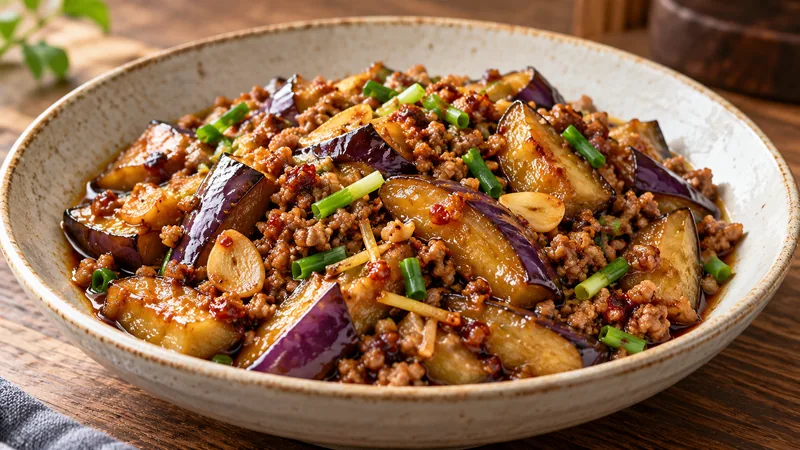
This Sichuan eggplant version is a savory minced-pork and doubanjiang preparation with ginger, garlic and scallion. It is a simpler braised-style eggplant dish, not the separate fish-fragrant sauce formula. There is no cucumber-smashing step, and the soft cooked eggplant rather than a rice bowl or noodle station defines the dish.
Quick Answer
Cut Asian eggplants into small skin-on pieces, briefly soak as specified, then drain completely. Cook the eggplant until soft and set it aside. Cook pork completely, develop the paste and aromatic base, then return eggplant with the measured final seasonings. Soft interiors and a coating sauce matter more than a claimed universal minute count.
Basic Facts
| Eggplant | 2 long Asian eggplants, trimmed and cut into small pieces |
|---|---|
| Meat | 1/4 cup minced pork; no separate marinade |
| Cooking oil | 3 tablespoons total, following the recipe-card method |
| Heat base | 1/2 tablespoon doubanjiang |
| Safe meat check | Ground pork 71°C (160°F) |
| Texture | Soft cooked eggplant with recognizable skin-on pieces |
Ingredients and prep
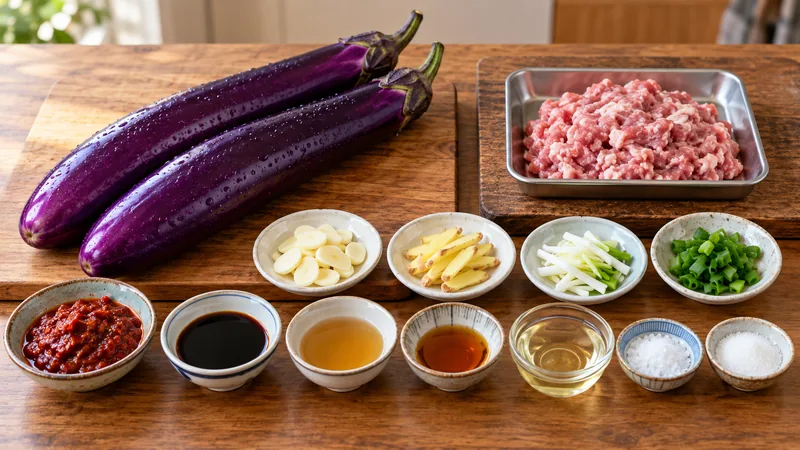
Prepare 2 long Asian eggplants, 1 tablespoon salt for the soaking water, 1/4 cup minced pork, 3 tablespoons neutral cooking oil, 1/2 tablespoon Chinese cooking wine, 2 sliced garlic cloves, a thumb-size piece of sliced ginger and 2 scallions, separating white and green parts. Measure 1/2 tablespoon doubanjiang, 1 tablespoon light soy sauce, up to 1/8 teaspoon final salt, 1/8 teaspoon sugar and 1/2 teaspoon sesame oil.
The soaking salt is separate from the small optional final salt allowance; do not put a tablespoon of salt into the finished sauce. The source prose and recipe card list different oil amounts; this version explicitly follows the card’s 3-tablespoon cooking method. Its author clarified that the pork need not be marinated, so the unused minced-ginger marinade listing is not carried into this version.
Wash the eggplants under running water, trim the ends and cut small pieces with some skin on each. Put them into water with the measured soaking salt for the source’s short soak, then drain completely. Raw-pork utensils must stay separate from garnish and serving plates. Let visible surface water leave before the hot pan stage.
Cook eggplant to the actual soft texture
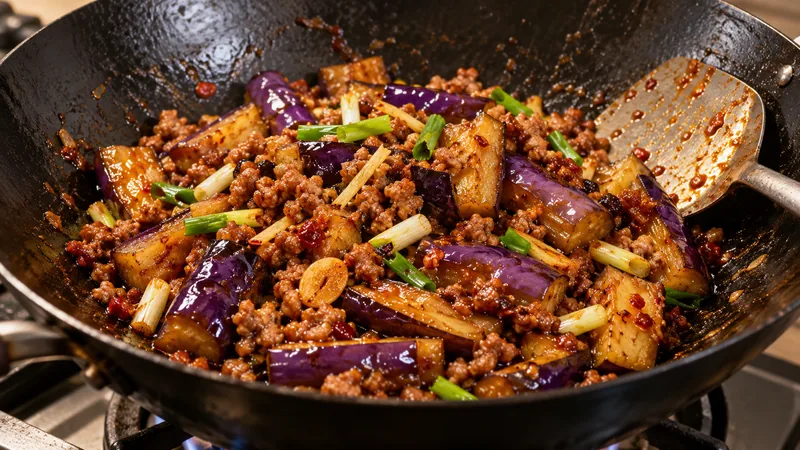
Heat the measured cooking oil in a suitable wok or pan and cook the drained pieces, turning so one face does not burn while the center stays firm. The source gives an approximate six-to-nine-minute range, but piece size, eggplant variety and heat change the result. Check that representative pieces are softened rather than declaring them done from a purple skin color.
Set the cooked eggplant aside and retain the cooking oil in the pan for the next stage. Do not automatically add another 3 tablespoons; that would double the listed oil. If the pan seems dry, assess surface moisture, heat and sticking rather than using the ingredient photo as a measure of how much oil went in.
This is a soft vegetable preparation. An optional crispy starch-coating variation is a different method and is not used here. Do not promise a crisp shell while directing a moist sauce finish. A globe eggplant substitution also changes size and skin texture; the measured version names long Asian eggplants so readers know the starting point.
Cook pork, paste and aromatics
Add minced pork to the reserved pan oil and break apart clumps. Cook it completely, checking ground pork at 71°C (160°F). Brown appearance and fragrant sauce are flavor observations, not substitutes for the meat-temperature check. The source says to fry un-marinated mince; no uncooked meat belongs in a final cold dressing.
Add the cooking wine at the pan edge as the source directs, keeping your face and hands away from steam and splashes. Move the cooked mince aside, gently fry the doubanjiang in the available oil, then reduce heat and add sliced garlic, sliced ginger and scallion whites. Avoid blackening garlic before the eggplant returns.
Finish the coating and serve
Return the soft eggplant and combine with the cooked pork. Add the measured soy, sugar and sesame oil; judge the small final salt allowance against the paste and soy already present. Toss gently so the pieces remain identifiable rather than stirring them into a paste. Finish with chopped scallion greens using clean utensils.
This version does not add vinegar or a fresh-pepper garnish. Those may appear in different eggplant preparations, but they are not silently added to this measured ingredient list. Serve the vegetable-and-pork dish as prepared; rice is an accompaniment, not an ingredient that changes the eggplant cooking sequence.
Safety, leftovers and changes
Keep raw pork refrigerated during delays. Wash hands and clean raw-meat equipment before handling cooked food or garnish. Refrigerate leftovers in shallow containers at 4°C (40°F) or below within two hours, or one hour above 32°C (90°F). Reheat leftovers to 74°C (165°F), checking the food and not only the pan.
Check paste and soy labels for wheat, soy or broad-bean ingredients and note sesame in the oil. Omitting pork is an ingredient change that removes the ground-meat stage, but it does not make every sauce vegan automatically. Check the actual packet rather than relying on the recipe’s color or a product name.
The pictures illustrate the named ingredients and intended serving texture. They are not photographs of a test batch, a measured quantity display or a temperature record. If scaling, record actual eggplant size and the quantities used; a twice-as-large pan is not proof that every cooking stage takes the same time.
Quick reference
Short salt soak, complete draining, soften eggplant, cook pork fully, gently fry paste and aromatics, then coat and garnish. Keep soaking salt, cooking oil and final seasonings separate in the plan.
References
- China Sichuan Food: eggplant with minced pork
- FoodSafety.gov: ground-pork temperature
- FoodSafety.gov: separation and chilling
Frequently Asked Questions
Is this the same as fish-fragrant eggplant?
No. This version uses a simpler minced-pork, paste and soy finish rather than the separate yuxiang sauce formula.
Does the pork need a marinade?
No. The source author clarified that the mince is fried without a separate marinade.
Does the soaking salt go into the sauce?
No. Drain the soaked eggplant; the tablespoon of soaking salt is separate from the small final salt allowance.
Should more oil be added for pork?
Not automatically. Retain the eggplant cooking oil for the next stage rather than doubling the listed amount.
Can browning prove the pork is safe?
No. Ground pork should reach 71°C (160°F); appearance alone is not the cooking check.