Quick answer: These easy Sichuan chicken wings use a rack and two oven temperatures instead of deep-frying. Dry the wings, bake them until browned, verify that the thickest pieces reach 165°F / 74°C, then coat them with a separately prepared glaze of Sichuan peppercorn, chili, ginger, garlic, soy, black vinegar, and honey. Keep raw-poultry liquid away from the finished sauce.
This is a practical home adaptation, not a claim that every Sichuan kitchen makes wings with one fixed sauce. “Sichuan wings” can describe dry spice coatings, sticky glazes, grilled versions, or restaurant inventions. The method below is intentionally narrow: oven-baked wings with a thin, numbing-spicy glaze.
The useful checks are visible and measurable. The skin should be dry before baking, the wings need space on the rack, the glaze should cling rather than pool, and a thermometer—not color, bubbling sauce, or a fixed minute count—confirms safe poultry temperature.
Method overview
| Stage | Target | Avoid |
|---|---|---|
| Preparation | Wings dry, separated into flats and drumettes | Wet skin or crowded pieces |
| First bake | Fat begins to render at moderate heat | Adding glaze before the skin sets |
| High-heat finish | Browned skin and 165°F / 74°C in thickest pieces | Judging safety only by color |
| Glaze | Briefly simmered, thin coating with peppercorn aroma | Using raw-poultry marinade as an uncooked sauce |
An edited Good Food recipe supplies a useful two-temperature rack-baking reference and combines Sichuan peppercorn, chili, soy, ginger, garlic, and sweetness. The quantities and sauce balance here are different and scaled for a home batch. Official USDA and FoodSafety.gov guidance—not the recipe source—supports the poultry safety temperature.
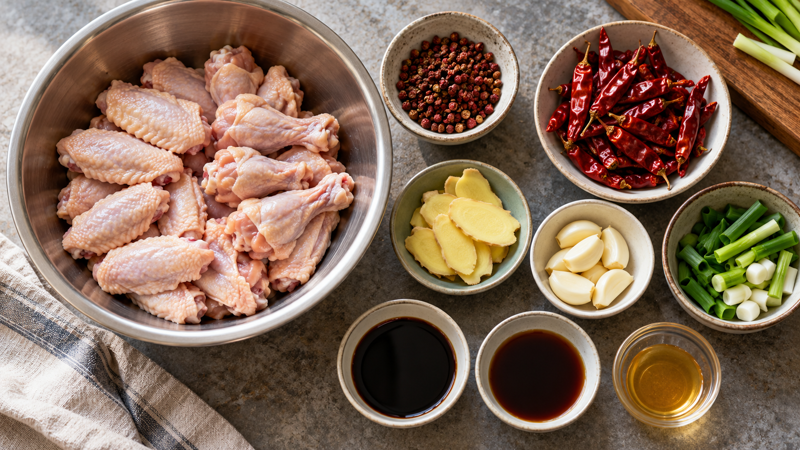
Ingredients for four servings
| Ingredient | Amount | Purpose or note |
|---|---|---|
| Chicken wings | 2 lb / 900 g | Split into flats and drumettes; save tips for stock |
| Fine salt | 1/2 tsp | Reduce if soy sauce is very salty |
| Aluminum-free baking powder | 2 tsp | Helps dry the skin; do not substitute baking soda |
| Whole red Sichuan peppercorns | 1 to 1 1/2 tsp | Toast gently, cool, and grind |
| Dried chili flakes | 1/2 to 1 tsp | Adjust heat separately from peppercorn |
| Light soy sauce | 1 1/2 tbsp | Check the label for wheat and sodium |
| Chinese black vinegar | 2 tsp | Adds acidity and malt-like depth |
| Shaoxing wine | 1 tbsp | Optional; use water if omitted |
| Honey or brown sugar | 1 tbsp | Enough for balance, not a thick candy coating |
| Garlic | 2 cloves | Finely grated or minced |
| Fresh ginger | 2 tsp | Finely grated |
| Water | 2 tbsp | Keeps the glaze fluid while it simmers |
| Sesame oil | 1/2 tsp | Optional finishing aroma; stir in after removing the glaze from heat; check sesame allergy |
| Scallions | 2 | Thinly sliced for serving |
Prepare the peppercorn and glaze separately
Toast the peppercorns in a dry pan over low heat just until fragrant, then move them to a plate to cool. Grind them coarsely. Black seeds and twig fragments can feel gritty, so remove obvious pieces before grinding.
In a small clean saucepan, combine soy sauce, black vinegar, Shaoxing wine or water, honey, garlic, ginger, chili flakes, half the ground peppercorn, and two tablespoons of water. This saucepan should never touch raw chicken. Reserve the remaining ground peppercorn for the final taste check.
Step-by-step oven method
- Heat and line the oven. Set a rack over a foil-lined tray. Heat the oven to 325°F / 165°C, or 300°F / 150°C fan.
- Dry the wings. Pat every piece dry with paper towel. Toss with salt and baking powder until no dry clumps remain. Do not rinse raw poultry; splashing can spread contamination around the sink.
- Arrange with space. Place the pieces skin-side up where possible. Keep a gap between them so hot air can move around the surface.
- Render at moderate heat. Bake for 25 minutes. Turn the pieces once. At this point the skin may look dry and lightly colored, not finished.
- Brown at high heat. Raise the oven to 425°F / 220°C, or 400°F / 200°C fan. Continue for about 20 to 25 minutes, turning once, until browned. Oven load and wing size change the time.
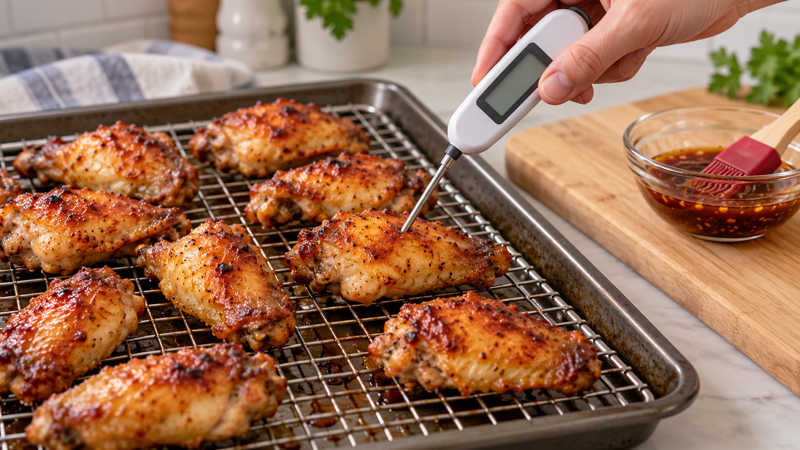
- Check temperature. Test several of the largest flats and drumettes in the thickest meaty section without touching bone. Every tested piece should reach at least 165°F / 74°C.
- Simmer and finish the glaze. While the wings finish, bring the clean saucepan of glaze to a steady simmer for 3 to 5 minutes, stirring until it lightly coats a spoon. Keep it fluid; it thickens further on the hot wings. Remove the pan from the heat, then stir in the optional 1/2 teaspoon sesame oil.
- Coat and set. Toss the cooked wings with enough glaze to make a thin coating. Return them to the rack for 3 to 5 minutes, just until the surface looks glossy and set.
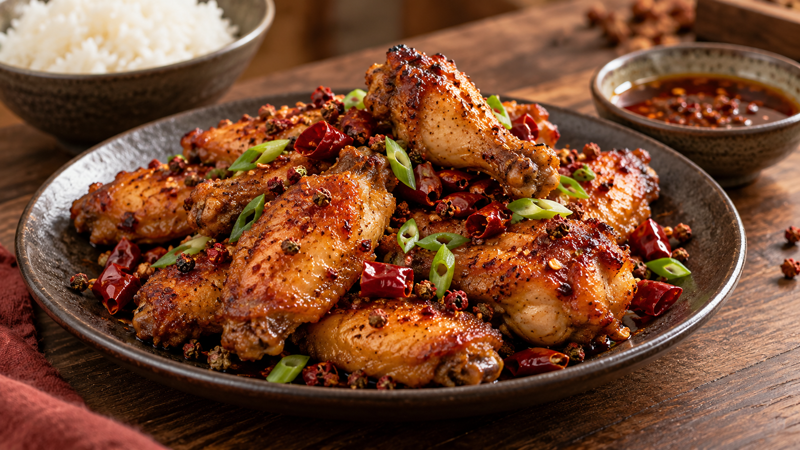
Balance the numbing, spicy, salty, and sour notes
Sichuan peppercorn contributes a citrus-like aroma and a numbing sensation; dried chili contributes heat. Increasing one does not duplicate the other. Start with the smaller peppercorn and chili amounts if the batch is for mixed spice tolerances, then serve extra ground peppercorn or chili oil at the table.
Taste one fully cooked, glazed wing before adding more soy sauce. The sauce becomes more concentrated as it simmers and clings to the skin. If it is too salty, do not hide the problem with more honey; loosen the remaining glaze with water and coat more lightly. If it tastes flat, a few drops of black vinegar can brighten it without making the wings wet.
For ingredient background, compare our Sichuan peppercorn guide. These wings do not require homemade chili oil.
Temperature and clean-glaze check
The USDA states that all poultry pieces should reach 165°F as measured with a food thermometer. Insert the probe into the thickest meaty part and avoid the bone, which can give a misleading reading. Check more than one piece because flats and drumettes differ in shape.
The FDA advises marinating food in the refrigerator and warns against reusing raw-meat marinade as sauce unless it is brought to a rapid boil. This recipe avoids that decision by mixing the glaze in its own clean saucepan. If you choose to marinate the wings, make a separate clean sauce batch or reserve a portion before any raw poultry enters the bowl.
Common problems and fixes
The wings are cooked but not browned
Surface moisture, crowding, or a cool oven can delay browning. Pat the wings dry, leave space, and verify oven temperature if the problem repeats. Do not extend cooking blindly once the meat is already dry; use a brief broiler finish only while watching continuously.
The glaze burned on the tray
Sugar darkens quickly at high heat. Add the glaze only after the wings are fully cooked and brown, then return them briefly. A thick coating will drip and burn before the surface sets.
The peppercorn tastes bitter or gritty
The peppercorn may have scorched or included too many black seeds and stems. Toast over low heat only until fragrant, cool before grinding, and add some after cooking instead of baking all of it for a long time.
The sauce is too salty
Soy sauce brands vary. Dilute the remaining glaze with water and coat the wings more lightly. Serve with plain rice and a cool vegetable dish rather than adding more sugar. Our Sichuan cucumber salad makes a useful contrast.
Serving and storage
Finish with scallions and the reserved ground peppercorn. Serve immediately with rice, cucumber salad, or simply blanched greens. For a larger meal, the site’s quick Sichuan recipe plan helps balance one intense main dish with milder sides.
Refrigerate cooked wings in a shallow covered container within two hours, or within one hour when the air temperature is above 90°F / 32°C, and keep the refrigerator at 40°F / 4°C or below. The FDA storage guidance gives those time and temperature limits. Use or freeze refrigerated leftovers within 3 to 4 days; the FoodSafety.gov cold storage chart lists cooked meat or poultry leftovers at 3 to 4 days. Reheat wings to 165°F / 74°C. A rack in a moderate oven or air fryer restores more surface texture than a covered microwave container, but temperature—not crispness—sets the safety check.
Common questions about easy Sichuan chicken wings
Can I make these wings without deep-frying?
Yes. The rack and two oven temperatures render fat and brown the skin. The result is oven-baked rather than identical to a deep-fried restaurant wing.
Is Sichuan peppercorn the same as chili pepper?
No. Sichuan peppercorn contributes aroma and a numbing sensation; chili contributes heat. Adjust them separately.
Can I use marinade as the finishing sauce?
Do not use liquid that touched raw poultry as an uncooked sauce. The simplest method is to prepare a separate clean glaze. FDA guidance says reused marinade must be brought to a rapid boil.
How do I know chicken wings are safely cooked?
Check several large pieces with a food thermometer in the thickest meaty section away from bone. Poultry should reach at least 165°F / 74°C.
Sources and method boundary
- Good Food: Sichuan chicken wings — two-stage oven and flavor-structure reference.
- USDA FSIS: safe meat and poultry temperatures.
- FDA: storing and marinating food safely.
- FoodSafety.gov: safe minimum internal temperatures.
Boundary: This article provides a source-informed home method and official safety checks. It does not claim that the exact seasoning ratio has been laboratory tested or represents every Sichuan restaurant or household.