Spicy Chinese food does not have one flavor or one heat level. Sichuan mapo tofu can combine chili heat with Sichuan peppercorn’s numbing sensation, while a Hunan pork stir-fry may center on fresh chilies and fermented black beans. The useful comparison is between actual dishes and ingredients, rather than a rule that one whole province always cooks hotter than another.
Start by separating three questions: where does the heat come from, is there also a numbing sensation, and what can the kitchen change? A red sauce, a green pepper or the word “spicy” does not answer all three. The examples here use published recipes and Hunan’s own cuisine overview to compare choices. They are not a restaurant ranking, a measured chili-strength test or a claim that every cook follows the same recipe.
Compare spicy Chinese food by the dish
| Example | Ingredients to notice | A useful question before ordering |
|---|---|---|
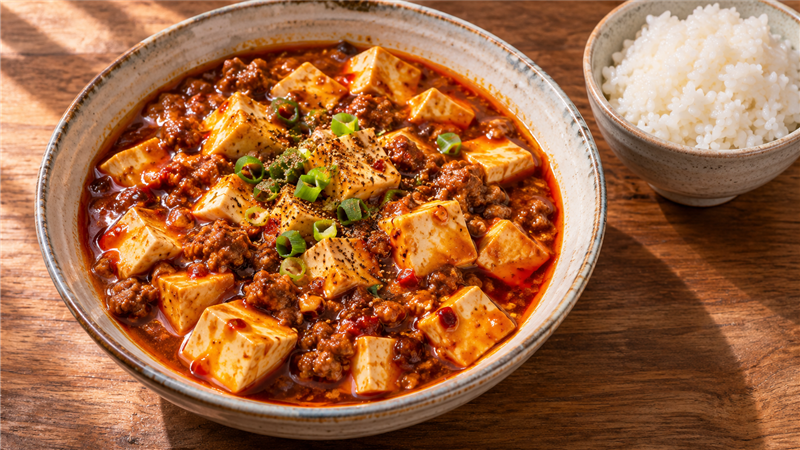
| Sichuan mapo tofu | Chili-based seasoning and Sichuan peppercorn; minced meat may be present | Can chili heat and peppercorn intensity be adjusted separately? |
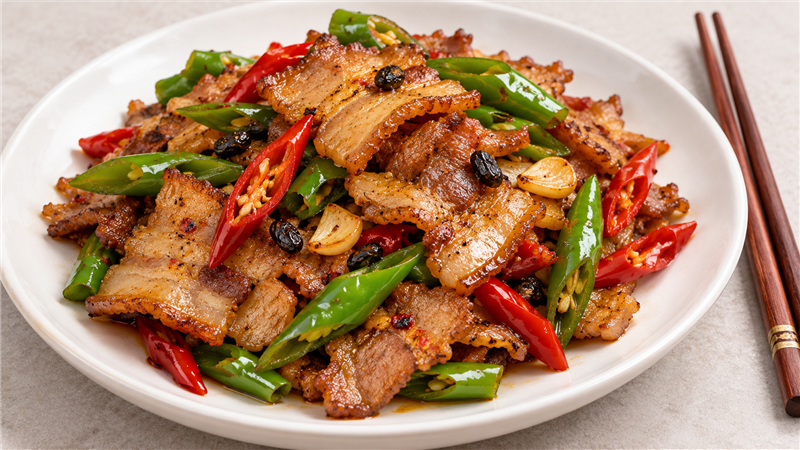
| Hunan-style pork stir-fry | Fresh chili peppers, pork and fermented black beans in the selected recipe | Which pepper variety is being used, and is a less-hot version possible? |
| Hunan pork and tofu stir-fry | Spicy bean paste plus red bell pepper in the selected recipe | Is the heat already in the paste rather than only the visible pepper? |
These are examples with named sources below, not official heat grades. Recipes, ingredient brands and restaurant portions vary. A request for “medium” means something within a particular kitchen’s practice; it is not a common numerical scale shared by every Chinese restaurant.
Sichuan: separate chili heat from peppercorn numbness
In Sichuan food, mala, 麻辣, combines the ideas of numbing and hot. Sichuan peppercorn is therefore an important question when a diner says, “I want the fragrance, but less tingling.” Asking only for less chili may leave a peppercorn-heavy finish largely unchanged.
The Woks of Life mapo tofu recipe explicitly includes spicy bean sauce and Sichuan peppercorn, and explains that peppercorn strength and the amount used affect the result. It also uses ground pork. That is a documented version to compare, not evidence that all mapo tofu must use pork or that tofu on a menu guarantees a vegetarian dish.
For a restaurant order, name the component you want changed. “Less chili oil and less Sichuan peppercorn, if that can be prepared separately” gives more information than “not too spicy.” Some sauces are made in advance, so the kitchen may be able to offer a different dish more reliably than remove seasoning from an existing one.
For Sichuan choices that do not revolve around a chili-heavy sauce, see our low-spice Sichuan food guide. The region’s food is broader than a collection of maximum-heat dishes.
Hunan: look at the peppers and the actual preparation
The Hunan provincial government’s cuisine overview identifies Hunan cooking as Xiang cuisine and lists pork stir-fried with chili peppers and fish head steamed with chopped chili among its well-known dishes. It also lists sweet glutinous rice dumplings and other foods, so the regional label is not a promise that every item is fiery.
For a concrete pork example, Wei Guo’s Hunan pork stir-fry uses fresh chilies, fermented black beans, garlic and soy sauce. Her ingredient notes distinguish hot peppers from a bell-pepper adaptation. This gives a useful ordering question: is the kitchen using hot fresh peppers as a substantial part of the dish, or a milder pepper with another source of chili heat?
The absence of a pool of red oil is not enough to answer that question. Nor should “Hunan” be treated as a fixed guarantee of more heat than “Sichuan.” Compare the specific pepper, sauce and amount, and explain your own preference to the person preparing the meal. The dish below illustrates a fresh-pepper pork combination; it cannot tell you how hot a real restaurant’s serving will be.
Why color alone cannot tell you the heat
A useful counterexample is the Woks of Life Hunan pork and tofu stir-fry. Its ingredient list includes a red bell pepper, but it also includes spicy bean sauce. Removing the visible pepper would not remove the paste already mixed into the dish. Conversely, seeing a red bell pepper is not proof that this particular vegetable supplies intense chili heat.
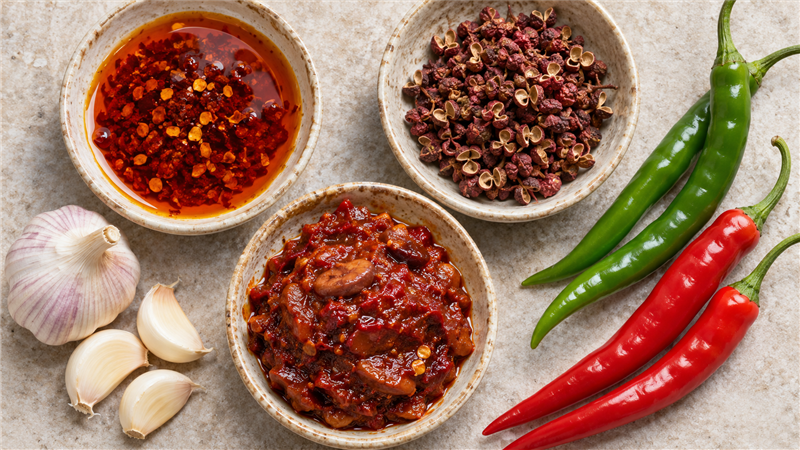
The practical lesson is to check the preparation, not to memorize a red-equals-hot rule. Ask whether chili is in a base sauce, a finishing oil, a fermented condiment or fresh pieces cooked with the food. These arrangements give the kitchen different options. A separate table condiment can sometimes be left out; a batch of seasoned sauce cannot simply be made unseasoned after it has been mixed.
Pictures are useful for recognizing ingredients and serving styles, but they cannot supply a reliable heat rating. The illustrations here are not evidence from a tasting panel or a laboratory test.
Questions that make an order clearer
Tell the kitchen whether your concern is chili heat, peppercorn tingling, a dietary restriction or an allergy. Those are different requests. Useful examples include “Does the sauce already contain chili?” and “Can you offer a dish without chili paste, rather than just remove the garnish?” These are sample questions, not a promise that a restaurant can make every substitution.
Keep allergy checks separate from heat preferences. A less-spicy dish can still contain soy, wheat, peanuts, sesame, fish or shellfish through its ingredients or sauces. The FDA’s food-allergy guidance emphasizes reading labels and avoiding the foods to which a person is allergic. Ask the kitchen about ingredients and preparation; do not interpret “mild” as an allergy assurance.
If you are exploring Sichuan in more detail, our guide to regional differences within Sichuan cuisine adds another layer. This comparison with Hunan is a starting point for questions, not a replacement for the details of the dish in front of you.
Spicy Chinese food FAQ
Is all Sichuan food spicy?
No. Mala dishes are important examples, but they do not represent every Sichuan preparation. Check the actual ingredients and ask about dishes without chili-heavy seasoning.
Is Hunan food always hotter than Sichuan food?
A whole-region rule cannot tell you the heat of an individual serving. Pepper varieties, sauces, quantities and kitchen practice vary. Compare the specific dish rather than assigning one universal heat rank to each cuisine.
Can removing red peppers make a dish mild?
Not reliably. Chili may already be present in a bean paste, sauce or oil, and a visible red pepper may be a bell pepper. Ask where the heat comes from before requesting a change.
Does less spicy mean safe for a food allergy?
No. Heat level and allergenic ingredients are separate questions. Check labels and ask the kitchen about ingredients and preparation; changing chili does not guarantee the removal of an allergen.