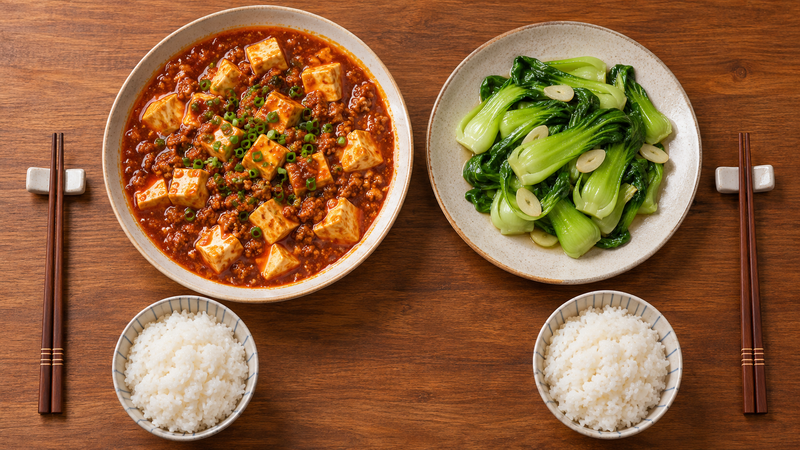
The best Sichuan food for dinner is the combination that suits the people sharing it. A useful starting point is one flavorful main, a gentler vegetable dish and plain rice, with another dish added only when the actual portions and appetites call for it. This is an ordering framework, not a claim that every Sichuan dinner must follow one traditional formula.
For example, mapo tofu can provide a soft, saucy main while simply prepared greens offer a different texture. If everyone wants a stronger vegetable dish, dry-fried green beans are another option—but their name does not establish that they are mild or meat-free. Ask about the preparation before treating a dish as the safe choice for everyone.
The examples below are suggested menus rather than restaurant reviews, tested meals or nutritional prescriptions. Prices, portion sizes and recipes vary. Use them to decide what to ask at a restaurant or when ordering takeout, rather than assume a menu name tells you everything you need.
Plan the table before choosing a signature dish
First agree on what the meal needs to accomplish: a small dinner for two, a shared meal for a larger group, or a table with different preferences about heat. Then ask the restaurant which dishes are intended for sharing and what its portions are like. “One dish per person” is not reliable when one menu item is an individual bowl and another is a large shared platter.
| Role at dinner | Example choice | Question before ordering |
|---|---|---|
| Saucy main | Mapo tofu | Does this version contain meat, and how are chili and Sichuan pepper adjusted? |
| Gentler contrast | Simply stir-fried leafy greens | Can these be prepared without chili, and what sauce or stock is used? |
| More assertive vegetable option | Gan bian si ji dou, dry-fried green beans | Does this version include pork, dried chilies or peppercorns? |
| Starch | Plain rice | Is rice included, and what is the serving size? |
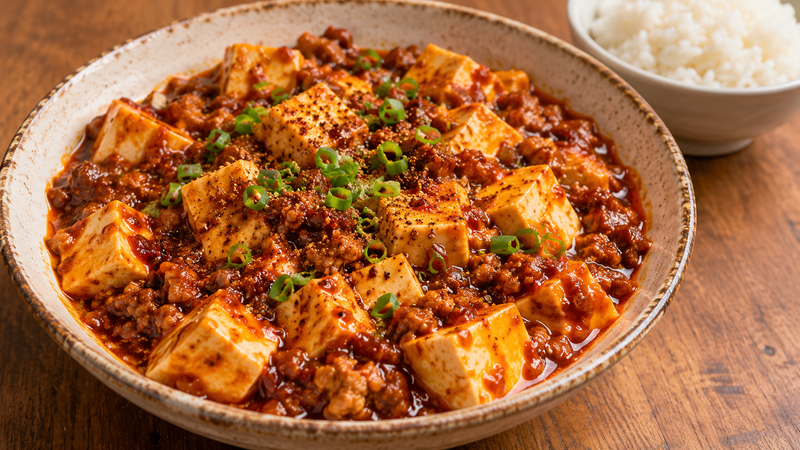
For a small table, start with mapo tofu, a confirmed gentler green vegetable and rice. Decide whether another dish is necessary after checking portion sizes. This keeps the order focused instead of collecting several rich dishes simply because each is a favorite.
The Woks of Life mapo tofu recipe documents soft tofu in a spicy sauce with ground pork and Sichuan peppercorns. It is one concrete example of why “tofu dish” does not mean vegetarian. A restaurant may use a different preparation; ask what is in the version you will actually receive.
If you choose dry-fried green beans instead of gentler greens, expect a different role. The documented gan bian si ji dou version has wrinkled beans with little pooled sauce, plus pork, dried chilies and peppercorns. It adds dry, aromatic intensity rather than automatically providing a mild counterpoint. You may prefer that combination, but make it a deliberate choice.
Mixed preferences: ask about each seasoning and ingredient
When some diners prefer less heat, ask which dishes the kitchen can genuinely prepare more gently. Chili heat and the tingling sensation of Sichuan pepper are different considerations. Asking for “less spicy” may not tell the cook whether you want less chili, fewer peppercorns or both.
Be specific: “Can the greens be made without chili? Does the tofu contain pork? Is the sauce already prepared?” A request for chili oil on the side may help with an optional condiment, but it cannot remove seasoning already cooked into a dish. For dietary requirements, the vegan versus vegetarian ordering guide gives more detailed questions about ingredients.
Tell the restaurant about food allergies separately from preferences. Removing visible meat, peanuts or garnish does not establish that the remaining dish meets a dietary requirement. If staff cannot confirm the preparation, do not treat an attractive name or photograph as confirmation.
Restaurant versus takeout: make the timing decision
For dine-in service, ask whether shared dishes can arrive close together if that matters to the table. For takeout, consider the journey before adding a dish whose appeal depends on a dry exterior or freshly cooked texture. Request sauces separately when the kitchen offers that option; do not assume every recipe can be separated after cooking.
Choose a manageable initial order rather than treating leftovers as the goal. If you actually want to cook the meal yourself, the quick Sichuan cooking plan addresses pantry and preparation sequencing. That is a different task from deciding what to order for a shared evening meal.
Keep the rest of dinner safe
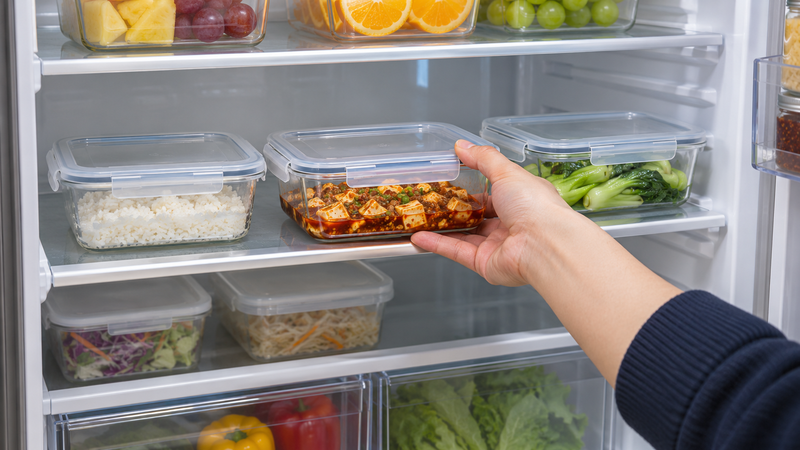
Put perishable leftovers into shallow containers and refrigerate promptly. FoodSafety.gov’s chilling guidance gives a limit of two hours out of refrigeration, reduced to one hour when exposed to temperatures above 90°F (32°C). Include time at the table and on the journey home; do not wait for the food to become completely cold on the counter. Keep the refrigerator at 40°F (4°C) or below.
The cold-storage chart lists three to four refrigerator days for cooked meat or poultry leftovers and soups or stews. Check the appropriate storage guidance for other components rather than assuming every item has the same limit. Do not keep perishable food that has exceeded safe room-temperature limits.
When reheating safely stored leftovers, use a food thermometer to check that they reach 165°F (74°C) throughout. A hot patch of sauce or visible steam is not a measurement of the coldest part.
A successful dinner order gives each dish a reason to be there. Confirm the main, choose a contrasting preparation that people can actually eat, and let real portions determine whether you need more. “Best” is a useful choice for this table, rather than a universal ranking of Sichuan dishes.