Quick Answer: Healthy Sichuan beef is better approached as a set of meal choices than as a guaranteed property of one recipe. Choose a leaner cut, measure added oil, count the sodium contributed by all sauces, and make room for vegetables and an appropriate grain portion. Chili heat does not tell you how much oil, sodium or energy a dish contains. Adjust the version you actually cook, rather than assuming “stir-fried,” “homemade” or “less spicy” automatically means lighter.
This is a planning and sauce-checking guide, not another beef stir-fry recipe or a calculated nutrition label. Exact nutrient values require the ingredients, brands, quantities and portions of the finished dish. The practical changes below help you examine those inputs without promising weight loss or a treatment effect.
Compare Beef, Sauce and Whole-Meal Choices
| What to check | Practical choice | What it cannot prove |
|---|---|---|
| Beef cut | Look for a leaner cut and trim visible external fat | The whole dish is low in fat |
| Added oil | Measure what goes into the pan and any finishing chili oil | A photo reveals the total quantity |
| Seasonings | Check sodium per stated serving and the amount actually used | Reduced-sodium soy sauce makes the meal low-sodium |
| Meal balance | Include vegetables and consider the grain alongside the beef | One fixed serving suits everyone |
| Portions | Estimate how much of the shared dish you actually eat | A small bowl has a known nutrient total |
Use the checklist on an existing recipe before changing it. It separates three different questions: what the ingredients contribute, how much you add, and how much of the completed meal reaches one person. Changing only one of them may leave the others almost unchanged.
Start With a Leaner Cut, Then Check the Cooking Method
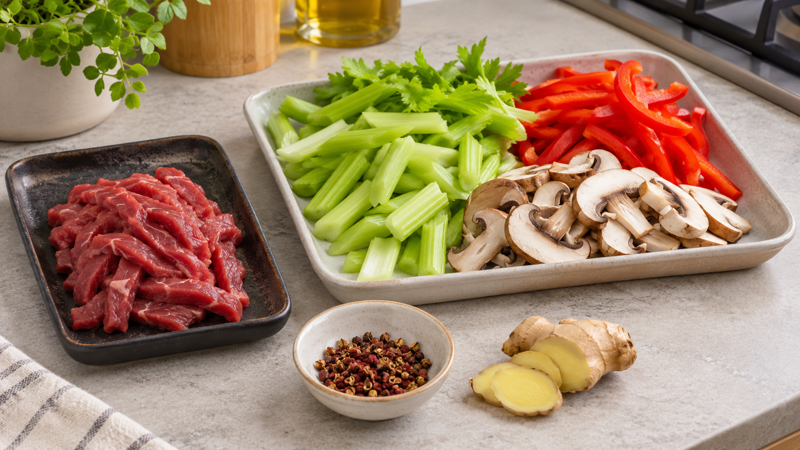
Health Canada’s protein-food guidance includes lean beef among protein choices and suggests lean cuts such as round and loin, trimming visible fat, limiting rich sauces and using small amounts of oils such as canola or olive oil. It also encourages choosing plant-based proteins regularly.
For the cook, that means inspecting the actual cut and recipe rather than relying on the word “beef.” A lean cut still receives whatever oil and sauce you add. Conversely, removing every trace of cooking fat is not the only way to improve a meal; measuring an addition lets you change it deliberately and reproduce the result.
If you use a lower-oil adaptation, recognize the tradeoff. It may not reproduce the texture of a version that fries or oil-blanches the beef. Choose a recipe designed for your pan and method instead of removing a major step and expecting an identical result. The aim is an enjoyable home adaptation with visible choices, not an unsupported claim that it is the single authentic or healthiest version.
Count the Sauces Together
Soy sauce is only one place to look. Depending on your recipe, chili-bean paste, stock, other bottled sauces and added salt may contribute sodium as well. Write down the actual products and spoonfuls used; do not assess the dish from one bottle’s front label.
The FDA’s sodium guide emphasizes checking serving size and comparing sodium on the Nutrition Facts label. For U.S. labels, 5% Daily Value or less per serving is considered low and 20% or more is high. Those percentages refer to the labeled serving, not automatically your whole pan or your personal portion.
A label arithmetic example: if a sauce lists 600 mg sodium per tablespoon and you use two tablespoons, that sauce contributes 1,200 mg to the batch. Divided equally into four portions, its contribution is 300 mg per portion. These are invented numbers to show the calculation, not values for a particular brand. Add the other sodium-containing ingredients before estimating the dish.
“Reduced sodium” also does not mean “low sodium.” The FDA describes reduced sodium as at least 25% less than the regular product. A reduction can still leave a substantial contribution, especially if you use more sauce. Diluting sauce with water changes its concentration; it does not remove the sodium already in the bowl.
Keep Flavor While Making Deliberate Adjustments
The World Health Organization’s healthy-diet guidance emphasizes balance, moderation and variety, and prefers unsaturated fats to saturated fats. Its guidance concerns an overall eating pattern, not a certification attached to one Sichuan dish.
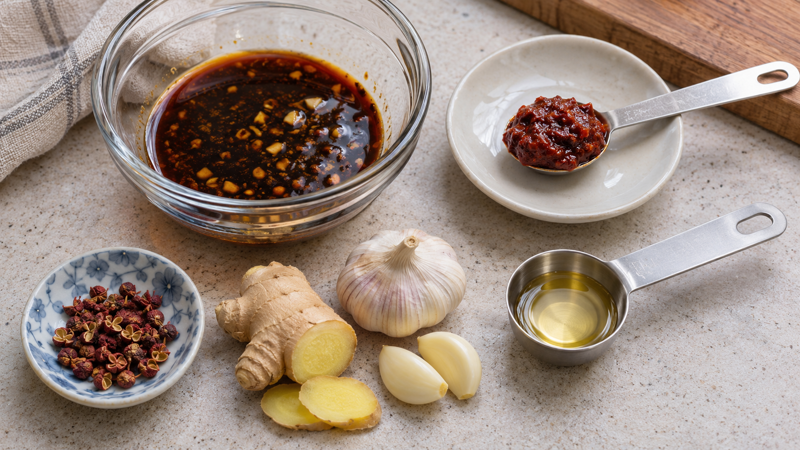
At the stove, make one purposeful change at a time. Measure the cooking oil first, then decide whether the recipe also needs a finishing pour of chili oil. If you reduce a salty condiment, use ginger, garlic, scallion, vinegar or Sichuan peppercorn aroma thoughtfully within the dish’s flavor profile. They add different sensory effects; none removes sodium that is already present.
A very spicy sauce can contain little added oil or a great deal. A mild sauce can still be salty. Therefore, “less spicy” is a request about heat, not a reliable description of fat or sodium. Keep the seasoning decision separate from the nutrition estimate, and taste for balance rather than trying to replace every lost flavor with another salty bottled ingredient.
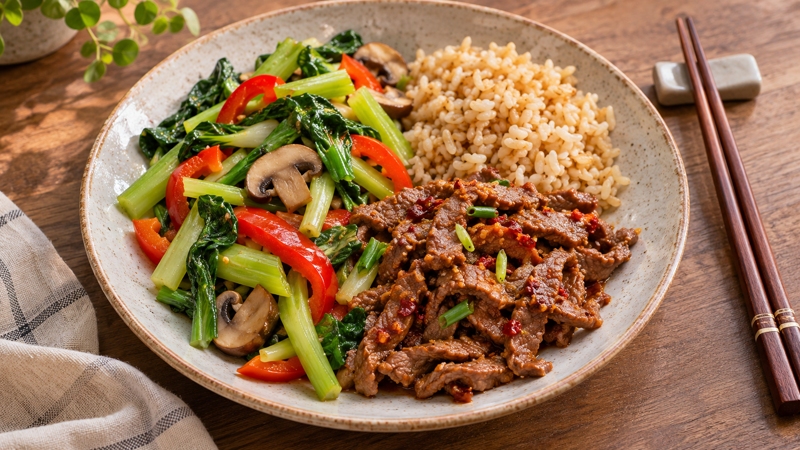
Canada’s food guide plate uses half vegetables and fruits, one-quarter whole grains and one-quarter protein foods as a visual reference. It explains that this can also guide mixed dishes and shared platters. The pictured amounts are not a prescription for how much every person should eat at once.
For a home Sichuan meal, consider the beef dish alongside the vegetable dishes, rice and other items on the table. Adding a vegetable side can change the balance of what you serve. It does not subtract oil or sodium from the beef already cooked. Similarly, dividing a shared dish into more stated servings only describes reality if people actually eat those smaller shares.
For takeout, ask what can be changed: an additional vegetable dish, a smaller beef portion, or sauce served separately where the kitchen can do it. Sauce on the side gives you a choice about how much to use; it does not establish an exact nutrient number. Without a restaurant’s recipe or nutrition information, appearance alone cannot provide one.
Apply the Checklist to a Recipe You Already Use
- Record the beef cut, cooking oil, finishing oil and every salty seasoning.
- Use label serving sizes to calculate ingredient contributions to the whole batch.
- Decide which change matters for your aim: cut choice, oil quantity, sauce quantity, or meal balance.
- Keep the recipe’s cooking and food-safety instructions; do not rely on undercooking to make beef seem tender.
- Serve the meal, then estimate the share actually eaten. Keep any nutrient total labeled as an estimate with its assumptions.
For a complete cooking method, use the Sichuan beef stir-fry recipe. To explore a different format, see the Sichuan braised beef guide. Compare the specific ingredients and portions rather than assuming one method is always lighter.
Questions About Healthy Sichuan Beef
Does less spicy mean less oil or sodium?
No. Chili heat, oil quantity and sodium are separate features. Check the ingredients and quantities instead of judging from heat alone.
Does reduced-sodium soy sauce make the dish low-sodium?
Not automatically. The amount used and sodium from other ingredients still count. Read the product label and calculate the total before making a low-sodium claim.
Does adding water remove sodium from a sauce?
No. Water dilutes the concentration but does not remove the sodium already added. The portion of sauce actually consumed still matters.
Can a photograph show the calories in a beef dish?
No. A photograph does not establish ingredient quantities, brands, cooking losses or the portion eaten. A reliable estimate needs those inputs.
Evidence and Limits
The linked FDA, WHO and Health Canada sources were checked on November 4, 2026. The practical kitchen examples apply their general principles; they are not a clinical meal plan or a claim that this dish treats a condition. No exact calories or finished-dish sodium values are asserted. Images are newly composed illustrations of the choices discussed, not evidence of a tested recipe.