Chengdu is an especially good place to understand this range. UNESCO describes the city as a center of Sichuan cuisine and emphasizes its variety of sweet, sour, bitter, spicy, and salty flavors. The foods below are small eats and casual dishes you can compare in one or two meals, rather than a list of banquet classics.
Choose your first order at a glance
| Food | What arrives | Main experience | Good first choice if you want |
|---|---|---|---|
| Dan dan noodles | Wheat noodles with a concentrated sauce and often minced pork | Savory, nutty, chile-fragrant | A compact introduction to Sichuan noodle seasoning |
| Red-oil wontons | Soft wontons dressed with chile oil, soy, garlic, and sometimes vinegar | Silky wrapper and aromatic oil | Dumplings with a vivid sauce |
| Zhong dumplings | Pork dumplings with a sweet-savory red-oil dressing | Gentler sweetness against chile | A rounder, less sharp sauce profile |
| Sweet-water noodles | Thick, chewy noodles in a dark, sweet-savory dressing | Chew, sesame, garlic, and mild heat | Texture more than extreme spice |
| Liangfen | Cool starch jelly cut into strips or blocks and dressed to order | Slippery, cooling texture with a spicy finish | A cold snack between richer dishes |
| Guokui | Baked or griddled stuffed flatbread | Crisp crust and savory filling | Something portable and bread-based |
| Chuanchuan | Vegetables, tofu, eggs, and meats on bamboo skewers | Customizable mala broth and dipping sauce | Sharing and choosing ingredient by ingredient |
| Bobo ji | Cooked skewers served cool in a seasoned chile-and-sesame broth | Fragrant, cool, and easy to sample | Skewers without a boiling pot at the table |
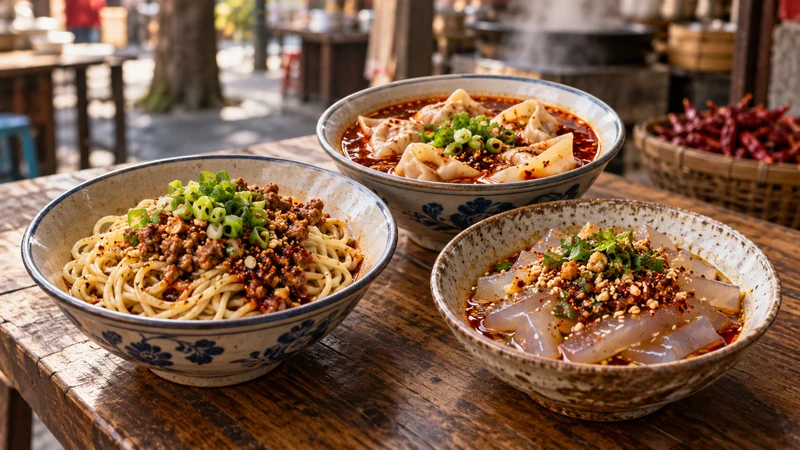
Eight Sichuan street foods worth ordering
1. Dan dan noodles 担担面 · dàn dàn miàn
Dan dan noodles are the clearest place to start because their history is tied to street vending. The name refers to the shoulder pole, or dan, once used by hawkers. A Chengdu-style bowl is usually small and intensely seasoned rather than built like a large soup meal. Expect wheat noodles, chile oil, soy, preserved vegetables or sprouts, scallion, and often minced pork.
Stir from the bottom before judging the flavor; much of the sauce sits below the noodles. If you want to cook the dish later, our dan dan noodles guide explains sauce balance and bowl assembly.
2. Red-oil wontons 红油抄手 · hóng yóu chāo shǒu
These soft wontons are served in an aromatic dressing rather than a heavy soup. The contrast matters: a tender wrapper and juicy filling carry garlic, chile oil, soy, and a touch of acidity or sweetness. “Red oil” describes the seasoning style; it does not tell you the exact heat level.
Ask whether the filling is pork, shrimp, or mixed, and whether the sauce contains sesame or peanuts. For a home version, see the Sichuan wonton recipe.
3. Zhong dumplings 钟水饺 · zhōng shuǐ jiǎo
Zhong dumplings look close to red-oil wontons, but their sauce often tastes sweeter and rounder. The classic form uses a pork filling without a large vegetable component, then adds seasoned soy and red oil. Order both dumpling dishes side by side if you want to notice how a similar wrapper-and-filling format changes with the dressing.
4. Sweet-water noodles 甜水面 · tián shuǐ miàn
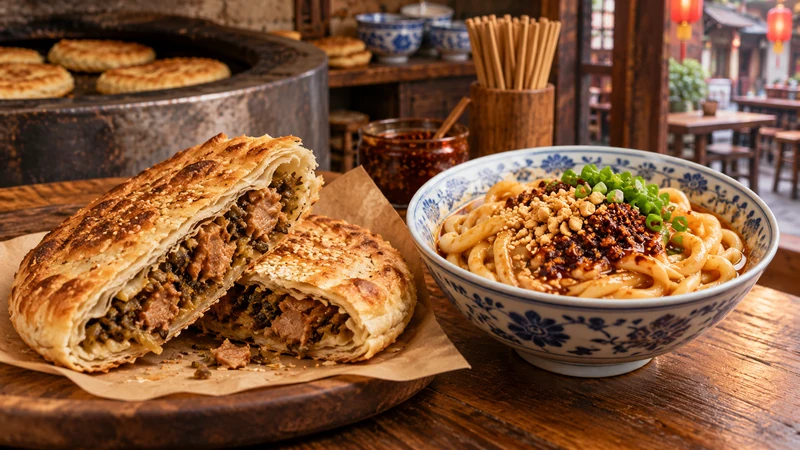
Despite the English name, this is not a dessert. Thick, hand-cut wheat noodles are coated with a dark sweet-savory sauce, garlic, sesame or sesame paste, and chile oil. The noodles should give you a pronounced chew. A Ministry of Commerce heritage-brand profile identifies sweet-water noodles as a well-known Chengdu snack and links the name to their returning sweetness.
5. Liangfen 凉粉 · liáng fěn
Liangfen is a starch jelly, commonly made from pea or mung-bean starch, served cool and cut into blocks or ribbons. On its own it is mild; the dressing supplies the character through chile oil, soy, vinegar, garlic, and sometimes sesame. The cool, slippery texture makes it a useful counterpoint to hot skewers or rich dumplings.
6. Guokui 锅盔 · guō kuī
Guokui is a baked or griddled flatbread with regional variations. In and around Chengdu, you may see thinner, crisp versions or stuffed breads with pork, beef, or preserved vegetables. Ask what is inside before ordering; a bread that looks vegetarian from the outside may contain meat or lard.
Eat it while the crust is still crisp. It works well between sauced dishes because it is less slippery and easier to share.
7. Chuanchuan 串串 · chuàn chuàn
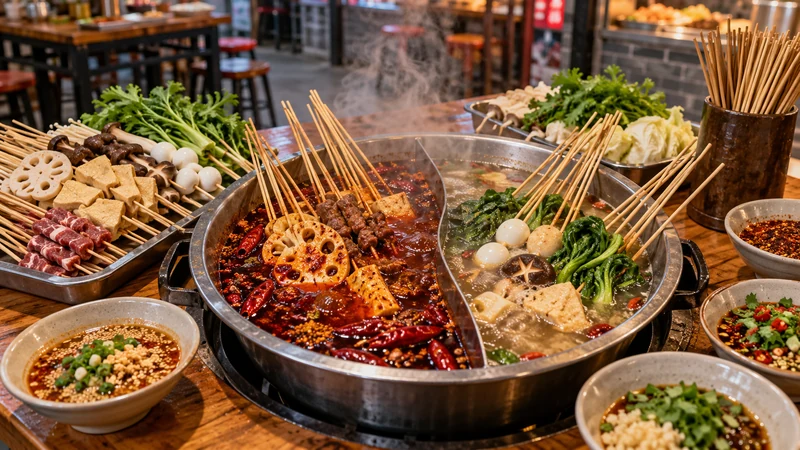
Chuanchuan turns ordering into a selection process: choose skewers of lotus root, mushrooms, tofu, leafy vegetables, quail eggs, meat, or offal, then have them cooked in broth. Michelin describes the dish as skewered morsels cooked in simmering broth and notes its connection to Chengdu street-snack culture.
Count systems vary. Some shops charge by stick; others weigh the selected food. Confirm the method before filling a tray. If you do not eat pork or shellfish, ask about the broth and shared cooking pot as well as the visible ingredient.
8. Bobo ji 钵钵鸡 · bō bō jī
Bobo ji is a Leshan specialty now widely sold in Chengdu and elsewhere in Sichuan. It is a cool, ready-to-eat member of the skewer family. The name literally mentions chicken, but modern displays can include vegetables, tofu, quail eggs, and other meats. The cooked skewers rest in a seasoned broth with chile oil and sesame, so the flavor reaches the surface without a boiling pot at your table.
How to order without assuming everything is extremely spicy
- Choose contrast. Pair one noodle or dumpling dish with liangfen, guokui, or vegetable skewers instead of ordering several bowls with similar red-oil dressings.
- Ask about both heat and numbness. Chile heat and the tingling aroma of Sichuan pepper are separate choices in some shops.
- Start with smaller portions. Many Chengdu snacks are designed for tasting more than one item.
- Check the whole preparation. Pork, wheat, soy, sesame, peanuts, shellfish, and shared broth or oil can appear even when they are not obvious from the finished dish.
- Use the Chinese name. English menu translations vary; showing the characters can reduce confusion.
Street food, snack shop, or restaurant?
The category is flexible. Foods that began with mobile vendors may now be served in specialist noodle shops, covered markets, food courts, or restaurants. That move indoors does not erase their street-food history. It does mean that portion size, sauce, and serving format can differ by shop and city.
Use this list as a tasting map rather than an authenticity test. Regional and household versions differ, and an English menu may group several dishes under broad labels such as “spicy wontons” or “Sichuan skewers.”
Frequently asked questions
What is the best Sichuan street food for a first-time visitor?
Dan dan noodles are the most useful first order because they combine noodles, savory topping, chile oil, and preserved or aromatic ingredients in a small bowl. Add liangfen or guokui for a contrasting texture.
Is all Sichuan street food very spicy?
No. Heat levels vary, and sweetness, sesame, garlic, vinegar, fermented seasonings, and Sichuan pepper can matter as much as chile. Ask the shop to separate chile heat from numbing pepper when possible.
Which Sichuan street foods can be vegetarian?
Liangfen, some guokui, and vegetable chuanchuan can be made without visible meat, but broth, lard, minced pork, oyster sauce, and shared oil are possible. Confirm the sauce and cooking method rather than judging by appearance.
Are chuanchuan and hot pot the same?
They are related communal broth experiences, but chuanchuan ingredients are threaded on skewers and are often selected and counted individually. Hot pot commonly uses loose plates of ingredients.