This Sichuan-style sesame noodle page uses a simple warm, meatless variation: cooked wheat noodles tossed with a sesame-paste dressing and optional chili oil. Sesame noodles have regional variations; this is not a claim that one sauce formula defines Sichuan cuisine.
Sichuan Sesame Noodles Recipe: Quick Answer
Cook two portions of wheat noodles according to their package. While they cook, thin 2 tablespoons Chinese sesame paste gradually with warm water, then mix in 2 tablespoons light soy sauce, 1 tablespoon black rice vinegar and 1/4 teaspoon sugar. Drain the noodles and toss promptly. Chili oil is optional and should be added to taste.
Basic Facts
| Yield | 2 portions |
|---|---|
| Noodles | Wheat noodles; package directions determine cooking time |
| Serving style | Warm, plain sesame noodles; optional chili oil |
| Allergens | Wheat, soy and sesame; check noodle and paste labels for egg or peanuts |
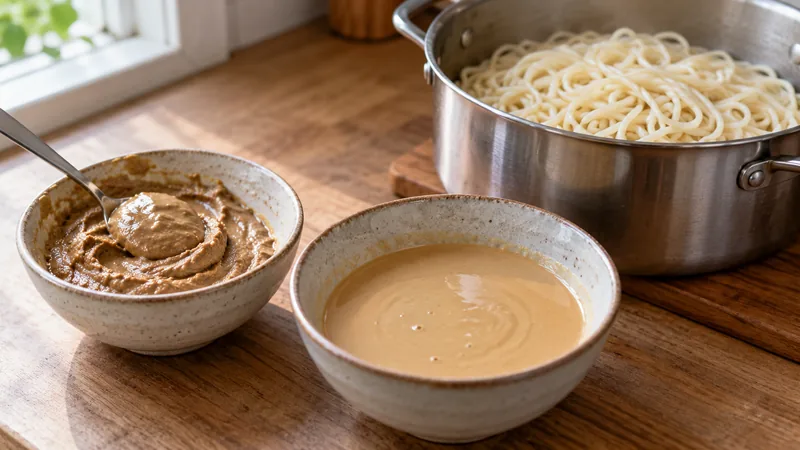
Mix sesame paste seasoning and chile components
Measure 2 tablespoons Chinese sesame paste, 2 tablespoons light soy sauce, 1 tablespoon black rice vinegar and 1/4 teaspoon sugar. Start with 2 tablespoons warm water for dilution and add more gradually if needed. Keep optional chili oil separate so heat can be adjusted without changing the whole batch.
Stir the sesame-paste jar before measuring if the oil has separated. Check its ingredient label: some products contain peanuts as well as sesame. Tahini is a different product with a milder flavor. Neither a peanut-containing paste nor tahini should silently replace the named ingredient when cooking for someone with an allergy.
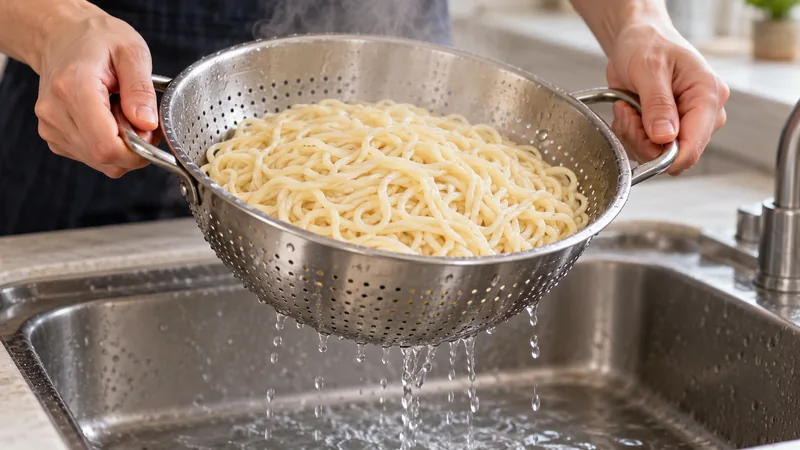
Cook rinse or drain noodles for the intended texture
- Set out the sauce ingredients and a colander before cooking. Use two noodle portions as specified on the package rather than assuming fresh and dried noodles weigh the same.
- Stir warm water into the sesame paste a little at a time. It may first become thicker; continue stirring and adding small amounts until smooth. Mix in the soy sauce, vinegar and sugar.
- Cook the noodles fully according to their package. Drain well. This warm variation omits rinsing, so the noodles can be tossed while still warm.
- Add the sauce and lift the strands through it until coated. If it is too stiff to distribute, add a small spoonful of warm water and toss again. Add optional chili oil to taste and serve promptly.
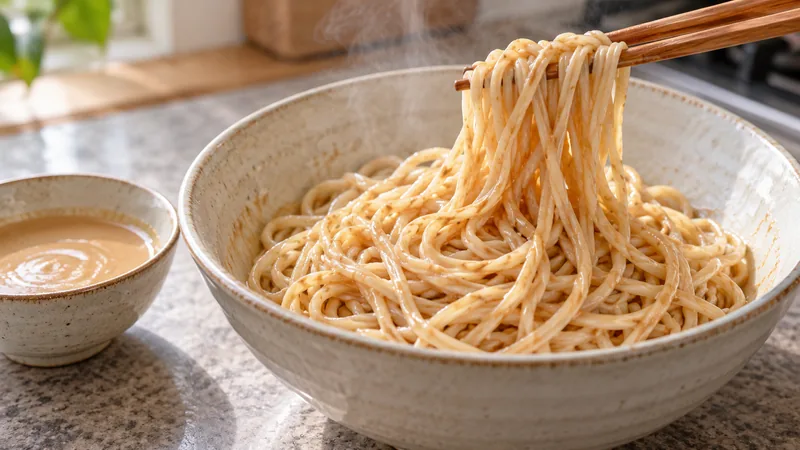
Toss promptly and adjust safely before serving
The dressing should coat the strands rather than leave a watery puddle. Check drainage before adding extra sauce. Taste a dressed noodle before adding more soy sauce; the amount needed depends on the sauce brand and noodle portion.
These illustrations show the plain variation. Cucumber, scallions, toasted sesame seeds and cooked meat toppings are separate choices, not missing required ingredients. This recipe gives no meat-cooking instructions. Follow product storage instructions, refrigerate prepared components promptly when making ahead, and do not treat a sauce recipe as a shelf-stable preserve.
Quick reference
Measure the sauce, dilute the paste gradually, fully cook and drain the noodles, then toss while warm. The warm version needs no cold rinse and no minced topping.
Check substitutions before mixing
If changing the noodles, read both the cooking directions and ingredient list. Egg noodles add an allergen that plain wheat noodles may not have. Rice noodles are a different variation, and switching only the noodles does not establish that the whole dish is gluten-free: soy sauce and black vinegar also need checking.
A different paste may need a different amount of dilution water. Add water gradually rather than copying the final volume after a substitution. Keep an undressed portion aside when accommodating different heat preferences. Add chili oil to individual bowls, using clean utensils and checking its label for ingredients that matter to your diners.
Hot noodles continue absorbing sauce after mixing, so a long delay can make the bowl heavy. Fresh alkaline noodles, dried wheat noodles and softer supermarket noodles do not absorb seasoning in exactly the same way. Record the noodle type, portion size and sauce amounts if you want to repeat your own preferred balance.
If preparing several servings, coat one portion first and use it to judge how much of the measured sauce the other portions need. Taste the sauce on a cooked noodle rather than relying only on a taste of the dressing alone. These observations are practical adjustments, not evidence that the recipe has been independently tested.
Recipe references
Red House Spice sesame noodles supports the sesame-soy-vinegar proportions, gradual dilution and warm-serving option; this simplified variation omits its aromatic hot-oil dressing and vegetable garnish. The Woks of Life sesame noodles supports package-based cooking and prompt warm tossing, but describes a Shanghai recipe, not a uniquely Sichuan formula. Its sesame paste guide explains the distinction from tahini and possible peanut ingredients.
Frequently Asked Questions
Can I serve sesame noodles warm?
Yes. Drain the cooked noodles and toss promptly with the smooth sauce. The warm variation does not need a cold-water rinse.
Is tahini identical to Chinese sesame paste?
No. Chinese toasted sesame paste has a stronger roasted flavor. Tahini changes the flavor; a little toasted sesame oil can help, but the result remains a substitution.
Why did the sauce turn thick when water was added?
Sesame paste can initially thicken during dilution. Add water gradually and keep stirring before deciding that the sauce is too thick.
Do these noodles require minced meat?
No. This plain sesame-noodle variation has no meat topping. Do not add meat just because another noodle recipe uses it.