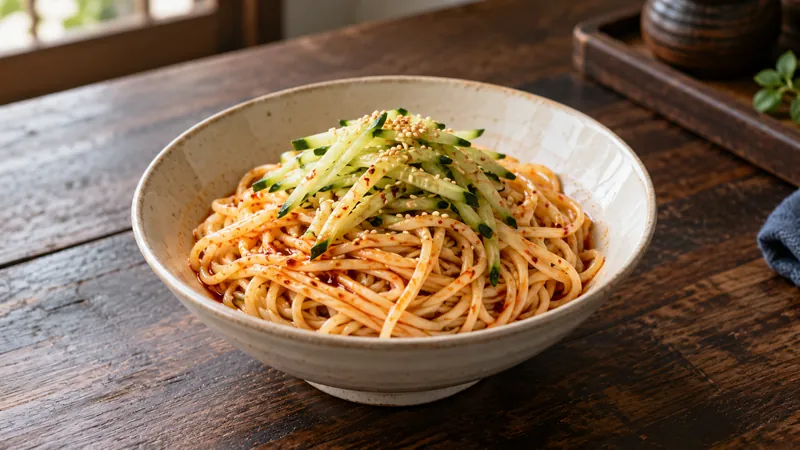
Sichuan cold noodles are cooked noodles served cool with a chili-oil dressing and crisp cucumber. This version uses two portions of alkaline or thin egg noodles; the sauce is mixed separately so the strands remain distinct rather than sitting in an oily puddle. It is a home-cooking adaptation of published recipes, not a report of kitchen testing.
Quick Answer
Cook the noodles according to their package, drain thoroughly, loosen with a little sesame oil and cool promptly. Mix vinegar, light soy, garlic, chili oil, a little sugar and sesame paste separately, then toss with the cool noodles and shredded cucumber shortly before serving.
Basic Facts
| Yield | 2 noodle portions |
|---|---|
| Noodles | Alkaline noodles or thin egg noodles; use package cooking instructions |
| Main garnish | Half an English cucumber, shredded |
| Texture goal | Cooked, separate strands; drained cucumber; light sauce coating |
| Allergens | Wheat; egg if egg noodles; soy and sesame; optional toppings may add allergens |
Sichuan Cold Noodles Recipe: Ingredients and Texture Goal
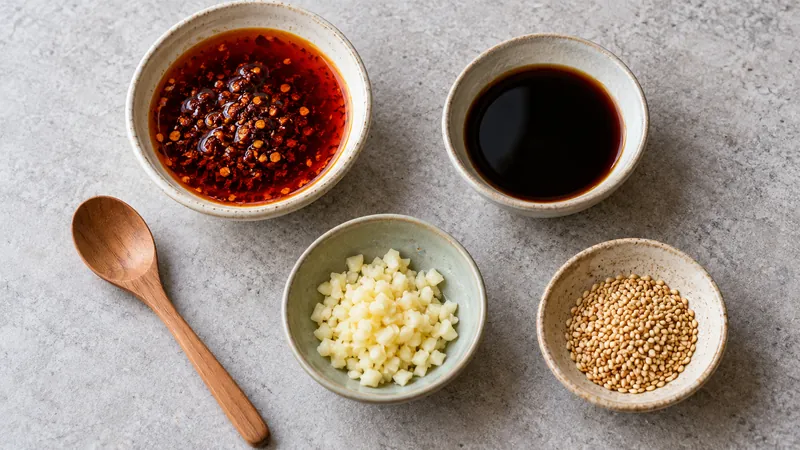
For two portions, prepare half an English cucumber and one finely chopped garlic clove. Use 1/2 tablespoon sesame oil to loosen the drained noodles. For the dressing, start with 1 tablespoon light soy sauce, 2 teaspoons vinegar, 1/2 tablespoon sesame paste, 1 tablespoon chili oil and up to 3 teaspoons sugar. Add salt only after tasting because soy sauce is already salty. These quantities are a starting version, not a required ratio for every chili oil.
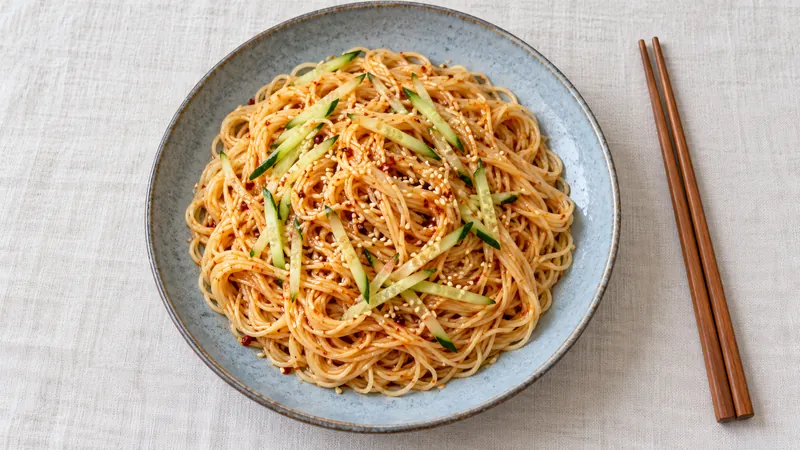
Keep cucumber as the principal garnish. Sesame seeds are optional; they are shown in the serving illustrations, but are not a substitute for the sesame paste in the measured dressing. Peanuts and scallions appear in some published versions and can be omitted. This page does not require meat or chili crisp. Chili oil and chili crisp have different amounts of solids, so swapping them spoon for spoon changes the coating.
Step-by-Step Cold Noodle Method
- Wash the cucumber and cut it into fine strips. Keep it chilled while preparing the noodles. Finely chop the garlic and mix the dressing in a separate bowl.
- Cook the noodles following their package instructions. Check a strand for a cooked center and a firm bite; do not use a universal time for fresh and dried noodles.
- Drain well. Toss with the sesame oil and spread or lift the strands with clean utensils to release steam and separate them. Cool promptly; do not leave a large warm mound standing for an extended period.
- When cool, combine the noodles, cucumber and dressing. Toss until the sauce reaches the lower strands as well as the top. Add a little more chili oil only if the heat and coating need it.
- Serve promptly. Optional sesame seeds can be added at the table.
The important sequence is cook, drain, separate, cool and then dress. A sauce poured onto a wet, steaming bundle may appear weak at first because residual water dilutes it. Adding more seasoning before draining properly can make the final bowl too salty.
Sauce Balance and Chili Oil Checks
Stir the sesame paste into the liquid seasonings before adding it to the noodles, so there are no isolated thick clumps. The dressing should spread across the strands rather than collect at the bottom. Chili oils vary in both heat and sediment; start with the listed amount, then adjust against the actual noodles.
Taste a dressed strand together with a cucumber strip. If the bowl tastes flat, decide whether it needs acidity, salt or garlic rather than automatically adding more oil. Sugar is adjustable and should not hide the vinegar. The ingredient image is a view of selected sauce components, not a visual measurement of the recipe: bowl sizes do not indicate spoon quantities.
Serving Notes and Common Mistakes
Serve the noodles cool, with clean utensils and a modest dressing coating. For make-ahead preparation, refrigerate noodles, cucumber and dressing separately, then combine close to serving. Refrigerate perishable cooked food within 2 hours, or within 1 hour when the ambient temperature is above 32°C (90°F); discard food left out beyond these limits rather than trying to rescue it with more vinegar.
In your own kitchen, the package instructions, actual noodle thickness and storage conditions determine the handling decisions. A useful note for a future batch records the noodle brand and which seasoning was adjusted, without treating one successful-looking bowl as a guaranteed result.
Quick reference
Two noodle portions; cook fully according to the package, drain, loosen with sesame oil, cool promptly and toss with cucumber and a separately mixed dressing. Keep optional garnish choices distinct from required ingredients.
Recipe references
For prompt refrigeration, see FoodSafety.gov food-handling guidance.
Frequently Asked Questions
Can I use dried noodles?
Yes. Use alkaline or thin egg noodles and follow the package cooking directions. Fresh and dried noodles should not share an assumed cooking time.
Is sesame paste essential?
It belongs to this measured version. A paste-free variation changes the body of the dressing and should be described as a variation.
Do I need peanuts or chicken?
No. This cucumber version omits both. Optional toppings do not define every bowl of Sichuan cold noodles.
Why is the sauce watery?
Check noodle drainage and cucumber moisture before adding more seasoning. Wet ingredients dilute the dressing.
Can I dress the noodles in advance?
For preparation ahead, chill the components separately and toss near serving. Follow cooked-food storage guidance.