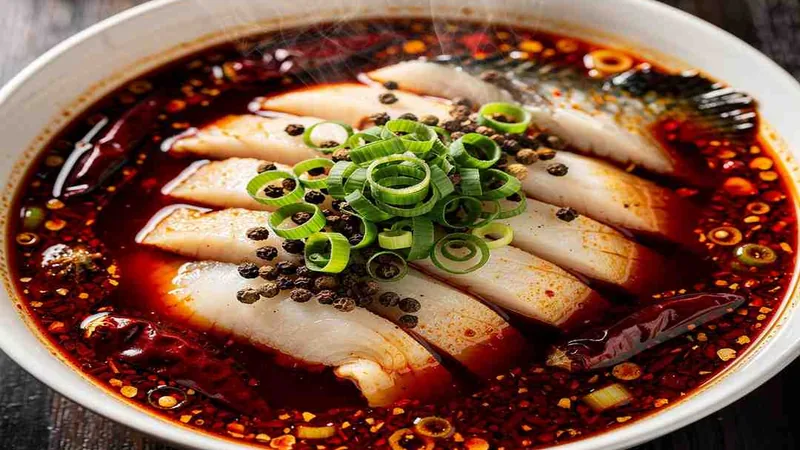
Authentic Sichuan boiled fish, or shui zhu yu, is made by briefly poaching marinated fish slices over vegetables, then finishing them with doubanjiang broth, dried chilies, Sichuan peppercorns, and hot oil. Tender fish and a balanced numbing-spicy aroma matter more than simply adding extra chili.
Quick Answer
Authentic Sichuan boiled fish, or shui zhu yu, is made by briefly poaching marinated fish slices over vegetables, then finishing them with doubanjiang broth, dried chilies, Sichuan peppercorns, and hot oil. Tender fish and a balanced numbing-spicy aroma matter more than simply adding extra chili.
Basic Facts
| Chinese name | Shui zhu yu (水煮鱼) |
|---|---|
| Best fish | Firm white fish cut into thin, even slices |
| Key flavors | Doubanjiang, dried chili, Sichuan peppercorn, garlic, and ginger |
| Main texture check | Fish should be opaque and tender, never rubbery |
Quick Reference
This dish is often paired with other Sichuan staples like Mapo Tofu, Dan Dan Noodles, and Hot and Sour Soup to create a full, fiery meal. It’s not just a side; it’s a centerpiece that brings warmth to any gathering.
The Story Behind authentic Sichuan boiled fish
Authentic Sichuan boiled fish has roots in the river towns of eastern Sichuan. Fishermen there would catch fresh, small fish from the Yangtze River and its tributaries.
Leftover scraps or smaller catches were transformed into a flavorful dish using local chilies and Sichuan peppercorns. Over time, it evolved into the hearty, balanced dish we know today.
It’s a perfect example of Sichuan’s “ma la” philosophy—where flavors are bold, layered, and meant to linger on the tongue. Unlike milder coastal fish dishes, this one is designed to warm you up, even in Sichuan’s humid summers.
It’s also a communal dish, often served family-style at dinner tables across the province.
What Makes authentic Sichuan boiled fish Special
What sets authentic Sichuan boiled fish apart from other spicy fish dishes is its precise balance of ma and la. The Sichuan peppercorns give that unique tingly, numbing sensation, while the dried chilies add deep, slow heat—not just a quick burn.
The fish is sliced thin and cooked quickly, so it stays tender and moist, never rubbery. Another key technique is blanching veggies first, which creates a bed of crisp, absorbing layers that soak up all the spicy sauce.
The final step—pouring hot oil over the garnishes—releases the aromatic oils, making every bite fragrant and vibrant. This isn’t just a spicy dish; it’s a symphony of flavors that feels both comforting and exciting.
Ingredients for authentic Sichuan boiled fish
- 500g fresh white fish (snakehead or tilapia, filleted into 5mm-thick slices)
- 2 tablespoons Sichuan doubanjiang (fermented chili bean paste, with broad beans)
- 1.5 teaspoons Sichuan peppercorns (divided: 1 tsp for sauce, 0.5 tsp for garnish)
- 15 dried Sichuan red chilies (split lengthwise, seeds removed for milder heat)
- 3 garlic cloves (minced finely)
- 1-inch fresh ginger (sliced into thin matchsticks)
- 2 scallions (white parts chopped, green parts sliced thin for garnish)
- 1 tablespoon light soy sauce (for umami depth)
- 1 teaspoon rice vinegar (for a subtle tang)
- 1 teaspoon granulated sugar (to balance the heat)
- 200g Napa cabbage (cut into 5cm-wide strips, tough stems removed)
- 100g fresh bean sprouts (trimmed of root ends)
- 3 tablespoons peanut oil (high smoke point, ideal for stir-frying)
- 1 large egg white (for marinating fish, keeps it tender)
- 1 tablespoon cornstarch (for marinating fish, locks in moisture)
How to Make authentic Sichuan boiled fish
- Marinate the fish: In a medium bowl, toss fish slices with egg white and cornstarch. Let sit at room temperature for 15 minutes.
- Authentic Sichuan Boiled Fish This step prevents the fish from drying out during cooking.
- Blanch the base veggies: Bring 1 liter of water to a rolling boil (100°C) in a pot. Add Napa cabbage and bean sprouts, blanch for exactly 2 minutes.
- Authentic Sichuan Boiled Fish They should be tender-crisp, not mushy.
- Transfer blanched veggies to a large, deep serving bowl. Authentic Sichuan Boiled Fish Spread them evenly across the bottom to create a bed for the fish.
- Heat 1 tablespoon of peanut oil in a wok over medium-high heat (180°C). Add dried Sichuan chilies and 1 teaspoon of Sichuan peppercorns.
- Authentic Sichuan Boiled Fish Stir constantly for 30 seconds until fragrant—don’t burn them.
- Remove the fried chilies and peppercorns from the wok, set them aside on a small plate.
- Add 2 more tablespoons of peanut oil to the same wok. Toss in ginger, minced garlic, and chopped scallion whites.
- Authentic Sichuan Boiled Fish Stir-fry for 1 minute until the aromatics are soft and fragrant.
- Add the 2 tablespoons of doubanjiang to the wok. Stir-fry for 2 minutes until the oil turns bright red. Authentic Sichuan Boiled Fish This releases the deep, savory flavors of the paste.
- Pour 500ml of water into the wok. Stir in light soy sauce, rice vinegar, and granulated sugar. Authentic Sichuan Boiled Fish Bring the mixture to a boil, then reduce heat to simmer for 5 minutes.
- Gently add the marinated fish slices to the simmering sauce. Don’t overcrowd the wok. Authentic Sichuan Boiled Fish Cook for 2 to 3 minutes, until the fish turns opaque and flaky.
- Use a slotted spoon to transfer the fish slices on top of the veggies in the serving bowl. Authentic Sichuan Boiled Fish Pour all the remaining sauce from the wok over the fish.
- Top the dish with the reserved fried chilies and Sichuan peppercorns, plus the sliced green scallions.
- Heat 1 more tablespoon of peanut oil in a small pan until it smokes (around 200°C). Carefully pour the hot oil over the garnishes.
- Authentic Sichuan Boiled Fish The sizzle will release all the aromatic flavors, making the dish smell incredible.
Common Mistakes with authentic Sichuan boiled fish
The most common mistake is overcooking the fish. Thin fish slices cook in just 2 to 3 minutes.
If you leave them in the sauce longer, they become tough and rubbery. Stick to the exact time to keep them tender.
Another mistake is skipping the marination step. Using egg white and cornstarch coats the fish, locking in moisture.
Authentic Sichuan Boiled Fish Without it, the fish will dry out quickly.
Many home cooks also forget to remove chili seeds. Seeds add bitterness, not heat.
Split the dried chilies and scrape out all the seeds before using. This keeps the flavor balanced, not harsh.
Finally, don’t rush the final hot oil pour. Authentic Sichuan Boiled Fish It’s the step that amplifies all the Sichuan flavors—skipping it makes the dish feel incomplete.
Serving & Storage
Authentic Sichuan boiled fish is best served immediately, right after the hot oil pour. The sizzle and aroma are part of the experience.
Pair it with steamed white rice to cut through the heat, or alongside other Sichuan dishes like Mapo Tofu, Dan Dan Noodles, or Hot and Sour Soup for a full meal. For a vegetarian twist, swap fish for extra firm tofu or shiitake mushrooms.
Leftovers can be stored in an airtight container in the fridge for up to 1 day. Reheat gently in a pot over low heat, don’t boil vigorously—this will dry out the fish.
Avoid microwaving if possible, as it can make the fish rubbery. Authentic Sichuan Boiled Fish If you reheat, add a splash of water to keep the sauce moist.
Question 1: Can I use a different fish instead of snakehead or tilapia?
Answer: Yes, you can use most mild, white-fleshed fish. Cod, catfish, or sea bass work well.
Just make sure to slice the fish into thin, even pieces (5mm thick) so it cooks quickly. Authentic Sichuan Boiled Fish Avoid oily fish like salmon, as they’ll overpower the delicate sauce.
Question 2: How do I adjust the spiciness level for my taste?
Answer: To make it less spicy, remove all seeds from the dried chilies and use only 10 instead of 15. Cut back on the doubanjiang to 1.5 tablespoons.
Authentic Sichuan Boiled Fish For extra heat, add 5 more dried chilies or a pinch of chili flakes to the sauce.
Question 3: Is Sichuan peppercorns necessary for authentic flavor?
Answer: Yes, they’re non-negotiable for the authentic ma (numbing) flavor. Regular black pepper won’t give the same tingly sensation.
Authentic Sichuan Boiled Fish If you can’t find Sichuan peppercorns, look for them at Asian grocery stores—they’re easy to find and worth the effort.
Question 4: Can I make this dish vegetarian?
Answer: Absolutely. Replace the fish with 200g of extra-firm tofu (sliced thin) or 150g of shiitake mushrooms.
Use vegetable oil instead of peanut oil, and skip any meat-based ingredients. Authentic Sichuan Boiled Fish The rest of the steps stay the same.
Question 5: Can I prepare parts of this dish ahead of time?
Answer: Yes. You can marinate the fish for up to 1 hour in the fridge.
Blanch the veggies and make the sauce base (without adding fish) a day ahead. Authentic Sichuan Boiled Fish Assemble and cook the dish just before serving for the best flavor.
Frequently Asked Questions
Can I make authentic Sichuan boiled fish vegetarian?
Traditional authentic Sichuan boiled fish is fish-based, but you can adapt it to be vegetarian while retaining its core flavors by swapping fish for hearty, absorbent ingredients like extra-firm tofu, konjac slices, bamboo shoots, or seitan.
Keep the signature Sichuan seasonings—including Pixian doubanjiang (fermented broad bean chili paste), Sichuan peppercorns, dried red chilies, garlic, and ginger—to preserve the dish’s iconic ma la (numbing-spicy) profile.
What makes authentic Sichuan boiled fish authentic Sichuan style?
Authentic Sichuan boiled fish (called shui zhu yu in Mandarin) is defined by three key elements: 1) its signature ma la flavor, derived from Pixian doubanjiang (a fermented chili paste unique to Sichuan), Sichuan peppercorns, and dried red chilies; 2) use of fresh freshwater fish (most often grass carp, a local staple) for tender, flaky texture; 3) the final step of pouring smoking hot oil over the cooked dish to awaken the spices’ aromas and create a rich, fragrant top layer.
How spicy is authentic Sichuan boiled fish?
Authentic Sichuan boiled fish typically has a medium to very spicy heat level, balanced with a distinctive numbing tingle from Sichuan peppercorns (not just fiery, one-note heat).
Spice intensity varies by regional Sichuan sub-styles: milder versions exist for less tolerant palates, but traditional home-style or restaurant versions are designed to showcase bold, layered heat.
You can adjust the spice by reducing the number of dried chilies or using less doubanjiang paste.
What can I serve with authentic Sichuan boiled fish?
Authentic Sichuan boiled fish pairs best with plain, starchy sides to balance its bold, spicy flavors.
The most essential pairing is steamed white rice, which helps cool the mouth from the heat and cut through the richness of the broth.
Common complementary sides include light stir-fried greens (like bok choy or Chinese broccoli), cold Sichuan cucumber salad, or pickled mustard greens, which complement the dish’s intense flavors without overpowering them.
Can I prepare authentic Sichuan boiled fish ahead of time?
Authentic Sichuan boiled fish is best prepared and served immediately, as the fish will become overcooked, mushy, and lose its tender texture if left sitting in the spicy broth for too long.
However, you can prep most components ahead: marinate the fish fillets, make the base spice paste, and chop aromatics and vegetables 1–2 days in advance, then assemble and cook the dish right before serving.
Leftovers can be stored in an airtight container in the fridge for up to 2 days, though the fish’s texture will be less ideal when reheated.
Final Tip
Don’t skip the final hot oil pour—it’s the magic step that transforms a good spicy fish dish into an authentic Sichuan boiled fish. The sizzle wakes up all the aromatics, making every bite taste like it’s straight from a Chengdu street stall. Take your time, follow the steps, and enjoy every fiery, numbing bite.
Sichuan Soup Recipes Vegan Mapo Tofu Simple Mapo Tofu Wikipedia