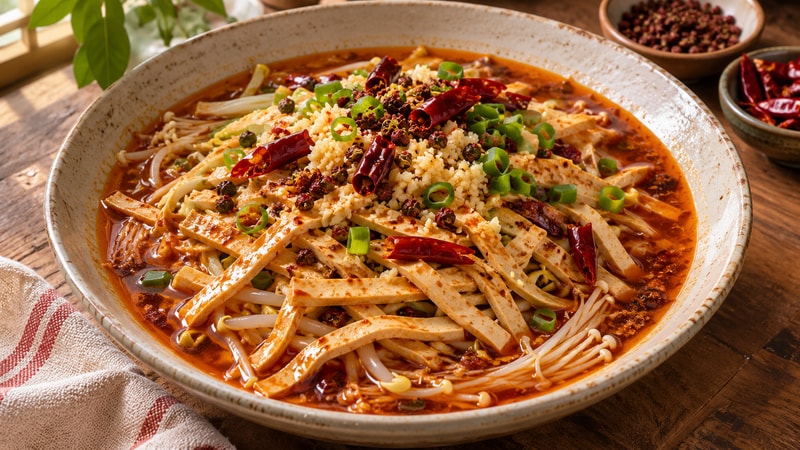
Quick answer: Sichuan boiled tofu is a meat-free adaptation of the shui zhu method. Pressed tofu and vegetables sit in a doubanjiang broth, then garlic, dried chilies, and Sichuan peppercorns are briefly bloomed with hot oil. The name does not mean plain tofu boiled in water.
If you searched for “Sichuan tofu boiled,” the key distinction is the tofu. This recipe uses doufu gan (豆腐干), a dense pressed tofu that can be sliced thinly without breaking apart. Soft or silken tofu behaves differently and is better saved for soup, douhua, or a separate mapo tofu method.
This home version serves four with rice. It uses bean sprouts and enoki mushrooms under the tofu, but napa cabbage or celery can replace either vegetable. Doubanjiang brands vary greatly in salt and heat, so taste the broth before adding soy sauce or salt.
What the shui zhu method means here
The better-known shui zhu dishes use beef, pork, or fish. The method layers cooked vegetables, a chili-bean-seasoned broth, tender slices of the main ingredient, and a final aromatic topping. This tofu version borrows that structure while changing the protein and timing.
It is not the same dish as mapo tofu. Mapo tofu uses soft cubes in a thickened sauce and often includes minced meat. The goal here is one pressed-tofu bowl with a broth-and-hot-oil finish.
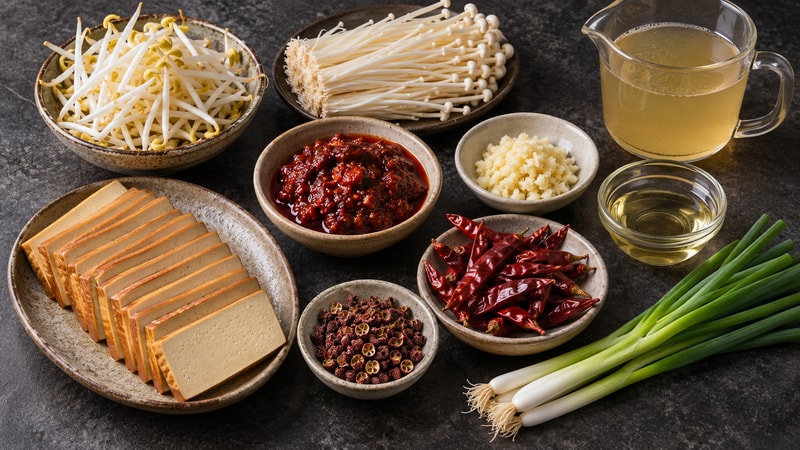
Ingredients for four servings
| Part | Ingredient | Amount | Function or substitute |
|---|---|---|---|
| Tofu | Plain pressed tofu / doufu gan | 14 oz / 400 g | Slice into 1/8-inch strips; five-spice tofu changes the flavor. |
| Vegetable base | Bean sprouts | 6 oz / 170 g | Napa cabbage can replace them. |
| Vegetable base | Enoki mushrooms | 4 oz / 115 g | Remove the root end; celery or oyster mushrooms also work. |
| Broth | Unsalted vegetable stock | 3 cups / 710 ml | Water works; adjust seasoning at the end. |
| Seasoning | Doubanjiang | 2 tbsp, finely chopped | Do not replace with sweet chili sauce. |
| Aromatics | Ginger and garlic | 1 tbsp each, minced | Reserve half the garlic for the topping. |
| Dry spices | Dried chilies | 8 to 12 | Cut and shake out seeds for less heat. |
| Dry spices | Sichuan peppercorns | 1 to 2 tsp | Use less for a gentler numbing aroma. |
| Finish | Neutral oil | 3 tbsp | Use an oil with a high smoke point. |
| Finish | Scallions and cilantro | 2 scallions; small handful cilantro | Cilantro is optional. |
You will also need 1 teaspoon sugar, 1 teaspoon light soy sauce if the broth needs it, and 1 teaspoon Chinkiang vinegar for a subtle bright finish. Check doubanjiang and soy labels for wheat or soy allergens; formulations vary.
Step-by-step Sichuan boiled tofu
1. Prepare the tofu and vegetables
Drain the pressed tofu and cut it into thin strips about 2 inches long. Rinse and drain the bean sprouts. Trim the enoki root end and separate the mushrooms. Keep the garlic for the final topping dry; water droplets make hot oil splatter.
2. Cook the vegetable bed
Heat 1 tablespoon neutral oil in a wok or wide pot over medium-high heat. Add the bean sprouts and enoki mushrooms with a pinch of salt. Cook them fully rather than only softening them: keep stir-frying until the bean sprouts are hot and tender throughout and the enoki mushrooms are thoroughly cooked. Cooking time varies with the pan and batch size. Do not rely on the hot broth poured over the bowl later to finish either ingredient. Transfer them to a deep, heat-safe serving bowl.
3. Build the doubanjiang broth
Lower the heat to medium. Add 1 tablespoon oil, the ginger, half the garlic, and half the Sichuan peppercorns. Stir for about 20 seconds. Add chopped doubanjiang and cook for 45 to 60 seconds until the oil turns red and aromatic; do not let the paste scorch.
Pour in the vegetable stock carefully. Add sugar and bring to a steady simmer for 4 minutes. Taste before adding soy sauce. The broth should be savory and spicy but still spoonable; concentrated doubanjiang may need dilution rather than more seasoning.
4. Simmer the pressed tofu
Add the tofu strips and keep the liquid at a gentle simmer for 3 to 4 minutes. Avoid a violent boil, which can make the broth harsh and jostle the slices. Stir once or twice with a broad spatula. Add the vinegar off heat, then pour the tofu and broth over the vegetables.
5. Bloom the topping safely
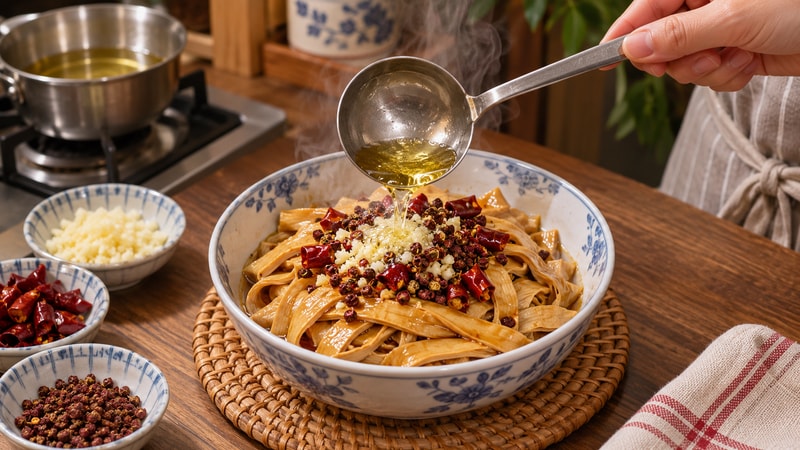
Scatter the remaining garlic, dried chilies, remaining Sichuan peppercorns, and scallions over the tofu. Heat the final tablespoon of oil in a small pan until shimmering but not smoking. Turn off the burner, let the oil settle for several seconds, and pour it in a controlled stream over the dry topping. Keep your face and bare hands away from the bowl.
How to adjust heat without flattening the flavor
- Reduce chili heat: use fewer dried chilies and shake out their seeds, but keep some doubanjiang for fermented depth.
- Reduce numbing: lower the Sichuan peppercorn amount independently of the chilies.
- Reduce salt: use unsalted stock, start with less doubanjiang, and add soy only after tasting.
- Reduce oil: sauté with measured oil and keep only enough for a small final bloom. Do not compensate with raw spice powder.
Troubleshooting
| Problem | Likely cause | Fix next time |
|---|---|---|
| Tofu breaks | Soft tofu or aggressive stirring | Use pressed tofu and a broad spatula. |
| Broth is too salty | Salty doubanjiang plus stock and soy | Use unsalted stock and taste before soy. |
| Spices taste bitter | Doubanjiang, garlic, or chilies scorched | Use medium heat and shorter blooming times. |
| Oil splatters | Wet herbs, bowl, or topping | Drain and dry ingredients; pour away from your body. |
Storage and reheating
Cool leftovers promptly, transfer them to a shallow covered container, and refrigerate. FoodSafety.gov lists soups and stews at 3 to 4 days under refrigeration; use that as a conservative outer limit. Reheat the portion you plan to eat until steaming throughout. The tofu will continue absorbing broth, so add a spoonful of water if needed.
The aromatic topping is best on the first day. For meal prep, store chopped scallions and cilantro separately and add them after reheating.
Frequently asked questions
Can I use soft tofu?
Not as a direct swap. Soft tofu can break during the layered shui zhu method. Use pressed tofu here, or choose a recipe designed for soft tofu.
Is Sichuan boiled tofu the same as mapo tofu?
No. This dish uses pressed tofu strips in seasoned broth with a final aromatic oil bloom. Mapo tofu uses soft cubes in a thickened sauce and often includes minced meat.
Does “boiled” mean bland?
No. Shui zhu names a broader technique. Doubanjiang broth, chilies, Sichuan peppercorns, garlic, and hot oil create the main flavor layers.
Can I make it fully plant-based?
Yes, use vegetable stock and check every packaged sauce for its actual ingredients. The recipe itself does not require meat, egg, or dairy.
Sources and recipe boundary
- The Woks of Life: Spicy Sichuan Boiled Tofu and pressed-tofu adaptation
- FoodSafety.gov: Cold Food Storage Chart
- U.S. FDA: Selecting and Serving Produce Safely (sprout precautions)
- U.S. FDA: Enoki mushroom safety advice
- MySichuanFood: Sichuan boiled beef technique reference
Recipe boundary: this is a home-style adaptation using pressed tofu. It does not claim that every Sichuan restaurant or household prepares one identical tofu version.