Quick answer: This Sichuan tofu dry pot is a practical home method built around firm tofu, crisp-tender vegetables, dried chilies, Sichuan peppercorns, aromatics, and doubanjiang. The key is sequencing: dry and brown the tofu first, pre-cook dense vegetables, bloom the chile-bean base briefly, then toss everything with only enough liquid to coat. The finished pan should look glossy and concentrated, not like tofu floating in sauce.
“Dry pot” describes the serving and cooking direction more than one fixed ingredient list. Restaurant versions may include meat, seafood, many vegetables, and a larger quantity of flavored oil. This version keeps the same dry-coated idea but scales the process for a home wok or wide skillet. It is not presented as the single authentic formula for every Sichuan kitchen.
Use the ingredient amounts as a starting point. Packaged tofu varies in moisture, doubanjiang varies in salt and chile intensity, and a small electric burner loses heat faster than a commercial wok range. The visual checks in each step matter more than an exact number of seconds.
What makes this a dry pot method
| Element | Target | Avoid |
|---|---|---|
| Tofu | Firm cubes with browned broad sides | Wet, pale cubes that break during tossing |
| Vegetables | Tender enough to eat, still defined | Raw dense slices or limp watery peppers |
| Sauce | Thin glossy coating on every piece | A pool of broth at the bottom |
| Aromatics | Fragrant chile, peppercorn, garlic, ginger | Burned doubanjiang or blackened garlic |
Utah State University Extension’s Create Family Meals recipe book browns drained firm tofu before combining it with separately stir-fried vegetables and keeps the vegetables tender-crisp. Its Create Better Health curriculum likewise cooks vegetables and tofu in separate stages before returning the vegetables to the pan. Those examples support the texture method here; they do not prove that this exact Sichuan seasoning ratio has been formally tested.
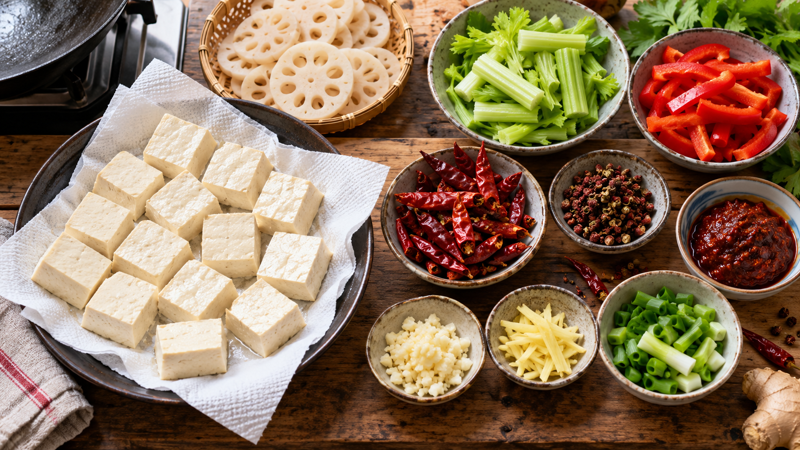
Ingredients and preparation
Serves: 3 to 4 with rice. Active cooking: about 20 minutes after the tofu is drained and the vegetables are cut.
| Ingredient | Amount | Preparation |
|---|---|---|
| Firm or extra-firm tofu | 14 to 16 oz / 400 to 450 g | Drain, blot, cut into 1-inch cubes |
| Lotus root | 1 cup thin slices | Peel, rinse, blanch 2 minutes, drain well |
| Celery | 1 cup short batons | Keep separate from quick-cooking pepper |
| Red bell pepper | 1 medium | Cut into broad strips |
| Fresh mushrooms | 5 oz / 140 g | Slice; cook until released moisture evaporates |
| Neutral oil | 2 to 3 tbsp | Divide between tofu and aromatics |
| Dried red chilies | 4 to 8 | Cut in sections; shake out seeds for less heat |
| Sichuan peppercorns | 1/2 to 1 tsp | Use less for a gentle numbing effect |
| Doubanjiang | 1 tbsp | Chop coarse beans if needed |
| Garlic and ginger | 2 cloves + 2 tsp | Thinly slice or mince |
| Light soy sauce | 1 tbsp | Check the salt level of doubanjiang first |
| Sugar and water | 1 tsp + 2 tbsp | Mix with soy sauce |
| Black vinegar | 1 tsp, optional | Add at the end for aroma |
| Scallions | 2 | Cut in short sections |
Prepare by density, not by color
Lotus root needs a head start; bell pepper does not. Briefly blanch the lotus root, drain it, and let surface steam escape. Keep celery, pepper, mushrooms, and scallions in separate piles. If everything enters together, the quick vegetables release water while the dense pieces are still firm.
Step-by-step Sichuan tofu dry pot method
- Dry the tofu. Drain and blot it well. A 15- to 20-minute weighted press is useful for very wet blocks, but firm tofu does not need to be squeezed until dense and rubbery.
- Brown in batches. Heat a wide wok or skillet over medium-high heat, add a thin film of oil, and place tofu with space between pieces. Leave it undisturbed until one broad side is golden, then turn. Transfer to a plate.
- Remove vegetable water. Cook mushrooms first until their released moisture largely evaporates. Add the blanched lotus root and celery; toss until hot. Add bell pepper briefly, then transfer the vegetables out.
- Bloom the base. Lower the heat to medium. Add a little fresh oil, dried chilies, and Sichuan peppercorns. Stir just until fragrant. Add doubanjiang, garlic, and ginger and stir 20 to 30 seconds. Do not wait for the garlic or bean paste to darken.
- Return and coat. Put tofu and vegetables back in the wok. Stir the soy, sugar, and water, pour around the side, and toss until the liquid reduces to a thin coating.
- Finish off heat. Add scallions and optional black vinegar. Taste before adding salt. Serve immediately with rice.
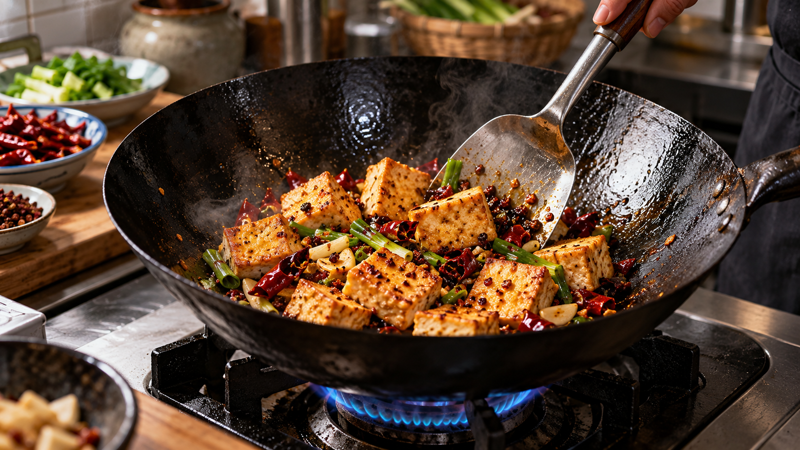
Texture checks and common mistakes
The tofu tears when turned
It may not have formed a crust yet, the pan may be crowded, or the block may be too soft. Wait until the broad side releases more easily. A thin flexible spatula is safer than vigorous stirring.
The bottom becomes watery
Mushrooms, peppers, and inadequately drained blanched vegetables can release more water than a home burner evaporates. Cook moisture-heavy vegetables separately and keep the final seasoning liquid to a few tablespoons.
The paste tastes bitter
Doubanjiang, dried chilies, garlic, and ground peppercorn can burn before the rest of the ingredients return. Reduce heat for the aromatic stage and keep everything ready. Fragrant red oil is the cue to continue; blackened paste is not.
Final check: Lift a piece of tofu. It should be browned under a red-speckled coating. The vegetables should remain recognizable, and a spatula drawn across the pan should not reveal a puddle of broth.
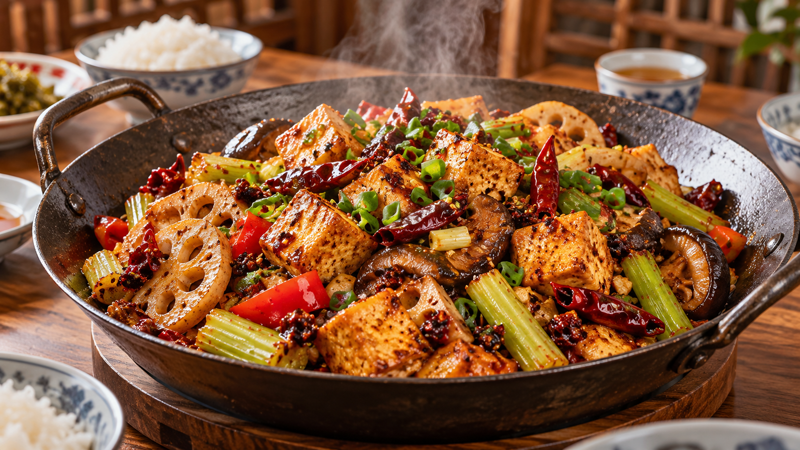
Substitutions and serving choices
- Tofu: Extra-firm is easiest to handle. Medium tofu can work, but use larger pieces and turn less often. Silken tofu is not a direct substitute for this wok method.
- Vegetables: Cauliflower, potato, bamboo shoots, wood ear, or cabbage can replace part of the mix. Pre-cook dense pieces and drain them well.
- Heat: Reduce dried chilies before reducing doubanjiang; the paste supplies salt, fermented depth, and color as well as heat.
- Serving: Rice balances the concentrated seasoning. A cool cucumber dish can add contrast.
For more tofu choices, see our three-method Sichuan tofu guide. The Sichuan ingredients guide helps with doubanjiang and peppercorn selection.
Storage and reheating
Refrigerate leftovers within two hours—or within one hour when the ambient temperature is above 90°F / 32°C—in a shallow covered container, and keep the refrigerator at 40°F / 4°C or below. FoodSafety.gov advises using refrigerated leftovers within three to four days. Reheat only the portion you need to an internal temperature of 165°F / 74°C, measured with a food thermometer; a wide skillet restores texture better than adding extra water.
These limits come from current FDA refrigeration guidance, USDA leftover reheating guidance, and FoodSafety.gov leftover guidance. They are safety boundaries, not evidence that this exact recipe was lab-tested.
Common questions about Sichuan tofu dry pot
Do I have to press tofu for Sichuan dry pot?
No. Very wet blocks benefit from a short press, but thorough draining and blotting may be enough for firm or extra-firm tofu. The goal is a dry surface that browns without making the center tough.
Can I make tofu dry pot without doubanjiang?
You can make a chile-and-peppercorn tofu stir-fry, but it will not have the same fermented bean flavor. Do not replace doubanjiang with an equal amount of a much saltier paste without tasting.
Why did my tofu dry pot turn watery?
The likely causes are wet tofu, crowded mushrooms, undrained blanched vegetables, or too much finishing liquid. Cook components separately and reduce before the final toss.
How long can leftovers stay refrigerated?
Refrigerate within two hours—or within one hour above 90°F / 32°C—at 40°F / 4°C or below, and use within three to four days. Reheat leftovers to 165°F / 74°C.