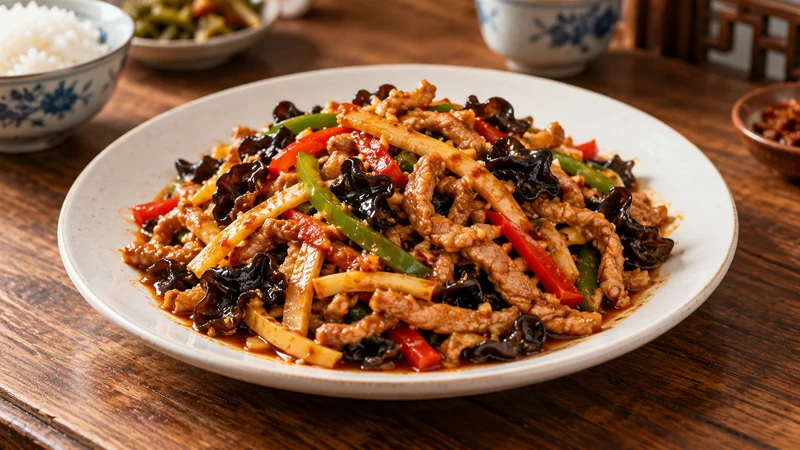
Fish-fragrant shredded pork, or yu xiang rou si (鱼香肉丝), is a fast Sichuan stir-fry of tender pork and crisp vegetables in a sweet, sour, savory, garlicky chile sauce. Despite the English name, the dish contains no fish. “Fish-fragrant” describes a seasoning profile traditionally associated with cooking fish: pickled chile, ginger, garlic, scallion, vinegar, sugar, and soy-based savoriness.
Fish-fragrant shredded pork at a glance
| Element | Practical choice | Why it matters |
|---|---|---|
| Pork | Lean pork loin or tenderloin, cut across the grain | Thin, even strips cook quickly without turning chewy |
| Vegetables | Wood ear mushrooms, bamboo shoots, and red and green bell pepper | They add crisp and springy textures rather than bulk alone |
| Chile base | Finely chopped pickled red chile; doubanjiang can supplement it | The aroma should be fermented and bright, not only hot |
| Sweet-sour sauce | Chinkiang vinegar, sugar, light soy sauce, stock or water | Pre-mixing prevents rushed measuring over a hot wok |
| Finish | A light cornstarch slurry | It makes the sauce glossy and helps it coat each strip |
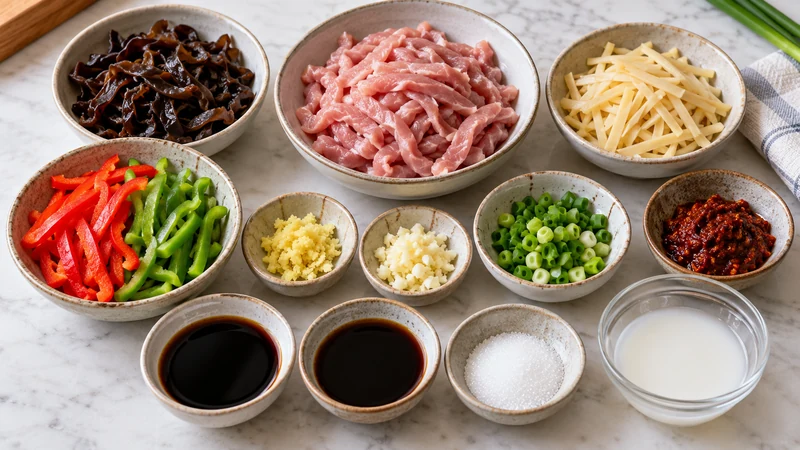
Ingredients for four servings
For the pork
- 12 oz (340 g) lean pork loin or tenderloin
- 1 teaspoon light soy sauce
- 1 teaspoon Shaoxing wine or dry sherry
- 1 teaspoon cornstarch
- 1 teaspoon neutral oil
For the vegetables and aromatics
- 1 cup rehydrated wood ear mushrooms, cut into thin strips
- 1 cup bamboo shoot strips, rinsed and drained
- ½ small red bell pepper and ½ small green bell pepper, julienned
- 1 tablespoon finely chopped pickled red chile
- 2 teaspoons minced ginger
- 2 teaspoons minced garlic
- 2 scallions, white and green parts separated
- 2 tablespoons neutral cooking oil, divided
For the fish-fragrant sauce
- 1½ tablespoons Chinkiang vinegar
- 1 tablespoon light soy sauce
- 1 tablespoon sugar
- 3 tablespoons unsalted stock or water
- 1 teaspoon cornstarch
- ½ teaspoon sesame oil, optional
Ingredient note: Pickled chile is the defining direction for this flavor. If you use doubanjiang, add only 1 to 2 teaspoons and reduce the soy sauce because the paste is salty. For background on the fermented bean paste, see our doubanjiang guide.
How to make fish-fragrant shredded pork
1. Cut and marinate the pork
Chill the pork for 15 to 20 minutes so it firms up, then slice it across the grain into pieces about 2 inches long and ⅛ inch thick. Mix with soy sauce, wine, cornstarch, and oil. Rest for 15 minutes while you prepare the vegetables. The light coating protects the surface and helps the strips separate in the wok.
2. Mix the sauce before cooking
Whisk vinegar, soy sauce, sugar, stock, cornstarch, and optional sesame oil in a small bowl until no dry starch remains. Taste a drop before it touches raw meat. It should be assertively sweet-sour because the pork and vegetables will dilute it. Stir it again immediately before adding it to the wok; starch settles quickly.
3. Cook the pork in one loose layer
Heat a wok or wide skillet over medium-high heat until hot. Add 1 tablespoon oil, then spread in the pork. Let it sear for about 20 seconds before separating the strips. Stir-fry until the outside loses its raw color, 60 to 90 seconds, then transfer it to a clean plate. It will finish cooking when returned to the sauce.
4. Build the aromatic base
Add the remaining oil. Reduce the heat briefly if the wok is smoking hard. Fry the pickled chile for 10 to 15 seconds, then add ginger, garlic, and scallion whites. Stir only until fragrant. Burned garlic turns the whole sauce bitter, so keep the ingredients moving.
5. Keep the vegetables crisp
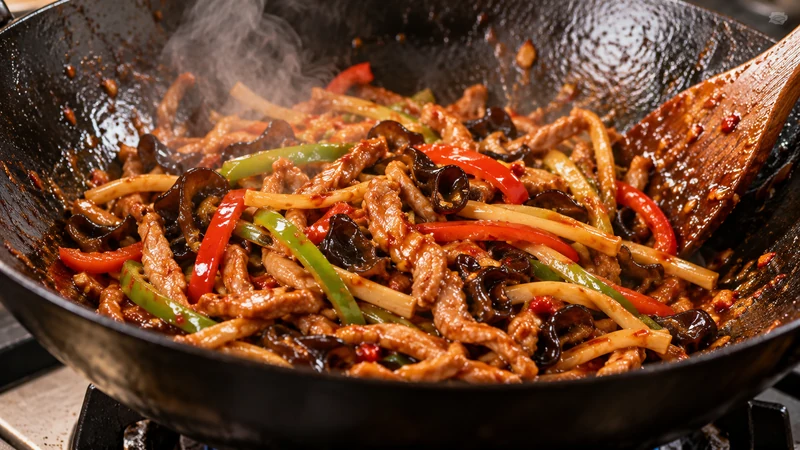
Add bamboo shoots, wood ear mushrooms, and pepper. Stir-fry for about 60 to 90 seconds. The vegetables should be heated through but still distinct. If they release water, increase the heat and wait for the excess moisture to evaporate before adding the sauce.
6. Finish with the sauce
Return the pork to the wok. Stir the sauce once more, pour it around the hot sides, and toss continuously. In 20 to 40 seconds it should turn glossy and coat the ingredients. Add scallion greens, taste, and remove from heat. If the sauce becomes too thick, loosen it with a tablespoon of hot water.
How to judge the finished dish
The pork should be tender, the wood ear springy, and the bamboo shoots and peppers lightly crisp. The first impression is aromatic chile and garlic, followed by a clear sweet-sour balance. The dish should not taste like plain sweet-and-sour pork, and it should not be dominated by doubanjiang saltiness.
For food safety, keep raw pork and its utensils separate from the prepared vegetables and cooked food. The USDA lists 145°F (62.8°C) with a three-minute rest for whole cuts of pork. Thin strips are difficult to probe individually, so cook them through, check a representative thicker piece with an instant-read thermometer when practical, and avoid returning cooked pork to the raw-meat plate.
Common mistakes and fixes
| Problem | Likely cause | Fix next time |
|---|---|---|
| Watery sauce | Wet vegetables or sauce added before the wok recovered heat | Drain well and evaporate moisture before saucing |
| Tough pork | Strips were thick, cut with the grain, or cooked twice for too long | Cut across the grain and remove the pork while still slightly underdone |
| Flat sweetness | Too much sugar or too little vinegar and chile aroma | Measure the vinegar and fry the pickled chile briefly before adding liquid |
| Salty, heavy flavor | Full amounts of both doubanjiang and soy sauce | Use one as the main salt source and adjust the other |
| Starch lumps | The slurry settled or hit a cool pool of liquid | Stir it immediately before adding and keep the wok hot |
Substitutions that preserve the method
Celery, carrot, or green pepper can replace part of the bamboo shoots, but cut everything to a similar size. Fresh shiitake mushrooms do not duplicate the springy texture of wood ear, though they can provide a savory variation. Chicken breast can follow the same cutting and marinating method, but it must reach the USDA minimum of 165°F (73.9°C).
Serve with plain steamed rice and a simple green vegetable. For another pork stir-fry built around careful slicing and heat control, compare our Sichuan beef stir-fry method; for pantry planning, use the Sichuan ingredients guide.
Frequently asked questions
Does fish-fragrant shredded pork contain fish?
No. The name refers to a seasoning style associated with fish cookery. The standard pork dish itself does not require fish or seafood.
Can I make the dish without doubanjiang?
Yes. Finely chopped pickled red chile is a strong traditional direction for the sauce. Doubanjiang is useful but should not overwhelm the vinegar, sugar, ginger, garlic, and scallion.
Why is my sauce watery?
The vegetables may be too wet, the wok may have cooled, or the starch slurry may not have been stirred before use. Cook off excess moisture and add the freshly mixed sauce at the end.
Can I prepare it ahead?
You can slice the ingredients, marinate the pork, and mix the sauce earlier the same day. Keep the pork refrigerated and separate. Stir-fry just before serving so the vegetables stay crisp.