Red-oil shredded pork ear is cooked pork ear cut into narrow strips and dressed with Sichuan chili oil. Its texture comes from skin and cartilage, not from cucumber crunch or noodle warmth. For this method, red oil shredded pork ear should be sliced only after the cooked ear has cooled enough to hold an even texture.
Red Oil Shredded Pork Ear: Quick Answer
Use safely fully cooked pork ears, cool promptly, cut along the cartilage into thin strips and combine with a separately mixed red-oil dressing. Keep raw cooking separate from cold assembly; a short generic timer is not a substitute for verified cooking and safe handling.
Basic Facts
| Pork ears | 3 ears for the cited batch, safely fully cooked before cold assembly |
|---|---|
| Cooking aromatics | 3 ginger slices, 1 scallion and a few Sichuan peppercorns if cooking raw ears |
| Dressing | 2 tablespoons Sichuan red oil; 3 tablespoons safely cooked stock; 1 tablespoon soy; 1 teaspoon black vinegar; 1 teaspoon sugar |
| Optional garnish | 1 teaspoon toasted sesame, chopped scallion and coriander |
| Salt | Cooking water: 1 teaspoon salt. Dressing: source specifies 1 teaspoon; this adaptation omits that extra dressing salt and tastes only after the measured soy/stock. |
| Cut | Narrow strips along the cartilage after cooling enough to handle |
Prepare and cook pork ear safely
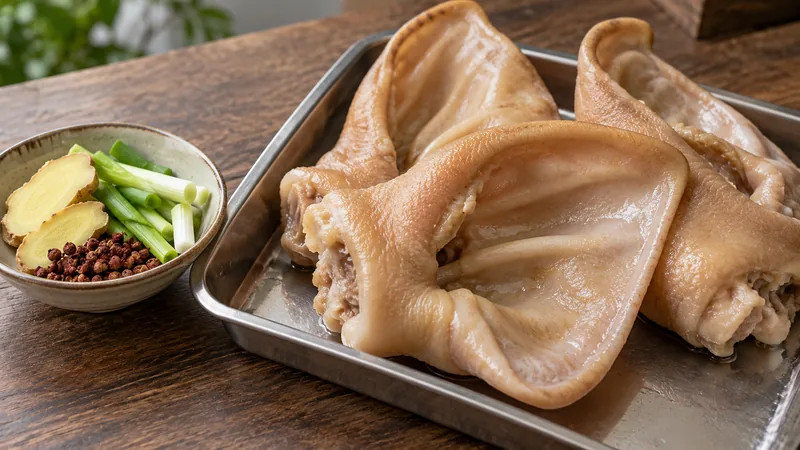
Use three cleaned raw pork ears from a reliable supplier. Put them in a pot with enough water to cover, three ginger slices, one scallion cut into sections, several whole Sichuan peppercorns and one teaspoon salt. Bring to a boil and maintain a steady boil. Elaine’s written method gives approximately twenty minutes; ear size and condition vary, so this is an estimate, not a safety guarantee.
Check the center of the thickest fleshy part with a clean food thermometer. Following the Hong Kong Centre for Food Safety’s pork guidance, reach at least 75°C and maintain that temperature for at least 30 seconds. Continue cooking if needed; do not stop merely because the timer has ended or the cartilage feels crunchy. The recipe card’s shorter headline time does not replace its written method or this temperature check.
Transfer fully cooked ears with clean utensils into shallow portions and cool promptly in the refrigerator. Do not leave a large warm pile on the counter until completely cold. Keep cooked food separate from the raw-ear board, knife and liquid. Once chilled and firm enough to handle, slice narrowly along the cartilage on a clean board. Cartilage provides the characteristic texture; this is cooked pork, never raw pork served cold.
Chill and slice for an even crisp texture
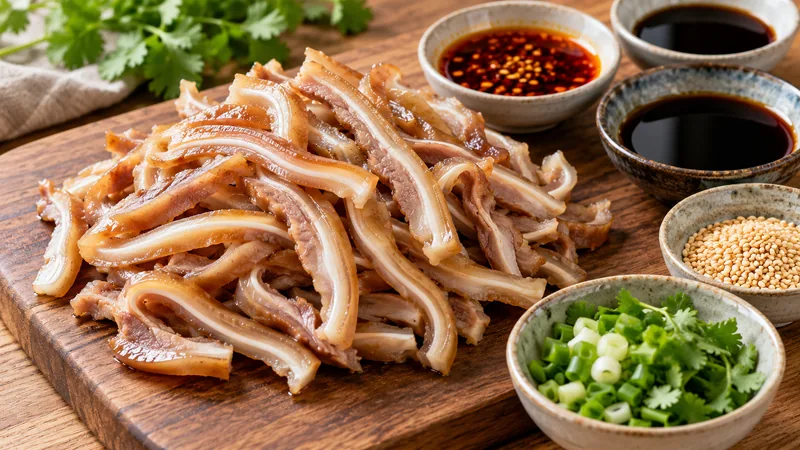
Use clean utensils to transfer the cooked ears and cool promptly. When manageable, slice along the cartilage into narrow strips so skin and the pale cartilage layer remain identifiable. Use a clean cooked-food board, not the unwashed surface used for raw ears.
Thin even strips differ from thick chunks of ordinary pork. Keep the food chilled during advance preparation and do not leave a large warm batch standing for hours to become firm. A suitable illustration shows fully cooked layered strips, not raw tissue or cucumber pieces.
Mix red oil aromatics and seasoning balance
Mix the measured red oil, safely cooked stock, soy, vinegar and sugar in a separate bowl. Taste before adding salt because stock and soy vary. Optional toasted sesame, chopped scallion and coriander can be added near serving. This is a ready-to-eat dressing; raw-pork liquid must not be used as its stock.
The mixture is a thin dressing with chili oil rather than an unverified shelf-stable jarred sauce. Stir the oil before measuring if solids have settled. For a less spicy version, the source permits replacing part of the chili oil with sesame oil, but that variation changes both flavor and allergen considerations.
Dress serve and store without losing texture
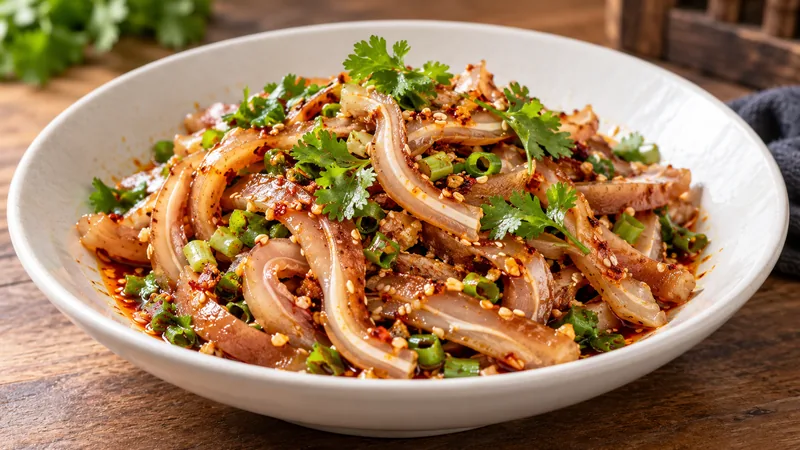
Toss the cooked ear strips with the dressing and arrange for serving. Keep the narrow layered texture visible rather than hiding the food under a deep sauce pool. Add the chosen optional garnish only if it appears in the final ingredient list. No hot noodles or cucumber-salting method belongs in this assembly.
Use clean utensils and refrigerate promptly in shallow portions at 4°C (40°F) or below, within two hours or one hour above 32°C (90°F). Chill the ears without waiting for a large warm batch to become fully cold on the counter. Neither vinegar nor chili oil preserves cooked pork at room temperature. Check soy, sesame and stock labels for allergens.
Quick reference
Fully cooked ear first; prompt cooling; thin cartilage-aligned strips; separate safe-stock red-oil dressing; chilled assembly. Confirm raw-ear cooking rather than asserting a short universal timer.
Recipe references
Frequently Asked Questions
Is this raw pork ear served cold?
No. Pork ears must be safely fully cooked before cold assembly.
Why slice after cooking and cooling?
The cooked ear holds a more even strip structure; the cut follows its cartilage.
Is twenty minutes a guaranteed cooking time?
No. About twenty minutes is an estimate. Cook the actual ears to at least 75°C for at least 30 seconds, checking the thickest fleshy part with a food thermometer.
Can chicken stock be used?
The cited dressing uses stock; it must be safely cooked and handled, never raw-pork liquid.
Does vinegar permit room-temperature storage?
No. Keep the prepared pork dish refrigerated under applicable food-handling guidance.