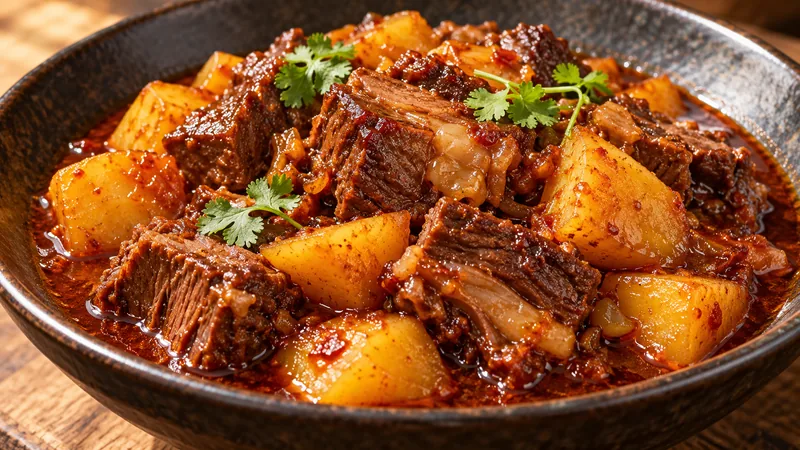
This Sichuan braised-beef version uses brisket, doubanjiang, restrained warm spices and potatoes cooked separately. It is a long, moist cooking method for tender beef chunks, not a quick chicken or cucumber recipe. The preliminary boil is preparation for the braise, not the complete cooking step.
Quick Answer
Prepare evenly cut brisket, briefly boil and drain it, then build a doubanjiang and aromatic base. Add beef, soy, sugar, the remaining cooking wine and enough water for the stovetop braise. Simmer until the beef is cooked and tender. Cook potatoes separately and combine near serving, so they do not dissolve during the beef stage.
Basic Facts
| Beef | About 1,000 g brisket, in chunks |
|---|---|
| Vegetable | 4 medium potatoes, cooked separately |
| Heat base | 2 tablespoons Sichuan doubanjiang |
| Cooking wine | 4 tablespoons total: 1 preliminary boil, 3 braise |
| End point | Cooked, tender beef; potatoes hold their shape |
Ingredients and preparation
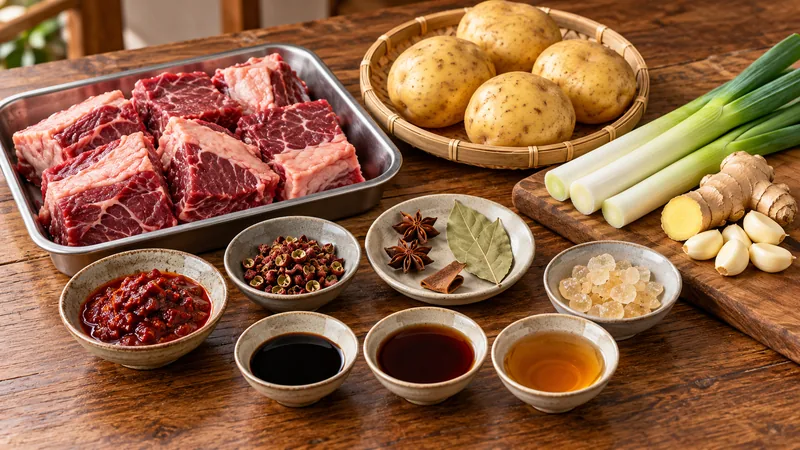
Prepare the brisket and potatoes above, 2 large Chinese onion or leek stalks cut into sections, a 1-inch piece of ginger, 1 peeled garlic bulb, 1 tablespoon rock sugar, 2 star anise, 2 bay leaves, a very small piece of cassia bark and 1/2 tablespoon Sichuan peppercorns. Measure 1/4 cup light soy sauce, 2 tablespoons dark soy sauce, 4 tablespoons Chinese cooking wine, about 1 tablespoon cooking oil and water as needed. Chopped coriander is an optional serving garnish; the optional amomum spice is omitted here.
Set aside some ginger slices for the preliminary boil and keep the remaining crushed ginger for the braise. Separate the wine into two measured portions before starting. The source ingredient list alone does not assign all the wine; its author clarified that the remainder belongs in the later simmer. This page follows that clarification rather than leaving three tablespoons unexplained.
Cut brisket into reasonably even chunks so a few oversized pieces do not determine the entire pot’s tenderness. Keep raw meat and its utensils away from cooked potatoes and garnish. If using the source’s short soaking preparation, keep the meat refrigerated and discard that water; this preparation is not a meat-safety treatment.
Step 1: Preliminary boil and aromatic base
Put beef in a pot of fresh cold water with the reserved ginger slices and 1 tablespoon wine. Bring to a boil, continue the source’s brief preliminary boil, then drain. The meat still needs the full braise. Handle the pot and colander carefully so hot water does not splash, and use clean equipment for the drained meat.
Warm the cooking oil in the braising pot and stir the doubanjiang over gentle heat until fragrant. Add the onion or leek sections, whole peeled garlic cloves, remaining ginger and measured spices. Keep the heat controlled: a scorched spice base transfers bitterness into the entire liquid, and adding more sugar afterward does not remove burned material.
Use the small cassia piece specified rather than filling the pot with cinnamon bark. Check the paste and sauces for salt and allergens. Doubanjiang products vary, and a different chili sauce is an ingredient change rather than a guaranteed equivalent.
Step 2: Braise the brisket
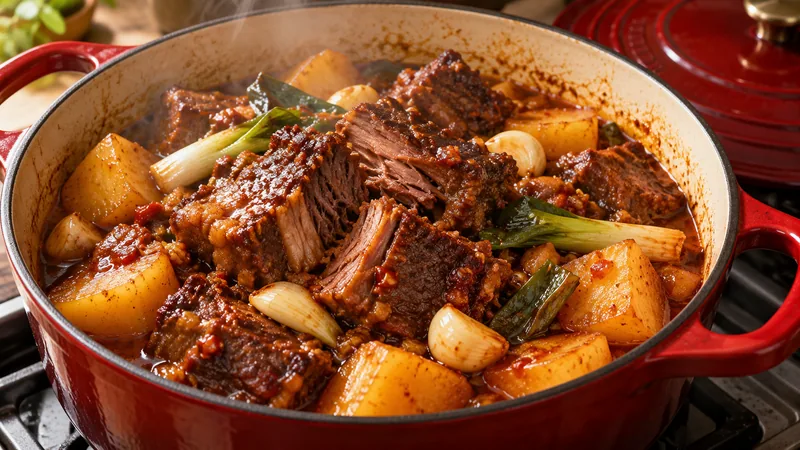
Add drained beef to the aromatic base and stir briefly. Add rock sugar and both soy sauces, followed by the remaining 3 tablespoons wine. Add water to cover the meat for a stovetop braise, bring to a boil, then reduce to a controlled simmer. This version uses a covered stovetop pot, not pressure-cooker instructions transferred to an ordinary pan.
Continue until the beef is fully cooked and tender. Check representative pieces, including the largest ones, rather than relying on red-brown sauce color. A whole-cut beef temperature benchmark is 63°C (145°F) with a three-minute rest, but merely reaching that threshold does not guarantee brisket has softened; tenderness requires the longer moist cooking stage.
Check liquid during the braise. If it is disappearing before the beef softens, add enough hot water to sustain moist cooking and adjust the heat. If beef is tender but the sauce is loose, control the reduction while watching the salt concentration. Neither a fixed timer nor an illustration guarantees the same outcome in different pots.
Step 3: Cook potatoes separately and combine
Peel and cut potatoes into roughly 3 cm pieces. Boil them separately in clean water until almost tender, drain, then add to the cooked beef for a short combining stage. Check the actual potato texture; hard centers require more cooking, while crumbling pieces do not need another long boil.
Stir gently enough to coat without crushing. Remove large whole spices as practical before serving and let diners know that any remaining whole spices are aromatics rather than vegetables to eat. Coriander can be added at serving if desired. The finished dish should contain identifiable tender brisket and potato pieces in a seasoned braising sauce.
Serving and safe leftovers
Serve using clean bowls and utensils. Do not place cooked beef back on a raw-meat tray. Refrigerate leftovers promptly in shallow containers at 4°C (40°F) or below, within two hours or one hour above 32°C (90°F). Divide a large batch rather than leaving a deep pot on the counter to cool overnight.
Reheat leftovers to 74°C (165°F), checking the food rather than only the pot surface. Fresh garnish and rice have their own handling needs. The spices do not establish shelf stability, and the broth’s strong flavor is not evidence that storage was safe. These are source-based cooking instructions with illustrations, not a report of an actual kitchen trial.
Quick reference
Briefly boil and drain brisket, gently build the paste and spice base, braise with the correctly divided wine until tender, then combine separately cooked potatoes. Keep flavor development, tenderness and food-safety checks distinct.
References
- China Sichuan Food: brisket recipe and author clarifications on garlic and wine
- FoodSafety.gov: cooking and reheating temperatures
- FoodSafety.gov: separation and prompt chilling
Frequently Asked Questions
Which cut does this version use?
Beef brisket, cut into small reasonably even chunks, not thin stir-fry slices.
Where does the cooking wine go?
Use 1tablespoon in the preliminary boil and the remaining 3tablespoons in the later simmer, following the source author’s clarification.
Should potatoes simmer with the beef from the start?
No. Cook them separately and combine once the beef is tender.
Is red color a doneness test?
No. The paste and soy color the sauce; assess meat cooking and tenderness separately.
Does a two-minute preliminary boil finish the beef?
No. It is followed by the sustained braise until the beef is cooked and tender.