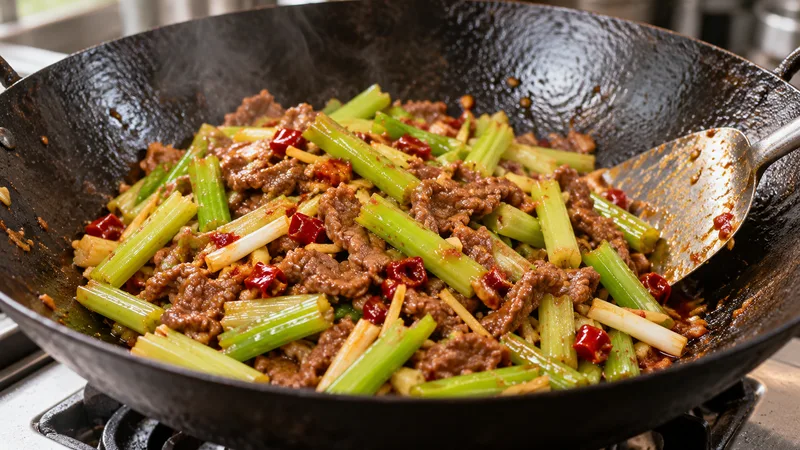
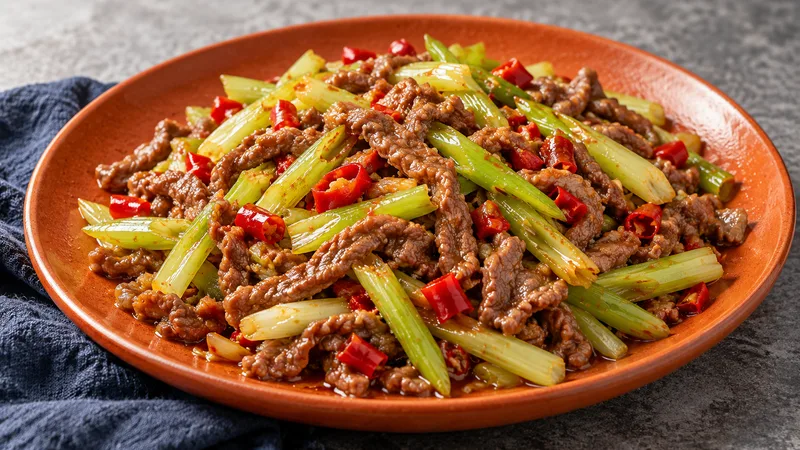
This Sichuan celery beef stir fry uses thin beef shreds, celery, pickled peppers and doubanjiang. It is a tender marinated stir-fry variation, not the separate dry-fried beef preparation. The celery and aromatic stages are kept apart from the meat stage so each can be adjusted without relying on one fixed number of seconds.
Quick Answer
Cut whole-cut beef across the grain and then into thin shreds. Refrigerate it with the marinade, mix in the starch, cook celery separately and briefly cook the aromatics. Add beef, doubanjiang and dark soy, then return the celery. Verify meat doneness and observe the appropriate rest before serving rather than judging sauce color alone.
Basic Facts
| Yield | 2 servings |
|---|---|
| Main ingredients | 250 g whole-cut beef and 100 g celery |
| Seasoning style | Pickled peppers, doubanjiang and savory marinade |
| Oil | 4 tablespoons divided across 3 stages |
| Allergens | Check soy, wheat and oyster/mollusk ingredients |
Sichuan Celery Beef Stir Fry Recipe: Ingredients
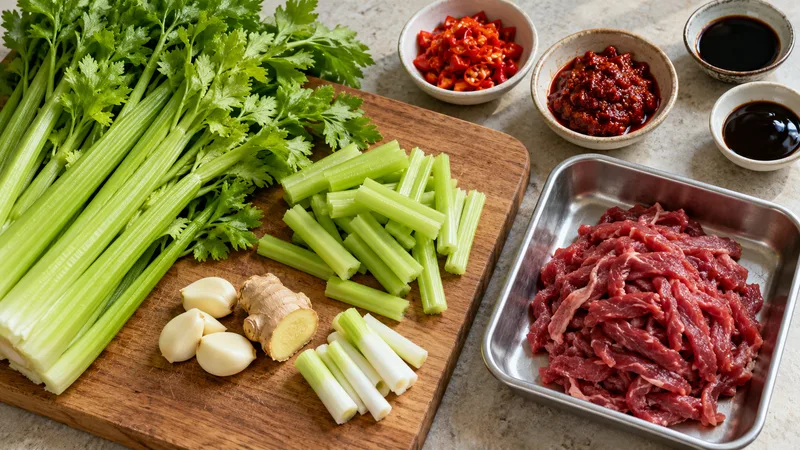
Prepare 250 g beef from a whole cut, 100 g celery cut into roughly 5 cm sections, 4 tablespoons neutral oil, 10 to 15 small pickled peppers chopped (or less to suit their actual heat), 2 scallion whites, a 1-inch ginger piece chopped, 2 garlic cloves chopped, 1 tablespoon doubanjiang and 2 teaspoons dark soy sauce. Salt is optional after tasting.
For the marinade, mix 1 tablespoon cooking wine or water, 1 tablespoon light soy and 1 tablespoon oyster sauce. Use 2 teaspoons cornstarch, mixed in after the initial refrigerated marinade. An extra pinch of salt is usually unnecessary until the combined seasonings have been considered.
Marinate and cook in stages
- Slice the beef against the grain, then cut into shreds of similar thickness. Refrigerate with the liquid marinade for about 15 minutes while preparing the other ingredients; mix in the cornstarch before cooking.
- Dry the washed celery. Use 1 tablespoon of the oil to briefly stir-fry it, then remove to a clean plate. Keep the celery recognizable, without treating a specific minute as compulsory for every stalk thickness.
- Use another 1 tablespoon oil to gently cook the ginger, garlic, scallion whites and chopped pickled peppers until fragrant. Keep them from scorching.
- Add the remaining 2 tablespoons oil and spread the beef out, working in batches if needed. Add doubanjiang and dark soy as it cooks; return the celery and mix until combined.
- Use a food thermometer suited to thin pieces. FoodSafety.gov gives 63°C(145°F) plus a 3-minute rest for beef from whole cuts. Ground beef is a different ingredient and requires 71°C(160°F). Do not serve the dish based only on a change of surface color.
- After the appropriate safety check and rest, taste a cooked portion before adding optional salt. Serve warm.
Control texture without changing the recipe
Identify the grain before slicing. Cutting across those muscle lines shortens the fibers; simply cutting along them into thin-looking ribbons does not make the same cut. Keep the shreds similar in thickness so a few larger pieces do not demand a different cooking stage from the rest.
Prepare all the vegetables and seasonings before the meat reaches the pan. A crowded pan can release enough moisture to interfere with searing. Use a sufficiently roomy pan and smaller batches rather than compensating by leaving the aromatics over high heat for a long time.
Celery varies in thickness and firmness. Separately cooking it allows the vegetable stage to be shortened or extended before it rejoins the meat. The goal here is identifiable celery with some texture. Dry the vegetable after washing so water does not splash into the hot oil.
Pickled pepper and seasoning adjustments
Pickled peppers contribute their own acidity, salt and heat. Their count is not a universal measure of spiciness. Start with less if the product is particularly hot. Use a product suitable for culinary use and follow its label, rather than assuming any jar of preserved vegetables is the same ingredient.
The cited source offers fresh pepper with a little black vinegar as a substitution. That is a changed version, not an identical fermented flavor. This measured recipe keeps pickled peppers, so there is no extra vinegar in the main ingredient list and no invented mandatory sourness ratio.
Dark soy contributes color as well as seasoning. More dark sauce is not a doneness test. The measured doubanjiang, light soy, oyster sauce and peppers may already provide substantial salt; adding salt independently to every component can make the final dish difficult to adjust.
Safe handling and serving
Keep raw beef and its utensils separate from celery ready to return to the pan and from serving plates. Refrigerate the marinade rather than leaving the meat on a counter. A starch coating and cooking wine do not make raw meat safe to eat.
This is a source-based home version with a specified whole-cut beef ingredient. The thermometer guidance is not a promise that a particular household wok reaches safe doneness in a few seconds. If changing to ground meat or another protein, use the temperature and method appropriate to that ingredient rather than silently keeping the beef-cut directions.
Quick reference
250 g beef, 100 g celery; refrigerated marinade, starch, separate celery stage, gentle aromatics, beef and seasonings, meat safety check and rest. Taste after cooking before adding salt.
Recipe references
The selected formulation and celery-first sequence follow China Sichuan Food’s Sichuan shredded beef. Whole-cut and ground-beef safety requirements follow FoodSafety.gov minimum temperatures.
Refrigerated marinating and separate raw-food utensils follow FoodSafety.gov handling guidance.
Frequently Asked Questions
Is this dry-fried beef?
No. This version uses a starch marinade and celery, with a short staged stir-fry. Dry-fried beef is a different preparation.
Can I omit pickled peppers?
That changes the version. The source suggests fresh peppers with a little black vinegar, but they do not reproduce the same fermented flavor or heat.
Why is the sauce too salty?
Light soy, dark soy, oyster sauce, doubanjiang and pickled peppers can all contribute salt. Taste a cooked portion before adding more salt.
Should celery be cooked with the raw beef from the beginning?
Cook the celery separately first, then return it near the end. This separates its texture adjustment from the meat-cooking stage.